

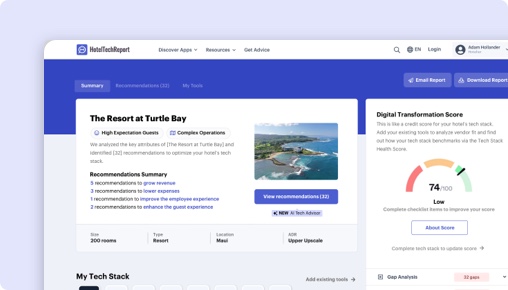
抱歉,此功能仅向已认证的酒店从业者开放
项目面板是一款免费工具,仅向已认证的酒店从业者开放。它通过简化调研流程和沟通环节,让采用新技术变得更轻松。

RateGain 对比 Sojern:按酒店细分市场排名
各产品在不同酒店规模、类型和区域的 酒店元搜索管理软件 供应商中的排名——基于各细分市场中酒店经营者的经验证评价。
按酒店规模
| 细分市场 |
 RateGain |
 Sojern |
|---|---|---|
| 小型(10-24 间客房) ▾ | #8 4 条评价 | #7 7 条评价 |
| 中型(25-74 间客房) ▾ | #8 10 条评价 | #7 21 条评价 |
| 大型(75-199 间客房) ▾ | #7 5 条评价 | #9 4 条评价 |
| 超大型(200+ 间客房) | #9 0 条评价 | #13 0 条评价 |
按酒店类型
| 细分市场 |
RateGain
|
Sojern
|
|---|---|---|
| 精品酒店 ▾ | #7 9 条评价 | #8 15 条评价 |
| 豪华酒店 ▾ | #7 8 条评价 | #10 10 条评价 |
| 品牌/连锁酒店 ▾ | #8 6 条评价 | #7 15 条评价 |
| 长住酒店 | #5 1 条评价 | #10 1 条评价 |
按区域
| 细分市场 |
RateGain
|
Sojern
|
|---|---|---|
| 北美 ▾ | #12 0 条评价 | #5 16 条评价 |
| 欧洲 ▾ | #8 13 条评价 | #10 9 条评价 |
| 亚太 ▾ | #2 5 条评价 | #12 1 条评价 |
| 中东 | #1 1 条评价 | #3 2 条评价 |
Is Demand Booster by RateGain or Sojern Ad Platform Better for Hotels?
Demand Booster by RateGain and Sojern Ad Platform both address hotel metasearch management, aiming to increase direct bookings and reduce reliance on OTAs. Demand Booster focuses on combining a vast travel intent database with business intelligence, targeting over 1.7 billion digital identities and promising a minimum 30% increase in direct booking contribution. Sojern centers on traveler insights and automated, multichannel marketing to reach travelers at the optimal moment in their journey.
Demand Booster fits hotels prioritizing granular control over guest journeys and integration with a broad range of global booking engines. Sojern suits properties looking for data-driven ad automation and a commission-based pricing model that aligns cost with actual booking outcomes. Both solve the core challenge of driving direct bookings but differ in their data scale, integration breadth, and operational approach.
Demand Booster by RateGain vs Sojern Ad Platform: Which Should Your Hotel Choose?
If your hotel is a branded or boutique property in Europe or Asia-Pacific seeking comprehensive metasearch marketing with deep integration—backed by 96 verified partners and features like metasearch surveillance and e-commerce consulting—choose Demand Booster. This choice rests on RateGain’s 4.8/5 rating across 19 reviews, a 22x ROAS claim, and a 30% direct booking increase reported by existing users.
If you operate a luxury or limited-service hotel in North America or South America with a preference for commission-based advertising that charges only on incremental bookings, Sojern’s 4.6/5 rating across 34 reviews supports its fit. Its smoother onboarding (4.8/5) and slightly higher ease of use (4.8/5) reflect a platform optimized for automated campaign management and integration with 35 verified partners including Vertical Booking and Oaky by Plusgrade.
For segments with fewer than five reviews, such as hostels and casinos for Sojern or resorts for RateGain, the recommendation is less definitive due to limited data. In those cases, operational priorities and feature needs should guide the decision.
Is Demand Booster by RateGain or Sojern Ad Platform Easier to Use?
Demand Booster and Sojern have closely matched ease of use and onboarding scores—4.7/5 and 4.6/5 for RateGain versus 4.8/5 and 4.8/5 for Sojern, respectively. Reviewers of both products frequently cite intuitive user interfaces and smooth initial setup processes. RateGain users highlight patient, knowledgeable support during onboarding that helped them optimize online performance, while Sojern users appreciate automated campaign management that reduces daily operational burdens.
However, some Demand Booster customers note the dashboard interface feels dated and could benefit from modernization, which may slow adoption among less tech-savvy front desk staff. Sojern reviews praise the platform’s ease but mention a learning curve that could be eased with more onboarding tutorials.
Edge: Even.
Which Has Better Features: Demand Booster by RateGain or Sojern Ad Platform?
Demand Booster offers five metasearch-specific features absent in Sojern: meta search marketing, metasearch connectivity, metasearch surveillance, a marketing dashboard, and e-commerce consulting. These features enable hotels to monitor rate parity actively, manage campaigns from one system, and receive expert guidance to improve direct booking strategies. For example, metasearch surveillance helps revenue managers identify and address rate discrepancies across OTAs, protecting pricing integrity.
Sojern does not list unique metasearch features but excels in data-driven traveler segmentation and automated multichannel campaign optimization. Its platform streamlines ad targeting to reach travelers at the right time in their journey, which reduces manual campaign management but does not provide the same granular metasearch control as RateGain.
Both share a basic set of metasearch management tools, but Demand Booster’s broader feature set directly supports operational workflows of revenue and distribution teams seeking detailed channel control.
Edge: Demand Booster by RateGain.
Which Has Better Customer Support: Demand Booster by RateGain or Sojern Ad Platform?
Demand Booster and Sojern score closely on customer support and onboarding, with RateGain at 4.9/5 and 4.6/5, and Sojern at 4.8/5 and 4.8/5. RateGain’s reviews consistently praise fast, friendly, and proactive support that provides timely advice beyond campaign management. One user reported a 4-year partnership marked by responsiveness and strategic consultation that improved direct bookings by 30%.
Sojern’s support is described as generally positive but with occasional slow responses that hinder quick campaign adjustments. Some users called for more accessible training resources to accelerate onboarding. A notable negative review cited deceptive billing practices and lack of support, although this is an isolated case among 34 reviews.
Edge: Even.
Which Has More Integrations: Demand Booster by RateGain or Sojern Ad Platform?
Demand Booster integrates with 96 verified partners, nearly three times Sojern’s 35. Both share 18 common integrations with major PMSs and booking engines like Profitroom, Mirai, ROIBACK, and Bookassist. RateGain’s unique integrations include RoomRaccoon, Fairmas, apaleo GmbH, and VISIT, broadening its compatibility with diverse PMS and revenue management tools popular in Europe and Asia.
Sojern’s unique partners include Vertical Booking, Oaky by Plusgrade, and Frontdesk Anywhere, appealing to hotels favoring those platforms, especially in North America. For hotels operating with complex or less common property management systems, RateGain’s wider integration ecosystem reduces manual data transfers and errors.
Edge: Demand Booster by RateGain.
Which Do Hoteliers Rate Higher: Demand Booster by RateGain or Sojern Ad Platform?
Demand Booster holds a 4.8/5 overall rating from 19 reviews, while Sojern scores 4.6/5 from 34 reviews. Demand Booster’s ratings are stable but have no recent reviews in the past six months, which limits insight into current performance. Sojern has two recent reviews but fewer than ten, so recent rating trends are inconclusive.
Segment ratings show Demand Booster leads in boutique hotels (4.9/5 vs. Sojern’s 4.5/5 from 15 reviews) and branded hotels (4.9/5 vs. 4.7/5). Sojern has stronger ratings in bed & breakfast & inns (4.9/5 vs. 4.7/5) and limited service hotels (4.7/5 vs. RateGain data unavailable). Luxury hotels rate RateGain higher (4.8/5 vs. 4.2/5), but Sojern has a larger luxury hotel user base (15% vs. 5%).
Edge: Even.
How Much Do Demand Booster by RateGain and Sojern Ad Platform Cost?
Demand Booster’s base price is $1,000 with no freemium, monthly flat, or per-room pricing, and no implementation fee reported. Sojern’s base price is slightly higher at $1,100, similarly lacking freemium or per-room models and without an implementation fee. Neither offers a trial period.
Sojern’s commission-based pricing model charges fees only on incremental bookings, aligning costs with revenue impact. Demand Booster offers a "pay on stay" commission model with 100% control over guest journeys but does not publish commission details. This suggests similar financial risk management but requires direct vendor consultation for final cost comparison.
What Type of Hotel Should Use Demand Booster by RateGain?
- Hotels that operate multi-brand or boutique properties, especially in Europe or Asia-Pacific, looking for granular metasearch channel management and surveillance.
- Teams that require integration with a broad range of PMSs and booking engines, including less common platforms like RoomRaccoon and apaleo.
- Properties aiming to achieve at least a 30% increase in direct booking contribution through data-driven campaigns and e-commerce consulting.
- Revenue managers who need detailed parity monitoring and campaign reporting to protect pricing strategies.
- Hotels with dedicated marketing or revenue teams that can leverage advanced features like meta search surveillance and marketing dashboards.
Not ideal if:
- Your property prefers a commission-based pricing model with transparent reconciliation processes, as RateGain’s pay-on-stay commission details are less explicit.
- You require recent user feedback reflecting current product performance; RateGain has no active recent reviews.
- Your team lacks technical resources to manage a complex feature set or prefers automated ad campaign simplification.
What Type of Hotel Should Use Sojern Ad Platform?
- Hotels focused on North American or South American markets with a preference for commission-based advertising tied strictly to incremental bookings.
- Properties seeking automated, data-driven multichannel marketing campaigns that minimize manual oversight.
- Small to mid-sized hotels with limited marketing resources that benefit from easy campaign management and integrated traveler insights.
- Hotels using PMSs and distribution partners like Vertical Booking, Oaky by Plusgrade, and Frontdesk Anywhere.
- Operators valuing smooth integration and ongoing campaign optimization with moderate support needs.
Not ideal if:
- You require advanced metasearch-specific features such as parity surveillance or e-commerce consulting.
- Your property values a broad integration network beyond Sojern’s 35 partners.
- You need detailed, downloadable reports to share with multiple stakeholders; Sojern’s reporting is noted as less customizable.
Demand Booster by RateGain vs Sojern Ad Platform: The Bottom Line for Hotels
Demand Booster and Sojern both aim to increase direct bookings via metasearch management but diverge sharply in feature depth and integration scope. Demand Booster leverages an extensive travel intent database and 96 verified integrations to deliver detailed metasearch marketing, parity monitoring, and e-commerce consulting. Sojern focuses on automated, data-driven multichannel ad campaigns and a commission-based pricing model attractive to cost-conscious hotels.
Choose Demand Booster if your property requires sophisticated metasearch capabilities, broad PMS compatibility, and hands-on campaign management with expert consulting. Its 4.8/5 rating over 19 reviews and reported 30% direct booking lift support this choice. Opt for Sojern if you prioritize automated campaign management, commission-aligned costs, and seamless integration with key North American partners, backed by a solid 4.6/5 rating from 34 reviews.
Both products have strong user satisfaction but differ operationally: RateGain demands marketing expertise to exploit its feature set, while Sojern suits hotels leaning on automation and simpler campaign workflows. Your decision should hinge on your property’s marketing resources, integration needs, and preferred pricing alignment.
实际成果:RateGain 对比 Sojern(按业务目标)
我们分析了 1 个经验证的案例研究,比较了酒店在四个关键业务目标上使用每个平台实际取得的成果。
Safir Hotels & Resorts
中型
"The partnership with RateGain has been transformative for Safir Hotels & Resorts, yielding 4x growth in our revenue."
 Sojern
该目标暂无已发布的案例研究。
RateGain 对比 Sojern:总结
排名更高的方面
独特功能
酒店经营者喜爱的方面
用户常说Sojern简化了元搜索和其他数字渠道的持续活动管理。他们重视它为需要启动、监控和调整活动且无需大量手工操作的酒店团队带来的运营效率。
多位评论者将Sojern与更强的直接收入表现和更好的营销支出回报联系起来。他们认为该平台在提升预订效率和带来可衡量的财务影响时具有价值,尽管有些人指出早期结... 多位评论者将Sojern与更强的直接收入表现和更好的营销支出回报联系起来。他们认为该平台在提升预订效率和带来可衡量的财务影响时具有价值,尽管有些人指出早期结果仍然难以证明。
评论者一致提到需要更清晰地了解活动结果,包括进度跟踪、部署指标和预订绩效。虽然报告工具受到认可,但部分用户希望获得更详细的元搜索特定洞察,以更好地理解... 评论者一致提到需要更清晰地了解活动结果,包括进度跟踪、部署指标和预订绩效。虽然报告工具受到认可,但部分用户希望获得更详细的元搜索特定洞察,以更好地理解预订的驱动因素。
酒店经营者提出异议的方面
一位评论者特别呼吁加强平台内的创意功能,包括自助式活动构建、实时渲染、AI文案建议和模板。这表明酒店内部营销团队需要更快的广告制作速度和更高的自主权。
一个负面主题是不确定活动是否真正带来了可观的转化增长。一位评审指出对活动情况有很强的可见性,但没有明确的转化影响,这表明正在评估该系统的酒店更希望看到... 一个负面主题是不确定活动是否真正带来了可观的转化增长。一位评审指出对活动情况有很强的可见性,但没有明确的转化影响,这表明正在评估该系统的酒店更希望看到预订量的提升证据,而不仅仅是流量或跟踪数据。
排名更高的方面
关于 Demand Booster 与 Sojern Ad Platform 的常见问题
Demand Booster 能否替代 Sojern Ad Platform?
这取决于您的需求。Demand Booster 和 Sojern Ad Platform 共享许多核心 Hotel Metasearch Management Software 功能,但各有独特的能力。Demand Booster 提供 96 个经验证的集成合作伙伴,而 Sojern Ad Platform 提供 35 个。在切换之前,请查看上方的功能对比以了解它们的差异。
哪个更适合小型或独立酒店?
小型酒店应优先考虑易用性和快速上手。Demand Booster 在易用性方面领先,评分为 4.7/5 对比 4.7/5。寻找透明定价以及试用或演示选项。在各产品页面上按酒店规模筛选评价,了解与您类似的酒店的反馈。
Demand Booster 或 Sojern Ad Platform 是否提供免费方案?
Demand Booster:否。Sojern Ad Platform:否。 两款产品目前均不提供免费版。大多数 Hotel Metasearch Management Software 供应商提供演示或试用——在做出承诺之前,请分别向各供应商申请体验。
HTR 如何评估和排名 Demand Booster 和 Sojern Ad Platform?
HT Score 是一个综合排名,考虑 4 个标准组和十多个变量,帮助酒店经营者客观比较酒店科技产品。RateGain 的 HT Score 为 0,Sojern 的为 92。以下是评分的计算方式。
| 标准组 | 权重 | 衡量内容 |
|---|---|---|
| 客户评分与评价 |
|
用户对该产品的推荐度如何? 评分分数、评价数量、声量份额、评价深度、评价时效性、成功案例 ▾ 权重最高的因素。分析平均满意度评分(推荐可能性、易用性、支持、投资回报率)、相对于同类产品的评价总数、评价时效性(最近 6 个月内至少 20 条评价)以及跨独立酒店客户的声量份额以检测选择偏差。 |
| 合作伙伴生态系统 |
|
技术合作伙伴对该公司的推荐度如何? 合作伙伴推荐、集成数量、集成质量 ▾ 评估合作伙伴推荐作为专家信心投票、经验证集成的数量以及生态系统质量——集成合作伙伴的平均 HT Score。拥有更高质量集成生态系统的产品更有可能提供互联互通的技术栈。 |
| 以客户为中心 |
|
该组织以客户为中心的程度如何? 认证支持、评价一致性、资料完整性 ▾ 评估公司是否获得 HTR 客户支持认证、是否保持持续的评价收集(反馈驱动文化的指标)以及产品资料是否完整,包括功能、截图、定价和特性。 |
| 覆盖范围、持久力与资源 |
|
该公司的覆盖范围和资源有多广泛? 地理覆盖、持久力、公司资源、趋势评分 ▾ 衡量全球覆盖(服务的国家和区域)、经营年限作为稳定性指标、团队规模作为资源指标,以及基于近十二个月买家咨询、评价、合作伙伴推荐和媒体活动的趋势评分。 |
客户评分和评价是 HT Score 算法中最重要的因素。HTR 不接受付费以提高排名。所有评价均经过验证——只有经确认从属关系的酒店行业从业者才能提交评分。 查看完整 HT Score 评估方法 →
酒店经营者还在阅读哪些 酒店元搜索管理软件 对比?
探索更多基于经验证酒店经营者评价的一对一对比。





获取您的免费人工智能分析师报告
根据您酒店的情况量身定制的推荐


让我们查找您的酒店信息
还在权衡您的 酒店元搜索管理软件 选项吗?
我们 酒店元搜索管理软件 指南中的一些热门系统——或者让我们的 AI 在大约两分钟内根据您酒店的具体情况为每个系统评分。


