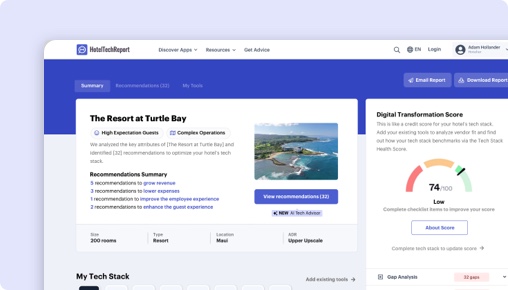
Sorry, this functionality is only available for verified hoteliers
The project dashboard is a free tool that is only available to verified hoteliers to make adopting new technology easier by streamlining their research and simplifying their communication workflow.

Demand Calendar vs. Smartpricing:
מה מתאים לכם?


בקצרה
ניתחנו 233 ביקורות מאומתות של מלונאים, השווינו מערכי תכונות, תמחור ומקרי בוחן מהשטח כדי לפרק היכן כל פלטפורמה מצטיינת. הבחירה הנכונה תלויה בסוג הנכס ובסדרי העדיפויות שלכם:
Demand Calendar AB מצטיין/ת , עם תכונות בלעדיות כמו Financial Forecast Builder and Scheduled Reports.
Smartness מצטיין/ת בonboarding , עם תכונות בלעדיות כמו Fully automated revenue management and Controlled Automation/Algorithm Customization.
איך Demand Calendar משתווה ל-Smartpricing?
דירוגים זה לצד זה על סמך 233 ביקורות מאומתות של מלונאים ב-HTR.
| HTScore |
|
|
| סבירות להמלצה |
|
|
| קלות שימוש |
|
|
| תמיכת לקוחות |
|
|
| תמורה לכסף |
|
|
| מחיר התחלתי | From $600/mo | From $300/mo |
| ביקורות מאומתות | 7 | 226 |
מהם היתרונות והחסרונות של Demand Calendar מול Smartpricing?
לאחר ניתוח 233 ביקורות מאומתות, משתמשי Demand Calendar AB מעריכים ביותר את , בעוד משתמשי Smartness מדגישים את time efficiency, קלות שימוש, תמיכת לקוחות. לחצו על כל נושא כדי לראות מה אומרים המבקרים.
|
Demand Calendar AB
|
Smartness
|
|---|---|
| יתרונות | |
|
+
Time Efficiency
▾
|
|
|
+
קלות שימוש
▾
|
|
|
+
תמיכת לקוחות
▾
|
|
|
+
Dynamic Pricing Automation
▾
|
|
| חסרונות | |
|
−
דיווח הניתן להתאמה אישית
▾
|
|
|
−
שקיפות תובנות
▾
|
|
|
−
אינטגרציה עם מערכת ניהול מערכות ניהול (PMS)
▾
|
|
Demand Calendar AB מול Smartness: דירוגים לפי פלח מלונאות
כיצד כל מוצר מדורג בין ספקי מערכות ניהול הכנסות עבור גדלי נכסים, סוגים ואזורים שונים — על סמך ביקורות מאומתות ממלונאים בכל פלח.
לפי גודל מלון
| פלח |
Demand Calendar AB
|
Smartness
|
|---|---|---|
| קטן (10-24 חדרים) ▾ | #36 2 ביקורות | #4 93 ביקורות |
| בינוני (25-74 חדרים) ▾ | #34 5 ביקורות | #12 32 ביקורות |
| גדול (75-199 חדרים) ▾ | — | #16 5 ביקורות |
| גדול במיוחד (200+ חדרים) | — | #20 1 ביקורות |
לפי סוג נכס
| פלח |
Demand Calendar AB
|
Smartness
|
|---|---|---|
| בוטיק ▾ | #36 5 ביקורות | #8 62 ביקורות |
| יוקרה ▾ | #38 2 ביקורות | #10 33 ביקורות |
| רשת / מותג ▾ | #33 2 ביקורות | #12 24 ביקורות |
| שהייה מורחבת ▾ | — | #6 29 ביקורות |
לפי אזור
| פלח |
Demand Calendar AB
|
Smartness
|
|---|---|---|
| צפון אמריקה ▾ | — | #15 7 ביקורות |
| אירופה ▾ | #27 5 ביקורות | #5 199 ביקורות |
| אסיה פסיפיק | #13 2 ביקורות | — |
| המזרח התיכון | — | #11 3 ביקורות |
The Decision
Choosing between Demand Calendar by Demand Calendar AB and Smartpricing by Smartness hinges on your hotel’s specific revenue management needs. Both aim to improve your profitability through data and automation, but they diverge significantly in scope, features, and user experience. Demand Calendar’s niche focus on business intelligence makes it suitable for hotels prioritizing detailed analytics, while Smartpricing’s broader automation appeals to those seeking simple, real-time rate adjustments. Which aligns better with your hotel’s operational style?
Demand Calendar offers extensive revenue analytics and forecasting tools, whereas Smartpricing emphasizes dynamic, AI-driven rate adjustments. Your decision depends on whether you want a deep business intelligence platform or an automated pricing engine. Are you ready to weigh their strengths against your hotel’s unique priorities?
Is Demand Calendar or Smartpricing Better for Hotels?
Demand Calendar focuses on providing a comprehensive suite of analytics, forecasting, and profit management tools designed to give your team detailed insights and control over total revenue streams. Its three-tiered approach—room revenue, total revenue, and profit-focused management—is tailored for hotels that need granular data to inform strategic decisions.
In contrast, Smartpricing simplifies revenue management by automating daily price adjustments based on market demand, competitor pricing, and booking trends. It’s ideal for hotels that prefer a hands-off, automated approach to rate optimization, especially if you operate multiple properties or manage vacation rentals.
Demand Calendar’s strengths lie in its in-depth business intelligence, multi-source data integration, and profit-centric analytics, making it suited for hotels with dedicated revenue teams. Smartpricing excels in ease of use, automation, and real-time adjustments, appealing to hoteliers seeking a straightforward, effective revenue solution.
Would your hotel benefit more from detailed analytics or from automated, AI-driven pricing?
Demand Calendar vs Smartpricing: Which Should Your Hotel Choose?
If your hotel needs to understand total revenue sources, forecast profitability, and analyze customer acquisition costs, Demand Calendar is the better choice. Its advanced forecasting tools and business intelligence features—like scheduled reports and loss business data—help you make data-driven decisions that maximize profitability.
On the other hand, if your team prioritizes quick, automated rate adjustments with minimal manual input, Smartpricing is the right fit. Its dynamic pricing engine, real-time price updates, and user-friendly interface help you boost occupancy and revenue without complex analysis.
For hotels with a dedicated revenue management team that requires strategic insights, Demand Calendar offers more comprehensive tools. Conversely, if your hotel prefers automation and ease, Smartpricing delivers effective rate management with less effort.
Is Demand Calendar or Smartpricing Easier to Use?
Demand Calendar boasts a high ease-of-use rating of 4.71/5, with an onboarding experience rated at 4.33/5. Its interface is designed for multi-property management, and reviews highlight how intuitive and interactive the platform is for revenue teams. However, some users mention connectivity issues with certain PMS integrations, which slightly impacts overall ease.
Smartpricing scores marginally higher at 4.77/5 and enjoys a stronger onboarding rating of 4.69/5. Its clean, simple interface makes setup and daily use straightforward, even for non-technical staff. Users appreciate how quickly they can implement strategies and see results.
Edge: Smartness.
Which Has Better Features: Demand Calendar or Smartpricing?
Demand Calendar offers four exclusive features: Financial Forecast Builder, Scheduled Reports, Lost Business Data, and Business Intelligence, adding depth to its analytics suite. These tools enable detailed profit analysis, strategic planning, and multi-source revenue insights.
Smartness, however, provides a broader array of features—28 in total—including dynamic pricing, fully automated revenue management, real-time price optimization, price sensitivity modeling, and advanced automation controls. It also includes features like AI Optimization, "What-if" scenario analysis, and a channel manager for integrated distribution.
Given the sheer number of features, Smartness offers a more versatile toolset. But if your focus is on advanced financial forecasting and business intelligence, Demand Calendar’s niche features could be more beneficial.
Edge: Smartness.
Which Has Better Customer Support: Demand Calendar or Smartpricing?
Demand Calendar’s customer support is rated a perfect 5/5, with reviews emphasizing responsiveness and proactive assistance. One user notes, “Whenever I have a question, the support team is quick to respond and helpful,” reinforcing their reputation for excellent service.
Smartness also ranks highly at 4.83/5, with users praising their efficient communication and ongoing support during onboarding and beyond. A typical review states, “Their team is very attentive and always ready to assist with any issues,” which reflects their commitment to customer satisfaction.
While both excel, Demand Calendar’s slightly higher rating underscores its strong customer support reputation.
Edge: Demand Calendar.
Which Has More Integrations: Demand Calendar or Smartpricing?
Demand Calendar integrates with five verified partners, including Mews, Clock, and Oracle Hospitality. Its integrations are focused but limited, with some notable gaps such as IDeaS and HQ Revenue, which are only supported in Demand Calendar.
Smartness, by comparison, offers 30 verified integrations across a wide range of PMS, booking engines, and channel managers—including HotelRunner, WuBook, Beds24, and Casablanca. It shares partners like Mews and Oracle but covers a broader ecosystem, facilitating easier connectivity for diverse hotel setups.
Edge: Smartness.
Which Do Hoteliers Rate Higher: Demand Calendar or Smartpricing?
Demand Calendar’s user base, although smaller with only 7 reviews, has not provided recent feedback, making it harder to gauge current satisfaction. Its ratings are generally positive but lack data to confirm recent hotel experiences.
Smartness, with 198 reviews and recent ratings, boasts a very high likelihood to recommend at 97%. Hotels across Europe, North America, and beyond praise its ease of use, automation, and ROI-focused features. Given the volume and recency of reviews, Smartness’s reputation appears stronger and more current.
Edge: Smartness.
How Much Do Demand Calendar and Smartpricing Cost?
Demand Calendar is priced at $600 per month, with no free trial or freemium options. Its pricing reflects its focus on detailed analytics and multi-property management, suitable for hotels with dedicated revenue teams.
Smartness, at $300 per month, offers a more affordable entry point with no trial or implementation fees. Its lower price, combined with automation features, makes it attractive for smaller hotels or those new to revenue management systems.
Both platforms lack free trials, so your decision should consider value relative to your hotel’s budget and needs.
What Type of Hotel Should Use Demand Calendar?
- Hotels that require in-depth revenue analytics, forecasting, and profit management.
- Hotels with dedicated revenue managers or teams who need detailed, multi-source data.
- Properties seeking integration with various revenue streams beyond room sales, such as F&B or events.
- Hotels that value strategic business intelligence and detailed reporting.
- Hotels managing multiple locations needing consolidated oversight.
Not ideal if your hotel:
- Prefers a simple, automated pricing tool over in-depth analytics.
- Operates with a small team or limited revenue management resources.
- Needs quick, real-time rate adjustments without diving into analytics.
Demand Calendar suits hotels that prioritize strategic revenue insights and profit maximization over day-to-day rate automation.
What Type of Hotel Should Use Smartpricing?
- Hotels looking for a simple, automated revenue management tool that requires minimal manual input.
- Properties with limited or no dedicated revenue management staff.
- Small to medium-sized hotels or vacation rentals seeking to increase occupancy and revenue efficiently.
- Hotels that want real-time price adjustments based on market demand, without complex analytics.
- Hotels with multiple properties that benefit from centralized, automated rate updates.
Not ideal if your hotel needs detailed forecasting, in-depth analytics, or profit-oriented management.
Smartpricing is perfect for hotels that want to boost bookings with less effort and a straightforward setup.
The Bottom Line for Hotels
Demand Calendar excels when your hotel demands detailed, multi-stream revenue analytics, strategic forecasting, and profit management tools. Its focus on business intelligence makes it suitable for hotels with dedicated revenue teams or complex operations.
Smartpricing is the go-to if you need an easy-to-use, automated pricing engine that updates rates in real-time, maximizing occupancy and revenue without requiring intensive analysis. Its AI-driven approach suits hotels that want to reduce manual work and rely on smart automation.
If your hotel has a sizable revenue team, values detailed insights, and can invest in higher-priced software, Demand Calendar is the clear choice. Conversely, for hotels seeking quick wins, automation, and affordability, Smartpricing delivers the most value.
In summary, Demand Calendar is for strategic, analytics-driven hotels; Smartpricing is better for automated, operational rate management. Your hotel’s size, team structure, and revenue priorities should guide your decision.
כמה עולים Demand Calendar ו-Smartpricing?
תמחור מערכות ניהול הכנסות הוא לעיתים רחוקות פשוט. הנה מה שידוע לנו מנתוני התמחור הפומביים של כל ספק. תמיד בקשו הצעת מחיר מותאמת לגודל הנכס שלכם.
|
Demand Calendar AB
|
Smartness
|
|
|---|---|---|
| Starting Price | From $600/mo | From $300/mo |
אילו תכונות יש ל-Demand Calendar שאין ל-Smartpricing (ולהפך)?
על פי מסד הנתונים של HTR, ל-Demand Calendar ול-Smartpricing יש 14 תכונות משותפות. הנה ההבדלים העיקריים — תכונות שיש לאחד ולא לשני.
| תכונה |
Demand Calendar AB
|
Smartness
|
|---|---|---|
| אופטימיזציה של מחירים בזמן אמת | ||
| בונה תחזיות פיננסיות | ||
| דוחות מותאמים אישית | ||
| דוחות מתוזמנים | ||
| מודיעין עסקי | ||
| מודלים של רגישות למחיר | ||
| ניהול הכנסות אוטומטי לחלוטין | ||
| נתונים עסקיים אבודים | ||
| תמחור אוטומטי מסוג חדר | ||
| תמחור דינמי |
מציג את ההבדלים העיקריים. עוד 20 תכונות נבדלות בין המוצרים.
תוצאות מהשטח: Demand Calendar AB מול Smartness לפי יעד עסקי
ניתחנו 1 מקרי בוחן מאומתים כדי להשוות מה מלונות באמת משיגים עם כל פלטפורמה בארבעה יעדים עסקיים מרכזיים.
Demand Calendar AB
עדיין אין מקרה בוחן מפורסם ליעד זה.
CheckVienna
גדול
"In the past, I used to sit down every day and rack my brains over the prices. It was a burden. Because I knew if I made a mistake, I could lose €50,000. With Smartpricing, I have t..."
Demand Calendar AB מול Smartness: השורה התחתונה
יכולות ייחודיות
מה מלונאים אוהבים
Many reviews highlight the platform's ability to save time by automating repetitive tasks such as pricing updates and inventory management. Users appr... Many reviews highlight the platform's ability to save time by automating repetitive tasks such as pricing updates and inventory management. Users appreciate the substantial time savings allowing focus on strategic tasks. However, some reviews suggest that real-time support could further enhance efficiency in handling quick queries.
התוכנה זוכה לשבחים בזכות עיצובה האינטואיטיבי, המאפשר ניהול קל של תהליכים מורכבים כמו תמחור דינמי וניתוח נתונים, אפילו עבור אנשים שאינם מומחים. זה מקצר... התוכנה זוכה לשבחים בזכות עיצובה האינטואיטיבי, המאפשר ניהול קל של תהליכים מורכבים כמו תמחור דינמי וניתוח נתונים, אפילו עבור אנשים שאינם מומחים. זה מקצר משמעותית את עקומת הלמידה. חלק מהמשתמשים מציעים תהליך קליטה חלק יותר כדי לשפר עוד יותר את חוויית המשתמש הראשונית.
בעוד שתמיכה נחשבת בדרך כלל מצוינת ומהירה, חלק מהמשתמשים הציעו שתמיכה בצ'אט בזמן אמת יכולה לשפר את שביעות רצון הלקוחות על ידי מתן אפשרות לפתרון מהיר של... בעוד שתמיכה נחשבת בדרך כלל מצוינת ומהירה, חלק מהמשתמשים הציעו שתמיכה בצ'אט בזמן אמת יכולה לשפר את שביעות רצון הלקוחות על ידי מתן אפשרות לפתרון מהיר של בעיות, במיוחד עבור שאלות קלות הדורשות טיפול מיידי.
היכן מלונאים מביעים הסתייגות
ישנה קריאה לתכונות דיווח הניתנות להתאמה אישית יותר שיאפשרו ניתוח טוב יותר ותובנות מותאמות אישית עבור ניהול מלונות. משתמשים מאמינים שזה ישפר את התכנון... ישנה קריאה לתכונות דיווח הניתנות להתאמה אישית יותר שיאפשרו ניתוח טוב יותר ותובנות מותאמות אישית עבור ניהול מלונות. משתמשים מאמינים שזה ישפר את התכנון האסטרטגי והתאמות התפעוליות המבוססות על דוחות מפורטים.
מספר משתמשים הביעו צורך בהסברים שקופים יותר להמלצות שמספקת התוכנה. נימוקים ברורים יותר יגבירו את האמון בהצעות המערכת וישפרו את הלמידה עבור משתמשים שאי... מספר משתמשים הביעו צורך בהסברים שקופים יותר להמלצות שמספקת התוכנה. נימוקים ברורים יותר יגבירו את האמון בהצעות המערכת וישפרו את הלמידה עבור משתמשים שאינם מכירים אלגוריתמי תמחור מורכבים.
מדורג גבוה יותר עבור
יכולות ייחודיות
היכן הדירוגים מתפצלים ביותר
שאלות נפוצות על Demand Calendar מול Smartpricing
האם Demand Calendar יכול להחליף את Smartpricing?
זה תלוי בדרישות שלכם. ל-Demand Calendar ול-Smartpricing תכונות ליבה רבות של Revenue Management Systems במשותף, אך לכל אחד יכולות ייחודיות. Demand Calendar מציע 5 שותפי אינטגרציה מאומתים, בעוד Smartpricing מציע 35. עיינו בהשוואת התכונות למעלה כדי לראות היכן הם נבדלים לפני המעבר.
מה עדיף למלונות קטנים או עצמאיים?
מלונות קטנים צריכים לתת עדיפות לקלות שימוש וקליטה מהירה. Smartpricing מוביל בקלות שימוש עם 4.8/5 מול 4.7/5. חפשו תמחור שקוף ואפשרות לתקופת ניסיון או הדגמה. סננו ביקורות בעמוד כל מוצר לפי גודל נכס כדי לשמוע ממלונות כמו שלכם.
האם Demand Calendar או Smartpricing מציעים תוכנית חינמית?
Demand Calendar: לא. Smartpricing: לא. אף אחד מהמוצרים אינו מציע כרגע רמה חינמית. רוב ספקי Revenue Management Systems מציעים הדגמות או תקופות ניסיון — בקשו אחת מכל ספק כדי להעריך לפני ההתחייבות.
כיצד HTR מעריך ומדרג את Demand Calendar ו-Smartpricing?
ציון HT Score הוא דירוג מורכב הלוקח בחשבון 4 קבוצות קריטריונים ויותר מתריסר משתנים כדי לעזור למלונאים להשוות באופן אובייקטיבי מוצרי טכנולוגיה למלונות. ל-Demand Calendar AB יש HT Score של 0 ול-Smartness יש 88. כך מחושב הציון.
| קבוצת קריטריונים | משקל | מה זה מודד |
|---|---|---|
| דירוגי לקוחות וביקורות |
|
עד כמה משתמשים ממליצים על מוצר זה? ציון דירוגים, היקף ביקורות, נתח קול, עומק ביקורות, עדכניות ביקורות, סיפורי הצלחה ▾ הגורם בעל המשקל הגבוה ביותר. מנתח דירוגי שביעות רצון ממוצעים (סבירות להמלצה, קלות שימוש, תמיכה, החזר השקעה), מספר ביקורות כולל ביחס לעמיתים בקטגוריה, עדכניות ביקורות (לפחות 20 ביקורות ב-6 החודשים האחרונים), ונתח קול בין לקוחות מלון ייחודיים לזיהוי הטיית בחירה. |
| מערכת אקולוגית של שותפים |
|
עד כמה שותפים טכנולוגיים ממליצים על חברה זו? המלצות שותפים, כמות אינטגרציות, איכות אינטגרציות ▾ מעריך המלצות שותפים כהצבעות אמון של מומחים, את מספר האינטגרציות המאומתות, ואת איכות המערכת האקולוגית — ממוצע ציוני HT Score של שותפי האינטגרציה. מוצרים עם מערכות אקולוגיות איכותיות יותר צפויים לספק מערך טכנולוגי מחובר. |
| מוכוונות לקוח |
|
עד כמה הארגון הזה ממוקד לקוח? תמיכה מוסמכת, עקביות ביקורות, שלמות פרופיל ▾ בודק האם החברה קיבלה הסמכת תמיכת לקוחות של HTR, שומרת על איסוף ביקורות עקבי לאורך זמן (אינדיקטור לתרבות מונחית משוב), ושומרת על פרופילי מוצר מלאים עם יכולות, צילומי מסך, תמחור ותכונות. |
| טווח, יציבות ומשאבים |
|
מה היקף הטווח והמשאבים של חברה זו? טווח גיאוגרפי, יציבות, משאבי חברה, ציון מגמה ▾ מודד נוכחות גלובלית (מדינות ואזורים מכוסים), שנות פעילות כמדד יציבות, מספר עובדים כמדד משאבים, וציון מגמה המבוסס על פניות קונים, ביקורות, המלצות שותפים ופעילות עיתונאית ב-12 החודשים האחרונים. |
דירוגי לקוחות וביקורות הם ללא ספק הגורם החשוב ביותר באלגוריתם HT Score. HTR אינו מקבל תשלום עבור דירוגים גבוהים יותר. כל הביקורות מאומתות — רק אנשי מקצוע בתעשיית המלונאות עם שיוך מאושר יכולים לשלוח דירוגים. צפו במתודולוגיית HT Score המלאה →
אילו השוואות מערכות ניהול הכנסות נוספות קוראים מלונאים?
גלו עוד השוואות ישירות המבוססות על ביקורות מאומתות של מלונאים.



תוכן העניינים
קבלו את דוח אנליסט הבינה המלאכותית שלכם בחינם
המלצות מותאמות אישית לנכס שלכם


בואו נחפש את פרטי המלון שלכם
עדיין שוקל/ת את אפשרויות ה-מערכות ניהול הכנסות שלך?
כמה מערכות פופולריות ממדריך ה-מערכות ניהול הכנסות שלנו - או תנו לבינה המלאכותית שלנו לדרג כל אחת מהן מול הנכס הספציפי שלכם תוך כשתי דקות.