


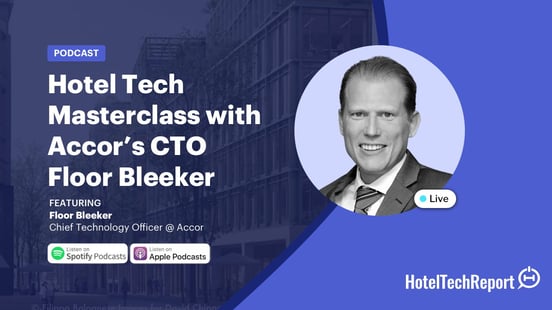
您是否曾想过,一些全球最大的酒店集团如何在不断发展的技术领域保持领先地位?想象一下管理全球 5,600 多家酒店和 300,000 名员工所面临的挑战和取得的成就。在我们最近的一次对话中,我们与全球最成功的酒店公司之一雅高的首席技术官 Floor Bleeker 深入探讨了这些话题。
继续阅读,您将发现雅高如何利用尖端技术来增强其运营的各个方面,从网络安全到可持续性和客户体验。 Floor Bleeker 的见解不仅会为您提供信息,还会启发您思考技术如何改变您自己的业务实践。
您是否好奇全球酒店巨头如何管理其数字化转型?您是否想了解可以帮助您在酒店业保持竞争力的策略?本文将解答这些问题以及更多问题,为您提供宝贵的知识和实用的解决方案。
加入我们,探索雅高的创新方法,并了解如何应用类似的策略来实现您的目标。无论您是想改善客户体验、简化运营还是增强安全性,与 Floor Bleeker 的对话都提供了大量不容错过的见解。深入了解如何将您的酒店业务提升到新的水平。
喜欢在 Spotify 上收听?点击此处
送货机器人彻底改变客户服务
讨论的突出创新之一是酒店使用送餐机器人,尤其是在中国。这些机器人不仅是一种新奇事物,而且完全融入了酒店运营,为客人提供无缝且安全的食物配送方式。
“他们遇到了一个问题,就像我们世界各地的许多人一样,外卖服务变得非常流行。这意味着你的大堂里、酒店里经常会有送餐员试图送餐。这对酒店的形象不利。这不安全。让没有登记的人在酒店里走来走去是不安全的。”
这些机器人被小心地安置在送餐人员可以放下食物的地方,然后机器人会直接把食物送到客人的房间。机器人会在酒店内导航、呼叫电梯,甚至在客人到达时通知客人。这项创新不仅提高了安全性,还通过确保及时和卫生地送餐来提升客人的体验。
 加入来自世界领先酒店品牌的 10 万多名高管,每周一次将最新见解发送到您的收件箱
从多 PMS 转向单一基于云的 PMS
雅高最初采用多 PMS(物业管理系统)策略来快速重新定位和开业酒店。但此后,该公司已转向单一的基于云的 PMS,以简化运营并改善数据管理。
“我们努力了两年……但没有一家做得完美。所以我们又改变了策略,选择单一供应商,基于云平台。”
转向单一 PMS 可以更好地控制数据、隐私和安全。它还简化了新功能的推出并确保遵守当地数据法规。这一战略转变凸显了适应性的重要性以及利用技术进步来优化运营的必要性。
人工智能和智能自动化提高运营效率
雅高集团在曼谷设立了人工智能和智能自动化卓越中心,专注于机器人流程自动化 (RPA) 和其他人工智能驱动的计划。该中心旨在识别和实施能够显著提高运营效率的用例。
“他们首先关注的重点实际上是 RPA,他们已经在酒店中确定了许多 RPA 能够真正提供帮助的用例,我们目前正在实施这些用例。”
重点关注领域之一是自动化后台流程,这些流程不会为客户互动带来直接价值。通过利用人工智能和 RPA,雅高旨在简化这些流程,让员工更加专注于提升客户体验。这一举措凸显了人工智能不仅可以改变面向客户的服务,还可以改变内部运营的潜力。
网络安全:采用零信任理念
网络安全是雅高的首要任务,重点是采用零信任安全理念。这种方法确保在资产或应用程序级别应用安全措施,而不是仅仅依靠基于边界的防御。
“我们试图建立一种零信任安全理念,我们希望我们的员工或合作伙伴尽可能轻松地连接和使用我们现有的系统,但我们将在中心应用安全性。”
这一策略对于缓解现代网络安全威胁(如冒充和复杂的网络钓鱼攻击)至关重要。通过从核心角度保护应用程序和数据,雅高旨在更有效地保护其运营和客户信息,凸显了酒店业网络安全的不断发展。
通过技术实现可持续发展
可持续发展是雅高集团的核心关注点,而技术在实现公司环保目标方面发挥着关键作用。从智能恒温器到人工智能驱动的食品垃圾管理系统,雅高集团正在利用技术减少碳足迹。
“我们投资了一家名为 full soon 的公司……他们使用人工智能来处理食物浪费,以更好地预测需要准备的食物,这确实减少了酒店的浪费。”
雅高集团致力于可持续发展,其举措包括测量和减少能源消耗、管理食品浪费以及向客人提供信息,帮助他们做出环保选择。这些举措不仅有助于环境保护,还提升了雅高集团作为负责任和有远见的酒店业领导者的声誉。
本集的这些精彩内容提供了宝贵的见解,让我们了解雅高如何通过创新技术和战略远见应对现代酒店业的复杂性。无论您是酒店经营者还是技术爱好者,都可以从雅高的数字化转型方法中学到很多东西。
Accor's Tech Stack and Strategy Breakdown
Floor Bleeker, the CTO of Accor, approaches compiling his tech stack with a strategic mindset that differs from many hoteliers. Instead of building everything in-house, Bleeker emphasizes a "build versus buy" strategy. He advocates for purchasing commodity technologies from vendors who can deliver them more efficiently and cost-effectively than Accor could internally. This approach allows Accor to focus its development efforts on areas that provide a competitive advantage, such as their loyalty program or custom apps.
Bleeker also highlights the importance of flexibility and adaptability in technology procurement. He mentions that Accor initially tried a multi-PMS strategy to quickly reflag or open hotels, but shifted back to a single cloud-based PMS due to advancements in cloud technology and the challenges of managing multiple vendors. This shift allows for better control over data, privacy, security, and functionality.
Furthermore, Bleeker's approach includes leveraging innovations from acquisitions and partnerships, as well as integrating successful technologies discovered in regional or brand-specific implementations into the broader organization. This bottom-up approach complements the top-down strategy of identifying and implementing necessary systems through a structured procurement process.
Overall, Bleeker's strategy is characterized by a pragmatic balance between in-house development and external procurement, a focus on leveraging cloud technologies, and an openness to adopting innovations from various sources within the organization.
1. Delivery Robots
Description: Floor Bleeker highlights the use of delivery robots, particularly inspired by their partner in China, Wazoo. These robots are integrated into the hotel's operations to handle food deliveries efficiently and securely.
Usage:
-
Integration: The robots are discreetly positioned where delivery personnel can drop off food. The robot then navigates through the hotel, calls the elevator, and delivers the food directly to the guest's room.
-
Security and Cleanliness: This system ensures that delivery personnel do not roam around the hotel, maintaining security and cleanliness.
-
Guest Experience: The robots provide a seamless and innovative experience for guests, enhancing the hotel's image.
Recommendation: Floor recommends this tool for its ability to improve operational efficiency and guest satisfaction while maintaining high security and hygiene standards.
2. Cloud PMS (Property Management System)
Description: Accor has shifted from a multi-PMS strategy to a single cloud-based PMS to streamline operations and improve data management.
Usage:
-
Centralization: The cloud PMS allows for centralized control over data, privacy, security, and functionality.
-
Ease of Implementation: The cloud-based system is easier to implement and less expensive from a migration perspective.
-
Data Management: It provides better control over data, which is crucial for leveraging AI and other advanced technologies.
Recommendation: Floor suggests that a cloud PMS is essential for modern hotel operations due to its scalability, cost-effectiveness, and enhanced data management capabilities.
3. AI and Smart Automation
Description: Accor has established an AI and Smart Automation Center of Excellence in Bangkok to explore various use cases for AI in hotel operations.
Usage:
-
RPA (Robotic Process Automation): The center focuses on implementing RPA to automate back-office processes that do not add direct value to guest interactions.
-
Sustainability: AI is used to measure and reduce the hotel's carbon footprint, such as automating the processing of energy bills and analyzing food waste.
-
Guest and Employee Services: AI-driven services are being developed to enhance both guest experiences and employee efficiency.
Recommendation: Floor emphasizes the importance of AI and automation in improving operational efficiency, sustainability, and overall service quality.
4. Smart Thermostats
Description: Smart thermostats are used to manage energy consumption in hotel rooms efficiently.
Usage:
-
Energy Management: These devices adjust the room temperature based on occupancy and guest preferences, significantly reducing energy usage.
-
Cost-Effective: They are inexpensive to install and provide immediate energy savings.
Recommendation: Floor recommends smart thermostats for their simplicity, cost-effectiveness, and substantial impact on energy conservation.
5. HR System
Description: Accor has implemented a new HR system to manage the complete employee lifecycle.
Usage:
-
Employee Management: The system provides a single view of employees from onboarding to retirement.
-
Talent Development: It includes modules for learning, development, and performance management, helping to identify and nurture talent within the organization.
-
Global Mobility: The system supports the global movement of employees, allowing them to transfer between properties seamlessly.
Recommendation: Floor advises that a robust HR system is crucial for managing a large, diverse workforce and promoting career development within the hotel industry.
6. Sustainability Measurement Tools
Description: Accor uses various tools to measure and manage their sustainability efforts.
Usage:
-
Carbon Footprint: Tools are used to measure the carbon footprint from energy bills and other sources.
-
Food Waste: AI-driven tools help predict and reduce food waste, contributing to overall sustainability goals.
-
Guest Choices: The website features green badges to inform guests about the sustainability measures taken by different hotels.
Recommendation: Floor stresses the importance of sustainability tools in meeting environmental goals and enhancing the hotel's reputation among eco-conscious travelers.
随着酒店业的不断发展,与雅高集团首席技术官 Floor Bleeker 在 Hotel Tech Insider 上的对话提供了宝贵的见解,酒店经营者可以利用这些见解保持领先地位。Bleeker 的讨论强调了技术在重塑酒店运营、提升客人体验和推动可持续发展方面的变革力量。
最引人注目的收获之一是雅高在技术采购和实施方面的战略方针。Bleeker 强调区分开发专有解决方案和购买现成产品的重要性。他指出:“我们只在能给我们带来竞争优势的情况下才会开发产品。”他强调,雅高专注于开发独特的应用程序,如忠诚度计划和应用程序,同时依靠市场解决方案来满足更商品化的需求。
雅高集团的数字化转型之旅还标志着向云端系统的重大转变,这简化了运营并改善了数据管理。这一举措不仅提高了后台流程的效率,还为面向宾客的创新技术铺平了道路。人工智能和智能自动化的融合,特别是在可持续发展工作中,展示了技术如何推动卓越运营和环境责任。Bleeker 分享了一个有趣的人工智能驱动的食品废物管理示例,它可以预测食品准备需求并显著减少浪费。
此外,此次对话还揭示了网络安全在当今数字环境中的关键作用。雅高集团采用零信任安全理念,确保为其系统提供强有力的保护,同时保持员工和合作伙伴的轻松访问。在网络威胁日益复杂的时代,这种方法至关重要。
讨论还涉及提升客人和员工的数字化旅程的重要性。雅高致力于将个性化客人体验从在线互动扩展到入住期间,这一点尤其值得注意。通过利用雅高应用程序并整合各种数字工具,该公司旨在为不同品牌和地区的客人提供无缝且丰富的体验。
对于希望效仿雅高集团成功的酒店经营者来说,关键在于采用整体数字化转型方法。这不仅涉及采用尖端技术,还涉及培养创新和持续改进的文化。正如 Bleeker 恰如其分地指出的那样,“成功的数字化转型在于长期持续的小实验。”
为了更深入地了解这些策略并探索更多可操作的见解,我们强烈建议您收听完整的播客节目。与 Floor Bleeker 的对话是利用技术推动酒店业增长、效率和可持续性的大师级课程。