

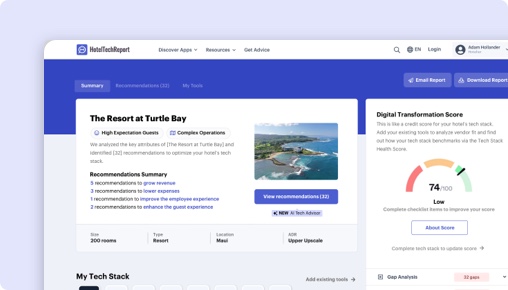
申し訳ございません。この機能は認証済みのホテル運営者のみご利用いただけます
プロジェクトダッシュボードは、認証済みのホテル運営者のみが利用できる無料ツールです。調査を効率化し、コミュニケーションの流れを簡素化することで、新しいテクノロジーの導入を容易にします。

Demand Calendar vs. happyhotel:
あなたに最適なのはどちら?
要点
222件の認証済みホテル経営者レビューを分析し、機能セット、料金、実際の導入事例を比較して、各プラットフォームの強みを明らかにしました。最適な選択は、施設の種類と優先事項によって異なります:
Demand Calendar AB はマーケットインサイトレポートなどの独自機能で際立っています。
happyhotel はサポート、オンボーディング、実装支援において優れており、特にシティセンター施設(4.9/5)に適しているほか、完全に自動化された収益管理およびモバイルフレンドリーなデザインなどの独自機能を備えています。
Demand Calendarとhappyhotelの比較
HTRの222件の認証済みホテル経営者レビューに基づく並列評価。
| HTScore |
|
|
| 推奨度 |
|
|
| 使いやすさ |
|
|
| カスタマーサポート |
|
|
| コストパフォーマンス |
|
|
| 開始価格 | $600/月〜 | $500/月〜 |
| 認証済みレビュー | 7 | 215 |
Demand Calendarとhappyhotelの長所と短所は?
222件の認証済みレビューを分析した結果、Demand Calendar ABのユーザーはを最も評価し、happyhotelのユーザーはサポート、オンボーディング、実装支援, レポーティング、ダッシュボード、分析, 収益への影響と時間節約を高く評価しています。各テーマをクリックすると、レビュー投稿者の声をご覧いただけます。
 Demand Calendar AB |
 happyhotel |
|---|---|
| 長所 | |
|
+
サポート、オンボーディング、実装支援
▾
|
|
|
+
レポーティング、ダッシュボード、分析
▾
|
|
|
+
収益への影響と時間節約
▾
|
|
|
+
オートパイロット / 自動料金設定
▾
|
|
| 短所 | |
Demand Calendar AB vs happyhotel:ホテルセグメント別ランキング
各セグメントのホテル経営者による認証済みレビューに基づく、施設規模・タイプ・地域別の収益管理システムベンダー内ランキング。
ホテル規模別
| セグメント |
Demand Calendar AB
|
happyhotel
|
|---|---|---|
| 小規模(10〜24室) ▾ | #39 2件のレビュー | #4 98件のレビュー |
| 中規模(25〜74室) ▾ | #34 5件のレビュー | #7 83件のレビュー |
| 大規模(75〜199室) ▾ | — | #11 11件のレビュー |
| 特大規模(200室以上) | — | #21 1件のレビュー |
施設タイプ別
| セグメント |
Demand Calendar AB
|
happyhotel
|
|---|---|---|
| ブティック ▾ | #39 5件のレビュー | #10 54件のレビュー |
| ラグジュアリー ▾ | #40 2件のレビュー | #16 26件のレビュー |
| ブランド/チェーン ▾ | #37 2件のレビュー | #7 33件のレビュー |
| 長期滞在型 ▾ | — | #7 23件のレビュー |
地域別
| セグメント |
Demand Calendar AB
|
happyhotel
|
|---|---|---|
| ヨーロッパ ▾ | #29 5件のレビュー | #6 196件のレビュー |
| アジア太平洋 | #13 2件のレビュー | #25 1件のレビュー |
Is Demand Calendar by Demand Calendar AB or happyhotel by happyhotel Better for Hotels?
Demand Calendar and happyhotel both address revenue management challenges but diverge significantly in scope and target users. Demand Calendar functions primarily as a hotel business intelligence tool, aggregating PMS, RMS, STR, and budget data to forecast total revenue and profit across rooms, F&B, meetings, and spa. It is tailored for hotel groups seeking strategic alignment across departments. In contrast, happyhotel is a cloud-based revenue management system focused on real-time dynamic pricing automation designed for hotels of all sizes, especially small to medium properties aiming to increase revenue through algorithm-driven price optimization.
Both tools solve the core problem of revenue predictability and pricing efficiency. Demand Calendar provides a consolidated forecast platform to identify budget risks and opportunities across multiple revenue streams, aiding operational coordination. happyhotel automates pricing decisions with autopilot features, competitor benchmarking, and demand signals, reducing manual intervention and improving rate agility. Hotels that want a holistic business intelligence view with manual pricing controls may lean towards Demand Calendar, while those prioritizing automated yield management and frequent rate updates will find happyhotel a more complete revenue management solution.
Demand Calendar vs happyhotel: Which Should Your Hotel Choose?
If you operate a multi-department or multi-property hotel group that requires consolidated forecasting across rooms, F&B, meetings, and spa, Demand Calendar’s integration of PMS, RMS, and market data offers a strategic advantage by aligning revenue, sales, marketing, and operations around one forecast. This insight fits properties with complex revenue streams and organizational layers, reflected in its user base with 44% boutique hotels and 14% branded hotels, predominantly in Europe and North America.
If your hotel is a small to medium-sized property or a chain seeking automated pricing to maximize occupancy and ADR, happyhotel’s dynamic pricing algorithms, autopilot function, and real-time market benchmarking provide superior operational value. Its extensive feature set (32 unique features) and integration with 25 verified partners including top PMS systems like Opera Cloud and protel support rapid adoption and ongoing revenue optimization. Review data from 215 hoteliers, including 50 recent reviews at 4.8/5, confirms its suitability for properties ranging from boutique hotels to luxury resorts.
Data for luxury hotels and boutique hotels is robust for both products, but happyhotel has broader segment coverage and more recent reviews. Demand Calendar’s limited review count (7 total, none recent) suggests its current market presence is narrower, making happyhotel the safer choice for broader hotel segments and chains requiring automated, scalable revenue management.
Is Demand Calendar or happyhotel Easier to Use?
Demand Calendar and happyhotel share nearly identical ease of use and onboarding scores: Demand Calendar with 4.7 and 4.3, happyhotel with 4.8 and 4.7 respectively. Reviewers of Demand Calendar appreciate its time-saving dashboards and centralized data views that simplify complex revenue work, though some note a slightly cluttered layout and occasional syncing issues with PMS Suite8. happyhotel users highlight its intuitive interface, rapid onboarding, and ease of use for non-revenue management specialists, enabling quick team adoption even during staff shortages.
Both products facilitate user adoption but happyhotel’s higher onboarding rating (4.7 vs 4.3) and numerous reviews praising friendly, responsive support during setup give it a modest operational edge for properties new to revenue management systems. Demand Calendar’s fewer reviews limit confidence in broad usability claims.
Edge: Even.
Which Has Better Features: Demand Calendar or happyhotel?
happyhotel offers 32 unique features not found in Demand Calendar, including dynamic pricing, fully automated revenue management, price sensitivity modeling, “what-if” scenario analysis, guided workflows, group pricing and evaluation, and AI optimization. These features enable real-time price optimization, bulk adjustments, and multi-month forward pricing (up to 24 months), directly reducing manual workload for revenue teams and increasing pricing agility. For example, happyhotel’s automated room-type pricing and controlled algorithm customization allow hoteliers to fine-tune pricing strategies without daily manual intervention, benefiting front desk and revenue managers by ensuring rates reflect current demand and market conditions.
Demand Calendar’s 4 unique features focus on business intelligence: future market demand data, lost business data, market insights reporting, and booking pattern analysis. These support strategic decision-making by revealing market trends and revenue leakage but do not automate pricing. This suits hotels needing comprehensive revenue forecasting across departments rather than dynamic pricing automation.
The extensive feature set of happyhotel translates into operational efficiency gains through automation and detailed analytics, while Demand Calendar provides broader revenue visibility without pricing automation. Given the scale and scope difference, happyhotel’s feature advantage is decisive for hotels wanting automated, dynamic revenue management.
Edge: happyhotel.
Which Has Better Customer Support: Demand Calendar or happyhotel?
Demand Calendar scores a perfect 5.0 for customer support, while happyhotel scores 4.8. Both products have onboarding ratings close to each other (4.3 vs 4.7). Demand Calendar reviewers emphasize prompt, easy communication and rapid responses to improvement suggestions, with one reviewer noting, “If you have any suggestion for improvement or any problems it is very easy to make contact and get a response.” happyhotel users commonly praise the personal, fast, and competent support that provides individualized responses instead of boilerplate answers, with some calling it “fantastic” and “excellent.” However, a minority report slower support responses and occasional technical issues with PMS integration.
With just 7 total reviews, Demand Calendar’s support ratings rest on less evidence compared to happyhotel’s 215 reviews, including 50 recent ones. The volume and recency of happyhotel’s positive feedback provide stronger operational assurance. Both vendors appear committed to support quality, but happyhotel’s scale and consistency make its support reliability more verifiable.
Edge: Even.
Which Has More Integrations: Demand Calendar or happyhotel?
Happyhotel leads with 25 verified integration partners versus Demand Calendar’s 5. Both share three common partners: Mews, Clock, and Oracle Hospitality. Demand Calendar integrates uniquely with IDeaS and HQ Revenue, focusing on revenue systems. Happyhotel’s broader partner list includes major PMS and channel managers like RoomRaccoon, apaleo GmbH, SiteMinder, protel, Access Hospitality, and others.
For hotels relying on a wide ecosystem of PMS and distribution software, happyhotel’s larger integration portfolio facilitates smoother data exchange, real-time rate updates, and reduced manual workload for front desk and revenue teams. Demand Calendar’s integrations emphasize BI data sources, aligning with its forecasting role but limiting operational connectivity.
Edge: happyhotel.
Which Do Hoteliers Rate Higher: Demand Calendar or happyhotel?
Both products share an identical overall rating of 4.8/5. However, happyhotel’s rating is based on 215 reviews with 50 in the last six months, while Demand Calendar’s 4.8 rating comes from only 7 reviews with no recent activity. happyhotel’s stable last-6-month rating of 4.8 confirms consistency in current performance, whereas Demand Calendar’s lack of recent reviews limits confidence in its present state.
By segment, Demand Calendar’s highest ratings come from small samples in boutique hotels (4.7 from 5 reviews), luxury hotels (5.0 from 2 reviews), and city center hotels (4.7 from 5 reviews). However, these counts are low. happyhotel maintains strong ratings across multiple hotel types with substantial review counts: boutique hotels (4.8/5, 58 reviews), branded hotels (4.8/5, 36), city center hotels (4.9/5, 56), airport/conference hotels (4.8/5, 70), and luxury hotels (4.9/5, 27). happyhotel also shows high ratings in limited service, hostels, resorts, and extended stay segments, reflecting broad acceptance.
The volume, recency, and segment diversity of happyhotel’s reviews give it a more reliable rating benchmark for buyers.
Edge: Even.
How Much Do Demand Calendar and happyhotel Cost?
Demand Calendar has a base price of $600.00 with no implementation fee or trial. happyhotel’s base price is $500.00, also without implementation fees or trials. Neither product publishes monthly flat or per-room pricing, and neither offers a freemium or free trial. This fixed base price model suggests a predictable upfront investment for both, with happyhotel being slightly more affordable by $100.
Without detailed pricing tiers or published volume discounts, cost comparisons rely on base price alone, where happyhotel offers a modest price advantage.
What Type of Hotel Should Use Demand Calendar?
- Hotels that operate multiple revenue streams (rooms, F&B, meetings, spa) and need consolidated forecasting to align revenue, sales, marketing, and operations within one view.
- Boutique and branded hotel groups with complex organizational structures requiring shared total revenue forecasts.
- Properties located in Europe, North America, or the Middle East where Demand Calendar has verified presence and partner integrations.
- Teams prioritizing business intelligence over automated pricing, focusing on strategic decision-making and market insights.
- Hotels currently using Suite8 PMS or Oracle Hospitality RMS, though with some reported integration limitations.
Not ideal if:
- You require automated, dynamic pricing adjustments or real-time rate optimization.
- You operate a small to medium hotel or chain seeking easy-to-use, hands-off revenue management.
- Seamless integration with a broad range of PMS and channel management systems is critical.
- You need frequent price updates and flexible rate controls for pricing agility.
- You depend on active vendor support and regular product updates, given Demand Calendar’s limited recent review activity.
What Type of Hotel Should Use happyhotel?
- Small to medium hotels and chains seeking automated revenue management with dynamic pricing algorithms.
- Hotels that value real-time price optimization, including forward pricing up to 24 months and bulk rate adjustments.
- Properties using popular PMS platforms like Opera Cloud, protel, apaleo, and RoomRaccoon benefiting from 25 verified integrations.
- Hotels requiring strong competitor benchmarking, event and holiday demand signals, and “what-if” scenario analysis.
- Teams that want fast onboarding, personal support, and a user-friendly interface for staff without extensive revenue management expertise.
Not ideal if:
- Your hotel requires deep business intelligence integration across multiple revenue streams beyond pricing.
- You operate in regions outside happyhotel’s primary European market presence.
- Advanced multi-property workflows and special group pricing controls are mission-critical but currently limited.
- You prefer a system focused primarily on strategic forecasting rather than operational pricing automation.
Demand Calendar vs happyhotel: The Bottom Line for Hotels
Demand Calendar and happyhotel serve distinctly different revenue management needs. Demand Calendar excels as a hotel business intelligence platform that aggregates multiple data sources to forecast total revenue and profit across rooms, F&B, meetings, and spa. It supports strategic alignment across hotel departments but does not automate pricing. happyhotel delivers a comprehensive, cloud-based revenue management system with advanced automation, dynamic pricing, and extensive integrations that streamline daily rate management and optimize hotel profitability.
Choose Demand Calendar if your property operates multiple revenue streams and requires consolidated forecasting and business intelligence to guide strategic decisions. Its unique features like lost business data and market insights reporting support this need. Choose happyhotel if you prioritize automated, real-time price optimization with AI-driven algorithms, autopilot pricing, and broad PMS/channel integrations that reduce manual tasks and increase revenue agility. happyhotel’s 215 reviews, including 50 recent ones at 4.8/5, demonstrate operational reliability and satisfaction across diverse hotel segments.
For most small to medium hotels and chains seeking scalable, data-driven revenue management with ease of use and automation, happyhotel represents the stronger choice. Demand Calendar suits hotel groups with complex forecasting needs who are prepared to manage pricing separately. The decision hinges on whether your hotel’s primary need is strategic revenue intelligence or automated pricing execution.
Demand Calendarとhappyhotelの費用は?
収益管理システム の料金はわかりにくいことが多いです。各ベンダーの公開料金データから判明している情報をまとめました。施設の規模に合わせたカスタム見積もりを必ずご依頼ください。
|
Demand Calendar AB
|
happyhotel
|
|
|---|---|---|
| 開始価格 | $600/月〜 | $500/月〜 |
機能比較:Demand Calendar と happyhotel
これらは各ベンダーが設定した機能で、機能グループごとに整理されており、ベンダーダッシュボードに表示されるデータと同じです。グループを展開すると、機能を並べて比較できます。
| 機能 |
Demand Calendar AB
|
happyhotel
|
|---|---|---|
|
▾
価格の最適化
|
|
|
| 価格説明 | ||
| エンタープライズビジネスガイドライン | ||
| 代替滞在日の推奨事項 | ||
| 代替プロパティの推奨事項 | ||
| リアルタイムの価格最適化 | ||
| 動的価格階層制御 | ||
| オープン価格 | ||
| ガイド付きワークフロー | ||
| 「もしも」シナリオ分析 | ||
| ダイナミックプライシング | ||
| 境界を設定する | ||
| 例外の管理 | ||
| グループ価格 | ||
| 制限を管理する | ||
| 売り切れとキャンセルの管理 | ||
| ビジネスミックスの最適化 | ||
| サイクルを定義する | ||
| 個別に部屋タイプを譲る | ||
| 一括調整 | ||
| 24ヶ月間の価格設定と予測 | ||
| コンポーネント/バーチャルルームの料金 | ||
| 長期滞在料金 | ||
| アップセル価格 | ||
| ハードルレート | ||
|
▾
マーケットインテリジェンスと予測
|
|
|
| 5年間の予測 | ||
| 365日先渡価格 | ||
| STRデータ | ||
| 18か月先渡価格 | ||
| 価格感応度モデリング | ||
| マルチプロパティダッシュボード | ||
| マーケットインテリジェンスデータ | ||
| インタラクティブなカスタマイズ可能なダッシュボード | ||
| 将来の市場需要データ | ||
| Financial Forecast Builder | ||
| 長期滞在予測 | ||
| チャネル予測 | ||
| 予測の説明 | ||
| 柔軟な競合他社データ | ||
|
▾
ダッシュボードとレポート
|
|
|
| カスタムレポート | ||
| スケジュールされたレポート | ||
| 失われたビジネスデータ | ||
| 分析ダッシュボード | ||
| インタラクティブなカスタマイズ可能なダッシュボード | ||
| マーケットインサイトレポート | ||
| ピックアップ分析 | ||
| 予約パターン分析 | ||
| イベントデータ | ||
| 価格変更ログ | ||
| カスタマイズ可能な通知とアラート | ||
| 変位解析 | ||
| グループの価格設定と評価 | ||
| マルチプロパティダッシュボード | ||
| システムの利点の測定 | ||
|
▾
オートメーション
|
|
|
| 制御された自動化/アルゴリズムのカスタマイズ | ||
| 自動化された部屋タイプの価格設定 | ||
| 完全に自動化された収益管理 | ||
| ダイナミックプライシング | ||
| AIの最適化 | ||
| 自動価格更新 | ||
|
▾
マルチプロパティ機能
|
|
|
| 在庫管理 | ||
| マルチプロパティマネジメント | ||
| マルチプロパティダッシュボード | ||
|
▾
グループ事業
|
|
|
| グループの価格設定と評価 | ||
| 「もしも」シナリオ分析 | ||
| 変位解析 | ||
| グループ予測と洗浄 | ||
|
▾
統合
|
|
|
| オープンAPI | ||
| チャネルマネージャー | ||
| ビジネス・インテリジェンス | ||
| STRデータ | ||
| プロパティマネジメントシステム | ||
| 多要素認証 | ||
|
▾
Other
|
|
|
| グループの価格設定と評価 | ||
| モバイルアプリ | ||
| スマート拡散技術 | ||
| シングル・サインオン | ||
| モバイルフレンドリーなデザイン |
実際の成果:ビジネス目標別のDemand Calendar AB vs happyhotel
4件の認証済みケーススタディを分析し、4つの主要ビジネス目標において各プラットフォームでホテルが実際に達成した成果を比較しました。
Demand Calendar AB
この目標に関するケーススタディはまだ公開されていません。
Natur- & Wellnesshotels Brunner Hof 4****S (45 rooms, luxury resort, Germany)
小規模
"Before happyhotel, we handled prices manually and tracked everything in Excel. Now we have all key metrics in one place and save a lot of time every day."
 Demand Calendar AB
この目標に関するケーススタディはまだ公開されていません。
Hotel Öschberghof (127 rooms, luxury resort, Germany)
小規模
"Before we started using happyhotel, I manually entered prices into our PMS using self-made Excel sheets. We didn’t have a flexible pricing system and worked with seasonal tables, o..."

Demand Calendar AB vs happyhotel:まとめ
高評価の分野
独自の機能
ホテル経営者が高く評価する点
サポートは重要なプラスのテーマです。レビュアーは繰り返し、オンボーディングを個別対応、迅速、熟練、解決志向と表現しています。これは、製品がRMSに不慣れ... サポートは重要なプラスのテーマです。レビュアーは繰り返し、オンボーディングを個別対応、迅速、熟練、解決志向と表現しています。これは、製品がRMSに不慣れなチームによって採用されることが多いためであり、良い実装支援は導入までの時間短縮につながります。主な不満点は、一部での対応遅れ、複雑な設定に対する追加トレーニングの必要性、移行や技術設定時の案内不足です。
ユーザーは、わかりやすいダッシュボードやカスタマイズ可能なチャート、KPI、予測、RevPAR、ADR、稼働率、ピックアップへの迅速なアクセスを繰り返し評価してい... ユーザーは、わかりやすいダッシュボードやカスタマイズ可能なチャート、KPI、予測、RevPAR、ADR、稼働率、ピックアップへの迅速なアクセスを繰り返し評価しています。Happyhotelは、複雑なホテルデータを日々の意思決定に役立てやすくする点で特に有用と見なされています。改善の要望には、より柔軟なフィルター、詳細な比較、より良いSTLY分析、直感的なレポートナビゲーションの向上などが挙げられます。
一貫したテーマは、Happyhotelがスタッフの時間を節約しながらADR、稼働率、総収益を向上させるという点です。レビュアーは頻繁に、小規模なチームがより効果的... 一貫したテーマは、Happyhotelがスタッフの時間を節約しながらADR、稼働率、総収益を向上させるという点です。レビュアーは頻繁に、小規模なチームがより効果的に競争し、他の業務に集中できる実用的なビジネスツールとして評価しています。いくつかは測定可能な効果を指摘し、少数は導入の質に結果が左右される、または効果が現れるまでに時間がかかったと述べています。
高評価の分野
独自の機能
Demand Calendar vs happyhotelに関するよくある質問
Demand Calendarはhappyhotelの代わりになりますか?
お客様の要件次第です。Demand Calendarとhappyhotelは多くの主要なRevenue Management Systems機能を共有していますが、それぞれに独自の機能があります。Demand Calendarは5件の認証済み連携パートナーを持ち、happyhotelは25件を持っています。切り替え前に、上記の機能比較で違いをご確認ください。
小規模または独立系ホテルにはどちらが適していますか?
小規模ホテルは使いやすさと迅速なオンボーディングを優先すべきです。happyhotelは使いやすさで4.8/5対4.7/5とリードしています。透明性のある料金設定とトライアルまたはデモのオプションを探しましょう。各製品ページで施設規模別にレビューをフィルタリングして、同様のホテルからの声を確認してください。
Demand Calendarまたはhappyhotelに無料プランはありますか?
Demand Calendar:いいえ。happyhotel:いいえ。 どちらの製品も現在無料プランを提供していません。ほとんどのRevenue Management Systemsベンダーはデモまたはトライアルを提供しています — 契約する前に各社にご依頼ください。
HTRはDemand Calendarとhappyhotelをどのように評価・ランク付けしていますか?
HT Scoreは、ホテル経営者がホテルテクノロジー製品を客観的に比較できるよう、4個の基準グループと十数の変数を考慮した総合ランキングです。Demand Calendar ABのHT Scoreは0、happyhotelは95です。以下がスコアの算出方法です。
| 基準グループ | ウェイト | 測定内容 |
|---|---|---|
| 顧客評価とレビュー |
|
ユーザーはこの製品をどの程度推奨していますか? 評価スコア、レビュー数、シェアオブボイス、レビューの深さ、レビューの新しさ、成功事例 ▾ 最も重みの大きい要素です。平均満足度評価(推奨度、使いやすさ、サポート、ROI)、カテゴリー内の競合に対するレビュー総数、レビューの新しさ(直近6か月間に20件以上のレビュー)、固有のホテルクライアント全体のシェアオブボイスを分析して選択バイアスを検出します。 |
| パートナーエコシステム |
|
テクノロジーパートナーはこの企業をどの程度推奨していますか? パートナー推奨、連携数、連携品質 ▾ パートナー推奨を専門家の信頼票として評価し、認証済み連携の数、エコシステムの品質 — 連携パートナーの平均HT Scoreを評価します。より高品質な連携エコシステムを持つ製品は、接続されたテックスタックを提供する可能性が高くなります。 |
| 顧客中心主義 |
|
この組織はどの程度顧客中心ですか? 認定サポート、レビューの一貫性、プロフィールの完全性 ▾ 企業がHTRカスタマーサポート認定を取得しているか、長期にわたり一貫したレビュー収集を維持しているか(フィードバック主導の文化の指標)、機能、スクリーンショット、料金、特徴を含む完全な製品プロフィールを維持しているかを評価します。 |
| リーチ、継続性、リソース |
|
この企業のリーチとリソースはどの程度広範ですか? 地理的リーチ、継続性、企業リソース、トレンドスコア ▾ グローバルプレゼンス(対応国・地域)、安定性の指標としての事業年数、リソースの指標としてのチーム人数、直近12か月の購入者からの問い合わせ・レビュー・パートナー推奨・プレス活動に基づくトレンドスコアを測定します。 |
顧客評価とレビューは、HT Scoreアルゴリズムにおいて最も重要な要素です。HTRはランキング向上のための支払いを受け付けていません。すべてのレビューは認証済みです — 所属が確認されたホテル業界の実務者のみが評価を投稿できます。 HT Scoreの詳細な算出方法を見る →
ホテル経営者が読んでいるその他の収益管理システム比較
認証済みホテル経営者レビューに基づく、その他の一対一比較をご覧ください。





無料のAIアナリストレポートを入手しよう
お客様の施設に合わせたカスタム提案


ホテル情報を調べてみましょう
まだ 収益管理システム の選択肢を検討中ですか?
当社の 収益管理システム ガイドから、人気の高いシステムをいくつかご紹介します。または、当社のAIがお客様のホテルに合わせて各システムを約2分で評価することも可能です。


