

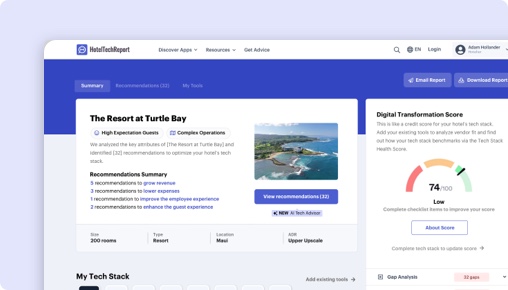
عذرًا، هذه الميزة متاحة فقط للفندقيين المُوثَّقين
لوحة تحكم المشاريع أداة مجانية متاحة فقط للفندقيين المُوثَّقين، وهي تسهّل تبنّي التقنيات الجديدة عبر تبسيط أبحاثهم وتنظيم سير التواصل لديهم.

Demand Calendar vs. happyhotel:
أيهما الأنسب لك؟


ملخص سريع
قمنا بتحليل 222 مراجعة موثقة من الفندقيين، وقارنّا مجموعات الميزات والأسعار ودراسات الحالة الواقعية لتوضيح أين تتفوق كل منصة. يعتمد الاختيار الصحيح على نوع فندقك وأولوياتك:
Demand Calendar AB يبرز بميزات حصرية مثل تقرير Market Insights.
happyhotel يتميّز في الدعم، والتوجيه، والتنفيذ — خاصةً لمنشآت وسط المدينة (4.9/5)، مع ميزات حصرية مثل إدارة إيرادات مؤتمتة بالكامل وتصميم سهل الاستخدام للجوال.
كيف يُقارن Demand Calendar بـ happyhotel؟
تقييمات جنبًا إلى جنب بناءً على 222 مراجعة موثقة من الفندقيين على HTR.
| HTScore |
|
|
| احتمالية التوصية |
|
|
| سهولة الاستخدام |
|
|
| دعم العملاء |
|
|
| القيمة مقابل السعر |
|
|
| السعر المبدئي | من $600/شهر | من $500/شهر |
| مراجعات موثقة | 7 | 215 |
ما هي إيجابيات وسلبيات Demand Calendar مقابل happyhotel؟
بعد تحليل 222 مراجعة موثقة، يقدّر مستخدمو Demand Calendar AB بشكل أكبر ، بينما يبرز مستخدمو happyhotel الدعم، والتوجيه، والتنفيذ, التقارير، لوحات المعلومات، والتحليلات, تأثير الإيرادات وتوفير الوقت. انقر على أي موضوع لمعرفة ما يقوله المراجعون.
|
Demand Calendar AB
|
happyhotel
|
|---|---|
| الإيجابيات | |
|
+
الدعم، والتوجيه، والتنفيذ
▾
|
|
|
+
التقارير، لوحات المعلومات، والتحليلات
▾
|
|
|
+
تأثير الإيرادات وتوفير الوقت
▾
|
|
|
+
التحكم الآلي / التسعير الآلي
▾
|
|
| السلبيات | |
Demand Calendar AB مقابل happyhotel: التصنيفات حسب شريحة الفنادق
كيف يُصنّف كل منتج بين مزوّدي أنظمة إدارة الإيرادات لأحجام الفنادق وأنواعها ومناطقها المختلفة — بناءً على مراجعات موثقة من الفندقيين في كل شريحة.
حسب حجم الفندق
| الشريحة |
Demand Calendar AB
|
happyhotel
|
|---|---|---|
| صغير (10-24 غرفة) ▾ | #39 2 مراجعة | #4 98 مراجعة |
| متوسط (25-74 غرفة) ▾ | #34 5 مراجعة | #7 83 مراجعة |
| كبير (75-199 غرفة) ▾ | — | #11 11 مراجعة |
| كبير جدًا (200+ غرفة) | — | #21 1 مراجعة |
حسب نوع الفندق
| الشريحة |
Demand Calendar AB
|
happyhotel
|
|---|---|---|
| بوتيك ▾ | #39 5 مراجعة | #10 54 مراجعة |
| فاخر ▾ | #40 2 مراجعة | #16 26 مراجعة |
| علامة تجارية / سلسلة ▾ | #37 2 مراجعة | #7 33 مراجعة |
| إقامة ممتدة ▾ | — | #7 23 مراجعة |
حسب المنطقة
| الشريحة |
Demand Calendar AB
|
happyhotel
|
|---|---|---|
| أوروبا ▾ | #29 5 مراجعة | #6 196 مراجعة |
| آسيا والمحيط الهادئ | #13 2 مراجعة | #25 1 مراجعة |
Is Demand Calendar by Demand Calendar AB or happyhotel by happyhotel Better for Hotels?
Demand Calendar and happyhotel both address revenue management challenges but diverge significantly in scope and target users. Demand Calendar functions primarily as a hotel business intelligence tool, aggregating PMS, RMS, STR, and budget data to forecast total revenue and profit across rooms, F&B, meetings, and spa. It is tailored for hotel groups seeking strategic alignment across departments. In contrast, happyhotel is a cloud-based revenue management system focused on real-time dynamic pricing automation designed for hotels of all sizes, especially small to medium properties aiming to increase revenue through algorithm-driven price optimization.
Both tools solve the core problem of revenue predictability and pricing efficiency. Demand Calendar provides a consolidated forecast platform to identify budget risks and opportunities across multiple revenue streams, aiding operational coordination. happyhotel automates pricing decisions with autopilot features, competitor benchmarking, and demand signals, reducing manual intervention and improving rate agility. Hotels that want a holistic business intelligence view with manual pricing controls may lean towards Demand Calendar, while those prioritizing automated yield management and frequent rate updates will find happyhotel a more complete revenue management solution.
Demand Calendar vs happyhotel: Which Should Your Hotel Choose?
If you operate a multi-department or multi-property hotel group that requires consolidated forecasting across rooms, F&B, meetings, and spa, Demand Calendar’s integration of PMS, RMS, and market data offers a strategic advantage by aligning revenue, sales, marketing, and operations around one forecast. This insight fits properties with complex revenue streams and organizational layers, reflected in its user base with 44% boutique hotels and 14% branded hotels, predominantly in Europe and North America.
If your hotel is a small to medium-sized property or a chain seeking automated pricing to maximize occupancy and ADR, happyhotel’s dynamic pricing algorithms, autopilot function, and real-time market benchmarking provide superior operational value. Its extensive feature set (32 unique features) and integration with 25 verified partners including top PMS systems like Opera Cloud and protel support rapid adoption and ongoing revenue optimization. Review data from 215 hoteliers, including 50 recent reviews at 4.8/5, confirms its suitability for properties ranging from boutique hotels to luxury resorts.
Data for luxury hotels and boutique hotels is robust for both products, but happyhotel has broader segment coverage and more recent reviews. Demand Calendar’s limited review count (7 total, none recent) suggests its current market presence is narrower, making happyhotel the safer choice for broader hotel segments and chains requiring automated, scalable revenue management.
Is Demand Calendar or happyhotel Easier to Use?
Demand Calendar and happyhotel share nearly identical ease of use and onboarding scores: Demand Calendar with 4.7 and 4.3, happyhotel with 4.8 and 4.7 respectively. Reviewers of Demand Calendar appreciate its time-saving dashboards and centralized data views that simplify complex revenue work, though some note a slightly cluttered layout and occasional syncing issues with PMS Suite8. happyhotel users highlight its intuitive interface, rapid onboarding, and ease of use for non-revenue management specialists, enabling quick team adoption even during staff shortages.
Both products facilitate user adoption but happyhotel’s higher onboarding rating (4.7 vs 4.3) and numerous reviews praising friendly, responsive support during setup give it a modest operational edge for properties new to revenue management systems. Demand Calendar’s fewer reviews limit confidence in broad usability claims.
Edge: Even.
Which Has Better Features: Demand Calendar or happyhotel?
happyhotel offers 32 unique features not found in Demand Calendar, including dynamic pricing, fully automated revenue management, price sensitivity modeling, “what-if” scenario analysis, guided workflows, group pricing and evaluation, and AI optimization. These features enable real-time price optimization, bulk adjustments, and multi-month forward pricing (up to 24 months), directly reducing manual workload for revenue teams and increasing pricing agility. For example, happyhotel’s automated room-type pricing and controlled algorithm customization allow hoteliers to fine-tune pricing strategies without daily manual intervention, benefiting front desk and revenue managers by ensuring rates reflect current demand and market conditions.
Demand Calendar’s 4 unique features focus on business intelligence: future market demand data, lost business data, market insights reporting, and booking pattern analysis. These support strategic decision-making by revealing market trends and revenue leakage but do not automate pricing. This suits hotels needing comprehensive revenue forecasting across departments rather than dynamic pricing automation.
The extensive feature set of happyhotel translates into operational efficiency gains through automation and detailed analytics, while Demand Calendar provides broader revenue visibility without pricing automation. Given the scale and scope difference, happyhotel’s feature advantage is decisive for hotels wanting automated, dynamic revenue management.
Edge: happyhotel.
Which Has Better Customer Support: Demand Calendar or happyhotel?
Demand Calendar scores a perfect 5.0 for customer support, while happyhotel scores 4.8. Both products have onboarding ratings close to each other (4.3 vs 4.7). Demand Calendar reviewers emphasize prompt, easy communication and rapid responses to improvement suggestions, with one reviewer noting, “If you have any suggestion for improvement or any problems it is very easy to make contact and get a response.” happyhotel users commonly praise the personal, fast, and competent support that provides individualized responses instead of boilerplate answers, with some calling it “fantastic” and “excellent.” However, a minority report slower support responses and occasional technical issues with PMS integration.
With just 7 total reviews, Demand Calendar’s support ratings rest on less evidence compared to happyhotel’s 215 reviews, including 50 recent ones. The volume and recency of happyhotel’s positive feedback provide stronger operational assurance. Both vendors appear committed to support quality, but happyhotel’s scale and consistency make its support reliability more verifiable.
Edge: Even.
Which Has More Integrations: Demand Calendar or happyhotel?
Happyhotel leads with 25 verified integration partners versus Demand Calendar’s 5. Both share three common partners: Mews, Clock, and Oracle Hospitality. Demand Calendar integrates uniquely with IDeaS and HQ Revenue, focusing on revenue systems. Happyhotel’s broader partner list includes major PMS and channel managers like RoomRaccoon, apaleo GmbH, SiteMinder, protel, Access Hospitality, and others.
For hotels relying on a wide ecosystem of PMS and distribution software, happyhotel’s larger integration portfolio facilitates smoother data exchange, real-time rate updates, and reduced manual workload for front desk and revenue teams. Demand Calendar’s integrations emphasize BI data sources, aligning with its forecasting role but limiting operational connectivity.
Edge: happyhotel.
Which Do Hoteliers Rate Higher: Demand Calendar or happyhotel?
Both products share an identical overall rating of 4.8/5. However, happyhotel’s rating is based on 215 reviews with 50 in the last six months, while Demand Calendar’s 4.8 rating comes from only 7 reviews with no recent activity. happyhotel’s stable last-6-month rating of 4.8 confirms consistency in current performance, whereas Demand Calendar’s lack of recent reviews limits confidence in its present state.
By segment, Demand Calendar’s highest ratings come from small samples in boutique hotels (4.7 from 5 reviews), luxury hotels (5.0 from 2 reviews), and city center hotels (4.7 from 5 reviews). However, these counts are low. happyhotel maintains strong ratings across multiple hotel types with substantial review counts: boutique hotels (4.8/5, 58 reviews), branded hotels (4.8/5, 36), city center hotels (4.9/5, 56), airport/conference hotels (4.8/5, 70), and luxury hotels (4.9/5, 27). happyhotel also shows high ratings in limited service, hostels, resorts, and extended stay segments, reflecting broad acceptance.
The volume, recency, and segment diversity of happyhotel’s reviews give it a more reliable rating benchmark for buyers.
Edge: Even.
How Much Do Demand Calendar and happyhotel Cost?
Demand Calendar has a base price of $600.00 with no implementation fee or trial. happyhotel’s base price is $500.00, also without implementation fees or trials. Neither product publishes monthly flat or per-room pricing, and neither offers a freemium or free trial. This fixed base price model suggests a predictable upfront investment for both, with happyhotel being slightly more affordable by $100.
Without detailed pricing tiers or published volume discounts, cost comparisons rely on base price alone, where happyhotel offers a modest price advantage.
What Type of Hotel Should Use Demand Calendar?
- Hotels that operate multiple revenue streams (rooms, F&B, meetings, spa) and need consolidated forecasting to align revenue, sales, marketing, and operations within one view.
- Boutique and branded hotel groups with complex organizational structures requiring shared total revenue forecasts.
- Properties located in Europe, North America, or the Middle East where Demand Calendar has verified presence and partner integrations.
- Teams prioritizing business intelligence over automated pricing, focusing on strategic decision-making and market insights.
- Hotels currently using Suite8 PMS or Oracle Hospitality RMS, though with some reported integration limitations.
Not ideal if:
- You require automated, dynamic pricing adjustments or real-time rate optimization.
- You operate a small to medium hotel or chain seeking easy-to-use, hands-off revenue management.
- Seamless integration with a broad range of PMS and channel management systems is critical.
- You need frequent price updates and flexible rate controls for pricing agility.
- You depend on active vendor support and regular product updates, given Demand Calendar’s limited recent review activity.
What Type of Hotel Should Use happyhotel?
- Small to medium hotels and chains seeking automated revenue management with dynamic pricing algorithms.
- Hotels that value real-time price optimization, including forward pricing up to 24 months and bulk rate adjustments.
- Properties using popular PMS platforms like Opera Cloud, protel, apaleo, and RoomRaccoon benefiting from 25 verified integrations.
- Hotels requiring strong competitor benchmarking, event and holiday demand signals, and “what-if” scenario analysis.
- Teams that want fast onboarding, personal support, and a user-friendly interface for staff without extensive revenue management expertise.
Not ideal if:
- Your hotel requires deep business intelligence integration across multiple revenue streams beyond pricing.
- You operate in regions outside happyhotel’s primary European market presence.
- Advanced multi-property workflows and special group pricing controls are mission-critical but currently limited.
- You prefer a system focused primarily on strategic forecasting rather than operational pricing automation.
Demand Calendar vs happyhotel: The Bottom Line for Hotels
Demand Calendar and happyhotel serve distinctly different revenue management needs. Demand Calendar excels as a hotel business intelligence platform that aggregates multiple data sources to forecast total revenue and profit across rooms, F&B, meetings, and spa. It supports strategic alignment across hotel departments but does not automate pricing. happyhotel delivers a comprehensive, cloud-based revenue management system with advanced automation, dynamic pricing, and extensive integrations that streamline daily rate management and optimize hotel profitability.
Choose Demand Calendar if your property operates multiple revenue streams and requires consolidated forecasting and business intelligence to guide strategic decisions. Its unique features like lost business data and market insights reporting support this need. Choose happyhotel if you prioritize automated, real-time price optimization with AI-driven algorithms, autopilot pricing, and broad PMS/channel integrations that reduce manual tasks and increase revenue agility. happyhotel’s 215 reviews, including 50 recent ones at 4.8/5, demonstrate operational reliability and satisfaction across diverse hotel segments.
For most small to medium hotels and chains seeking scalable, data-driven revenue management with ease of use and automation, happyhotel represents the stronger choice. Demand Calendar suits hotel groups with complex forecasting needs who are prepared to manage pricing separately. The decision hinges on whether your hotel’s primary need is strategic revenue intelligence or automated pricing execution.
كم تبلغ تكلفة Demand Calendar وhappyhotel؟
نادرًا ما تكون أسعار أنظمة إدارة الإيرادات واضحة ومباشرة. إليك ما نعرفه من بيانات التسعير العامة لكل مزوّد. اطلب دائمًا عرض أسعار مخصصًا لحجم فندقك.
|
Demand Calendar AB
|
happyhotel
|
|
|---|---|---|
| السعر المبدئي | من $600/شهر | من $500/شهر |
مقارنة الميزات: Demand Calendar مقابل happyhotel
هذه هي الميزات التي أعدّها كل مزوّد، منظّمة حسب مجموعة الميزات — نفس البيانات المعروضة في لوحة تحكم المزوّد. وسّع أي مجموعة لمقارنة الميزات جنبًا إلى جنب.
| الميزة |
Demand Calendar AB
|
happyhotel
|
|---|---|---|
|
▾
تحسين التسعير
|
|
|
| شرح السعر | ||
| إرشادات أعمال المؤسسة | ||
| توصيات تاريخ الإقامة البديل | ||
| توصيات الممتلكات البديلة | ||
| تحسين السعر في الوقت الفعلي | ||
| التحكم الديناميكي في التسلسل الهرمي للسعر | ||
| فتح التسعير | ||
| تدفقات العمل الموجهة | ||
| تحليل سيناريو "ماذا لو" | ||
| التسعير الديناميكي | ||
| ضع الحدود | ||
| إدارة الاستثناءات | ||
| تسعير المجموعة | ||
| إدارة القيود | ||
| إدارة عمليات البيع والإلغاء | ||
| مزيج الأعمال الأمثل | ||
| تحديد الدورات | ||
| إنتاج أنواع الغرف بشكل فردي | ||
| التعديلات المجمعة | ||
| التسعير والتنبؤ لمدة 24 شهرًا | ||
| تسعير الغرف المكونة/الافتراضية | ||
| تسعير الإقامة الممتدة | ||
| تسعير البيع الإضافي | ||
| معدل الحواجز | ||
|
▾
استخبارات السوق والتنبؤ
|
|
|
| التنبؤ الخمسي | ||
| التسعير الآجل لمدة 365 يومًا | ||
| بيانات STR | ||
| التسعير الآجل لمدة 18 شهرًا | ||
| نمذجة حساسية السعر | ||
| لوحة معلومات متعددة الخصائص | ||
| بيانات استخبارات السوق | ||
| لوحات معلومات تفاعلية قابلة للتخصيص | ||
| بيانات طلب السوق المستقبلية | ||
| منشئ التنبؤ المالي | ||
| التنبؤ بمدة الإقامة الممتدة | ||
| التنبؤ بالقناة | ||
| شرح التوقعات | ||
| بيانات المنافسين المرنة | ||
|
▾
لوحات القيادة والتقارير
|
|
|
| تقارير مخصصة | ||
| التقارير المجدولة | ||
| بيانات الأعمال المفقودة | ||
| لوحة التحليلات | ||
| لوحات معلومات تفاعلية قابلة للتخصيص | ||
| تقرير Market Insights | ||
| تحليل لاقط | ||
| تحليل نمط الحجز | ||
| بيانات الحدث | ||
| سجلات تغيير الأسعار | ||
| إخطارات وتنبيهات قابلة للتخصيص | ||
| تحليل النزوح | ||
| تسعير المجموعة وتقييمها | ||
| لوحة معلومات متعددة الخصائص | ||
| قياس فوائد النظام | ||
|
▾
أتمتة
|
|
|
| التحكم الآلي / تخصيص الخوارزمية | ||
| التسعير الآلي لنوع الغرفة | ||
| إدارة إيرادات مؤتمتة بالكامل | ||
| التسعير الديناميكي | ||
| تحسين الذكاء الاصطناعي | ||
| تحديثات الأسعار التلقائية | ||
|
▾
وظائف متعددة الخصائص
|
|
|
| ادارة المخزون | ||
| إدارة الممتلكات المتعددة | ||
| لوحة معلومات متعددة الخصائص | ||
|
▾
مجموعة الأعمال
|
|
|
| تسعير المجموعة وتقييمها | ||
| تحليل سيناريو "ماذا لو" | ||
| تحليل النزوح | ||
| توقعات المجموعة والغسيل | ||
|
▾
تكاملات
|
|
|
| افتح API | ||
| مدير القناة | ||
| ذكاء الأعمال | ||
| بيانات STR | ||
| نظام إدارة الممتلكات | ||
| المصادقة متعددة العوامل | ||
|
▾
Other
|
|
|
| تسعير المجموعة وتقييمها | ||
| تطبيق الهاتف المحمول | ||
| تقنية الانتشار الذكية | ||
| علامة واحدة على | ||
| تصميم سهل الاستخدام للجوال |
نتائج واقعية: Demand Calendar AB مقابل happyhotel حسب الهدف التجاري
قمنا بتحليل 4 دراسة حالة موثقة لمقارنة ما تحققه الفنادق فعليًا مع كل منصة عبر أربعة أهداف تجارية رئيسية.
Demand Calendar AB
لا توجد دراسة حالة منشورة لهذا الهدف بعد.
Natur- & Wellnesshotels Brunner Hof 4****S (45 rooms, luxury resort, Germany)
صغير
"Before happyhotel, we handled prices manually and tracked everything in Excel. Now we have all key metrics in one place and save a lot of time every day."
 Demand Calendar AB
لا توجد دراسة حالة منشورة لهذا الهدف بعد.
Hotel Öschberghof (127 rooms, luxury resort, Germany)
صغير
"Before we started using happyhotel, I manually entered prices into our PMS using self-made Excel sheets. We didn’t have a flexible pricing system and worked with seasonal tables, o..."

Demand Calendar AB مقابل happyhotel: الخلاصة
يحتل مرتبة أعلى في
قدرات فريدة
ما يحبه الفندقيون
الدعم هو موضوع إيجابي رئيسي: يصف المراجعون بشكل متكرر التوجيه بأنه شخصي وسريع وكفء وموجه نحو الحلول. هذا مهم لأن المنتج غالبًا ما يتبناه فرق جديدة على... الدعم هو موضوع إيجابي رئيسي: يصف المراجعون بشكل متكرر التوجيه بأنه شخصي وسريع وكفء وموجه نحو الحلول. هذا مهم لأن المنتج غالبًا ما يتبناه فرق جديدة على إدارة الإيرادات، ويُسرع التنفيذ الجيد من وقت تحقيق القيمة. الشكاوى الرئيسية هي بطء الاستجابات في بعض الحالات، الحاجة لمزيد من التدريب للإعدادات المعقدة، ورغبة في الحصول على إرشادات أفضل أثناء الانتقال أو الإعداد الفني.
يُقدّر المستخدمون بشكل متكرر لوحات المعلومات الواضحة، والرسوم البيانية القابلة للتخصيص، والوصول السريع إلى مؤشرات الأداء الرئيسية، والتوقعات، وRevPAR،... يُقدّر المستخدمون بشكل متكرر لوحات المعلومات الواضحة، والرسوم البيانية القابلة للتخصيص، والوصول السريع إلى مؤشرات الأداء الرئيسية، والتوقعات، وRevPAR، وADR، ومعدلات الإشغال، والطلبات. يُعتبر Happyhotel مفيدًا بشكل خاص لتحويل بيانات الفندق المعقدة إلى قرارات يومية قابلة للاستخدام. غالبًا ما تتضمن طلبات التحسين مرشحات أكثر مرونة، ومقارنات أعمق، وتحليل STLY أفضل، وتنقل أكثر سهولة للتقارير.
الثيمة الثابتة هي أن Happyhotel يوفر وقت الموظفين مع زيادة متوسط سعر الغرفة، نسبة الإشغال، والإيرادات الإجمالية. غالبًا ما يصف المراجعون البرنامج بأنه... الثيمة الثابتة هي أن Happyhotel يوفر وقت الموظفين مع زيادة متوسط سعر الغرفة، نسبة الإشغال، والإيرادات الإجمالية. غالبًا ما يصف المراجعون البرنامج بأنه أداة عملية للأعمال تتيح للفرق الصغيرة المنافسة بشكل أكثر فعالية والتركيز على مهام أخرى. يذكر العديد منهم مكاسب قابلة للقياس، بينما يقول مجموعة أصغر إن النتائج تعتمد على جودة الإعداد أو أن الفوائد استغرقت وقتًا لتظهر.
يحتل مرتبة أعلى في
قدرات فريدة
الأسئلة الشائعة حول Demand Calendar مقابل happyhotel
هل يمكن لـ Demand Calendar أن يحل محل happyhotel؟
يعتمد ذلك على متطلباتك. يشترك Demand Calendar وhappyhotel في العديد من ميزات Revenue Management Systems الأساسية، لكن لكل منهما قدرات فريدة. يقدم Demand Calendar عدد 5 شريك تكامل موثق، بينما يقدم happyhotel عدد 25. راجع مقارنة الميزات أعلاه لمعرفة أين يختلفان قبل التبديل.
أيهما أفضل للفنادق الصغيرة أو المستقلة؟
يجب أن تعطي الفنادق الصغيرة الأولوية لسهولة الاستخدام وسرعة الإعداد. يتصدر happyhotel في سهولة الاستخدام بتقييم 4.8/5 مقابل 4.7/5. ابحث عن تسعير شفاف وخيار تجربة أو عرض توضيحي. قم بتصفية المراجعات في صفحة كل منتج حسب حجم الفندق للاستماع إلى فنادق مثل فندقك.
هل يقدم Demand Calendar أو happyhotel خطة مجانية؟
Demand Calendar: لا. happyhotel: لا. لا يقدم أي من المنتجين حاليًا طبقة مجانية. يقدم معظم مزوّدي Revenue Management Systems عروضًا توضيحية أو تجارب — اطلب واحدة من كل منهما للتقييم قبل الالتزام.
كيف يقيّم HTR ويصنّف Demand Calendar وhappyhotel؟
HT Score هو تصنيف مركّب يأخذ في الاعتبار 4 مجموعات معايير وأكثر من عشرة متغيرات لمساعدة الفندقيين على مقارنة منتجات تكنولوجيا الفنادق بموضوعية. Demand Calendar AB حصل على HT Score بقيمة 0 وhappyhotel حصل على 95. إليك كيفية حساب النتيجة.
| مجموعة المعايير | الوزن | ما الذي يقيسه |
|---|---|---|
| تقييمات ومراجعات العملاء |
|
ما مدى توصية المستخدمين بهذا المنتج؟ درجة التقييمات، حجم المراجعات، حصة الصوت، عمق المراجعة، حداثة المراجعة، قصص النجاح ▾ العامل الأكثر وزنًا. يحلل متوسط تقييمات الرضا (احتمالية التوصية، سهولة الاستخدام، الدعم، العائد على الاستثمار)، إجمالي عدد المراجعات مقارنة بنظراء الفئة، حداثة المراجعات (20 مراجعة على الأقل في الأشهر الستة الماضية)، وحصة الصوت عبر عملاء الفنادق الفريدين لاكتشاف تحيز الاختيار. |
| منظومة الشركاء |
|
ما مدى توصية شركاء التكنولوجيا بهذه الشركة؟ توصيات الشركاء، كمية التكاملات، جودة التكاملات ▾ يقيّم توصيات الشركاء كأصوات ثقة من الخبراء، وعدد التكاملات الموثقة، وجودة المنظومة — متوسط درجات HT Score لشركاء التكامل. المنتجات ذات منظومات التكامل عالية الجودة أكثر احتمالًا لتقديم حزمة تقنية متصلة. |
| التمحور حول العميل |
|
ما مدى تمحور هذه المنظمة حول العميل؟ دعم معتمد، اتساق المراجعات، اكتمال الملف التعريفي ▾ يقيّم ما إذا كانت الشركة قد حصلت على شهادة دعم العملاء من HTR، وتحافظ على جمع مراجعات متسق بمرور الوقت (مؤشر على ثقافة مدفوعة بالملاحظات)، وتحافظ على اكتمال ملفات المنتجات بالقدرات ولقطات الشاشة والتسعير والميزات. |
| الانتشار والاستمرارية والموارد |
|
ما مدى انتشار هذه الشركة ومواردها؟ الانتشار الجغرافي، الاستمرارية، موارد الشركة، درجة الاتجاه ▾ يقيس التواجد العالمي (الدول والمناطق المخدومة)، سنوات العمل كمؤشر للاستقرار، عدد الفريق كمؤشر للموارد، ودرجة الاتجاه بناءً على استفسارات المشترين والمراجعات وتوصيات الشركاء والنشاط الصحفي خلال الاثني عشر شهرًا الماضية. |
تقييمات ومراجعات العملاء هي العامل الأهم بفارق كبير في خوارزمية HT Score. لا يقبل HTR مدفوعات مقابل تصنيفات أعلى. جميع المراجعات موثقة — يمكن فقط لممارسي صناعة الفنادق ذوي الانتماءات المؤكدة تقديم التقييمات. عرض منهجية HT Score الكاملة →
ما مقارنات أنظمة إدارة الإيرادات الأخرى التي يقرأها الفندقيون؟
اكتشف المزيد من المقارنات المباشرة بناءً على مراجعات موثقة من الفندقيين.





المحتويات
احصل على تقرير محلل الذكاء الاصطناعي المجاني
توصيات مخصصة مصممة خصيصًا لفندقك


دعونا نبحث عن معلومات فندقك
هل ما زلت تدرس خياراتك المتعلقة بفئة أنظمة إدارة الإيرادات؟
بعض الأنظمة الشائعة من دليل أنظمة إدارة الإيرادات لدينا - أو دع الذكاء الاصطناعي الخاص بنا يقيّم كل نظام مقابل فندقك تحديدًا في غضون دقيقتين تقريبًا.


