

Desculpe, esta funcionalidade está disponível apenas para hoteleiros verificados
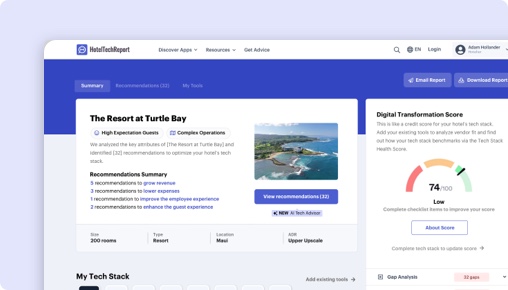
O painel de projetos é uma ferramenta gratuita disponível apenas para hoteleiros verificados, que facilita a adoção de novas tecnologias ao agilizar a pesquisa e simplificar os fluxos de comunicação.

Adara (by RateGain) vs. Demand Booster:
Qual é o Ideal para Você?
TLDR
Analisamos 23 avaliações verificadas de hoteleiros, comparamos conjuntos de funcionalidades, preços e estudos de caso reais para detalhar onde cada plataforma se destaca. A escolha certa depende do tipo de hotel e das suas prioridades:
RateGain se destaca por recursos exclusivos como Marketing de meta-busca e Conectividade de metapesquisa.
Como Adara (by RateGain) se Compara a Demand Booster?
Avaliações lado a lado baseadas em 23 avaliações verificadas de hoteleiros no HTR.
| HTScore |
|
|
| Probabilidade de Recomendar |
|
|
| Facilidade de Uso |
|
|
| Suporte ao Cliente |
|
|
| Custo-Benefício |
|
|
| Preço Inicial | Contatar vendas | A partir de $1.000/mês |
| Avaliações Verificadas | 4 | 19 |
RateGain vs RateGain: Rankings por Segmento Hoteleiro
Como cada produto se classifica entre os fornecedores de Software de gestão de metabusca para hotéis para diferentes tamanhos, tipos e regiões de hotéis — com base em avaliações verificadas de hoteleiros em cada segmento.
Por Tamanho do Hotel
| Segmento |
RateGain
|
RateGain
|
|---|---|---|
| Pequeno (10-24 quartos) | #10 2 avaliações | #8 4 avaliações |
| Médio (25-74 quartos) ▾ | #9 2 avaliações | #8 10 avaliações |
| Grande (75-199 quartos) ▾ | #10 0 avaliações | #7 5 avaliações |
| Extra Grande (200+ quartos) | #10 0 avaliações | #9 0 avaliações |
Por Tipo de Hotel
| Segmento |
RateGain
|
RateGain
|
|---|---|---|
| Boutique ▾ | #10 2 avaliações | #7 9 avaliações |
| Luxo ▾ | #9 2 avaliações | #7 8 avaliações |
| Rede / Cadeia ▾ | #9 2 avaliações | #8 6 avaliações |
| Estadia Prolongada | #7 1 avaliações | #5 1 avaliações |
Por Região
| Segmento |
RateGain
|
RateGain
|
|---|---|---|
| América do Norte | #19 0 avaliações | #12 0 avaliações |
| Europa ▾ | #17 0 avaliações | #8 13 avaliações |
| Ásia-Pacífico ▾ | #16 3 avaliações | #2 5 avaliações |
| Oriente Médio | #12 1 avaliações | #1 1 avaliações |
Is Adara (by RateGain) or Demand Booster Better for Hotels?
Adara and Demand Booster both help hotels optimize metasearch marketing and direct booking performance, but they serve different operational priorities. Adara excels at transforming massive travel data sets into actionable marketing insights across multiple global brands, targeting loyalty and booking behavior with precision. Demand Booster focuses on boosting direct bookings through travel intent data and a unified distribution platform that integrates OTAs, metasearch, and booking engines.
Hotels seeking deep market intelligence and cross-platform audience targeting will find Adara’s data-driven marketing capabilities valuable. In contrast, properties aiming to increase direct booking share with a more hands-on demand management solution benefit more from Demand Booster’s end-to-end distribution and retargeting features. Both solve the metasearch challenge of driving profitable direct bookings but do so from complementary angles: Adara through insight and audience reach, Demand Booster through execution and conversion.
Adara vs Demand Booster: Which Should Your Hotel Choose?
If you run a boutique or branded hotel looking for comprehensive competitive pricing intelligence and cross-device audience targeting, Adara fits the profile, especially with its access to over 450 million monthly unique travel users and 9 billion travel searches annually. This is supported by perfect 5/5 ratings from boutique and branded hotel reviewers, though the review volume is limited (2 reviews per segment). Demand Booster, with 19 reviews and strong ratings across boutique (4.9/5 from 9 reviews), branded (4.9/5 from 6 reviews), and city center hotels (4.8/5 from 13 reviews), suits operators prioritizing direct booking growth through campaign management and retargeting.
For luxury hotels, both platforms perform well, but Adara’s luxury segment ratings are just slightly higher (5/5 from 2 reviews vs. Demand Booster’s 4.8/5 from 8 reviews). Demand Booster’s higher review volume across multiple segments, including bed & breakfasts and resorts, indicates broader adoption and trust among diverse property types.
Limited recent reviews (none in the last 6 months for either) constrain confidence in how current each product’s ratings are. However, Demand Booster’s 19 total reviews provide a more stable data set than Adara’s 4. Hotels heavily focused on direct conversion and campaign agility should lean toward Demand Booster based on review volume and integrated marketing features. Adara suits hotels emphasizing market intelligence and audience insights from global travel data.
Is Adara (by RateGain) or Demand Booster Easier to Use?
Demand Booster has an ease of use rating of 4.7/5 with onboarding at 4.6/5 across 19 reviews. Reviewers specifically praise its user-friendly interface and efficient campaign management workflows. Adara scores slightly lower with a 4.5/5 ease of use and 4.5/5 onboarding rating based on just 4 reviews. Reviewers mention a need for faster system refresh rates and some language support improvements, indicating room to streamline the user experience.
Both products receive positive feedback on staff adoption, with Demand Booster users highlighting motivated and patient support during onboarding, while Adara users confirm effective integration with PMS and channel managers but desire speed improvements.
Edge: Even.
Which Has Better Features: Adara (by RateGain) or Demand Booster?
Demand Booster offers six distinct features relevant to hotel metasearch management that Adara does not list: metasearch marketing, metasearch connectivity, metasearch surveillance, marketing dashboard, e-commerce consulting, and marketing dashboard (listed twice, likely emphasizing comprehensive dashboard functionality). These features enable hotels to monitor OTA parity, manage campaigns in a single interface, and receive expert consulting for optimizing online sales efforts.
Adara does not list unique features in the data provided, focusing instead on data-driven marketing and audience targeting powered by first-party travel data from over 100 global brands. This translates operationally into broader reach and precision targeting but lacks the direct campaign management tools found in Demand Booster.
The absence of shared features suggests different architectural focuses: Adara on data insights, Demand Booster on actionable marketing execution. For front desk and revenue teams, Demand Booster’s marketing dashboard and parity surveillance simplify daily rate checks and campaign adjustments, while Adara’s strength lies in informing strategic marketing decisions with rich data sets.
Edge: Demand Booster.
Which Has Better Customer Support: Adara (by RateGain) or Demand Booster?
Customer support ratings are 5/5 for Adara (4 reviews) and 4.9/5 for Demand Booster (19 reviews), with onboarding scores of 4.5/5 and 4.6/5 respectively. Both platforms receive praise for responsive and professional support.
Demand Booster reviewers highlight "super fast and friendly support," consistent availability, and proactive consultation that extends beyond campaign management. One user credits Demand Booster’s support for a 30% increase in direct bookings without increased marketing spend.
Adara users appreciate a committed support team that resolves issues promptly and helps ensure smooth booking integration but mention language support as an area to expand.
Given the larger sample size and consistent high marks for Demand Booster’s support responsiveness and consultation, both provide excellent support, but Demand Booster’s volume of positive feedback is more robust.
Edge: Even.
Which Has More Integrations: Adara (by RateGain) or Demand Booster?
Both products list 96 verified partner integrations with identical common partners including Hospitality Software Development Services (HSDS), RoomRaccoon, Profitroom, Mirai, BookLogic, Fairmas, VISIT, HOTELTIME, and apaleo GmbH. This parity means hotels can expect equal compatibility with major PMS, channel managers, and booking engines from either solution.
Demand Booster’s marketing claims reach to over 140 connected booking engines, which appears higher than Adara’s stated partners but the verified integration counts are the same. This may reflect differences in marketing partner counts versus verified technical integrations.
For hotels requiring broad connectivity to OTAs, metasearch, and channel managers, both products offer sufficient integration depth. Demand Booster’s unified distribution capability to OTAs, Meta platforms, and IBEs in under two minutes is operationally significant for rapid campaign adjustments.
Edge: Even.
Which Do Hoteliers Rate Higher: Adara (by RateGain) or Demand Booster?
Adara holds a slight overall rating edge at 4.9/5 (4 reviews) compared to Demand Booster’s 4.8/5 (19 reviews). The difference is marginal and review counts limit confidence for Adara.
Segment ratings reveal Adara scores perfect 5/5 in boutique, branded, luxury, resorts, and extended stay segments, though each from only 1-2 reviews. Demand Booster demonstrates high ratings from a larger sample across boutique (4.9/5, 9 reviews), branded (4.9/5, 6 reviews), city center (4.8/5, 13 reviews), luxury (4.8/5, 8 reviews), and bed & breakfast (4.7/5, 6 reviews).
No reviews have been posted in the last six months for either product, which means the current ratings reflect older versions. Demand Booster’s broader and more recent review base makes its 4.8 rating more representative of ongoing customer satisfaction.
Edge: Even.
How Much Do Adara (by RateGain) and Demand Booster Cost?
Adara does not publish pricing publicly. Demand Booster has a base price of $1,000 but no monthly flat fee or per-room pricing. Neither offers a trial period.
Demand Booster’s pricing model includes a "pay on the stay" commission option, which aligns costs directly to bookings and reduces upfront risk, an advantage for hotels wary of fixed fees. Adara’s pricing transparency is limited, which complicates cost comparisons.
For hotels prioritizing predictable budgeting and performance-based fees, Demand Booster’s model is clearer and potentially more cost-effective, especially for smaller properties.
What Type of Hotel Should Use Adara (by RateGain)?
- Hotels that need to leverage broad, cross-platform travel data to inform competitive pricing and marketing strategies.
- Teams focused on global brand awareness and audience targeting across multiple devices and channels.
- Properties with established marketing departments capable of interpreting complex data insights.
- City center and luxury hotels that value access to insights from over 100 global travel brands.
- Hotels aiming to complement existing channel management with advanced market intelligence.
Not ideal if...
- Your hotel requires direct campaign management and rapid distribution across multiple booking platforms.
- You need more frequent system refreshes or local language support, as some users cite these as limitations.
- You prefer transparent, consumption-based pricing models.
What Type of Hotel Should Use Demand Booster?
- Hotels with a focus on increasing direct bookings through targeted metasearch and unified distribution.
- Properties seeking a single system to manage campaigns across OTAs, metasearch, and booking engines in under two minutes.
- Teams that want parity and demand intelligence tools to monitor competitor pricing and optimize rate strategies.
- Hotels valuing responsive, consultative customer support with proven ROI like 30%+ direct booking increases.
- Boutique, branded, and city center hotels with diverse guest profiles and need for agile marketing campaigns.
Not ideal if...
- Your property primarily requires market intelligence and broad audience insights rather than campaign execution.
- You prefer solutions with publicly published pricing that includes freemium or flat monthly rates.
- You operate in segments with minimal review representation for Demand Booster, such as extended stay.
Adara (by RateGain) vs Demand Booster: The Bottom Line for Hotels
Adara and Demand Booster address hotel metasearch marketing from different but complementary angles. Adara’s strength lies in its vast proprietary travel data and audience targeting capabilities, offering hotels deep intelligence to shape pricing and marketing strategies. Demand Booster emphasizes direct booking growth through unified distribution, campaign management, and parity monitoring, backed by a larger base of hotel reviews and demonstrated ROI.
Choose Adara if your property prioritizes competitive pricing insights, global travel data access, and audience engagement through sophisticated data-driven marketing. Its perfect segment ratings in boutique and luxury hotels reflect its fit for hotels with mature marketing functions.
Choose Demand Booster if your hotel seeks a hands-on, operational tool that integrates campaign management across OTAs, metasearch, and booking engines quickly, with a transparent pricing model and strong customer support. Its broad adoption and positive feedback across segments support its role in driving direct booking performance.
The data supports a clear distinction: Adara is the platform for insight and reach; Demand Booster is the platform for execution and conversion. Your choice should align with whether your team wants to leverage data-driven marketing intelligence or boost direct revenue with integrated campaign tools.
Quanto Custam Adara (by RateGain) e Demand Booster?
Os preços de Software de gestão de metabusca para hotéis raramente são simples. Aqui está o que sabemos com base nos dados públicos de preços de cada fornecedor. Sempre solicite uma cotação personalizada para o tamanho do seu hotel.
|
RateGain
|
RateGain
|
|
|---|---|---|
| Preço Inicial | — | A partir de $1.000/mês |
Comparação de funcionalidades: Adara (by RateGain) vs Demand Booster
Estas são as funcionalidades que cada fornecedor configurou, organizadas por grupo de funcionalidades — os mesmos dados mostrados no painel do fornecedor. Expanda um grupo para comparar as funcionalidades lado a lado.
| Recurso |
RateGain
|
RateGain
|
|---|---|---|
|
▾
Serviços
|
|
|
| Consultoria em e-commerce | ||
| Vigilância de Metapesquisa | ||
| Conectividade de metapesquisa | ||
| Marketing de meta-busca | ||
|
▾
Relatórios e análises
|
|
|
| Painel de marketing |
Resultados Reais: RateGain vs RateGain por Objetivo de Negócio
Analisamos 1 estudos de caso verificados para comparar o que os hotéis realmente alcançam com cada plataforma em quatro objetivos de negócio principais.
RateGain
Nenhum estudo de caso publicado para este objetivo ainda.
Safir Hotels & Resorts
Médio
"The partnership with RateGain has been transformative for Safir Hotels & Resorts, yielding 4x growth in our revenue."

RateGain vs RateGain: Conclusão Final
Melhor classificado em
Capacidades exclusivas
Perguntas Frequentes Sobre Adara (by RateGain) vs Demand Booster
Adara (by RateGain) pode substituir Demand Booster?
Depende dos seus requisitos. Adara (by RateGain) e Demand Booster compartilham muitas funcionalidades principais de Hotel Metasearch Management Software, mas cada um tem capacidades únicas. Adara (by RateGain) oferece 96 parceiros de integração verificados, enquanto Demand Booster oferece 96. Revise a comparação de funcionalidades acima para ver onde eles diferem antes de migrar.
Qual é melhor para hotéis pequenos ou independentes?
Hotéis pequenos devem priorizar facilidade de uso e onboarding rápido. Demand Booster lidera em facilidade de uso com 4,7/5 vs 4,5/5. Procure preços transparentes e opção de teste ou demonstração. Filtre as avaliações na página de cada produto por tamanho de hotel para ouvir hotéis como o seu.
Adara (by RateGain) ou Demand Booster oferecem um plano gratuito?
Adara (by RateGain): Não. Demand Booster: Não. Nenhum dos produtos oferece um plano gratuito atualmente. A maioria dos fornecedores de Hotel Metasearch Management Software oferece demonstrações ou períodos de teste — solicite um de cada para avaliar antes de se comprometer.
Como o HTR Avalia e Classifica Adara (by RateGain) e Demand Booster?
O HT Score é um ranking composto que considera 4 grupos de critérios e mais de uma dúzia de variáveis para ajudar hoteleiros a comparar objetivamente produtos de tecnologia hoteleira. RateGain tem um HT Score de 0 e RateGain tem 0. Veja como a pontuação é calculada.
| Grupo de Critérios | Peso | O Que Mede |
|---|---|---|
| Avaliações e Reviews de Clientes |
|
O quanto os usuários recomendam este produto? Pontuação de Avaliações, Volume de Reviews, Participação de Voz, Profundidade das Reviews, Recência das Reviews, Casos de Sucesso ▾ O fator com maior peso. Analisa as avaliações médias de satisfação (probabilidade de recomendar, facilidade de uso, suporte, ROI), contagem total de reviews em relação aos pares da categoria, recência das reviews (pelo menos 20 reviews nos últimos 6 meses) e participação de voz entre clientes hoteleiros únicos para detectar viés de seleção. |
| Ecossistema de Parceiros |
|
O quanto os parceiros de tecnologia recomendam esta empresa? Recomendações de Parceiros, Quantidade de Integrações, Qualidade das Integrações ▾ Avalia recomendações de parceiros como votos de confiança de especialistas, o número de integrações verificadas e a qualidade do ecossistema — a média dos HT Scores dos parceiros de integração. Produtos com ecossistemas de integração de maior qualidade têm mais chances de entregar uma stack tecnológica conectada. |
| Foco no Cliente |
|
Qual o nível de foco no cliente desta organização? Suporte Certificado, Consistência de Reviews, Completude do Perfil ▾ Avalia se a empresa obteve a certificação HTR Customer Support, mantém coleta consistente de reviews ao longo do tempo (um indicador de cultura orientada por feedback) e mantém perfis de produtos completos com capacidades, capturas de tela, preços e funcionalidades. |
| Alcance, Solidez e Recursos |
|
Qual a extensão do alcance e dos recursos desta empresa? Alcance Geográfico, Solidez, Recursos da Empresa, Pontuação de Tendência ▾ Mede a presença global (países e regiões atendidos), anos de operação como indicador de estabilidade, tamanho da equipe como indicador de recursos e uma pontuação de tendência baseada em consultas de compradores, reviews, recomendações de parceiros e atividade na imprensa dos últimos doze meses. |
As avaliações e reviews de clientes são, de longe, o fator mais importante no algoritmo do HT Score. O HTR não aceita pagamento por rankings mais altos. Todas as reviews são verificadas — apenas profissionais do setor hoteleiro com afiliações confirmadas podem enviar avaliações. Ver metodologia completa do HT Score →
Que Outras Comparações de Software de gestão de metabusca para hotéis os Hoteleiros Estão Lendo?
Explore mais comparações diretas baseadas em avaliações verificadas de hoteleiros.






Sumário
Obtenha seu relatório gratuito de análise de IA
Recomendações personalizadas para o seu hotel.


Vamos pesquisar as informações do seu hotel
Ainda está avaliando suas opções de software de gestão de metabusca para hotéis?
Alguns sistemas populares do nosso guia sobre software de gestão de metabusca para hotéis — ou deixe nossa IA avaliar cada um deles para o seu hotel em cerca de dois minutos.


