

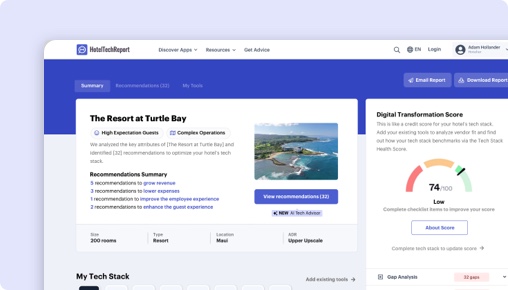
Spiacenti, questa funzionalità è disponibile solo per gli albergatori verificati
La dashboard dei progetti è uno strumento gratuito disponibile solo per gli albergatori verificati, che semplifica l'adozione di nuove tecnologie snellendo la ricerca e i flussi di comunicazione.

DayPass vs. Duve Upselling:
Qual è Quello Giusto per Te?


TLDR
Abbiamo analizzato 341 recensioni verificate di albergatori, confrontato funzionalità, prezzi e casi studio reali per evidenziare dove ciascuna piattaforma eccelle. La scelta giusta dipende dal tipo di hotel e dalle tue priorità:
DayPass eccelle in customer support and onboarding , con funzionalità esclusive come Gift Vouchers & Prepaid Experiences and Exception, Refund & Override Handling.
Duve eccelle in ease of use and ROI — soprattutto nel segmento brand (0.0/5) , con funzionalità esclusive come Mobile Friendly and SMS text messaging.
Come si Confronta DayPass con Duve Upselling?
Valutazioni fianco a fianco basate su 341 recensioni verificate di albergatori su HTR.
| HTScore |
|
|
| Probabilità di Raccomandazione |
|
|
| Facilità d'Uso |
|
|
| Assistenza Clienti |
|
|
| Rapporto Qualità-Prezzo |
|
|
| Prezzo di Partenza | Da $100/mese | Da $900/mese |
| Recensioni Verificate | 1 | 340 |
Quali Sono i Pro e i Contro di DayPass vs Duve Upselling?
Dopo aver analizzato 341 recensioni verificate, gli utenti di DayPass apprezzano maggiormente , mentre gli utenti di Duve evidenziano automazione della comunicazione e della messaggistica con gli ospiti, vendita aggiuntiva e generazione di ricavi accessori, efficienza operativa e risparmio di tempo del personale. Clicca su qualsiasi tema per vedere cosa dicono i recensori.
|
DayPass
|
Duve
|
|---|---|
| Pro | |
|
+
Automazione della comunicazione e della messaggistica con gli ospiti
▾
|
|
|
+
Vendita aggiuntiva e generazione di ricavi accessori
▾
|
|
|
+
Efficienza operativa e risparmio di tempo del personale
▾
|
|
|
+
Flusso di lavoro interfunzionale e casi d'uso più ampi
▾
|
|
| Contro | |
|
−
Integrazione di sistema e sincronizzazione in tempo reale
▾
|
|
|
−
Preoccupazioni relative ai prezzi e all'accesso alle funzionalità.
▾
|
|
DayPass vs Duve: Classifiche per Segmento Alberghiero
Come si classifica ciascun prodotto tra i fornitori di Software di upselling per diverse dimensioni di struttura, tipologie di hotel e regioni — basato su recensioni verificate di albergatori in ogni segmento.
Per Dimensione Hotel
| Segmento |
DayPass
|
Duve
|
|---|---|---|
| Piccolo (10-24 camere) ▾ | — | #2 69 recensioni |
| Medio (25-74 camere) ▾ | — | #3 137 recensioni |
| Grande (75-199 camere) ▾ | #19 1 recensioni | #3 45 recensioni |
| Extra-Grande (200+ camere) ▾ | #23 0 recensioni | #3 38 recensioni |
Per Tipo di Hotel
| Segmento |
DayPass
|
Duve
|
|---|---|---|
| Boutique ▾ | — | #3 125 recensioni |
| Lusso ▾ | #24 1 recensioni | #3 131 recensioni |
| Brand / Catena ▾ | — | #3 97 recensioni |
| Soggiorno Prolungato ▾ | #24 0 recensioni | #2 45 recensioni |
Per Regione
| Segmento |
DayPass
|
Duve
|
|---|---|---|
| Nord America ▾ | — | #2 37 recensioni |
| Europa ▾ | — | #2 132 recensioni |
| Asia Pacifico ▾ | — | #6 9 recensioni |
| Medio Oriente ▾ | #14 0 recensioni | #1 107 recensioni |
The Decision
Choosing between DayPass and Duve Upselling hinges on your hotel's specific needs, budgets, and the scope of your guest engagement plans. Both products aim to boost your revenue through upselling and improve guest experiences, but they approach these goals very differently. DayPass, with its focus on leisure amenities and a narrow feature set, offers straightforward solutions. Duve, on the other hand, provides a broad, customizable platform with extensive integrations and a proven track record in diverse hotel segments.
Are you looking for a simple solution to promote leisure amenities or a comprehensive guest engagement platform that can scale across multiple services and channels?
Is DayPass or Duve Better for Hotels?
DayPass specializes in leisure and recreation experiences, focusing on amenities like pools, beaches, and F&B packages. Its core strength lies in managing availability and distribution for these specific offerings, making it ideal for hotels and resorts with significant recreational assets. However, its limited feature set—only 7 shared features and one exclusive—means it lacks the automation, personalized communication, and upselling tools found in Duve.
Duve, with a score of over 91 in recent reviews and 270 reviews overall, outshines DayPass for hotels seeking a versatile, all-in-one upselling and engagement platform. Its extensive feature suite (25 unique features) and widespread integrations position it as a more adaptable choice for a broad hotel portfolio. Given the more recent reviews, Duve's support and user satisfaction are clearly superior.
The key question: Does your hotel need a specialized leisure-focused tool or an adaptable platform that supports broader guest interaction and revenue channels?
Duve vs DayPass: Which Should Your Hotel Choose?
If your hotel needs a straightforward solution for promoting leisure amenities and managing their availability, DayPass could be sufficient—especially if you're heavily invested in pools, beaches, and F&B. Its lower price point ($100/month) and simple setup make it appealing for properties with limited budgets or those primarily focusing on recreational revenue.
However, if your hotel aims to maximize ancillary revenue through personalized upselling, multi-channel communication, and automation, Duve should be your choice. Its comprehensive feature set—including guest messaging, pre-arrival communication, automated upsells, and integrations with numerous PMS and third-party services—makes it suitable for hotels of all sizes, especially those with complex guest engagement strategies. The higher price ($900/month) reflects its extensive capabilities and proven ROI, which is backed by large-scale case studies and positive reviews.
In summary, go with DayPass if you only need to promote leisure amenities and keep costs low. Opt for Duve if you want a full-scale upselling engine that can grow with your hotel and dramatically increase revenue.
Is DayPass or Duve Easier to Use?
DayPass boasts a solid ease-of-use rating (4/5) and a straightforward onboarding process, making it suitable for teams with limited technical resources. Its limited feature set minimizes complexity, allowing hotel staff to quickly adopt and manage leisure packages without extensive training.
Duve, with a 4.7/5 ease rating and over 270 reviews, impresses with its intuitive interface and user-friendly design. Its onboarding process is smooth, and support is highly regarded, although the platform’s depth may initially require some training for staff unfamiliar with advanced guest engagement tools.
Edge: Duve.
Which Has Better Features: DayPass or Duve?
DayPass offers only 7 shared features plus 1 exclusive feature: gift vouchers and prepaid experiences, tailored mainly for leisure amenities. Its feature set is streamlined, focusing on managing and distributing leisure packages without automation or personalization tools.
Duve, with 25 features, delivers a comprehensive suite: guest messaging, automated replies, SMS, analytics dashboards, guest profiles, guest app, upselling, segmentation, post-stay offers, and much more. Its advanced tools enable personalized communication, cross-channel marketing, and seamless integrations that DayPass cannot match.
Edge: Duve.
Which Has Better Customer Support: DayPass or Duve?
DayPass supports are rated 5/5 based on the single review available, emphasizing their proactive and responsive assistance. The review highlights their responsiveness and transparency, suggesting reliable support despite limited user feedback.
Duve, with a 4.63/5 support rating backed by 270 reviews, consistently receives praise for its dedicated support team and onboarding process. Users mention their quick responses, helpfulness, and the platform’s ongoing assistance, despite some reports of setup complexity.
Edge: Duve.
Which Has More Integrations: DayPass or Duve?
DayPass integrates with 2 verified partners, including Oracle Hospitality—an essential integration for many hotels. Its limited number of integrations restricts its ability to connect with other PMS or operational systems.
Duve, with 65 verified partners, offers a vast array of integrations including PMS systems like Mews, WebRezPro, and RoomRaccoon, along with third-party services such as payment providers and channel managers. Its open API and extensive partner network support complex hotel tech stacks.
Edge: Duve.
Which Do Hoteliers Rate Higher: DayPass or Duve?
Duve has a significantly higher overall rating (4.79/5) based on 252 recent reviews, with positive comments emphasizing its automation, support, and ability to increase revenue. Hotels of various sizes and segments praise its customization and guest engagement capabilities.
DayPass, with a single review rated 5/5, provides positive feedback but lacks the breadth of user data to establish a consistent satisfaction level. Its focus on leisure amenities appeals mainly to resorts and recreational hotels.
Edge: Duve.
How Much Do DayPass and Duve Cost?
DayPass’s pricing is straightforward at $100 per month, with no free trial or implementation fees. Its affordable price makes it accessible for smaller hotels or those starting their upselling journey.
Duve charges $900 per month, with no free trial, reflecting its broader feature set and enterprise-level capabilities. This higher investment is justified by its extensive automation, integrations, and demonstrated ROI across large hotel chains.
What Type of Hotel Should Use DayPass?
- Hotels with a primary focus on leisure amenities like pools, beaches, and F&B packages.
- Resorts and destination hotels with extensive recreational facilities.
- Hotels seeking a simple, low-cost platform to promote specific amenities.
- Small to medium-sized properties with limited budgets.
- Teams that prefer straightforward tools without complex automation.
Not ideal if:
- You need comprehensive guest engagement beyond leisure.
- Your property requires automation or personalized upselling.
- You plan to scale rapidly or diversify revenue streams.
What Type of Hotel Should Use Duve?
- Large hotels, chains, or portfolios seeking extensive automation.
- Properties that want to personalize guest communication at every touchpoint.
- Hotels aiming to increase ancillary revenue through targeted upselling.
- Properties requiring deep integrations with existing PMS and third-party systems.
- Hotels interested in sophisticated analytics and guest profiling.
Not ideal if:
- You operate a small hotel with minimal need for automation.
- Your budget is limited and you only want to promote leisure amenities.
- You prefer simple, out-of-the-box solutions without extensive setup.
Duve vs DayPass: The Bottom Line for Hotels
At its core, DayPass offers a niche, leisure-focused solution that’s ideal for resorts and properties prioritizing recreational packages. Its limited scope and lower price point make it suitable for hotels just starting to explore ancillary revenue streams.
Duve, with its comprehensive suite of over 25 features, extensive integrations, and high recent review scores, is the clear choice for hotels aiming to elevate their guest experience and maximize revenue. Its proven ROI, support, and flexibility benefit large and mid-sized properties looking to scale.
Choose DayPass if your hotel primarily wants to promote leisure amenities without a hefty investment. If you’re ready to implement a robust, customizable upselling platform that integrates with your existing systems and can grow with your property, Duve is the superior option.
Quanto Costano DayPass e Duve Upselling?
I prezzi di Software di upselling raramente sono semplici. Ecco cosa sappiamo dai dati pubblici sui prezzi di ciascun fornitore. Richiedi sempre un preventivo personalizzato per la dimensione della tua struttura.
|
DayPass
|
Duve
|
|
|---|---|---|
| Prezzo di Partenza | Da $100/mese | Da $900/mese |
Confronto delle funzionalità: DayPass vs Duve Upselling
Queste sono le funzionalità configurate da ciascun fornitore, organizzate per gruppo di funzionalità — gli stessi dati mostrati nella dashboard del fornitore. Espandi un gruppo per confrontare le funzionalità affiancate.
| Funzionalità |
DayPass
|
Duve
|
|---|---|---|
|
▾
Offerta di consegna
|
|
|
| Gestione dell'offerta (Prenotazione → Prima dell'arrivo → Arrivo → Durante il soggiorno → Dopo il soggiorno) | ||
| Distribuzione multicanale (email, SMS, WhatsApp, chat) | ||
| Segmentazione e targeting degli ospiti | ||
| Acquisizione digitale di accettazione e pagamento | ||
| Assistenza per il check-in e per le vendite aggiuntive in loco | ||
| Offerte post-soggiorno e per soggiorni futuri | ||
|
▾
Offerte e merchandising
|
|
|
| Libreria di modelli di offerta | ||
| Prezzi di aggiornamento dinamici | ||
| Merchandising per l'upgrade della camera | ||
| Merchandising di prodotti accessori | ||
| Buoni regalo ed esperienze prepagate | ||
| Segmentazione | ||
|
▾
Operazioni e gestione degli ordini
|
|
|
| Certificazione SOC 2 di tipo 2 (Sicurezza dei dati) | ||
| Instradamento automatizzato delle attività di evasione degli ordini | ||
| Distribuzione multicanale (email, SMS, WhatsApp, chat) | ||
| Buoni regalo ed esperienze prepagate | ||
| Controlli di inventario e idoneità | ||
| Flusso di lavoro per l'aggiornamento di prenotazioni e conti | ||
| Visibilità dell'adempimento da parte del personale e dei reparti | ||
| Gestione di eccezioni, rimborsi e deroghe | ||
|
▾
Prestazioni e controllo
|
|
|
| Segmentazione | ||
| Certificazione SOC 2 di tipo 2 (Sicurezza dei dati) | ||
| Controlli di soppressione e approvazione delle offerte | ||
| Reportistica sulle prestazioni e analisi delle offerte | ||
| Pannello di controllo multi-proprietà/catena | ||
| Offrire possibilità di sperimentazione e test A/B. | ||
| Analisi delle prestazioni dell'offerta |
Risultati Reali: DayPass vs Duve per Obiettivo di Business
Abbiamo analizzato 8 casi studio verificati per confrontare cosa gli hotel ottengono realmente con ciascuna piattaforma su quattro obiettivi di business chiave.
DayPass
Nessun caso studio ancora pubblicato per questo obiettivo.
סטאי תל אביב - The Setai, Tel Aviv
Grande
"Duve was a game changer for our customer service. I knew the platform would help us connect with guests but I was amazed at how cleverly simple it all is, even guests who are not v..."
 DayPass
Nessun caso studio ancora pubblicato per questo obiettivo.
Brown Hotels
Grande
"While scaling up and growing in terms of more hotel rooms and more hotels in different countries we found it difficult to communicate with our guests in a very personal way. Duve f..."
DayPass vs Duve: Il Verdetto Finale
Funzionalità uniche
Cosa amano gli albergatori
Gli utenti sottolineano soprattutto la capacità di DUVE di centralizzare la comunicazione prima dell'arrivo, durante il soggiorno e dopo il soggiorno,... Gli utenti sottolineano soprattutto la capacità di DUVE di centralizzare la comunicazione prima dell'arrivo, durante il soggiorno e dopo il soggiorno, attraverso canali come e-mail, WhatsApp, chat e messaggi automatici. Secondo le recensioni, questo riduce i follow-up manuali, mantiene i team organizzati e aiuta gli hotel a rispondere al momento giusto senza che l'esperienza risulti invadente.
Un tema centrale è la capacità di DUVE di generare entrate aggiuntive attraverso upsell mirati, upgrade e offerte extra. Gli utenti, in particolare, c... Un tema centrale è la capacità di DUVE di generare entrate aggiuntive attraverso upsell mirati, upgrade e offerte extra. Gli utenti, in particolare, collegano la piattaforma a tassi di conversione più elevati, a una migliore monetizzazione delle camere invendute e a nuove opportunità di entrate accessorie, anche da clienti non residenti nella struttura.
Un altro vantaggio frequente è che DUVE contribuisce a ridurre il lavoro manuale per il personale della reception e delle operazioni, centralizzando l... Un altro vantaggio frequente è che DUVE contribuisce a ridurre il lavoro manuale per il personale della reception e delle operazioni, centralizzando le richieste e automatizzando le attività di routine. Gli utenti affermano che rende l'erogazione del servizio più efficiente, fa risparmiare tempo durante il check-in e nei periodi di maggiore affluenza e aiuta il personale a tenere sotto controllo le esigenze degli ospiti.
Dove gli albergatori sollevano obiezioni
Diverse recensioni sottolineano l'importanza di una buona integrazione di DUVE con i sistemi PMS e altri sistemi alberghieri, in modo che offerte, ric... Diverse recensioni sottolineano l'importanza di una buona integrazione di DUVE con i sistemi PMS e altri sistemi alberghieri, in modo che offerte, richieste e dati degli ospiti rimangano sincronizzati. Mentre alcuni lodano le connessioni esistenti, altri auspicano un'integrazione più profonda, meno problemi di connessione e più widget integrati, in modo che gli ospiti non debbano ricorrere a link esterni.
Il principale aspetto negativo riguarda i prezzi, soprattutto per le strutture più piccole e per i clienti abituali. Un utente ha segnalato che una nu... Il principale aspetto negativo riguarda i prezzi, soprattutto per le strutture più piccole e per i clienti abituali. Un utente ha segnalato che una nuova funzionalità basata sull'intelligenza artificiale ha comportato un notevole aumento mensile, ritenuto sproporzionato, sollevando dubbi sul riconoscimento dei clienti fedeli e sulla convenienza di DUVE per gli hotel con un budget limitato.
Classificato più in alto per
Funzionalità uniche
Dove le valutazioni divergono di più
Domande Frequenti su DayPass vs Duve Upselling
DayPass può sostituire Duve Upselling?
Dipende dalle tue esigenze. DayPass e Duve Upselling condividono molte funzionalità di base di Upselling Software, ma ciascuno ha capacità uniche. DayPass offre 2 partner di integrazione verificati, mentre Duve Upselling ne offre 70. Consulta il confronto delle funzionalità sopra per vedere dove differiscono prima di cambiare.
Qual è migliore per hotel piccoli o indipendenti?
Gli hotel piccoli dovrebbero dare priorità alla facilità d'uso e a un onboarding rapido. Duve Upselling è in testa per facilità d'uso con 4.7/5 vs 4.0/5. Cerca prezzi trasparenti e un'opzione di prova o demo. Filtra le recensioni su ogni pagina prodotto per dimensione della struttura per sentire le opinioni di hotel simili al tuo.
DayPass o Duve Upselling offrono un piano gratuito?
DayPass: No. Duve Upselling: No. Nessuno dei due prodotti offre attualmente un livello gratuito. La maggior parte dei fornitori di Upselling Software offre demo o prove gratuite — richiedine una a ciascuno per valutare prima di impegnarti.
Come Valuta e Classifica HTR DayPass e Duve Upselling?
L'HT Score è una classifica composita che considera 4 gruppi di criteri e oltre una dozzina di variabili per aiutare gli albergatori a confrontare oggettivamente i prodotti tecnologici per hotel. DayPass ha un HT Score di 0 e Duve ha 97. Ecco come viene calcolato il punteggio.
| Gruppo di Criteri | Peso | Cosa Misura |
|---|---|---|
| Valutazioni e Recensioni dei Clienti |
|
Quanto raccomandano gli utenti questo prodotto? Punteggio Valutazioni, Volume Recensioni, Quota di Voce, Profondità Recensioni, Recenza Recensioni, Storie di Successo ▾ Il fattore con il peso maggiore. Analizza le valutazioni medie di soddisfazione (probabilità di raccomandazione, facilità d'uso, assistenza, ROI), il numero totale di recensioni rispetto ai concorrenti nella categoria, la recenza delle recensioni (almeno 20 recensioni negli ultimi 6 mesi) e la quota di voce tra clienti hotel unici per rilevare bias di selezione. |
| Ecosistema dei Partner |
|
Quanto raccomandano i partner tecnologici questa azienda? Raccomandazioni dei Partner, Quantità Integrazioni, Qualità Integrazioni ▾ Valuta le raccomandazioni dei partner come voti di fiducia degli esperti, il numero di integrazioni verificate e la qualità dell'ecosistema — la media degli HT Score dei partner di integrazione. I prodotti con ecosistemi di integrazione di qualità superiore hanno maggiori probabilità di offrire uno stack tecnologico connesso. |
| Centralità del Cliente |
|
Quanto è orientata al cliente questa organizzazione? Assistenza Certificata, Coerenza delle Recensioni, Completezza del Profilo ▾ Valuta se l'azienda ha ottenuto la Certificazione di Assistenza Clienti HTR, mantiene una raccolta di recensioni costante nel tempo (un indicatore di cultura orientata al feedback) e mantiene i profili prodotto completi con funzionalità, screenshot, prezzi e caratteristiche. |
| Portata, Solidità e Risorse |
|
Quanto sono estese la portata e le risorse di questa azienda? Portata Geografica, Solidità nel Tempo, Risorse Aziendali, Punteggio di Tendenza ▾ Misura la presenza globale (paesi e regioni servite), gli anni di attività come indicatore di stabilità, il numero di dipendenti come indicatore di risorse e un punteggio di tendenza basato su richieste degli acquirenti, recensioni, raccomandazioni dei partner e attività stampa degli ultimi dodici mesi. |
Le valutazioni e le recensioni dei clienti sono di gran lunga il fattore più importante nell'algoritmo dell'HT Score. HTR non accetta pagamenti per classifiche più alte. Tutte le recensioni sono verificate — solo i professionisti del settore alberghiero con affiliazioni confermate possono inviare valutazioni. Visualizza la metodologia completa dell'HT Score →
Quali Altri Confronti di Software di upselling Stanno Leggendo gli Albergatori?
Esplora altri confronti diretti basati su recensioni verificate di albergatori.



Indice
Ottieni il tuo report gratuito di analisi AI
Consigli personalizzati su misura per la tua struttura


Cerchiamo le informazioni sul tuo hotel
Stai ancora valutando le tue opzioni di software di upselling?
Alcuni sistemi popolari dalla nostra guida su software di upselling — oppure lascia che la nostra IA valuti ciascuno di essi in base alla tua struttura in circa due minuti.


