
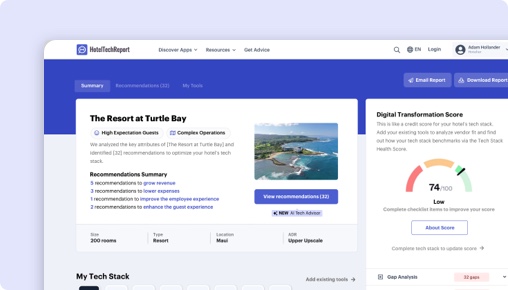
Sorry, this functionality is only available for verified hoteliers
The project dashboard is a free tool that is only available to verified hoteliers to make adopting new technology easier by streamlining their research and simplifying their communication workflow.

Selfbook Direct vs. Userguest:
¿Cuál es el adecuado para ti?


Resumen
Analizamos 58 reseñas verificadas de hoteleros, comparamos funcionalidades, precios y casos de estudio reales para desglosar dónde destaca cada plataforma. La elección correcta depende de tu tipo de propiedad y prioridades:
Selfbook destaca , con funcionalidades exclusivas como Messaging Analytics.
Userguest destaca en ease of use and customer support — especialmente para propiedades brand (4.0/5) .
¿Cómo se compara Selfbook Direct con Userguest?
Calificaciones comparadas basadas en 58 reseñas verificadas de hoteleros en HTR.
| HTScore |
|
|
| Probabilidad de recomendar |
|
|
| Facilidad de uso |
|
|
| Soporte al cliente |
|
|
| Relación calidad-precio |
|
|
| Precio inicial | Contact sales | From $200/mo |
| Reseñas verificadas | 0 | 58 |
¿Cuáles son los pros y contras de Selfbook Direct vs Userguest?
Tras analizar 58 reseñas verificadas, los usuarios de Selfbook valoran más su , mientras que los usuarios de Userguest destacan customer support, personalización y personalización, feature innovation. Haz clic en cualquier tema para ver qué dicen los evaluadores.
|
Selfbook
|
Userguest
|
|---|---|
| Pros | |
|
+
Customer Support
▾
|
|
|
+
Personalización y personalización
▾
|
|
|
+
Feature Innovation
▾
|
|
|
+
Direct Booking Conversion
▾
|
|
| Contras | |
|
−
Personalización de ventanas emergentes
▾
|
|
|
−
Desafíos de la integración
▾
|
|
Selfbook vs Userguest: Rankings por segmento hotelero
Cómo se posiciona cada producto entre los proveedores de Herramientas de reserva directa para diferentes tamaños de propiedad, tipos y regiones, basado en reseñas verificadas de hoteleros en cada segmento.
Por tamaño de hotel
| Segmento |
Selfbook
|
Userguest
|
|---|---|---|
| Pequeño (10-24 habitaciones) ▾ | — | #8 14 reseñas |
| Mediano (25-74 habitaciones) ▾ | — | #7 28 reseñas |
| Grande (75-199 habitaciones) ▾ | — | #6 9 reseñas |
| Extra grande (200+ habitaciones) | — | #6 4 reseñas |
Por tipo de propiedad
| Segmento |
Selfbook
|
Userguest
|
|---|---|---|
| Boutique ▾ | — | #7 23 reseñas |
| Lujo ▾ | — | #7 26 reseñas |
| Cadena / Marca ▾ | — | #7 17 reseñas |
| Estancia prolongada ▾ | — | #7 6 reseñas |
Por región
| Segmento |
Selfbook
|
Userguest
|
|---|---|---|
| Norteamérica | — | #9 3 reseñas |
| Europa ▾ | — | #7 30 reseñas |
| Asia Pacífico ▾ | — | #5 5 reseñas |
The Decision
Choosing between Selfbook Direct by Selfbook and Userguest by Userguest hinges on your hotel’s specific needs for direct booking tools. Selfbook aims to modernize hotel checkout experiences on your website with fintech features like digital wallets and one-step checkout, while Userguest focuses on boosting direct bookings through AI-driven acquisition and onsite personalization. Both solutions target increasing direct revenue but approach this goal through different technological angles—one through seamless payment, the other through targeted marketing and conversion optimization.
Selfbook offers a suite of unique features centered around simplified transactions, but it has a limited review footprint and no recent customer feedback. Conversely, Userguest boasts a large, recent review base and high customer satisfaction, making it the more compelling choice for hotels prioritizing proven support and ongoing innovation.
Is Selfbook or Userguest Better for Hotels?
Selfbook is designed for hotels seeking a streamlined, secure, and modern booking and payment process directly on their website. It’s best suited for properties that want to modernize their booking flow, especially those that could benefit from features like digital wallets, one-step checkout, and live chat. However, Selfbook’s lack of recent reviews and a zero-star rating from the hotel community makes its real-world performance and customer satisfaction uncertain.
Userguest, by contrast, is supported by 57 reviews, with a recent surge in feedback over the last six months. Its 4.88/5 overall rating and 96% likelihood to recommend reflect a mature, well-supported platform focused on increasing direct bookings through AI-driven marketing and onsite personalization. This extensive and recent review base makes Userguest a more reliable choice when considering ongoing support and effectiveness.
In summary, if your hotel values a proven, highly-rated platform with recent positive feedback, Userguest is the clearer option. If your hotel’s priority is implementing a modern, fintech-enabled booking process and you’re willing to risk less verified support, Selfbook may be worth exploring. However, the current review data strongly favors Userguest.
Userguest vs Selfbook: Which Should Your Hotel Choose?
If your hotel needs to rapidly increase direct bookings through targeted marketing, personalized on-site experiences, and robust analytics, go with Userguest. Its AI-powered tools attract high-intent travelers and optimize conversion, making it ideal for hotels aiming to reduce OTA dependency and boost revenue.
If, on the other hand, your hotel is seeking to modernize your website’s booking experience with features like digital wallets, live chat, and A/B testing, Selfbook might seem appealing. However, given that Selfbook has no recent reviews or demonstrated customer satisfaction, Userguest’s proven track record and high customer ratings make it the safer, more strategic choice.
For hotels that want a comprehensive platform with a focus on conversion optimization, Userguest offers 21 verified integrations and extensive regional presence, supporting diverse hotel segments. Selfbook’s feature set is more limited and primarily centered around checkout and payment improvements, making it suitable for hotels prioritizing payment security and checkout simplicity.
Is Selfbook or Userguest Easier to Use?
Userguest’s ease of use is highly rated at 4.75/5 with 57 reviews, and many hoteliers praise its intuitive interface and proactive support. Multiple reviews highlight that the platform shows key performance metrics clearly and is straightforward to implement, with users describing the onboarding process as smooth and supportive.
Selfbook, with a 0/5 rating based on no reviews, offers no recent user feedback on its usability. This absence of data leaves uncertainty about the platform’s user-friendliness and onboarding experience.
Edge: Userguest.
Which Has Better Features: Selfbook or Userguest?
Selfbook distinguishes itself with 13 unique features, including instant redeemable rewards, metasearch surveillance, parity reports, live chat, A/B testing, and a comprehensive analytics dashboard. These features cater to hotels wanting to enhance their website’s booking process with modern fintech tools and data insights.
Userguest, despite having no exclusive features listed, offers a suite of AI-driven marketing and conversion tools like AdsPlus, ConvertPlus, and real-time onsite personalization. Its focus is on acquiring high-quality traffic and optimizing conversion, which many hotels find highly effective.
Edge: Selfbook, with its richer and more diverse feature set explicitly designed for booking and payment improvements.
Which Has Better Customer Support: Selfbook or Userguest?
Userguest’s support and onboarding ratings are exceptional at 4.95/5, with reviews emphasizing proactive, personalized assistance and strategic advice. Clients describe the support team as highly responsive, making it easier to implement and optimize their platform.
Selfbook provides no recent or detailed customer support reviews, making it impossible to assess its responsiveness or quality of service. The absence of feedback raises concerns about ongoing support and customer success.
Edge: Userguest.
Which Has More Integrations: Selfbook or Userguest?
Userguest boasts 21 verified integrations, including major partners like HotelRunner, WuBook, SiteMinder, and others, supporting a broad range of hotel tech stacks. This extensive integration network allows hotels to connect seamlessly with existing systems and automate workflows effectively.
Selfbook has only 10 verified partners, with notable integrations but fewer options overall. While these may suffice for some hotels, the limited partner base could restrict flexibility in connecting with other hotel systems.
Edge: Userguest.
Which Do Hoteliers Rate Higher: Selfbook or Userguest?
Based on recent reviews, Userguest’s 4.88/5 rating from 57 reviews far exceeds Selfbook’s 0/5 rating, which is based on no recent feedback. Hoteliers across various segments—luxury, boutique, city-center, resorts—consistently praise Userguest’s reliability, support, and results.
Selfbook’s absence of reviews and ratings means there is no recent customer validation. This lack of user feedback makes Userguest the clear favorite among hoteliers evaluating these options.
Edge: Userguest.
How Much Do Selfbook and Userguest Cost?
Selfbook does not list any pricing information, implying that it may require custom quotes or have a bespoke pricing model. Its lack of a freemium or trial option further complicates cost evaluation.
Userguest charges a base fee of $200 per month, with no additional implementation or setup fees and no trial period. This transparent, predictable pricing makes it easier for hotels to assess ROI and plan budgets.
Given the transparency and affordability, Userguest’s pricing structure offers better value for hotels seeking clear, predictable costs.
What Type of Hotel Should Use Selfbook?
- Hotels that want to modernize their checkout process with digital wallets and one-step checkout.
- Properties seeking to enhance guest engagement through live chat, pop-up messaging, and A/B testing.
- Hotels focused on securing payments more efficiently and reducing friction in the booking process.
- Hotels that prioritize innovative fintech solutions tailored specifically for hospitality.
Not ideal if your hotel requires proven customer support, extensive integrations, or recent positive reviews, as Selfbook’s user feedback is nonexistent or outdated.
What Type of Hotel Should Use Userguest?
- Hotels aiming to increase direct bookings through AI-powered marketing and onsite personalization.
- Properties seeking a platform with proven support, recent reviews, and high customer satisfaction.
- Hotels looking for extensive integrations across various tech stacks and a broad geographic presence.
- Hotels that want to optimize revenue through dynamic campaigns, notifications, and data-driven insights.
Not ideal if your hotel prefers a simple, payment-focused checkout system without additional marketing or personalization features, as Userguest’s core strength is in marketing and conversion.
Selfbook vs Userguest: The Bottom Line for Hotels
Selfbook is a fintech-oriented booking and payment platform with features like digital wallets and one-step checkout. Its core advantage lies in streamlining the payment process and guest engagement but lacks recent customer validation and detailed reviews.
Userguest excels at acquiring high-quality, direct bookings through AI-driven tools, personalized marketing, and extensive integrations. Its recent, positive reviews and high customer satisfaction make it the more reliable choice for hotels serious about increasing direct revenue.
If your hotel’s main priority is proven support, a large review footprint, and a platform that actively helps you grow direct bookings, choose Userguest. Its high satisfaction ratings and recent reviews provide confidence that it can deliver measurable results.
However, if your hotel needs a simple, modern checkout experience with fintech features and minimal integration, Selfbook could be suitable—though you should proceed cautiously given the limited recent feedback.
Overall, for most hotels evaluating these options today, Userguest stands out as the safer, more supported, and more proven choice.
¿Cuánto cuestan Selfbook Direct y Userguest?
Los precios de Herramientas de reserva directa rara vez son sencillos. Esto es lo que sabemos de los datos de precios públicos de cada proveedor. Solicita siempre un presupuesto personalizado para el tamaño de tu propiedad.
|
Selfbook
|
Userguest
|
|
|---|---|---|
| Starting Price | — | From $200/mo |
Comparación de funcionalidades: Selfbook Direct frente a Userguest
Estas son las funcionalidades que cada proveedor ha configurado, organizadas por grupo de funcionalidades — los mismos datos que se muestran en el panel del proveedor. Expande un grupo para comparar las funcionalidades en paralelo.
| Funcionalidad |
Selfbook
|
Userguest
|
|---|---|---|
|
▾
Potenciadores de conversión
|
|
|
| Alertas de sobretensión | ||
| Recompensas canjeables instantáneas | ||
| Mensajes emergentes | ||
| Comparación de precios | ||
| Revisar el widget de compilación | ||
| Recordatorios SMS | ||
| Pruebas divididas A/B | ||
| Alertas de abandono de pestañas | ||
| Autocompletar formulario | ||
|
▾
Personalización
|
|
|
| Mensajería de segmento personalizado | ||
| Sincronización de datos del motor de reservas | ||
| Pruebas divididas A/B | ||
|
▾
Ofertas y Promociones
|
|
|
| Mensajes emergentes | ||
|
▾
Monitoreo de tarifas y paridad
|
|
|
| Supervisión de metabúsqueda | ||
| Informes de paridad | ||
| Transmisión en vivo de paridad OTA | ||
|
▾
Mensajería y Comunicación
|
|
|
| Integración de Facebook Messenger | ||
| Chat en vivo | ||
| Recordatorios SMS | ||
|
▾
Recompensas y Lealtad
|
|
|
| Recompensas canjeables instantáneas | ||
|
▾
Análisis y rendimiento
|
|
|
| Panel de análisis | ||
| Análisis de mensajería | ||
| Pruebas divididas A/B |
Selfbook vs Userguest: Conclusión final
Capacidades únicas
Lo que les encanta a los hoteleros
Exceptional account management is frequently praised, with specific mention of personalized support and strategy development assistance. The Userguest... Exceptional account management is frequently praised, with specific mention of personalized support and strategy development assistance. The Userguest team is seen as highly responsive and dedicated to customer success.
Los usuarios valoran la flexibilidad de las herramientas de Userguest, que permiten interacciones personalizadas con los huéspedes. La plataforma admi... Los usuarios valoran la flexibilidad de las herramientas de Userguest, que permiten interacciones personalizadas con los huéspedes. La plataforma admite campañas especializadas y ofertas segmentadas que se adaptan a las necesidades del mercado, aportando valor mediante experiencias personalizadas para los huéspedes.
Consistent updates and openness to client feedback are emphasized as strengths, though users also desire more advanced automation and recommendation e... Consistent updates and openness to client feedback are emphasized as strengths, though users also desire more advanced automation and recommendation engine features to streamline and enhance operations further.
Donde los hoteleros objetan
Algunos usuarios expresan la necesidad de opciones de diseño emergentes más personalizables y buscan flexibilidad para alinearse con los estilos de su... Algunos usuarios expresan la necesidad de opciones de diseño emergentes más personalizables y buscan flexibilidad para alinearse con los estilos de su marca y sus comunicaciones de marketing sin parecer intrusivos.
Si bien se elogia por su función, algunas revisiones indican áreas donde una integración más fluida con los sistemas hoteleros existentes, como CRM y... Si bien se elogia por su función, algunas revisiones indican áreas donde una integración más fluida con los sistemas hoteleros existentes, como CRM y PMS, podría mejorar la eficiencia operativa.
Donde más difieren las calificaciones
Preguntas frecuentes sobre Selfbook Direct vs Userguest
¿Puede Selfbook Direct reemplazar a Userguest?
Depende de tus requerimientos. Selfbook Direct y Userguest comparten muchas funcionalidades principales de Direct Booking Tools, pero cada uno tiene capacidades únicas. Selfbook Direct ofrece 11 socios de integración verificados, mientras que Userguest ofrece 21. Revisa la comparativa de funcionalidades anterior para ver en qué difieren antes de cambiar.
¿Cuál es mejor para hoteles pequeños o independientes?
Los hoteles pequeños deben priorizar la facilidad de uso y una incorporación rápida. Userguest lidera en facilidad de uso con 4.8/5 vs 0.0/5. Busca precios transparentes y una opción de prueba o demostración. Filtra las reseñas en la página de cada producto por tamaño de propiedad para conocer la opinión de hoteles como el tuyo.
¿Ofrecen Selfbook Direct o Userguest un plan gratuito?
Selfbook Direct: No. Userguest: No. Ninguno de los dos productos ofrece actualmente un nivel gratuito. La mayoría de los proveedores de Direct Booking Tools ofrecen demostraciones o pruebas. Solicita una de cada uno para evaluar antes de comprometerte.
¿Cómo evalúa y clasifica HTR a Selfbook Direct y Userguest?
El HT Score es un ranking compuesto que considera 4 grupos de criterios y más de una docena de variables para ayudar a los hoteleros a comparar objetivamente los productos de tecnología hotelera. Selfbook tiene un HT Score de 0 y Userguest tiene 83. Así se calcula la puntuación.
| Grupo de criterios | Peso | Qué mide |
|---|---|---|
| Calificaciones y reseñas de clientes |
|
¿Qué tanto recomiendan los usuarios este producto? Puntuación de calificaciones, Volumen de reseñas, Participación de voz, Profundidad de reseñas, Antigüedad de reseñas, Casos de éxito ▾ El factor con mayor ponderación. Analiza las calificaciones promedio de satisfacción (probabilidad de recomendar, facilidad de uso, soporte, ROI), el total de reseñas en relación con los competidores de la categoría, la antigüedad de las reseñas (al menos 20 reseñas en los últimos 6 meses) y la participación de voz entre clientes hoteleros únicos para detectar sesgo de selección. |
| Ecosistema de socios |
|
¿Qué tanto recomiendan los socios tecnológicos a esta empresa? Recomendaciones de socios, Cantidad de integraciones, Calidad de integraciones ▾ Evalúa las recomendaciones de socios como votos de confianza de expertos, la cantidad de integraciones verificadas y la calidad del ecosistema, es decir, el promedio de HT Scores de los socios de integración. Los productos con ecosistemas de integración de mayor calidad tienen más probabilidades de ofrecer un stack tecnológico conectado. |
| Enfoque en el cliente |
|
¿Qué tan centrada en el cliente es esta organización? Soporte certificado, Consistencia de reseñas, Completitud del perfil ▾ Evalúa si la empresa ha obtenido la Certificación de Soporte al Cliente de HTR, mantiene una recolección consistente de reseñas a lo largo del tiempo (un indicador de cultura orientada al feedback) y mantiene los perfiles de producto completos con capacidades, capturas de pantalla, precios y funcionalidades. |
| Alcance, solidez y recursos |
|
¿Qué tan extenso es el alcance y los recursos de esta empresa? Alcance geográfico, Solidez, Recursos de la empresa, Puntuación de tendencia ▾ Mide la presencia global (países y regiones atendidos), los años en el negocio como indicador de estabilidad, el tamaño del equipo como indicador de recursos y una puntuación de tendencia basada en consultas de compradores, reseñas, recomendaciones de socios y actividad en prensa de los últimos doce meses. |
Las calificaciones y reseñas de clientes son con diferencia el factor más importante en el algoritmo del HT Score. HTR no acepta pagos a cambio de mejores posiciones en el ranking. Todas las reseñas son verificadas: solo profesionales de la industria hotelera con afiliaciones confirmadas pueden enviar calificaciones. Ver metodología completa del HT Score →
¿Qué otras comparativas de Herramientas de reserva directa están leyendo los hoteleros?
Explora más comparativas directas basadas en reseñas verificadas de hoteleros.





Contenido
Obtén tu informe gratuito de analista de IA.
Recomendaciones personalizadas adaptadas a su propiedad.


