
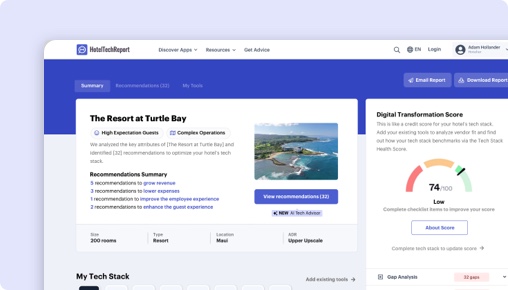
Sorry, this functionality is only available for verified hoteliers
The project dashboard is a free tool that is only available to verified hoteliers to make adopting new technology easier by streamlining their research and simplifying their communication workflow.

Attendance On Demand vs. Unifocus:
Qual è Quello Giusto per Te?

TLDR
Abbiamo analizzato 40 recensioni verificate di albergatori, confrontato funzionalità, prezzi e casi studio reali per evidenziare dove ciascuna piattaforma eccelle. La scelta giusta dipende dal tipo di struttura e dalle tue priorità:
Attendance on Demand eccelle .
Unifocus eccelle in ease of use and customer support — soprattutto per le strutture brand (4.3/5) , con funzionalità esclusive come Mobile App and Reporting & Analytics.
Come si Confronta Attendance On Demand con Unifocus?
Valutazioni fianco a fianco basate su 40 recensioni verificate di albergatori su HTR.
| HTScore |
|
|
| Probabilità di Raccomandazione |
|
|
| Facilità d'Uso |
|
|
| Assistenza Clienti |
|
|
| Rapporto Qualità-Prezzo |
|
|
| Prezzo di Partenza | Contact sales | Contact sales |
| Recensioni Verificate | 0 | 40 |
Quali Sono i Pro e i Contro di Attendance On Demand vs Unifocus?
Dopo aver analizzato 40 recensioni verificate, gli utenti di Attendance on Demand apprezzano maggiormente , mentre gli utenti di Unifocus evidenziano gestione del lavoro, interfaccia intuitiva, formazione e supporto. Clicca su qualsiasi tema per vedere cosa dicono i recensori.
|
Attendance on Demand
|
Unifocus
|
|---|---|
| Pro | |
|
+
Gestione del lavoro
▾
|
|
|
+
Interfaccia intuitiva
▾
|
|
|
+
Formazione e supporto
▾
|
|
|
+
Integrazione perfetta
▾
|
|
| Contro | |
|
−
Esigenze di personalizzazione
▾
|
|
|
−
Velocità e reattività
▾
|
|
|
−
Nuove critiche alla versione
▾
|
|
Attendance on Demand vs Unifocus: Classifiche per Segmento Alberghiero
Come si classifica ciascun prodotto tra i fornitori Pianificazione e gestione della forza lavoro per diverse dimensioni di struttura, tipologie e regioni — basato su recensioni verificate di albergatori in ogni segmento.
Per Dimensione Hotel
| Segmento |
Attendance on Demand
|
Unifocus
|
|---|---|---|
| Piccolo (10-24 camere) | — | #4 2 recensioni |
| Medio (25-74 camere) ▾ | — | #5 10 recensioni |
| Grande (75-199 camere) ▾ | — | #4 17 recensioni |
| Extra-Grande (200+ camere) ▾ | — | #4 7 recensioni |
Per Tipo di Struttura
| Segmento |
Attendance on Demand
|
Unifocus
|
|---|---|---|
| Boutique ▾ | — | #5 6 recensioni |
| Lusso ▾ | — | #4 19 recensioni |
| Catena / Brand ▾ | — | #4 17 recensioni |
| Soggiorno Prolungato ▾ | — | #4 5 recensioni |
Per Regione
| Segmento |
Attendance on Demand
|
Unifocus
|
|---|---|---|
| Nord America ▾ | — | #4 34 recensioni |
| Europa | — | #2 3 recensioni |
| Asia Pacifico | — | #1 0 recensioni |
The Decision
Choosing the right workforce management solution for your hotel can be a game of precision. Attendance On Demand and Unifocus both aim to automate employee scheduling and labor tracking, but they differ significantly in features, user experience, and market presence. While Attendance On Demand is a cloud-based, straightforward system with no recent reviews or high ratings, Unifocus boasts a robust feature set, a large user base, and a more recent, highly-rated reputation. So, which is better suited for your hotel’s needs?
Both products aim to improve labor efficiency, reduce errors, and streamline scheduling. Attendance On Demand provides basic automation with a simple, cloud-based platform, but its lack of recent reviews and zero ratings suggest limited ongoing support or updates. Unifocus, meanwhile, offers an extensive array of features and continues to evolve, supported by over 37 reviews in the last six months. This active feedback loop provides a clearer picture of current performance and user satisfaction. Are you ready to lean toward a more established platform with a proven track record?
Is Attendance On Demand or Unifocus Better for Hotels?
Attendance On Demand is a basic, cloud-based employee time and labor tracking tool designed to fully automate scheduling and attendance management. However, it has no recent reviews, ratings, or user feedback, which makes assessing its current effectiveness impossible. Conversely, Unifocus, with a 4.25/5 rating based on 37 recent reviews, is a comprehensive platform that includes forecasting, real-time scheduling, task management, and more—for over a decade, it has been trusted by many hotels worldwide.
The key divergence lies in depth: Attendance On Demand offers limited features and no recent customer insights, making it hard to judge whether it truly meets modern hotel demands. Unifocus's recent reviews highlight satisfaction with its forecasting accuracy, ease of use, and support, making it the more reliable choice for active hotels. Do you need a basic system that might lack ongoing support, or a robust platform proven in the field?
Unifocus vs Attendance On Demand: Which Should Your Hotel Choose?
If your hotel requires a comprehensive, feature-rich workforce management solution that integrates with your existing PMS and scales across multiple properties, Unifocus is the clear winner. Its 14 unique features—like auto scheduling, labor standards, tip pooling, and mobile apps—are unmatched by Attendance On Demand, which has no unique features listed and no recent reviews to support functionality.
On the other hand, if your hotel needs a simple, straightforward tool for basic attendance tracking without the complexity or cost of advanced features, Attendance On Demand might suffice—though its lack of recent feedback makes this a risky assumption. Given Unifocus's positive reviews, ease of use (4.01/5), and 84% likelihood to recommend, it’s the safer, more future-proof investment if your goal is operational efficiency.
Is Attendance On Demand or Unifocus Easier to Use?
Unifocus's user interface receives a 4.01/5 rating, with many reviewers praising its intuitive design and straightforward navigation. The platform offers onboarding rated at 4/5, and users find it easy to manage tasks like scheduling, payroll, and reporting, with some noting that its mobile app simplifies communication and task management on the go.
In contrast, Attendance On Demand has no ratings or recent reviews, leaving its ease of use entirely unverified. With no current user feedback or support data, it’s impossible to confirm how intuitive or user-friendly it truly is. Edge: Unifocus.
Which Has Better Features: Attendance On Demand or Unifocus?
Unifocus offers 14 distinct features, including labor standards, dynamic scheduling, auto scheduling, tip pooling, mobile app, reporting & analytics, and team communication, among others. These features empower your team with automation, insight, and flexibility, supporting large and complex hotel operations.
Attendance On Demand, however, lists no features beyond basic employee attendance and labor tracking, with no unique or advanced capabilities. Its limited feature set and lack of recent updates suggest it may not meet the demands of modern hotel management. Edge: Unifocus.
Which Has Better Customer Support: Attendance On Demand or Unifocus?
Unifocus’s customer support scores a 4.19/5, with recent reviews lauding on-site training and responsive service. Customers appreciate its ongoing support, with one reviewer noting that the team “continues to update it with new processes which are user-friendly and easy for associates to use.”
Attendance On Demand has no ratings or recent reviews, making it impossible to evaluate support quality. The absence of recent feedback casts doubt on its ability to deliver timely, effective assistance. Edge: Unifocus.
Which Has More Integrations: Attendance On Demand or Unifocus?
Unifocus integrates with 32 verified partners, including PMS, payroll, and third-party systems like Kronos and Otelier. Its extensive integration options facilitate smooth data flow and operational cohesion across departments.
Attendance On Demand has only one verified integration partner, Actabl, which limits its ability to connect with other systems your hotel may rely on. For scalable, multi-system environments, Unifocus clearly leads. Edge: Unifocus.
Which Do Hoteliers Rate Higher: Attendance On Demand or Unifocus?
Unifocus’s recent reviews reflect a 4.25/5 rating and an 84% likelihood to recommend, indicating high current user satisfaction. Hotels across segments—resorts, branded, and regional hotels—rate it favorably, especially praising its forecasting and ease of use.
Attendance On Demand has no recent reviews or ratings, so its user satisfaction level remains unknown. The lack of recent feedback suggests it’s not actively used or supported in the field today. Edge: Unifocus.
How Much Do Attendance On Demand and Unifocus Cost?
Both products do not publish specific pricing details. They are offered as subscription-based services without upfront implementation fees or free trial options. Your hotel will need to contact sales for custom quotes.
What Type of Hotel Should Use Attendance On Demand?
- Hotels that need a simple, cloud-based employee attendance and labor tracking system.
- Small properties with minimal complexity or scheduling needs.
- Teams seeking a basic automation tool without extensive training or features.
- Hotels prioritizing low-cost, straightforward solutions with minimal integration requirements.
Not ideal if your hotel:
- Is looking for a comprehensive workforce management platform.
- Operates multiple properties requiring advanced scheduling tools.
- Needs real-time forecasting, analytics, or mobile management.
- Seeks ongoing support, training, and feature updates.
What Type of Hotel Should Use Unifocus?
- Hotels that require a full-featured workforce management platform.
- Properties with complex scheduling, labor standards, and multi-department needs.
- Hotel groups managing multiple locations and requiring seamless integration.
- Teams that value real-time data, forecasting, and detailed analytics.
Not ideal if your hotel:
- Prefers a minimal, low-cost attendance solution.
- Has very limited staffing needs or operates as a small boutique hotel.
- Needs quick setup with minimal training.
- Seeks a product with no recent customer reviews or active support.
Unifocus vs Attendance On Demand: The Bottom Line for Hotels
Unifocus is a comprehensive, feature-rich workforce management platform supported by recent reviews and a strong user base. Its 14 features, positive user feedback, and integration options make it suitable for hotels seeking operational efficiency and scalability.
Attendance On Demand offers a basic, cloud-based solution with no recent feedback or ratings, making it a risky choice for hotels that need ongoing support or advanced features. Its limited capabilities may suit very small properties with minimal scheduling complexity but fall short for larger or more dynamic operations.
If your hotel needs a proven, scalable platform with active support, go with Unifocus. Its extensive feature set and recent positive reviews make it the safer, more effective choice.
Choose Attendance On Demand only if you require a minimal, budget-friendly tool and are prepared to accept limited support and future growth potential.
For long-term success, especially in a competitive hospitality environment, Unifocus delivers the automation, insights, and integration your team needs to operate smarter and serve guests better.
Quanto Costano Attendance On Demand e Unifocus?
I prezzi di Pianificazione e gestione della forza lavoro raramente sono semplici. Ecco cosa sappiamo dai dati pubblici sui prezzi di ciascun fornitore. Richiedi sempre un preventivo personalizzato per la dimensione della tua struttura.
|
Attendance on Demand
|
Unifocus
|
|---|
Confronto delle funzionalità: Attendance On Demand vs Unifocus
Queste sono le funzionalità configurate da ciascun fornitore, organizzate per gruppo di funzionalità — gli stessi dati mostrati nella dashboard del fornitore. Espandi un gruppo per confrontare le funzionalità affiancate.
| Funzionalità |
Attendance on Demand
|
Unifocus
|
|---|---|---|
|
▾
Turni e programmazione
|
|
|
| Cambio di turno | ||
| Programmazione automatica | ||
| App orologio | ||
| Programmazione dinamica | ||
| Standard di lavoro | ||
|
▾
Monitoraggio del tempo
|
|
|
| App orologio | ||
|
▾
Analisi e benchmarking
|
|
|
| Analisi comparativa | ||
| Reportistica e analisi | ||
| Visibilità aziendale | ||
| Monitoraggio automatizzato del lavoro | ||
| Standard di lavoro | ||
| Integrazione delle previsioni di occupazione | ||
|
▾
Compiti e liste di controllo
|
|
|
| Elenchi di attività e cose da fare | ||
|
▾
Messaggistica e comunicazione
|
|
|
| Comunicazione di squadra | ||
| App mobile | ||
|
▾
Gestione dei vantaggi
|
|
|
| Accumulo di benefici | ||
| Suggerimento Pooling |
Attendance on Demand vs Unifocus: Il Verdetto Finale
Cosa amano gli albergatori
Gli utenti elogiano il software per le sue solide capacità di gestione del lavoro, tra cui pianificazione, programmazione e analisi delle esigenze di... Gli utenti elogiano il software per le sue solide capacità di gestione del lavoro, tra cui pianificazione, programmazione e analisi delle esigenze di manodopera. È particolarmente utile per gestire operazioni sia su piccola che su larga scala, con la capacità di estrarre dati da vari sistemi per semplificare le previsioni.
Molti recensori apprezzano l'interfaccia user-friendly di UniFocus, evidenziandone l'intuitivo front-end e l'organizzato back-end. Gli utenti trovano... Molti recensori apprezzano l'interfaccia user-friendly di UniFocus, evidenziandone l'intuitivo front-end e l'organizzato back-end. Gli utenti trovano facile navigare e gestire attività come la pianificazione e la gestione del lavoro, rendendolo accessibile a nuovi manager e supervisori.
Mentre il software ottiene punteggi elevati per la formazione e il supporto in loco, gli utenti ritengono che la formazione iniziale online potrebbe e... Mentre il software ottiene punteggi elevati per la formazione e il supporto in loco, gli utenti ritengono che la formazione iniziale online potrebbe essere migliorata. La formazione in loco è evidenziata come altamente efficace e coinvolgente.
Dove gli albergatori sollevano obiezioni
Alcuni utenti esprimono la necessità di maggiori opzioni di personalizzazione nell'interfaccia utente e della possibilità di accedere a una cronologia... Alcuni utenti esprimono la necessità di maggiori opzioni di personalizzazione nell'interfaccia utente e della possibilità di accedere a una cronologia estesa dei report senza dover generare e salvare report a intervalli specifici.
Diversi recensori esprimono frustrazione per la bassa velocità e la scarsa reattività del software UniFocus. Ciò è particolarmente problematico durant... Diversi recensori esprimono frustrazione per la bassa velocità e la scarsa reattività del software UniFocus. Ciò è particolarmente problematico durante i periodi di punta, come l'approvazione delle buste paga.
Funzionalità uniche
Dove le valutazioni divergono di più
Domande Frequenti su Attendance On Demand vs Unifocus
Attendance On Demand può sostituire Unifocus?
Dipende dalle tue esigenze. Attendance On Demand e Unifocus condividono molte funzionalità Scheduling & Workforce Management di base, ma ciascuno ha capacità uniche. Attendance On Demand offre 1 partner di integrazione verificati, mentre Unifocus ne offre 32. Consulta il confronto delle funzionalità sopra per vedere dove differiscono prima di cambiare.
Qual è migliore per hotel piccoli o indipendenti?
Gli hotel piccoli dovrebbero dare priorità alla facilità d'uso e a un onboarding rapido. Unifocus è in testa per facilità d'uso con 4.0/5 vs 0.0/5. Cerca prezzi trasparenti e un'opzione di prova o demo. Filtra le recensioni su ogni pagina prodotto per dimensione della struttura per sentire le opinioni di hotel simili al tuo.
Attendance On Demand o Unifocus offrono un piano gratuito?
Attendance On Demand: No. Unifocus: No. Nessuno dei due prodotti offre attualmente un livello gratuito. La maggior parte dei fornitori Scheduling & Workforce Management offre demo o prove gratuite — richiedine una a ciascuno per valutare prima di impegnarti.
Come Valuta e Classifica HTR Attendance On Demand e Unifocus?
L'HT Score è una classifica composita che considera 4 gruppi di criteri e oltre una dozzina di variabili per aiutare gli albergatori a confrontare oggettivamente i prodotti tecnologici per hotel. Attendance on Demand ha un HT Score di 0 e Unifocus ha 74. Ecco come viene calcolato il punteggio.
| Gruppo di Criteri | Peso | Cosa Misura |
|---|---|---|
| Valutazioni e Recensioni dei Clienti |
|
Quanto raccomandano gli utenti questo prodotto? Punteggio Valutazioni, Volume Recensioni, Quota di Voce, Profondità Recensioni, Recenza Recensioni, Storie di Successo ▾ Il fattore con il peso maggiore. Analizza le valutazioni medie di soddisfazione (probabilità di raccomandazione, facilità d'uso, assistenza, ROI), il numero totale di recensioni rispetto ai concorrenti nella categoria, la recenza delle recensioni (almeno 20 recensioni negli ultimi 6 mesi) e la quota di voce tra clienti hotel unici per rilevare bias di selezione. |
| Ecosistema dei Partner |
|
Quanto raccomandano i partner tecnologici questa azienda? Raccomandazioni dei Partner, Quantità Integrazioni, Qualità Integrazioni ▾ Valuta le raccomandazioni dei partner come voti di fiducia degli esperti, il numero di integrazioni verificate e la qualità dell'ecosistema — la media degli HT Score dei partner di integrazione. I prodotti con ecosistemi di integrazione di qualità superiore hanno maggiori probabilità di offrire uno stack tecnologico connesso. |
| Centralità del Cliente |
|
Quanto è orientata al cliente questa organizzazione? Assistenza Certificata, Coerenza delle Recensioni, Completezza del Profilo ▾ Valuta se l'azienda ha ottenuto la Certificazione di Assistenza Clienti HTR, mantiene una raccolta di recensioni costante nel tempo (un indicatore di cultura orientata al feedback) e mantiene i profili prodotto completi con funzionalità, screenshot, prezzi e caratteristiche. |
| Portata, Solidità e Risorse |
|
Quanto è estesa la portata e le risorse di questa azienda? Portata Geografica, Solidità nel Tempo, Risorse Aziendali, Punteggio di Tendenza ▾ Misura la presenza globale (paesi e regioni servite), gli anni di attività come indicatore di stabilità, il numero di dipendenti come indicatore di risorse e un punteggio di tendenza basato su richieste degli acquirenti, recensioni, raccomandazioni dei partner e attività stampa degli ultimi dodici mesi. |
Le valutazioni e le recensioni dei clienti sono di gran lunga il fattore più importante nell'algoritmo dell'HT Score. HTR non accetta pagamenti per classifiche più alte. Tutte le recensioni sono verificate — solo i professionisti del settore alberghiero con affiliazioni confermate possono inviare valutazioni. Visualizza la metodologia completa dell'HT Score →
Quali Altri Confronti Pianificazione e gestione della forza lavoro Stanno Leggendo gli Albergatori?
Esplora altri confronti diretti basati su recensioni verificate di albergatori.
Indice
Ottieni il tuo report gratuito di analisi AI
Consigli personalizzati su misura per la tua proprietà


