
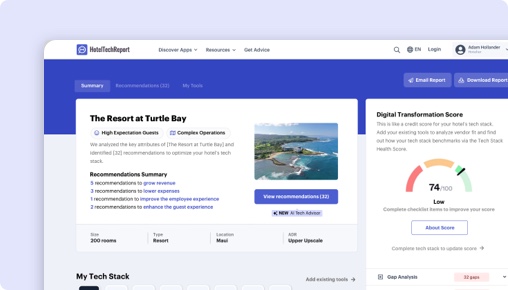
Sorry, this functionality is only available for verified hoteliers
The project dashboard is a free tool that is only available to verified hoteliers to make adopting new technology easier by streamlining their research and simplifying their communication workflow.

Abitari vs. Akia Contactless Check-In:
Welches ist das Richtige für Sie?
Kurzfassung
Wir haben 42 verifizierte Hotelier-Bewertungen analysiert, Funktionsumfänge, Preise und Praxisbeispiele verglichen, um aufzuzeigen, wo jede Plattform ihre Stärken hat. Die richtige Wahl hängt von Ihrem Betriebstyp und Ihren Prioritäten ab:
Abitari überzeugt , mit exklusiven Funktionen wie Guest requests and Mobile Request Dispatching.
Akia überzeugt bei ease of use and customer support — besonders für brand Betriebe (5.0/5) , mit exklusiven Funktionen wie Mobile Friendly and Guest History.
Wie schneidet Abitari im Vergleich zu Akia Contactless Check-In ab?
Bewertungen im direkten Vergleich basierend auf 42 verifizierten Hotelier-Bewertungen auf HTR.
| HTScore |
|
|
| Weiterempfehlungswahrscheinlichkeit |
|
|
| Benutzerfreundlichkeit |
|
|
| Kundensupport |
|
|
| Preis-Leistungs-Verhältnis |
|
|
| Einstiegspreis | Contact sales | Contact sales |
| Verifizierte Bewertungen | 0 | 42 |
Was sind die Vor- und Nachteile von Abitari vs Akia Contactless Check-In?
Nach der Analyse von 42 verifizierten Bewertungen schätzen Abitari-Nutzer besonders , während Akia-Nutzer gastnachrichten, teamkommunikation und aufgabenmanagement, kontaktloser check-in hervorheben. Klicken Sie auf ein Thema, um zu sehen, was die Bewerter sagen.
|
|
|
|---|---|
| Vorteile | |
|
+
Gastnachrichten
▾
|
|
|
+
Teamkommunikation und Aufgabenmanagement
▾
|
|
|
+
Kontaktloser Check-in
▾
|
|
|
+
Kundenfeedback und Reputationsmanagement
▾
|
|
| Nachteile | |
|
−
Automatisierte Antworten
▾
|
|
|
−
Integration und Datensynchronisation
▾
|
|
|
−
Reiseführer und digitale Tools
▾
|
|
Abitari vs Akia: Rankings nach Hotelsegment
Wie jedes Produkt unter den Kontaktloser Check-in-Anbietern für verschiedene Betriebsgrößen, -typen und Regionen abschneidet — basierend auf verifizierten Bewertungen von Hoteliers in jedem Segment.
Nach Hotelgröße
| Segment |
|
|
|---|---|---|
| Klein (10–24 Zimmer) ▾ | — | #4 17 Bewertungen |
| Mittelgroß (25–74 Zimmer) ▾ | — | #4 18 Bewertungen |
| Groß (75–199 Zimmer) | — | #19 0 Bewertungen |
| Sehr groß (200+ Zimmer) | — | #16 0 Bewertungen |
Nach Betriebstyp
| Segment |
|
|
|---|---|---|
| Boutique ▾ | — | #4 17 Bewertungen |
| Luxus ▾ | — | #6 7 Bewertungen |
| Marke / Kette ▾ | — | #4 10 Bewertungen |
| Langzeitaufenthalt ▾ | — | #7 6 Bewertungen |
Nach Region
| Segment |
|
|
|---|---|---|
| Nordamerika ▾ | — | #2 41 Bewertungen |
The Decision
Choosing the right contactless check-in platform is crucial for modern hotels aiming to improve guest experiences and operational efficiency. Both Abitari and Akia offer solutions that aim to streamline guest check-ins and communication, but they diverge significantly in features, user feedback, and market presence. Abitari emphasizes affordable, tablet-based kiosks with real-time management tools, while Akia focuses on comprehensive messaging, automation, and PMS integrations. Which platform better suits your hotel's specific needs?
You’ll need to consider the scale of your operation, technology preferences, and the level of automation required. Does your hotel prioritize cost-effective self-service kiosks or advanced guest communication tools? Could a broader feature set and recent reviews tip the scale toward one? Let’s explore how they compare.
Is Abitari or Akia Better for Hotels?
Both Abitari and Akia aim to simplify the check-in process, but they approach it differently. Abitari’s kiosk concept transforms tablets into physical self-check-in stations, emphasizing affordability and ease of installation. It’s tailored for hotels seeking a low-cost, physical solution that reduces front desk congestion.
In contrast, Akia’s platform is a mobile-friendly, communication-oriented system designed for seamless, contactless guest engagement through messaging, automation, and PMS integration. It’s ideal if your hotel wants a comprehensive digital communication suite that goes beyond check-in and checkout.
However, Abitari’s limited review volume and the absence of recent feedback mean it has less proven recent user satisfaction. Akia, with 38 recent reviews and a high NPS score, demonstrates more consistent positive sentiment. Are you comfortable adopting a less-reviewed product, or do recent, high-rated solutions give you more confidence?
Abitari vs Akia: Which Should Your Hotel Choose?
If your hotel needs simple, cost-efficient self check-in kiosks that integrate into existing operations without heavy investment, Abitari is worth considering. It’s especially suitable for hotels in Europe, North America, or the Middle East that want a physical check-in solution with basic management features.
If your team requires a full-featured guest communication platform with automation, chat, and PMS integration, Akia is the clear choice. It’s better suited for boutique hotels, resorts, and properties looking to improve guest engagement, reputation, and operational efficiency—evidenced by its high review count and recent positive feedback.
For hotels with a focus on automating guest interactions and reducing labor costs, Akia’s extensive feature set and recent reviews make it the safer, more reliable option. Conversely, if budget and physical kiosk deployment are your priorities, Abitari could be a fit, but its lower recent review activity warrants caution.
Is Abitari or Akia Easier to Use?
Akia’s UI is highly rated at 4.82/5, with users praising its intuitive design and quick onboarding, reflected in a 4.67/5 onboarding score. Reviewers mention that staff adapt easily to Akia’s messaging and automation features, and the platform is described as streamlined and user-friendly.
Abitari, however, has no recent reviews or ratings, making it impossible to gauge its ease of use. Its kiosk-based model could require more familiarization or setup time, especially for hotels without dedicated technical staff.
Given the current data, Akia’s high ease-of-use rating and recent positive reviews favor its adoption. Edge: Akia.
Which Has Better Features: Abitari or Akia?
Abitari offers four unique features: lost & found, guest requests, automated room assignments, and mobile request dispatching. These are useful but fairly basic, with a focus on operational management rather than guest engagement.
Akia provides 30 features, including mobile-friendly check-in, photo sharing, chatbot booking, WhatsApp integration, automated replies, guest history, secured data, SMS messaging, analytics, and door lock integration. These tools support extensive automation and communication, creating a more versatile platform.
If your hotel needs advanced guest messaging, automation, and digital tools, Akia’s feature set surpasses Abitari’s. For basic kiosk-based check-in, Abitari’s limited features might suffice but lack the breadth of Akia. Edge: Akia.
Which Has Better Customer Support: Abitari or Akia?
There are no recent reviews for Abitari, leaving support quality unverified. Its vendor claims suggest a focus on ease of integration, but actual user feedback is absent.
Akia, with a support rating of 4.86/5 and recent reviews praising its knowledgeable, responsive team, clearly leads in customer support. Users highlight rapid, effective assistance and a smooth onboarding experience, which are critical for ongoing platform success.
Given the recent review activity and high ratings, Akia’s support is more trustworthy. Edge: Akia.
Which Has More Integrations: Abitari or Akia?
Akia offers 32 verified integrations, including popular PMS and property management tools like WebRezPro, innRoad, Stayntouch, and Skyware. It also supports door lock systems and digital waiver tools, enhancing functionality.
Abitari’s 10 verified partners include RoomRaccoon, SiteMinder, Oracle Hospitality, and others. While fewer, these integrations cover essential hotel management systems but are less extensive overall.
If your hotel relies on a broad ecosystem of third-party systems, Akia’s larger integration network is advantageous. Edge: Akia.
Which Do Hoteliers Rate Higher: Abitari or Akia?
With 38 recent reviews, Akia’s average rating is an impressive 4.95/5, and users consistently praise its ease, automation, and support. Many reviews come from boutique hotels and resorts that value contactless check-in and automated messaging.
Abitari has no recent reviews or ratings, making it impossible to assess current user sentiment. Its older feedback references internal operational improvements but lacks recent validation.
Given the review volume and high scores, Akia is clearly the more favored platform. Edge: Akia.
How Much Do Abitari and Akia Cost?
Both products do not publicly disclose pricing details, which is common for enterprise solutions. They operate on a no-trial, no-freemium basis, suggesting custom quotes based on hotel size and needs.
Your hotel should contact both vendors directly for tailored pricing. Typically, Akia’s extensive features might come at a higher price point, but its value is reflected in user satisfaction and support.
What Type of Hotel Should Use Abitari?
- Hotels that want affordable self-check-in kiosks with minimal investment.
- Properties looking to enhance operational efficiency with physical check-in stations.
- Hotels in regions where kiosk deployment is advantageous and supported.
- Teams seeking a straightforward, cost-effective solution to reduce front desk congestion.
Not ideal if your hotel needs advanced guest communication, automation, or PMS integrations. Abitari is best for operational improvements rather than guest engagement.
What Type of Hotel Should Use Akia?
- Boutique hotels, resorts, and properties prioritizing guest experience and automation.
- Hotels looking for comprehensive guest messaging, feedback collection, and digital tools.
- Teams that want quick PMS integration and extensive third-party support.
- Hotels aiming to reduce staff workload with automated responses and task management.
Not ideal if your hotel prefers a physical kiosk-only solution or has minimal need for automation. Akia excels in communication and automation, not in standalone physical check-in hardware.
Abitari vs Akia: The Bottom Line for Hotels
The core difference lies in their focus: Abitari offers a kiosk-based check-in system designed for cost-effective, physical self-service stations, while Akia provides an all-encompassing guest communication platform with automation, messaging, and integrations.
Choose Abitari if your primary goal is to implement affordable, physical self-check-in kiosks with minimal complex features. It suits hotels seeking operational efficiency on a tight budget but requires careful consideration due to limited recent reviews.
Opt for Akia if your hotel values high user satisfaction, extensive features, automation, and support. Its recent reviews and high ratings make it the safer, more reliable choice for properties aiming to modernize guest communication and streamline operations.
In summary, for most hotels prioritizing guest engagement, automation, and a proven track record, Akia stands out. Abitari could serve niche needs where physical kiosks are essential, but limited recent validation warrants caution.
Welche Funktionen hat Abitari, die Akia Contactless Check-In nicht hat (und umgekehrt)?
Laut der Produktdatenbank von HTR teilen Abitari und Akia Contactless Check-In 5 Funktionen. Hier sind die wichtigsten Unterschiede — Funktionen, die eines hat und das andere nicht.
| Funktion |
|
|
|---|---|---|
| Automatisierte Antworten | ||
| Automatisierte Raumzuweisungen | ||
| Chatbot | ||
| Desktop-App (nicht webbasiert) | ||
| Fotos teilen | ||
| Gästeanfragen | ||
| Handyfreundlich | ||
| Verloren gefunden | ||
| Versand von mobilen Anfragen | ||
| WhatsApp-Integration |
Die wichtigsten Unterschiede werden angezeigt. 22 weitere Funktionen unterscheiden sich zwischen diesen Produkten.
Praxisergebnisse: Abitari vs Akia nach Geschäftsziel
Wir haben 1 verifizierte Fallstudien analysiert, um zu vergleichen, was Hotels mit jeder Plattform in vier zentralen Geschäftszielen tatsächlich erreichen.
Noch keine veröffentlichte Fallstudie für dieses Ziel.
"Automation emphasizes the guests experience at their fingertips. Akia closes the gap of missed opportunities by acting as a liaison to our guest satisfaction efforts. We have been..."
Abitari vs Akia: Das Fazit
Einzigartige Funktionen
Was Hoteliers schätzen
Das Nachrichtensystem wird geschätzt, weil es die Echtzeitkommunikation mit Gästen ermöglicht und so die Servicequalität verbessert. Es hilft dem Pers... Das Nachrichtensystem wird geschätzt, weil es die Echtzeitkommunikation mit Gästen ermöglicht und so die Servicequalität verbessert. Es hilft dem Personal, Gästeanfragen und -probleme umgehend zu bearbeiten, was sich positiv auf die Gästezufriedenheit und die Betriebseffizienz auswirkt.
Funktionen zur internen Teamkommunikation und Aufgabenverwaltung werden als wesentliche Vorteile hervorgehoben. Diese Tools helfen dem Hotelpersonal,... Funktionen zur internen Teamkommunikation und Aufgabenverwaltung werden als wesentliche Vorteile hervorgehoben. Diese Tools helfen dem Hotelpersonal, sich effizient zu koordinieren, Aufgaben zu verfolgen und die Bedürfnisse der Gäste effektiver zu erfüllen. Nutzer sind der Ansicht, dass die Übersichtlichkeit und Benutzerfreundlichkeit dieser Systeme verbessert werden könnte.
Rezensenten schätzen durchweg die kontaktlose Check-in-Funktion von Akia und geben an, dass sie den Check-in-Prozess reibungslos und effizient macht.... Rezensenten schätzen durchweg die kontaktlose Check-in-Funktion von Akia und geben an, dass sie den Check-in-Prozess reibungslos und effizient macht. Diese Funktion reduziert physische Interaktionen, vereinfacht die Ankunft der Gäste und gewährleistet die Einhaltung der Gesundheitsrichtlinien, was während der Pandemie besonders wichtig war.
Wo Hoteliers Kritik äußern
Viele Nutzer betonen den Vorteil der automatisierten Antworten von Akia, die Zeit und Mühe sparen. Mehrere Bewertungen erwähnen jedoch, dass diese aut... Viele Nutzer betonen den Vorteil der automatisierten Antworten von Akia, die Zeit und Mühe sparen. Mehrere Bewertungen erwähnen jedoch, dass diese automatisierten Antworten manchmal ungenau oder zum falschen Zeitpunkt erfolgen können, was bei den Gästen Verwirrung stiftet und manuelle Eingriffe des Personals erfordert.
Benutzer schätzen die Integrationsmöglichkeiten von Akia mit PMS und anderen Systemen, wünschen sich jedoch Verbesserungen wie eine nahtlose Integrati... Benutzer schätzen die Integrationsmöglichkeiten von Akia mit PMS und anderen Systemen, wünschen sich jedoch Verbesserungen wie eine nahtlose Integration von Kreditkartentransaktionen und bessere Synchronisierungsfunktionen, um doppelten Aufwand und manuelle Dateneingabe zu vermeiden.
Einzigartige Funktionen
Wo die Bewertungen am stärksten auseinandergehen
Häufig gestellte Fragen zu Abitari vs Akia Contactless Check-In
Kann Abitari Akia Contactless Check-In ersetzen?
Das hängt von Ihren Anforderungen ab. Abitari und Akia Contactless Check-In teilen viele zentrale Contactless Check-in-Funktionen, aber jedes hat einzigartige Fähigkeiten. Abitari bietet 10 verifizierte Integrationspartner, während Akia Contactless Check-In 32 bietet. Überprüfen Sie den Funktionsvergleich oben, um die Unterschiede vor einem Wechsel zu sehen.
Welches ist besser für kleine oder unabhängige Hotels?
Kleine Hotels sollten Benutzerfreundlichkeit und schnelles Onboarding priorisieren. Akia Contactless Check-In führt bei der Benutzerfreundlichkeit mit 4.8/5 vs 0.0/5. Achten Sie auf transparente Preise und eine Test- oder Demo-Option. Filtern Sie die Bewertungen auf jeder Produktseite nach Betriebsgröße, um von Hotels wie Ihrem zu hören.
Bieten Abitari oder Akia Contactless Check-In einen kostenlosen Plan an?
Abitari: Nein. Akia Contactless Check-In: Nein. Keines der Produkte bietet derzeit eine kostenlose Version an. Die meisten Contactless Check-in-Anbieter bieten Demos oder Testversionen an — fordern Sie von jedem eine an, um vor der Entscheidung zu evaluieren.
Wie bewertet und rankt HTR Abitari und Akia Contactless Check-In?
Der HT Score ist ein zusammengesetztes Ranking, das 4 Kriteriengruppen und über ein Dutzend Variablen berücksichtigt, um Hoteliers einen objektiven Vergleich von Hoteltechnologie-Produkten zu ermöglichen. Abitari hat einen HT Score von 0 und Akia hat 63. So wird der Score berechnet.
| Kriteriengruppe | Gewichtung | Was wird gemessen |
|---|---|---|
| Kundenbewertungen & Rezensionen |
|
Wie stark empfehlen Nutzer dieses Produkt? Bewertungspunktzahl, Bewertungsvolumen, Marktanteil, Bewertungstiefe, Bewertungsaktualität, Erfolgsgeschichten ▾ Der am stärksten gewichtete Faktor. Analysiert die durchschnittlichen Zufriedenheitsbewertungen (Weiterempfehlungswahrscheinlichkeit, Benutzerfreundlichkeit, Support, ROI), die Gesamtzahl der Bewertungen im Vergleich zu Kategorie-Mitbewerbern, die Aktualität der Bewertungen (mindestens 20 Bewertungen in den letzten 6 Monaten) und den Marktanteil über einzigartige Hotelkunden zur Erkennung von Auswahlverzerrungen. |
| Partner-Ökosystem |
|
Wie stark empfehlen Technologiepartner dieses Unternehmen? Partner-Empfehlungen, Integrationsanzahl, Integrationsqualität ▾ Bewertet Partner-Empfehlungen als Expertenvertrauensvoten, die Anzahl verifizierter Integrationen und die Ökosystemqualität — die durchschnittlichen HT Scores der Integrationspartner. Produkte mit hochwertigeren Integrations-Ökosystemen liefern mit größerer Wahrscheinlichkeit einen vernetzten Tech-Stack. |
| Kundenorientierung |
|
Wie kundenorientiert ist dieses Unternehmen? Zertifizierter Support, Bewertungskonsistenz, Profilvollständigkeit ▾ Bewertet, ob das Unternehmen die HTR Customer Support Certification erhalten hat, eine konsistente Bewertungserfassung über die Zeit aufrechterhält (ein Indikator für feedbackgetriebene Kultur) und Produktprofile vollständig mit Funktionen, Screenshots, Preisen und Features pflegt. |
| Reichweite, Beständigkeit & Ressourcen |
|
Wie umfangreich sind Reichweite und Ressourcen dieses Unternehmens? Geografische Reichweite, Beständigkeit, Unternehmensressourcen, Trending Score ▾ Misst die globale Präsenz (bediente Länder und Regionen), die Geschäftsjahre als Stabilitätsindikator, die Teamgröße als Ressourcenindikator und einen Trending Score basierend auf Käuferanfragen, Bewertungen, Partner-Empfehlungen und Presseaktivitäten der letzten zwölf Monate. |
Kundenbewertungen und Rezensionen sind bei weitem der wichtigste Faktor im HT Score-Algorithmus. HTR akzeptiert keine Zahlungen für höhere Rankings. Alle Bewertungen sind verifiziert — nur Fachleute der Hotelbranche mit bestätigten Zugehörigkeiten können Bewertungen abgeben. Vollständige HT Score-Methodik ansehen →
Welche anderen Kontaktloser Check-in-Vergleiche lesen Hoteliers?
Entdecken Sie weitere Direktvergleiche basierend auf verifizierten Hotelier-Bewertungen.
Inhalt
Erhalten Sie personalisierte Produktempfehlungen
Berater für Produktempfehlungen
