

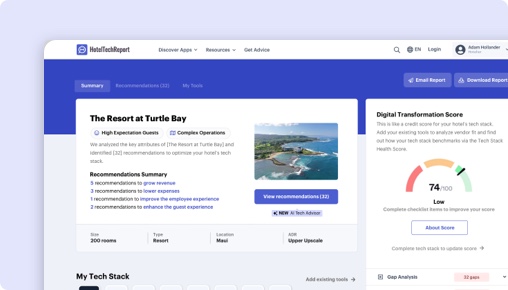
Spiacenti, questa funzionalità è disponibile solo per gli albergatori verificati
La dashboard dei progetti è uno strumento gratuito disponibile solo per gli albergatori verificati, che semplifica l'adozione di nuove tecnologie snellendo la ricerca e i flussi di comunicazione.

Multi-Channel CRM by Bookboost vs. D-EDGE CRM (Prev. LoungeUp):
Qual è Quello Giusto per Te?
TLDR
Abbiamo analizzato 151 recensioni verificate di albergatori, confrontato funzionalità, prezzi e casi studio reali per evidenziare dove ciascuna piattaforma eccelle. La scelta giusta dipende dal tipo di hotel e dalle tue priorità:
Bookboost eccelle in interfaccia intuitiva e chiara — soprattutto per le strutture di tipo bed & breakfast (4,9/5), con funzionalità esclusive come Newsletter via e-mail e Profili degli ospiti.
D-Edge si distingue per funzionalità esclusive come Segmentazione e targeting degli ospiti e Distribuzione multicanale (email, SMS, WhatsApp, chat).
Come si Confronta Multi-Channel CRM by Bookboost con D-EDGE CRM (Prev. LoungeUp)?
Valutazioni fianco a fianco basate su 151 recensioni verificate di albergatori su HTR.
| HTScore |
|
|
| Probabilità di Raccomandazione |
|
|
| Facilità d'Uso |
|
|
| Assistenza Clienti |
|
|
| Rapporto Qualità-Prezzo |
|
|
| Prezzo di Partenza | Da $600/mese | Da $400/mese |
| Recensioni Verificate | 147 | 4 |
Quali Sono i Pro e i Contro di Multi-Channel CRM by Bookboost vs D-EDGE CRM (Prev. LoungeUp)?
Dopo aver analizzato 151 recensioni verificate, gli utenti di Bookboost apprezzano maggiormente interfaccia intuitiva e chiara, comunicazione semplificata con gli ospiti, gestione centralizzata delle comunicazioni, mentre gli utenti di D-Edge evidenziano . Clicca su qualsiasi tema per vedere cosa dicono i recensori.
|
Bookboost
|
D-Edge
|
|---|---|
| Pro | |
|
+
Interfaccia intuitiva e chiara
▾
|
|
|
+
Comunicazione semplificata con gli ospiti
▾
|
|
|
+
Gestione centralizzata delle comunicazioni
▾
|
|
|
+
Capacità di personalizzazione
▾
|
|
| Contro | |
|
−
Interfaccia utente unificata
▾
|
|
|
−
Funzionalità di ricerca
▾
|
|
|
−
Reporting e analisi
▾
|
|
Bookboost vs D-Edge: Classifiche per Segmento Alberghiero
Come si classifica ciascun prodotto tra i fornitori di CRM alberghiero e email marketing per diverse dimensioni di struttura, tipologie di hotel e regioni — basato su recensioni verificate di albergatori in ogni segmento.
Per Dimensione Hotel
| Segmento |
Bookboost
|
D-Edge
|
|---|---|---|
| Piccolo (10-24 camere) ▾ | #4 30 recensioni | #29 1 recensioni |
| Medio (25-74 camere) ▾ | #5 70 recensioni | #27 1 recensioni |
| Grande (75-199 camere) ▾ | #7 17 recensioni | #32 1 recensioni |
| Extra-Grande (200+ camere) ▾ | #2 22 recensioni | — |
Per Tipo di Hotel
| Segmento |
Bookboost
|
D-Edge
|
|---|---|---|
| Boutique ▾ | #5 83 recensioni | — |
| Lusso ▾ | #5 69 recensioni | #33 1 recensioni |
| Brand / Catena ▾ | #4 54 recensioni | — |
| Soggiorno Prolungato ▾ | #3 21 recensioni | #25 1 recensioni |
Per Regione
| Segmento |
Bookboost
|
D-Edge
|
|---|---|---|
| Nord America | #21 1 recensioni | — |
| Europa ▾ | #4 126 recensioni | #21 4 recensioni |
| Asia Pacifico ▾ | #4 12 recensioni | — |
Is Multi-Channel CRM by Bookboost or D-EDGE CRM Better for Hotels?
Multi-Channel CRM by Bookboost and D-EDGE CRM both target hotel CRM and email marketing but diverge sharply in feature scope and market presence. Bookboost focuses on deep automation with a robust Customer Data Platform (CDP) that integrates email, SMS, and WhatsApp in one platform, enabling personalized, multi-channel guest journeys. D-EDGE CRM emphasizes a broader operations management approach alongside guest communications, with a larger integration network and multi-property dashboard capabilities.
Both products solve the core problem of centralizing guest communication and automating lifecycle marketing to increase revenue and guest satisfaction. However, Bookboost excels in personalization and automation for hotels aiming to leverage detailed guest data, while D-EDGE offers a more comprehensive operations suite suited to hotel chains and multi-property groups seeking extensive integration and ancillary merchandising.
Multi-Channel CRM by Bookboost vs D-EDGE CRM: Which Should Your Hotel Choose?
If you operate a small to medium independent hotel or serviced apartment portfolio seeking advanced guest segmentation, personalized multi-channel messaging, and automation, choose Bookboost. This recommendation is based on its 147 verified reviews averaging 4.8/5 overall, with specific praise for automation and guest journey management. Its integrated CDP supports niche segmentation such as loyalty and geographic filters, which benefits properties aiming to boost direct bookings and engagement as demonstrated in case studies like Room Republic's 23% OTA conversion rate.
If you manage a larger hotel chain or resort requiring multi-property dashboards, dynamic upsell offers, and a wider integration ecosystem, D-EDGE CRM fits better. Despite only 4 recent reviews, it scores 4.9/5 overall and 5/5 in customer support and ROI, reflecting strong satisfaction within its niche. Its 117 verified integrations and features like multi-channel delivery including chat and WhatsApp, gift vouchers, and SOC 2 certification address operational complexity and compliance needs typical of larger portfolios. However, data on segment-specific ratings is limited due to low review volume.
Is Multi-Channel CRM by Bookboost or D-EDGE CRM Easier to Use?
Bookboost and D-EDGE both rate similarly on ease of use with Bookboost at 4.7/5 and D-EDGE at 4.5/5, and identical onboarding scores at 4.7/5. Bookboost users commend its intuitive interface and centralized unified inbox that simplifies guest communication workflows, although some mention a learning curve due to extensive features. D-EDGE users highlight clear and simple tool performance but note that the newsletter editor and customer portal UX could be more modern and modular.
Staff adoption is supported in both platforms by effective onboarding, with Bookboost praised for responsive improvement driven by user feedback and D-EDGE for dedicated project management. Since both products have over 10 reviews supporting these ratings, the edge on ease of use is even.
Edge: Even.
Which Has Better Features: Multi-Channel CRM by Bookboost or D-EDGE CRM?
Bookboost offers 25 exclusive features, including a visual journey builder for automated guest journeys, comprehensive segmentation types (geographic, loyalty, room type), a centralized data warehouse with database health monitoring, GDPR and CCPA compliance, and advanced email campaign tools with A/B testing and template importing. This suite enhances personalization, enabling front-desk and marketing teams to communicate tailored messages through multiple channels without switching platforms.
D-EDGE provides 13 unique features focusing on revenue management and operational workflow, such as room upgrade and ancillary product merchandising, dynamic upgrade pricing, an offer orchestration engine covering booking to post-stay phases, and automated fulfillment task routing. Its multi-property dashboard and gift vouchers also target chains and resorts. D-EDGE's SOC 2 Type 2 certification addresses data security for larger-scale clients.
Bookboost’s extensive segmentation and automation capabilities translate operationally to more granular targeting and reduced manual guest communication, improving loyalty and conversion. D-EDGE’s features streamline upselling and complex offer management across properties, critical for maximizing revenue in larger portfolios.
Edge: Multi-Channel CRM by Bookboost.
Which Has Better Customer Support: Multi-Channel CRM by Bookboost or D-EDGE CRM?
Both platforms score highly in customer support with Bookboost at 4.8/5 and D-EDGE at a perfect 5/5, and equal onboarding scores of 4.7/5. Bookboost reviewers frequently cite prompt, helpful support and responsiveness to feature requests, such as improvements implemented rapidly after feedback. D-EDGE users praise their project managers personally and describe support as "first-class" and highly responsive.
Negative feedback is minimal; Bookboost users suggest more training materials would be useful, while D-EDGE users recommend UI improvements but do not criticize support. The balance of evidence with over 10 reviews for Bookboost and consistent high scores for both leads to an even edge.
Edge: Even.
Which Has More Integrations: Multi-Channel CRM by Bookboost or D-EDGE CRM?
D-EDGE clearly leads in integration breadth with 117 verified partners compared to Bookboost’s 36. Both platforms share 17 common partners including major PMS providers like HOTELTIME, apaleo GmbH, SiteMinder, Oracle Hospitality, and Mews, ensuring compatibility with widely used hotel systems.
Bookboost integrates uniquely with RoomRaccoon, 4SUITES, hotelkit, and Snapshot Analytics, supporting smaller and boutique hotels seeking specialized tools. D-EDGE’s integrations include Priority Software, RevControl, Mirai, and Customer Alliance, reflecting a focus on chain hotels and resorts needing extensive revenue and guest feedback systems.
Hotels requiring broad third-party connectivity, especially chains or multi-property groups, benefit more from D-EDGE’s integration ecosystem. Boutique and independent hotels may find Bookboost’s curated integrations sufficient.
Edge: D-EDGE CRM.
Which Do Hoteliers Rate Higher: Multi-Channel CRM by Bookboost or D-EDGE CRM?
Bookboost holds a 4.8/5 overall rating across 147 reviews, with 4 reviews in the last six months, while D-EDGE scores 4.9/5 from 4 reviews with no recent feedback. The sharp drop in Bookboost’s review activity (81% fewer recent reviews compared to its previous 21 per six months) suggests its historical ratings may not fully reflect current performance or support levels. D-EDGE’s limited review volume makes its high rating less statistically robust.
Segment-wise, Bookboost’s ratings are consistent across 5+ review segments: Boutique Hotels (4.8/5, 83 reviews), Branded Hotels (4.8/5, 54), Luxury Hotels (4.8/5, 69), and City Center Hotels (4.8/5, 62). D-EDGE’s ratings per segment are from single reviews, limiting reliability.
Overall, both products are rated highly by their users, but Bookboost’s larger, more diverse review base gives it a more representative rating despite the recent review activity drop.
Edge: Even.
How Much Do Multi-Channel CRM by Bookboost and D-EDGE CRM Cost?
Bookboost’s pricing starts at $600 per month with no freemium, monthly flat, or per-room pricing, and no implementation fees or trial options. D-EDGE begins at $400 per month under similar conditions—no freemium, flat or per-room pricing, implementation fees, or trial.
The $200 monthly price difference favors D-EDGE for budget-conscious buyers but does not include details on feature tiers or custom pricing. Hotels should consider total cost relative to required features and integration needs.
What Type of Hotel Should Use Multi-Channel CRM by Bookboost?
- Hotels that prioritize personalized multi-channel guest communication, including SMS and WhatsApp alongside email.
- Properties seeking advanced segmentation and automation to deliver tailored guest journeys and lifecycle marketing.
- Small to medium independent hotels, boutique properties, and serviced apartments with a focus on guest experience and direct booking growth.
- Teams needing a centralized data warehouse and compliance with GDPR and CCPA for data security.
- Hotels aiming to reduce manual front-desk workload through automation and unified inbox management.
Not ideal if:
- Your property requires extensive multi-property dashboards and revenue merchandising features designed for chains.
- You need a broader integration ecosystem supporting a wide variety of third-party operational software.
- You value recent and active review feedback to reflect current product performance, given the decline in Bookboost’s recent review volume.
What Type of Hotel Should Use D-EDGE CRM?
- Multi-property hotel groups and chains requiring a centralized dashboard for operations and guest communication.
- Hotels focused on dynamic room upgrade, ancillary product merchandising, and automated offer orchestration across guest journeys.
- Properties needing broad integration with over 100 hotel software partners to support complex revenue management and guest feedback workflows.
- Hotels that require SOC 2 Type 2 data security certification for compliance.
- Teams looking for high-touch customer support and project management during onboarding and implementation.
Not ideal if:
- You run a small independent property without the operational complexity to justify the broader feature set.
- Your priority is advanced guest data segmentation and personalized multi-channel marketing beyond basic email campaigns.
- You require a large volume of current user reviews to assess ongoing product quality, as D-EDGE’s review volume is limited.
Multi-Channel CRM by Bookboost vs D-EDGE CRM: The Bottom Line for Hotels
The core difference is that Bookboost centers on advanced guest data management and personalized multi-channel communication automation, while D-EDGE focuses on broader operations management, multi-property capabilities, and extensive integrations. Bookboost excels in delivering granular segmentation and messaging workflows that enhance guest loyalty and direct bookings. D-EDGE provides a comprehensive platform addressing upsell merchandising, multi-channel delivery, and chain-level operational needs.
Choose Bookboost if your hotel or serviced apartment portfolio values rich guest data insights, extensive automation across SMS, WhatsApp, and email, and a platform proven in boutique and branded hotels with 4.8/5 ratings over 147 reviews. Its automation capabilities reduce manual communication and improve conversion rates, as seen in case studies like Room Republic's 23% OTA conversion.
Choose D-EDGE if you manage a larger portfolio requiring multi-property dashboards, revenue merchandising features, and SOC 2 certified data security. Its 117 verified integrations and focus on offer orchestration suit complex hotel operations. Although review volume is limited, its 4.9/5 overall rating and 5/5 support score indicate strong satisfaction in its niche.
Note that Bookboost’s sharp 81% decline in recent review volume suggests potential changes in product experience or support that buyers should investigate, while D-EDGE’s limited recent reviews do not provide a current performance trend. This makes Bookboost the safer bet for properties prioritizing proven, data-driven automation and D-EDGE suitable for larger, integration-heavy operations with strong support needs.
Quanto Costano Multi-Channel CRM by Bookboost e D-EDGE CRM (Prev. LoungeUp)?
I prezzi di CRM alberghiero e email marketing raramente sono semplici. Ecco cosa sappiamo dai dati pubblici sui prezzi di ciascun fornitore. Richiedi sempre un preventivo personalizzato per la dimensione della tua struttura.
|
Bookboost
|
D-Edge
|
|
|---|---|---|
| Prezzo di Partenza | Da $600/mese | Da $400/mese |
Confronto delle funzionalità: Multi-Channel CRM by Bookboost vs D-EDGE CRM (Prev. LoungeUp)
Queste sono le funzionalità configurate da ciascun fornitore, organizzate per gruppo di funzionalità — gli stessi dati mostrati nella dashboard del fornitore. Espandi un gruppo per confrontare le funzionalità affiancate.
| Funzionalità |
Bookboost
|
D-Edge
|
|---|---|---|
|
▾
Automazione del marketing
|
|
|
| Comunicazione individuale personalizzata | ||
| Test A/B | ||
| Automazione del marketing | ||
| Newsletter via e-mail | ||
| Monitoraggio dello stato del database | ||
|
▾
Costruttore di modelli
|
|
|
| Editor di modelli | ||
| WYSIWYG - Editor HTML | ||
| Modelli di campagna | ||
| Modelli transazionali | ||
| Importazione di modelli | ||
|
▾
Profili degli ospiti
|
|
|
| Profili degli ospiti | ||
| Monitoraggio dello stato del database | ||
| Conforme al GDPR | ||
| Conforme al CCPA | ||
| De-duping automatico | ||
|
▾
Segmentazione
|
|
|
| Segmentazione | ||
| Monitoraggio dello stato del database | ||
| Etichettatura | ||
| Segmentazione della fedeltà | ||
| Segmentazione basata sugli attributi | ||
| Segmentazione geografica | ||
| Segmentazione basata sul canale/mercato | ||
| Segmentazione basata sul lead time | ||
| Segmentazione basata sul tipo di camera | ||
|
▾
Privacy e conformità
|
|
|
| Conforme al GDPR | ||
| Conforme al CCPA | ||
| Reclamo PCI | ||
|
▾
Gestione dei dati
|
|
|
| Data warehouse centralizzato | ||
| Monitoraggio dello stato del database | ||
| Apri API | ||
| Soluzione centralizzata multihotel/multimarca | ||
|
▾
Feedback e sondaggi
|
|
|
| Modulo di feedback degli ospiti (schede di commento/recensioni) | ||
| Partner di connettività di Trip Advisor |
Risultati Reali: Bookboost vs D-Edge per Obiettivo di Business
Abbiamo analizzato 8 casi studio verificati per confrontare cosa gli hotel ottengono realmente con ciascuna piattaforma su quattro obiettivi di business chiave.
Room Republic
Piccolo
"Bookboost saves us a lot of time. It’s easy to use, easy to schedule and you can make email templates. So you can automate different workflows that in other ways you would spend mo..."
 D-Edge
Nessun caso studio ancora pubblicato per questo obiettivo.
Ruby Hotels
Medio
"As hoteliers, we need to save that guest's attention for something that counts and matters to them. We are happy with the higher conversion compared to what we had, and we still wa..."
 D-Edge
Nessun caso studio ancora pubblicato per questo obiettivo.
Bookboost vs D-Edge: Il Verdetto Finale
Cosa amano gli albergatori
L'interfaccia del sistema Bookboost si distingue per la sua semplicità e intuitività, consentendo al personale dell'hotel di navigare facilmente senza... L'interfaccia del sistema Bookboost si distingue per la sua semplicità e intuitività, consentendo al personale dell'hotel di navigare facilmente senza perdersi in menu complicati, migliorando così l'esperienza dell'utente.
Bookboost eccelle nel consolidare diversi canali di comunicazione in un'unica piattaforma, consentendo risposte rapide e una facile gestione di messag... Bookboost eccelle nel consolidare diversi canali di comunicazione in un'unica piattaforma, consentendo risposte rapide e una facile gestione di messaggi ed e-mail. Questa funzionalità contribuisce notevolmente ad aumentare l'efficienza operativa e a migliorare la soddisfazione degli ospiti.
Grazie alla gestione di tutte le comunicazioni con gli ospiti in un unico spazio, Bookboost consente transizioni fluide tra le diverse attività, aumen... Grazie alla gestione di tutte le comunicazioni con gli ospiti in un unico spazio, Bookboost consente transizioni fluide tra le diverse attività, aumentando l'efficacia delle operazioni alberghiere e offrendo esperienze personalizzate agli ospiti.
Dove gli albergatori sollevano obiezioni
Viene menzionata la necessità di un'interfaccia utente unificata in tutti i menu per semplificare ulteriormente le operazioni e ridurre i punti di att... Viene menzionata la necessità di un'interfaccia utente unificata in tutti i menu per semplificare ulteriormente le operazioni e ridurre i punti di attrito durante l'utilizzo, migliorando così l'efficienza complessiva.
La funzione di ricerca di Bookboost è criticata perché non offre risultati logici o esaustivi, poiché gli utenti la trovano frustrante quando cercano... La funzione di ricerca di Bookboost è criticata perché non offre risultati logici o esaustivi, poiché gli utenti la trovano frustrante quando cercano di individuare dati specifici. Sono necessari miglioramenti in quest'area per un migliore recupero dei dati.
Classificato più in alto per
Funzionalità uniche
Classificato più in alto per
Funzionalità uniche
Domande Frequenti su Multi-Channel CRM by Bookboost vs D-EDGE CRM (Prev. LoungeUp)
Multi-Channel CRM by Bookboost può sostituire D-EDGE CRM (Prev. LoungeUp)?
Dipende dalle tue esigenze. Multi-Channel CRM by Bookboost e D-EDGE CRM (Prev. LoungeUp) condividono molte funzionalità di base di Hotel CRM & Email Marketing, ma ciascuno ha capacità uniche. Multi-Channel CRM by Bookboost offre 36 partner di integrazione verificati, mentre D-EDGE CRM (Prev. LoungeUp) ne offre 117. Consulta il confronto delle funzionalità sopra per vedere dove differiscono prima di cambiare.
Qual è migliore per hotel piccoli o indipendenti?
Gli hotel piccoli dovrebbero dare priorità alla facilità d'uso e a un onboarding rapido. Multi-Channel CRM by Bookboost è in testa per facilità d'uso con 4,7/5 vs 4,5/5. Cerca prezzi trasparenti e un'opzione di prova o demo. Filtra le recensioni su ogni pagina prodotto per dimensione della struttura per sentire le opinioni di hotel simili al tuo.
Multi-Channel CRM by Bookboost o D-EDGE CRM (Prev. LoungeUp) offrono un piano gratuito?
Multi-Channel CRM by Bookboost: No. D-EDGE CRM (Prev. LoungeUp): No. Nessuno dei due prodotti offre attualmente un livello gratuito. La maggior parte dei fornitori di Hotel CRM & Email Marketing offre demo o prove gratuite — richiedine una a ciascuno per valutare prima di impegnarti.
Come Valuta e Classifica HTR Multi-Channel CRM by Bookboost e D-EDGE CRM (Prev. LoungeUp)?
L'HT Score è una classifica composita che considera 4 gruppi di criteri e oltre una dozzina di variabili per aiutare gli albergatori a confrontare oggettivamente i prodotti tecnologici per hotel. Bookboost ha un HT Score di 99 e D-Edge ha 0. Ecco come viene calcolato il punteggio.
| Gruppo di Criteri | Peso | Cosa Misura |
|---|---|---|
| Valutazioni e Recensioni dei Clienti |
|
Quanto raccomandano gli utenti questo prodotto? Punteggio Valutazioni, Volume Recensioni, Quota di Voce, Profondità Recensioni, Recenza Recensioni, Storie di Successo ▾ Il fattore con il peso maggiore. Analizza le valutazioni medie di soddisfazione (probabilità di raccomandazione, facilità d'uso, assistenza, ROI), il numero totale di recensioni rispetto ai concorrenti nella categoria, la recenza delle recensioni (almeno 20 recensioni negli ultimi 6 mesi) e la quota di voce tra clienti hotel unici per rilevare bias di selezione. |
| Ecosistema dei Partner |
|
Quanto raccomandano i partner tecnologici questa azienda? Raccomandazioni dei Partner, Quantità Integrazioni, Qualità Integrazioni ▾ Valuta le raccomandazioni dei partner come voti di fiducia degli esperti, il numero di integrazioni verificate e la qualità dell'ecosistema — la media degli HT Score dei partner di integrazione. I prodotti con ecosistemi di integrazione di qualità superiore hanno maggiori probabilità di offrire uno stack tecnologico connesso. |
| Centralità del Cliente |
|
Quanto è orientata al cliente questa organizzazione? Assistenza Certificata, Coerenza delle Recensioni, Completezza del Profilo ▾ Valuta se l'azienda ha ottenuto la Certificazione di Assistenza Clienti HTR, mantiene una raccolta di recensioni costante nel tempo (un indicatore di cultura orientata al feedback) e mantiene i profili prodotto completi con funzionalità, screenshot, prezzi e caratteristiche. |
| Portata, Solidità e Risorse |
|
Quanto sono estese la portata e le risorse di questa azienda? Portata Geografica, Solidità nel Tempo, Risorse Aziendali, Punteggio di Tendenza ▾ Misura la presenza globale (paesi e regioni servite), gli anni di attività come indicatore di stabilità, il numero di dipendenti come indicatore di risorse e un punteggio di tendenza basato su richieste degli acquirenti, recensioni, raccomandazioni dei partner e attività stampa degli ultimi dodici mesi. |
Le valutazioni e le recensioni dei clienti sono di gran lunga il fattore più importante nell'algoritmo dell'HT Score. HTR non accetta pagamenti per classifiche più alte. Tutte le recensioni sono verificate — solo i professionisti del settore alberghiero con affiliazioni confermate possono inviare valutazioni. Visualizza la metodologia completa dell'HT Score →
Quali Altri Confronti di CRM alberghiero e email marketing Stanno Leggendo gli Albergatori?
Esplora altri confronti diretti basati su recensioni verificate di albergatori.




Indice
Ottieni il tuo report gratuito di analisi AI
Consigli personalizzati su misura per la tua struttura


Cerchiamo le informazioni sul tuo hotel
Stai ancora valutando le tue opzioni di crm alberghiero e email marketing?
Alcuni sistemi popolari dalla nostra guida su crm alberghiero e email marketing — oppure lascia che la nostra IA valuti ciascuno di essi in base alla tua struttura in circa due minuti.


