


Populaire dans Operations
Le meilleur choix en Systèmes de Gestion d'Établissement (PMS) pour 2026
Le système d'exploitation central de votre hôtel pour gérer sans effort les réservations, l'expérience client et les opérations.
Le meilleur choix en Outils de collaboration du personnel pour 2026
Améliorez la collaboration d'équipe grâce à la messagerie en temps réel, au partage des tâches et aux mises à jour centralisées entre les départements.
Le meilleur choix en Logiciel de comptabilité hôtelière pour 2026
Des outils pour gérer la comptabilité, le budget et la planification financière de votre hôtel.
Populaire dans Revenue Management
Le meilleur choix en Systèmes de gestion des revenus pour 2026
Optimisez vos revenus grâce à la tarification dynamique, aux prévisions de la demande et à l'analyse automatisée des données.
Le meilleur choix en Gestionnaires de canaux pour 2026
Logiciel de distribution hôtelière qui synchronise les tarifs, les disponibilités et les stocks sur les plateformes tierces.
Le meilleur choix en Veille stratégique pour 2026
Dites adieu aux tableurs et tirez parti des outils de BI modernes pour visualiser vos données et découvrir des informations cachées.
Populaire dans Marketing
Le meilleur choix en CRM hôtelier et marketing par e-mail pour 2026
Transformez les données clients en actions concrètes grâce à des offres personnalisées, une communication ciblée et des flux de travail automatisés.
Le meilleur choix en Moteur de réservation pour 2026
Le panier d'achat e-commerce pour le site web de votre hôtel.
Le meilleur choix en Logiciel de gestion de métarecherche hôtelière pour 2026
Configurez, gérez et optimisez les campagnes publicitaires sur tous les canaux pour générer des réservations directes.
Populaire dans Guest Experience
Le meilleur choix en Applications pour clients d'hôtel pour 2026
Améliorez les séjours grâce à une application client offrant des informations sur les équipements, la messagerie, la commande mobile et des opportunités de vente additionnelle.
Le meilleur choix en Enregistrement sans contact pour 2026
Offrez à vos clients une expérience simplifiée grâce à un enregistrement en ligne facile, des autorisations numériques et des ventes additionnelles fluides.
Le meilleur choix en Logiciel de messagerie pour invités pour 2026
Communiquez instantanément avec vos invités grâce à la messagerie en temps réel, aux réponses automatisées et à une communication fluide.
Désolé, cette fonctionnalité est réservée aux hôteliers vérifiés
Le tableau de bord des projets est un outil gratuit réservé aux hôteliers vérifiés. Il facilite l'adoption de nouvelles technologies en rationalisant leurs recherches et en simplifiant leurs échanges.

Rejoignez 100 000 dirigeants de grandes marques comme Accor, Marriott, Viceroy, Shangri-La, Rosewood, Expedia et AirBnB et recevez les dernières innovations et informations dans votre boîte de réception une fois par semaine.
Quels sont les meilleurs outils d’IA pour la visibilité des hôtels ?
The top AI visibility tools for hotels in 2026 are MARA AI Visibility Tracker, Lighthouse AI Visibility Insights (built on Hotelrank.ai) and Cendyn Wayfinder. All three track how AI assistants recommend an individual property. General trackers such as Peec AI, Profound, Otterly.ai, the Semrush AI Visibility Toolkit and Ahrefs Brand Radar work for hotel groups and brands that want cross-industry monitoring, and fall short for a single hotel.Here is why that split matters, how each tool works, what they cost, and which one fits your property.AI visibility for a hotel is a property-level question, not a brand questionAI visibility for a hotel is the share of AI travel answers that name your property, and where the booking link in those answers points. That second half is the part general marketing tools miss.Picture a traveler typing "best boutique hotel near Union Square under $400" into ChatGPT. The answer is a shortlist of four or five properties, each with a sentence of reasoning and, increasingly, a link. A hotel that is not on that shortlist was never considered. A hotel that is on it but whose link goes to Expedia just paid a commission on a guest who asked an AI, not an OTA.Four engines decide most of this today: ChatGPT, Google's AI Overviews and AI Mode, Gemini and Perplexity. Each one builds its answer from your website, your OTA listings, your reviews and whatever the trade press has written about you, and each one weighs those sources differently.The distribution of attention is already lopsided. A Lighthouse study of ChatGPT hotel searches found that AI mentions concentrate in chains and upscale properties, with Marriott taking more than a quarter of branded hotel mentions in the US, while many independent and midscale hotels never appear at all. A property with strong reviews, a good location and fair rates can still be invisible, because the engine has never been given a reason to surface it.How we compared the toolsEvery tool below was judged on the same five questions, because a hotel buying one needs to know what it is giving up as much as what it is getting.Does it track a single property in destination-style prompts, or only a brand name?Which AI engines does it cover?Does it show whether the booking link in the answer goes direct or to an OTA?Does it recommend fixes, or only report?What does it cost to start?The three hotel-specific tools answer yes to the first and third questions. None of the general tools do, and that is the dividing line.The hotel-specific tools measure what a hotel can act onMARA AI Visibility TrackerMARA AI Visibility Tracker is a standalone product from MARA Solutions that runs the prompts guests use when they ask ChatGPT, Gemini, Perplexity and Google AI Overviews where to stay, then scores how often a property appears in the answers over time.MARA started in hotel reputation management, which is the right place to start. AI engines read reviews heavily when they rank hotels, so a vendor that already holds a property's review corpus can connect visibility to the content that drives it. The tracker launched in November 2026 and MARA is walking through it in a webinar on 12 November 2026.What makes it hotel-specific is the prompt set. Instead of asking "what do people say about Brand X," it asks the questions a traveler asks, with the city, the budget and the style attached, and reports whether your property shows up. It then suggests what to change on your website, your listings and your reviews to move that number.MARA says setup takes minutes and sells the tracker on its own, separate from the review assistant. Pricing is not published as of November 2026. Best for independent and small-group hotels that want a self-serve number and a list of things to fix, and already care about their reviews.Lighthouse AI Visibility Insights (Hotelrank.ai)Lighthouse AI Visibility Insights is the measurement product inside Lighthouse Connect AI, built on Hotelrank.ai, the French startup Lighthouse acquired in May 2026. It tracks a visibility score across ChatGPT, Gemini and emerging platforms, the attributes AI engines associate with a property, a competitor benchmark and, the part that matters most to an owner, whether the links in AI answers go direct or to an OTA.Hotelrank.ai was founded in 2025 and had reached hotels in more than 25 countries when Lighthouse bought it. Its research corpus covers 245,000 unique sources and 31,000 hotels, which is the dataset behind its AI Hotel Landscape report.The reason to care about the Lighthouse version over the standalone one is what sits next to it. Connect AI is the engine behind The Hotels Network app in ChatGPT, launched in March 2026, which puts brand-verified content, live rates and a commission-free direct booking link inside the conversation. So Lighthouse can show you that AI sends your guests to Booking.com, and then give you the channel that changes it. No other vendor on this list closes that loop today.AI Visibility Insights is included at no extra cost for Connect AI clients. Connect AI itself is sold as a flat monthly fee with no booking commission. Best for hotels that want measurement and the direct booking fix from one vendor, and for groups that already run Lighthouse for pricing or business intelligence.Cendyn WayfinderCendyn Wayfinder is a generative engine optimization analytics and large language model monitoring product built into the Cendyn CMS. It runs simulated traveler prompts across Gemini, ChatGPT and Perplexity and produces a GEO health score that covers visibility, rate accuracy and content parity.Launched in June 2026, Wayfinder is the only tool on this list that scores accuracy, not just presence. It flags drift, which is Cendyn's term for the moment an AI starts answering with the wrong cancellation policy, the wrong rate or an amenity you no longer offer. For a hotel that gets a guest at the desk insisting ChatGPT promised free parking, that is the metric that matters.Wayfinder follows Cendyn AI Connect, launched in January 2026, which exposes a hotel's availability, rates and inventory to AI agents. Together they treat the hotel website as the source of truth that the AI engines should be reading from, which is the correct architecture for any hotel on a Cendyn site.It is not sold on its own. Wayfinder is part of the Cendyn CMS, so it is a reason to pick Cendyn for your website rather than a product you add to another site. Best for properties and groups already on Cendyn, and for hotels whose main AI problem is factual errors rather than absence.Three more hotel-side options worth knowingOperto has launched a GEO Consultant aimed at vacation rental and hotel operators. Kollective has published a prompt framework for hotels that want to pick their own tracking prompts around real guest demand rather than a tool's generic list. Vervotech, the hotel data mapping vendor, publishes AI hotel visibility analytics on top of its property database. None of the three is a complete tracker in the way the three above are, but each solves a piece of the problem, and all three names will come up in your research.The general tools track a brand, and a hotel is not a brandThe tools below are built for software and consumer companies that want to know how often ChatGPT mentions their name. They are good at that. Where they struggle is the destination prompt: a 120-room independent in Lisbon is not a brand a traveler asks about by name, so a tool that tracks brand mentions has nothing to count. Prices below are as of August and September 2026 and these vendors change them often.Peec AIPeec AI is an AI visibility analytics platform from Berlin that tracks prompts across ChatGPT, Google AI Overviews and AI Mode, with Perplexity, Gemini and others as add-ons. Plans start around $95 per month, every plan includes unlimited seats and there is a seven-day trial.Peec is the strongest mid-market option for a hotel group or brand marketing team that wants to track "best hotel loyalty program" or "Marriott vs Hilton for business travel" across engines. It will not tell you whether the link in a ChatGPT answer goes direct or to an OTA, and it reports rather than recommends. Best for brands and groups with a marketing team that can act on the data.ProfoundProfound is the category leader in AI visibility for enterprise brands, with pricing that starts at $99 per month for a ChatGPT-only tier and $399 per month above that, billed annually, with enterprise plans beyond. It covers ten or more engines at the enterprise level and adds content-generating agents on top of monitoring.Profound is built for Fortune 500 brand teams and is priced like it. A global hotel brand with a central digital team could justify it. A single property or a regional group cannot. Best for the largest hotel companies only.Otterly.aiOtterly.ai is the lowest-priced monitoring tool in the category, starting at $29 per month for a Lite plan and $189 per month for Standard. It covers four engines on the base plan with three more as add-ons.The catch is the prompt count. The entry tier tracks 15 prompts, which is not enough to cover the traveler questions for a single city, let alone a portfolio. Best for an owner who wants a cheap first look at whether AI mentions the brand at all, before committing to a hotel-specific tool.Semrush AI Visibility ToolkitThe Semrush AI Visibility Toolkit is an add-on to a Semrush subscription, priced at $99 per user per month on top of the base plan, and covers ChatGPT, Gemini, Perplexity and AI Overviews.It only makes sense for a hotel marketing team that already pays for Semrush and wants AI data in the same login. As a standalone purchase it costs more than Peec and does less for a hotel. Best for in-house teams already on Semrush.Ahrefs Brand RadarAhrefs Brand Radar is an AI visibility add-on to Ahrefs plans, starting around $199 per month, covering AI Overviews, ChatGPT, Perplexity, Gemini and Copilot. It is report-only, with no fixes recommended and no hotel-level attributes.Same verdict as Semrush. If your team lives in Ahrefs for search data, Brand Radar is a convenient view. It is not a reason to buy Ahrefs.The comparison in one tableToolHotel-specificEnginesDirect vs OTA link dataRecommends fixesEntry priceBest forMARA AI Visibility TrackerYesChatGPT, Gemini, Perplexity, AI OverviewsNot publishedYesNot publishedIndependents and small groups that already manage reviewsLighthouse AI Visibility InsightsYesChatGPT, Gemini, emerging platformsYesYes, via Connect AIIncluded with Connect AI (flat fee)Hotels that want measurement and the direct booking fix togetherCendyn WayfinderYesGemini, ChatGPT, PerplexityPartial (rate and content parity)YesIncluded with Cendyn CMSHotels on Cendyn, and hotels fighting factual driftPeec AINoChatGPT, AI Overviews, AI Mode, add-onsNoNo~$95/moGroups and brands with a marketing teamProfoundNoChatGPT on entry, 10+ at enterpriseNoYes (agents)$99/mo and $399/mo, annualGlobal hotel brandsOtterly.aiNo4 engines, 3 add-onsNoPartial (audits)$29/moA cheap first lookSemrush AI Visibility ToolkitNoChatGPT, Gemini, Perplexity, AI OverviewsNoPartial$99/user/mo plus SemrushTeams already on SemrushAhrefs Brand RadarNoAI Overviews, ChatGPT, Perplexity, Gemini, CopilotNoNo~$199/mo plus AhrefsTeams already on AhrefsSee verified hotelier reviews of MARA, Lighthouse and Cendyn on Hotel Tech Report before you book a demo.Which tool your hotel should pickIf you are an independent or a small group already on a Cendyn site or already running Lighthouse, take what your vendor bundles. Wayfinder and AI Visibility Insights come with platforms you already pay for, and the data is more useful when it sits next to the system that fixes the problem. If you are on neither, MARA is the only hotel-specific tracker you can buy on its own today, and the self-serve setup suits a property without a dedicated marketing hire.If you are a multi-brand group with a central marketing team, run one hotel-specific tool at the property level and one general tool at the brand level. Peec is the sensible general choice at that scale; Profound only if you are a global brand with the budget to match. The hotel tool tells you whether the Lisbon property shows up for Lisbon prompts. The brand tool tells you what ChatGPT says about your loyalty program.If you are a hotel technology vendor rather than a hotel, none of these tools answers your question. Your visibility problem is whether ChatGPT names your product when a hotelier asks for a property management system or a revenue management system, and that depends on the review and comparison sources the engines cite. Hotel Tech Report's premium membership includes an AI visibility tool built for exactly that, drawing on the review corpus the engines already read.Generative engine optimization for hotels: what to do with the dataGenerative engine optimization is the practice of shaping the sources an AI engine reads so that it names your property, describes it accurately and links to you. A tracker tells you where you stand. These five actions, ordered from least effort to most, move the number.Fix factual drift on your own site first. If an engine quotes the wrong cancellation policy, the wrong pet rule or a closed restaurant, the fix is usually a page on your site that has not been updated. Wayfinder's drift alerts and MARA's suggestions both point here. A one-hour content audit of policies, amenities and opening hours removes most of the errors.Add structured data for rates, amenities and policies. Engines read schema markup before they read prose. Hotel, Offer and FAQ schema on the property site, kept current, give the engine verifiable facts to lift. Your web vendor should already be doing this; ask them to show you.Keep listings consistent across OTAs and Google. AI engines cross-check your website against Booking.com, Expedia and your Google Business Profile. When the star rating, the room count or the amenity list disagree, the engine either picks one at random or drops you for a property it is sure about. Consistency is boring and it is the single biggest visibility lever an independent controls.Publish dense, verifiable facts over marketing copy. Research on generative engine optimization found that keyword stuffing had little or negative effect on AI visibility, while specific, checkable facts could lift a lower-ranked source's visibility by a wide margin. "Three blocks from the convention center, 212 rooms, rooftop pool open May through October" beats "an unforgettable urban retreat" every time.Connect live rates through a direct booking app or an MCP connection. This is the biggest lift and the biggest prize. The Lighthouse app in ChatGPT and Cendyn AI Connect both exist to put your live rate and your direct link inside the answer, so the engine recommends you and the booking stays yours. If your tracker shows the OTAs own your links, this is the fix.Frequently asked questionsWhat is AI visibility for a hotel?AI visibility for a hotel is the share of AI travel answers that name your property, and where the booking link in those answers points. It is measured by running the prompts travelers use in ChatGPT, Gemini, Perplexity and Google AI Overviews and recording how often, and how accurately, a property appears.How do I check if ChatGPT recommends my hotel?Type the questions a traveler would ask, with your city, a budget and a style, into ChatGPT and see whether your property is on the shortlist and where the link goes. Do it for ten prompts and you have a manual baseline. Tools such as MARA AI Visibility Tracker, Lighthouse AI Visibility Insights and Cendyn Wayfinder automate that across hundreds of prompts and track it over time.What is the difference between hotel AI visibility tools and general AI visibility tools?Hotel-specific tools track a single property in destination prompts and show whether AI answers link direct or to an OTA. General tools such as Peec AI, Profound and Otterly track mentions of a brand name across industries and do not distinguish direct from OTA links. A hotel group can use both; a single property needs the hotel-specific kind.Does Lighthouse own Hotelrank.ai?Yes. Lighthouse acquired Hotelrank.ai in May 2026 and folded its AI visibility analytics into Connect AI as AI Visibility Insights, included at no extra cost for Connect AI clients.Is Cendyn Wayfinder sold separately from the Cendyn CMS?No. Wayfinder launched in June 2026 as part of the Cendyn CMS and is not sold as a standalone product, so it is a reason to choose Cendyn for your website rather than an add-on to another site.How much do AI visibility tools cost for hotels?The hotel-specific tools are mostly bundled: Lighthouse AI Visibility Insights comes with Connect AI and Cendyn Wayfinder with the Cendyn CMS, and MARA has not published a price for its standalone tracker as of November 2026. General tools run from $29 per month (Otterly.ai) to $95 per month (Peec AI) to $99 and $399 per month billed annually (Profound), with Semrush and Ahrefs selling AI visibility as add-ons to existing plans.The hotels that get this right in 2027 will be the ones that treat an AI answer as a distribution channel with its own cost of acquisition, the way they already treat OTAs and metasearch. Pick a tracker, run the ten-prompt test this week and compare the number to your competitive set. Then look at the verified reviews for reputation management and website vendors on Hotel Tech Report when you decide who fixes it.
 Jordan Hollander
Comment The Gale Miami a éliminé les files d’attente au lobby et unifié la communication avec les clients grâce à Canary
Lobby lines, phone trees, guests drowning in texts. The Gale Miami fixed all three without adding a single desk. See which move mattered most.
 Hotel Tech Report

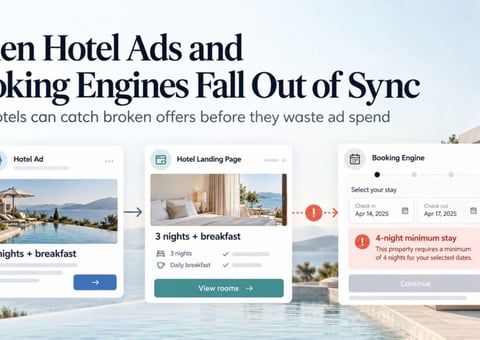
Comment les hôtels peuvent repérer les offres défectueuses avant qu'elles ne gaspillent leur budget publicitaire
Hotel campaigns can keep running even after the underlying rate, restriction or package has changed. Automated offer validation helps catch those mismatches before they waste ad spend or create booking friction.
 Exely
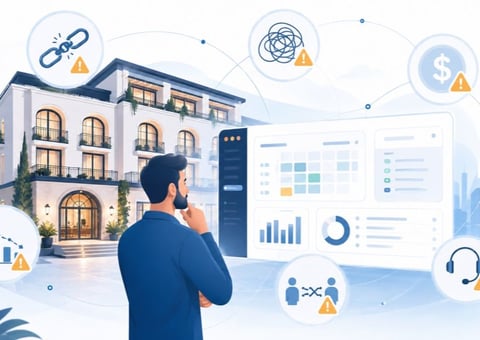
Avant d'acheter : 6 pièges des systèmes de gestion hôtelière à éviter pour les hôteliers indépendants
Your choice of hotel property management system (PMS) shapes the course of your business for years to come, either setting you up for success or setting you back in a competitive marketplace. From daily workflows and guest satisfaction to overall revenue potential, your PMS touches every corner of your property. To help you choose with confidence, we’ve outlined the most common pitfalls independent hoteliers face when evaluating a new system—and how to avoid them. Pitfall #1: Falling Into the "Feature Bloat" Trap Boutique properties don’t need the same complicated technology as large chain hotels. Extra software features may result in a cluttered user interface, steeper learning curve, and higher costs that fail to deliver a return on investment (ROI). Before shopping for your new system, conduct a quick SWOT analysis (strengths, weaknesses, opportunities, and threats) for your property. Establish concrete 5-10 year business goals so you can select a platform that meets your actual operational needs without paying for unnecessary bells and whistles. Pitfall #2: Overlooking Hidden Costs of OwnershipWhat you see isn’t always what you pay. A hotel property management system may initially seem budget friendly, but keep an eye out for these hidden fees that quickly inflate your total cost of ownership: Tiered Support Fees: Ensure direct customer support is included in your base subscription. Some vendors charge extra for "premium" tiers just to get a live human on the phone. Per-User Licensing Fees: Avoid systems that charge per user profile. As your seasonal staffing changes or your business grows, these additional seat licenses become a financial burden. Look for a flat-rate subscription model instead. Direct Booking Commission Fees: Direct bookings are meant to eliminate middleman fees; vendors that charge a commission on reservations generated through your own website completely defeat the purpose. Opaque Setup and Cancellation Fees: Some vendors tack on arbitrary setup costs or steep early-exit penalties that aren't clear until you try to leave. Ensure your provider clearly outlines all standard contract terms, notice periods, and setup fees in plain English before you commit. Upgrade Fees: All PMS software requires upgrades to stay secure and functional. Ensure that upgrade fees won’t trap you on an older, unsupported version down the road. Pitfall #3: Treating Payment Processing as an AfterthoughtMany operators select a PMS first and figure out payments later. This separation frequently results in a clunky, disconnected check-in procedure and a higher risk of manual accounting errors. Instead of wrestling with third-party middleware, look for a PMS like WebRezPro with its own embedded payment processor. This enables seamless daily reconciliation, tighter data security (PCI compliance), and faster check-ins. Pitfall #4: Ignoring Integration Flexibility A modern, cloud-based PMS should act as a hub allowing information to flow freely and securely to and from your other critical tools. A thriving hotel relies on an ecosystem of interconnected technologies, including channel managers, point-of-sale (POS) systems, smart locks, and guest messaging apps. Strong integrations give you the flexibility to adopt best-in-class software as your property grows, without replacing your core system. Choosing a closed PMS creates data silos and missed revenue opportunities. Ensure your prospective PMS features a robust integration marketplace so you can build your ideal hospitality tech stack.Pitfall #5: Neglecting the Mobile and Guest-Facing Experience Independent hoteliers are rarely chained to a desk; they are on the floor checking rooms, greeting guests, or managing operations remotely. Choosing a legacy system restricted to desktop computers or even a cloud-based PMS with a poor mobile interface is a recipe for frustration for guests and staff alike. Furthermore, a clunky mobile booking experience will decimate direct conversions. Consider these statistics: 50% of hotel bookings happen on mobile devices.60% of travelers research hotels on mobile.It’s easy to get obsessed with the backend dashboard and forget to audit the booking engine from a guest's perspective. If the booking flow is clunky, requires too many steps, or feels outdated, guests will head straight back to OTAs like Expedia or Booking.com.Pro tip: Book a test reservation yourself—or better yet, ask a friend unfamiliar with your system to do so—to uncover any hidden friction points. The Impact of Direct Booking Engines on AI Search (GEO) A modern booking engine doesn't just serve human guests; it feeds AI search tools. Modern AI travel assistants rely on your booking engine’s structured data (schema markup) to pull real-time rates and availability for travelers. If your booking engine lacks clear schema markup, Generative Engine Optimization (GEO) breaks down, and AI search platforms may omit your property entirely. As generative AI becomes a primary way travelers discover and plan trips, a strong GEO strategy is no longer optional; it determines whether your property appears in next-generation search results. Pitfall #6: Discounting the Value of Support and Onboarding Implementing a new PMS is a major operational transition, and you shouldn't have to navigate it alone. Look for a vendor that provides a fully guided onboarding experience rather than simply handing over a login and leaving you to figure it out yourself.Beyond initial setup, reliable ongoing support is critical. When your system experiences a hiccup at 10:00 PM on a holiday weekend, you can’t afford to wait on a generic corporate chatbot; you need fast access to live, expert assistance.Finally, consider how easy the system is for your team to learn. With high staff turnover being an industry-wide reality, an intuitive user interface ensures seasonal or new employees can learn to check a guest in confidently during their very first shift.Future-Proofing Your Hotel Operations The right hotel property management system acts as an accelerator for your business, streamlining daily workflows, protecting your data, and unlocking new revenue streams. Take the time to audit software thoroughly from both the staff and guest perspectives to find a platform that supports long-term growth.
 WebRezPro
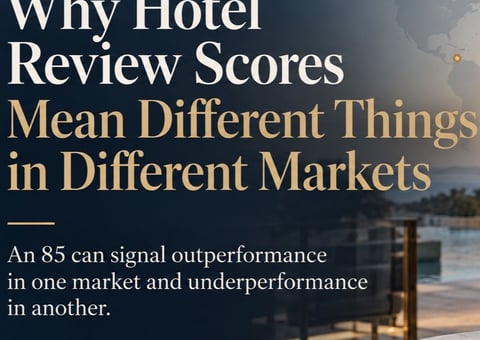
Pourquoi les notes de satisfaction client ont des significations différentes selon les marchés
Hotel review scores vary significantly by market, platform and guest mix, making raw comparisons misleading. Operators should benchmark performance against the right local context before acting.
 Hotel Speaker
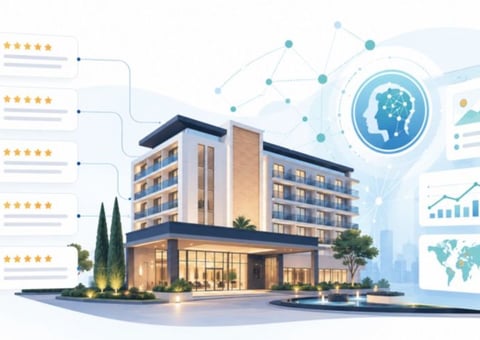
Pourquoi les avis sont des atouts marketing hôteliers essentiels à l'ère de l'IA
Online reputation has always influenced bookings. Now it influences visibility itself.
 GuestRevu
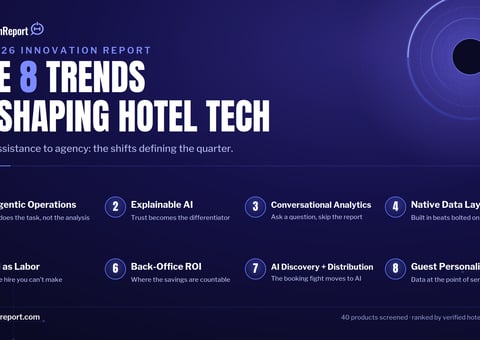
Rapport sur l'innovation technologique dans l'hôtellerie : Tendances et tactiques en matière d'IA (T2 2026)
The Q2 2026 Innovation Report from HITEC San Antonio: forty products, eight trends, and one shift from advice to action.
 Hotel Tech Report
How To Turn Guest Review Data Into Operational Decisions
Most hotels already have the data needed to improve operations and increase revenue—they're just looking at it the wrong way.
Hotel Speaker

Pourquoi les hôtels optimisent leurs revenus et perdent des bénéfices
The question is no longer just whether you priced the room well. It is whether the strategy you ran actually delivered the profit your hotel needed, and whether you have the visibility to know.
Hotel Tech Report
5 Signs Your Resort Operations Are More Inefficient Than You Think
A single system designed to manage your resort’s daily operations can remove the friction, reduce the manual work, and give your team the clarity they need to perform at their best.
 Eleanor
Des données hôtelières critiques se trouvent dans la messagerie d'équipe sur vos appareils personnels.
Your hotel's most critical operational and guest data is currently sitting on your departing employees' personal phones. Learn why relying on consumer apps is a serious data security risk and how to regain control of your data infrastructure.
Jordan Hollander

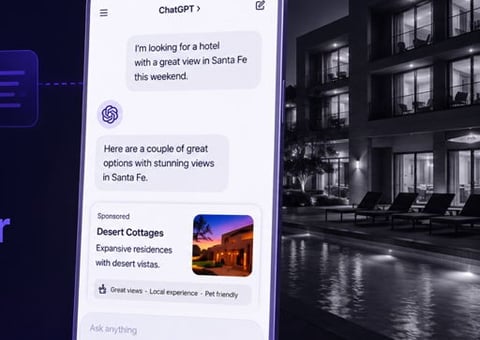
Annonces hôtelières ChatGPT : elles sont là et les agences de voyages en ligne bénéficient déjà d’un avantage concurrentiel.
OpenAI began testing ads in ChatGPT on Feb 9, 2026, showing sponsored placements to Free and Go users only, with paid tiers remaining ad-free. Ads appear below responses, are clearly labeled, and do not influence organic recommendations. Travel is among the first impacted categories as AI reshapes discovery: 56% of travelers used AI last year, and 78% booked based on it. Since ChatGPT returns just a few options, organic inclusion is critical before ads matter.
Jordan Hollander
Rapport sur l'innovation ITB Berlin 2026 : La rapidité de décision devient un avantage concurrentiel pour les hôtels
At ITB Berlin 2026, the most notable hotel tech innovation wasn’t any single product category—it was a wave of tools designed to shorten the time between signals (guest inquiries, demand shifts, operational issues) and the decisions hotels make in response.
Hotel Tech Report

Hotel Tech Report dévoile les lauréats des HotelTechAwards 2026, le classement des technologies hôtelières le plus axé sur les données du secteur.
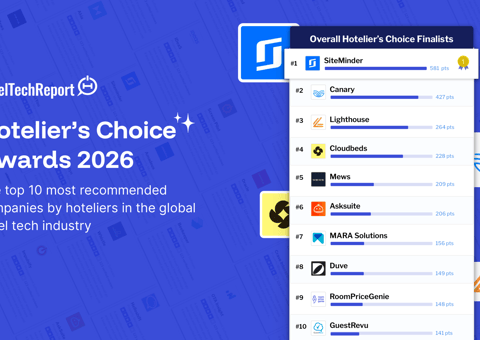
Hotel Tech Report, the global hotel software research platform used by more than 1.5 million hotel technology buyers each year, today announced the winners of the 2026 HotelTechAwards.HotelTechReport’s platform is used by hotel owners, operators, and management companies across the globe, with representation from 100% of the world’s top 10 global hotel chains. Now in its eighth year, the HotelTechAwards have become the industry’s definitive benchmark for evaluating hotel technology, ranking the world’s best software companies and products using verified, real-world customer data not panels, sponsorships, or popularity contests. The Industry’s Most Competitive and Elite Data-Backed Awards ProgramThe 2026 HotelTechAwards evaluated 3,013 hotel technology companies worldwide, with 245 products qualifying for final consideration after meeting strict eligibility and data-quality thresholds.Awards were determined using authentic, timely reviews from verified hotel owners and operators with hands-on experience using each product. Rankings span the entire hotel technology stack, including: Property Management Systems Revenue Management Systems Channel Managers Guest Messaging and Contactless Check-In Hotel Operations, CRM, and Upselling Platforms In addition to category awards, the program recognizes: The 10 Overall Hotelier’s Choice Award winners, honoring the most customer-centric companies in the industry The 10 Best Places to Work in Hotel Tech, recognizing companies with outstanding internal culture as rated by employees Built to Help Hoteliers Cut Through the NoiseAs the hotel technology landscape continues to expand—bringing thousands of software options and increasingly complex buying decisions the role of independent, data-backed validation has become more critical than ever. “We originally created the HotelTechAwards as a democratized way to help hoteliers quickly identify best-of-breed technology partners using data they can trust,” said Jordan Hollander, CEO of Hotel Tech Report.“The scale of competition this year reflects how dramatically the hotel technology market has evolved. Our methodology is simple, transparent, and unbiased built on publicly available data and crowdsourced insights from verified hoteliers with real operational experience.” Industry leaders say that transparency and peer-driven insight are what make the HotelTechAwards especially relevant in a crowded market.“HotelTechReport provides the most transparent, customer feedback-led information that industry professionals can rely on to make confident decisions,” said Sean Fitzpatrick, CEO of Lighthouse. “Hoteliers value being able to share honest, unfiltered feedback with peers in an open forum. The HotelTechAwards surface the very best of those insights, and that’s why hoteliers trust them.”Sankar Narayan, CEO of SiteMinder, added, “Openness is core to what we stand for at SiteMinder, and the HotelTechAwards align perfectly with that value. The program’s data-driven and transparent process sets a clear industry standard for credibility.” 2026 Platform Award WinnersThe HotelTechAwards Platform Awards recognize hotel technology companies building true end-to-end platforms—across e-commerce, operations, and guest experience. These awards honor vendors whose integrated product suites enable hoteliers to execute critical workflows within a single business domain, reflecting the industry’s shift toward holistic platforms as hotel technology buying matures. Winners are evaluated using verified customer data, HTScores across constituent products, and platform interoperability, highlighting companies delivering comprehensive, scalable solutions for modern hotel operations. Best eCommerce Platform: SiteMinder Best Guest Experience Platform: Canary Technologies Best Hotel Operations Platform: hotelkit 2026 Overall Hotelier’s Choice Award WinnersThe 2026 Hotelier’s Choice Awards recognize the 10 most customer-centric hotel technology companies in the world, based entirely on verified hotelier reviews and proprietary performance data from HotelTechReport.com. Part of the annual HotelTechAwards, this distinction compares companies across the entire hotel technology ecosystem—making it the most competitive award in the program. Winners demonstrate sustained customer satisfaction, global adoption, and consistently high likelihood-to-recommend scores, reflecting real-world performance at global scale.The Overall Hotelier’s Choice Awards recognize the most customer-centric hotel technology companies across all categories: SiteMinder Canary Technologies Lighthouse Cloudbeds Mews Asksuite MARA Solutions Duve RoomPriceGenie GuestRevu Learn more about the Hotelier's Choice Award 10 Best Places to Work in Hotel TechThe 2026 Best Places to Work in Hotel Tech recognizes the companies setting the standard for workplace quality in hospitality technology. Based on 3,011 verified employee survey responses, this data-driven list reflects how teams experience leadership, growth, fairness, and direction in practice—not in marketing. As hotel technology becomes core infrastructure for the industry, these organizations stand out for scaling with clarity, trust, and long-term sustainability. RoomPriceGenie Asksuite Cloudbeds Snapfix Actabl Mews Duve Inn-Flow hotelkit Canary Technologies Learn more about the 10 Best Places to Work
Jordan Hollander
Les meilleures applications technologiques pour hôtels de 2026
Discover the top rated hotel tech products to run & grow your hotel business in 2026 based on real product reviews from verified hoteliers at the world’s leading hotel companies.
Hotel Tech Report
Les 10 meilleurs endroits où travailler dans le secteur des technologies hôtelières en 2026
For the 2026 edition of our list, we analyzed survey responses from 3,011 hotel tech professionals across the globe. Respondents rated their employers on key factors that define an exceptional workplace.
Jordan Hollander
Histoires de réussite tendance




Obtenez votre rapport d'analyste IA gratuit
Recommandations personnalisées adaptées à votre établissement


