
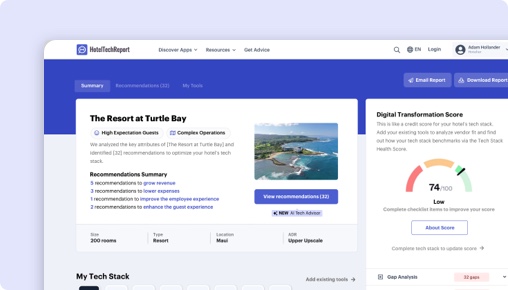
Sorry, this functionality is only available for verified hoteliers
The project dashboard is a free tool that is only available to verified hoteliers to make adopting new technology easier by streamlining their research and simplifying their communication workflow.

AXIS vs. RMS:
Which Is Right for You?

TLDR
We analyzed 322 verified hotelier reviews, compared feature sets, pricing, and real-world case studies to break down where each platform delivers. The right choice depends on your property type and priorities:
AXIS shines .
RMS shines in ease of use and customer support — especially for brand properties (5.0/5) , with exclusive features like Payment processing and Revenue management module.
What Are the Pros and Cons of AXIS vs RMS?
After analyzing 322 verified reviews, AXIS users most value its , while RMS users highlight technical support and learning resources, scalability and feature depth, trust accounting support. Click any theme to see what reviewers say.
| AXIS |
RMS
|
|---|---|
| Pros | |
|
+
Technical Support and Learning Resources
▾
|
|
|
+
Scalability and Feature Depth
▾
|
|
|
+
Trust Accounting Support
▾
|
|
|
+
Online Channel Management
▾
|
|
| Cons | |
|
−
Booking Engine and Mobile Interface
▾
|
|
|
−
Report Writer Flexibility
▾
|
|
|
−
POS System Integration
▾
|
|
AXIS vs RMS: Rankings by Hotel Segment
How each product ranks among Property Management Systems vendors for different property sizes, types, and regions — based on verified reviews from hoteliers in each segment.
By Hotel Size
| Segment | AXIS |
RMS
|
|---|---|---|
| Small (10-24 rooms) ▾ | — | #7 147 reviews |
| Mid-Size (25-74 rooms) ▾ | — | #8 102 reviews |
| Large (75-199 rooms) ▾ | — | #8 14 reviews |
| X-Large (200+ rooms) ▾ | — | #7 8 reviews |
By Property Type
| Segment | AXIS |
RMS
|
|---|---|---|
| Boutique ▾ | — | #11 100 reviews |
| Luxury ▾ | — | #13 57 reviews |
| Branded / Chain ▾ | — | #9 50 reviews |
| Extended Stay ▾ | — | #3 65 reviews |
By Region
| Segment | AXIS |
RMS
|
|---|---|---|
| North America ▾ | — | #11 63 reviews |
| Europe ▾ | — | #23 20 reviews |
| Asia Pacific ▾ | — | #12 10 reviews |
| Middle East ▾ | — | #8 7 reviews |
The Decision
Choosing the right property management system (PMS) is critical for your hotel’s operational efficiency and guest experience. AXIS by AXIS and RMS by RMS both aim to streamline hotel operations, but they differ significantly in scope, maturity, and user feedback. AXIS promises to automate complex revenue management tasks with advanced analytics, while RMS offers a broad suite of features that cover nearly every aspect of hotel operations. Which one aligns better with your hotel’s needs?
Is AXIS or RMS Better for Hotels?
AXIS and RMS are designed to solve different core problems. AXIS focuses primarily on revenue management, using AI to forecast demand and optimize pricing strategies, making it ideal for hotels prioritizing revenue growth. RMS, on the other hand, provides a full suite of operational tools—reservation management, guest engagement, channel management, and more—making it suitable for hotels seeking a comprehensive management platform.
The divergence lies in their feature depth and target use cases. RMS boasts over 74 features, including integrated booking engines, POS, and guest portals, while AXIS specializes in revenue analytics and decision support. RMS has a broader market presence, with over 7,000 users across 70 countries, compared to AXIS’s more niche focus. Given that RMS has more recent reviews and a higher user rating, it clearly has stronger recent market validation.
Are you looking for a PMS that handles day-to-day operations or one that mainly boosts revenue? Your decision will depend on whether your emphasis is on operational automation or maximizing profitability.
RMS vs AXIS: Which Should Your Hotel Choose?
If your hotel needs a comprehensive operational system that covers reservations, housekeeping, guest engagement, and channel management, RMS is the better choice. Its more than 74 features support scalable, multi-property management, and recent reviews praise its ease of use and extensive integrations.
Conversely, if your priority is precise revenue forecasting and dynamic pricing driven by AI, AXIS might appeal more. Its focus on demand forecasting and advanced analytics can help mature hotels or revenue teams optimize profits, especially if they have the capacity to integrate it into broader operational workflows.
For most hotels, RMS's broader feature set and recent positive feedback make it the more suitable option. AXIS is ideal if your team is revenue-centric and seeking to automate pricing strategies with AI insights.
Is AXIS or RMS Easier to Use?
RMS generally receives higher UI/UX ratings (4.28/5) compared to AXIS, which has no available ratings but is described as a comprehensive system that can be complex. RMS’s interface is praised for its clarity, with users noting the ease of managing reservations and reports, and onboarding scores above 4.1/5.
AXIS, lacking recent reviews and user feedback, leaves its ease of use uncertain. However, given its AI-driven analytics and specialized functions, it may require more training and onboarding effort.
Edge: RMS.
Which Has Better Features: AXIS or RMS?
RMS offers 74 features, including integrated CRS, online 24/7 support, booking engine, revenue management, guest CRM, POS, digital registration, and multi-lingual support. Its feature set supports every operational aspect, making it highly versatile.
AXIS has no unique features listed and is primarily centered on revenue management and analytics, with no other capabilities detailed. Its focus is narrower, emphasizing automation of forecasting rather than operational management.
Edge: RMS.
Which Has Better Customer Support: AXIS or RMS?
RMS’s support is highly rated (4.48/5), with recent reviews highlighting prompt, knowledgeable service. Users appreciate their quick response, proactive help, and accessible support staff, with feedback like, "Support team is proactive and helpful."
AXIS's support ratings are unavailable, and with no recent reviews, confidence in support quality is limited. Given RMS’s more recent and numerous reviews, it clearly has the edge here.
Edge: RMS.
Which Has More Integrations: AXIS or RMS?
RMS offers 112 verified integrations, including prominent partners like Criton, Sage, STR, and Unifocus. Its broad integration ecosystem supports extensive customization and linking with other hotel technology.
AXIS has no verified partners listed, indicating a limited or undeclared integration network. For hotels relying on multiple systems, RMS’s extensive integrations are a decisive advantage.
Edge: RMS.
Which Do Hoteliers Rate Higher: AXIS or RMS?
With 293 reviews and more recent feedback, RMS’s average rating of 4.56/5 far exceeds AXIS’s 0/5 rating, which is based on no reviews. RMS’s users, especially in mid-sized and boutique hotels, praise its ease of use, support, and feature depth.
AXIS’s lack of reviews suggests limited market validation and confidence. RMS’s higher ratings from diverse hotel segments confirm its strong standing.
Edge: RMS.
How Much Do AXIS and RMS Cost?
AXIS’s pricing details are unavailable, indicating it may be bespoke or not openly marketed. RMS costs $800 per month, with no free tiers or trial options listed, reflecting a transparent subscription model.
Unless AXIS offers a cost advantage, RMS’s predictable pricing provides clarity for budgeting.
What Type of Hotel Should Use AXIS?
- Hotels that prioritize revenue optimization and demand forecasting.
- Revenue teams seeking AI-driven insights to set competitive prices.
- Hotels with an in-house analytics team capable of interpreting advanced data.
- Properties with existing operational systems they want to complement with revenue management.
Not ideal if your hotel requires comprehensive operational features or seamless guest engagement tools.
What Type of Hotel Should Use RMS?
- Hotels seeking a full-service PMS covering reservations, housekeeping, payments, and guest communication.
- Properties looking for an integrated booking engine, channel management, and POS.
- Hotels with multiple properties needing scalable, centralized management.
- Teams that value extensive support, integrations, and user-friendly interfaces.
Not ideal if your hotel only needs basic booking or if you prioritize revenue management over operational management.
RMS vs AXIS: The Bottom Line for Hotels
The core difference is that RMS is a broad operational platform with a proven track record, while AXIS specializes in revenue analytics with AI-driven forecasting. RMS’s comprehensive features and recent positive reviews make it suitable for hotels seeking operational automation and growth.
Choose RMS if your hotel needs day-to-day management tools alongside scalable, multi-property capabilities. Opt for AXIS if your primary goal is to enhance revenue strategies through sophisticated forecasting.
For most hotels, RMS’s extensive feature set, strong user ratings, and support infrastructure make it the stronger choice. AXIS remains a niche solution better suited for revenue-focused teams with advanced analytics needs.
In conclusion, RMS’s proven market presence, recent reviews, and broad feature set give it a clear edge over AXIS for hotels looking to streamline operations and grow. If revenue management is your top priority and you have the technical capacity, AXIS might be worth considering, but RMS offers a more complete, tested solution for most properties.
Which Features Does AXIS Have That RMS Doesn't (and Vice Versa)?
According to HTR's product database, AXIS and RMS share 0 features. Here are the key differences — features one has that the other lacks.
| Feature | AXIS |
RMS
|
|---|---|---|
| Booking Engine | ||
| EPoS | ||
| Integrated CRS | ||
| Online 24/7 support | ||
| Payment processing | ||
| Revenue management module |
Showing top differences. 62 more features differ between these products.
Real-World Results: AXIS vs RMS by Business Goal
We analyzed 3 verified case studies to compare what hotels actually achieve with each platform across four key business objectives.
No published case study for this goal yet.
Lafayette Hotels
Mid-Size
"When you manage 26 properties, speed and control are everything. With RMS, I can update rates, policies, or form letters instantly across the group. That kind of centralization let..."
No published case study for this goal yet.
The Nare
Small
"RMS has helped us strengthen what makes The Nare special: our connection with guests. It gives our team the knowledge they need to offer a genuinely personal experience, and we see..."

AXIS vs RMS: The Bottom Line
What hoteliers love
RMS's support team is frequently praised for its proactive and knowledgeable assistance. However, users have expressed a need for more digital learnin... RMS's support team is frequently praised for its proactive and knowledgeable assistance. However, users have expressed a need for more digital learning resources and video tutorials to aid in system navigation and maximize the utility of available features.
RMS is praised for its ability to support growing businesses, especially RV resorts requiring complex operational support. Users commend the scalabili... RMS is praised for its ability to support growing businesses, especially RV resorts requiring complex operational support. Users commend the scalability and the rich feature set, including reservation management, reporting, and housekeeping, available out of the box. Such comprehensiveness allows properties to streamline varied operations effectively.
Users appreciate RMS for its exceptional trust accounting support, citing reliable and speedy assistance with accounting issues. The system's updates... Users appreciate RMS for its exceptional trust accounting support, citing reliable and speedy assistance with accounting issues. The system's updates enhance its capability to manage property trust accounting efficiently, with many noting that this feature significantly reduces operational complexity, thus allowing property managers to focus on other critical tasks.
Where hoteliers push back
The booking engine receives mixed reviews, with calls for enhancement in sophistication and mobile friendliness. Suggestions include making the bookin... The booking engine receives mixed reviews, with calls for enhancement in sophistication and mobile friendliness. Suggestions include making the booking process easier and potentially cost-free for returning guests, which could encourage loyalty and repeat business.
While RMS offers a robust report writing tool, customers have called for more customization options. Suggestions included editable fields and optional... While RMS offers a robust report writing tool, customers have called for more customization options. Suggestions included editable fields and optional columns to allow faster and more flexible report generation, aiding daily decision-making without needing to reconstruct reports from scratch.
Unique capabilities
Where the ratings diverge most
Frequently Asked Questions About AXIS vs RMS
Can AXIS replace RMS?
It depends on your requirements. AXIS and RMS share many core Property Management Systems features, but each has unique capabilities. AXIS offers 0 verified integration partners, while RMS offers 112. Review the feature comparison above to see where they differ before switching.
Which is better for small or independent hotels?
Small hotels should prioritize ease of use and fast onboarding. RMS leads in ease of use at 4.3/5 vs 0.0/5. Look for transparent pricing and a trial or demo option. Filter reviews on each product page by property size to hear from hotels like yours.
Do AXIS or RMS offer a free plan?
AXIS: No. RMS: No. Neither product currently offers a free tier. Most Property Management Systems vendors offer demos or trials — request one from each to evaluate before committing.
How Does HTR Evaluate and Rank AXIS and RMS?
The HT Score is a composite ranking that considers 4 criteria groups and over a dozen variables to help hoteliers objectively compare hotel technology products. AXIS has an HT Score of 0 and RMS has 89. Here is how the score is calculated.
| Criteria Group | Weight | What It Measures |
|---|---|---|
| Customer Ratings & Reviews |
|
How highly do users recommend this product? Ratings Score, Review Volume, Share of Voice, Review Depth, Review Recency, Success Stories ▾ The most heavily weighted factor. Analyzes average satisfaction ratings (likelihood to recommend, ease of use, support, ROI), total review count relative to category peers, review recency (at least 20 reviews in the trailing 6 months), and share of voice across unique hotel clients to detect selection bias. |
| Partner Ecosystem |
|
How highly do tech partners recommend this company? Partner Recommendations, Integration Quantity, Integration Quality ▾ Evaluates partner recommendations as expert votes of confidence, the number of verified integrations, and ecosystem quality — the average HT Scores of integration partners. Products with higher-quality integration ecosystems are more likely to deliver a connected tech stack. |
| Customer Centricity |
|
How customer-centric is this organization? Certified Support, Review Consistency, Profile Completeness ▾ Assesses whether the company has earned HTR Customer Support Certification, maintains consistent review collection over time (an indicator of feedback-driven culture), and keeps product profiles complete with capabilities, screenshots, pricing, and features. |
| Reach, Staying Power & Resources |
|
How extensive is this company's reach and resourcing? Geographic Reach, Staying Power, Company Resources, Trending Score ▾ Measures global presence (countries and regions served), years in business as a stability proxy, team headcount as a resource proxy, and a trending score based on trailing-twelve-month buyer inquiries, reviews, partner recommendations, and press activity. |
Customer ratings and reviews are by far the most important factor in the HT Score algorithm. HTR does not accept payment for higher rankings. All reviews are verified — only hotel industry practitioners with confirmed affiliations can submit ratings. View full HT Score methodology →
What Other Property Management Systems Comparisons Are Hoteliers Reading?
Explore more head-to-head comparisons based on verified hotelier reviews.






Contents
Get Your Free AI Analyst Report
Custom recommendations tailored to your property


Let´s lookup your hotel information
Still weighing your property management systems options?
A few popular systems from our property management systems guide — or let our AI score each one against your specific property in about two minutes.