

Popular in Operations
Best Property Management Systems of 2026
Your hotel's core operating system to effortlessly manage bookings, guest experiences, and operations.
Best Staff Collaboration Tools of 2026
Enhance team collaboration with real-time messaging, task sharing, and centralized updates across departments.
Best Hotel Accounting Software of 2026
Tools to manage your hotel's accounting, budgeting and financial planning.
Popular in Revenue Management
Best Revenue Management Systems of 2026
Maximize revenue with dynamic pricing, demand forecasting, and automated data insights.
Best Channel Managers of 2026
Hotel distribution software that syncs rates, availability and inventory across 3rd party channels
Best Business Intelligence of 2026
Say goodbye to spreadsheets and leverage modern BI tools to visualize your data and uncover hidden insights.
Popular in Marketing
Best Hotel CRM & Email Marketing of 2026
Turn guest data into action with personalized offers, targeted communication, and automated workflows.
Best Booking Engine of 2026
The eCommerce shopping cart for your hotel's website.
Best Hotel Metasearch Management Software of 2026
Setup, manage and optimize advertising campaigns across channels to drive direct bookings.
Popular in Guest Experience
Best Hotel Guest Apps of 2026
Enhance stays with a guest app offering amenities info, messaging, mobile ordering, and upsell opportunities.
Best Contactless Check-in of 2026
Empower guests with easy online check-in, digital authorizations, and seamless upsells.
Best Guest Messaging Software of 2026
Connect with guests instantly through real-time messaging, automated responses, and seamless communication.
Sorry, this functionality is only available for verified hoteliers
The project dashboard is a free tool that is only available to verified hoteliers to make adopting new technology easier by streamlining their research and simplifying their communication workflow.

Join 100,000 executives from top brands like Accor, Marriott, Viceroy, Shangri-La, Rosewood, Expedia and AirBnB and get the latest innovations and insights delivered to your inbox once a week.
Before You Buy: 6 PMS Pitfalls Independent Hoteliers Must Avoid
Your choice of hotel property management system (PMS) shapes the course of your business for years to come, either setting you up for success or setting you back in a competitive marketplace. From daily workflows and guest satisfaction to overall revenue potential, your PMS touches every corner of your property. To help you choose with confidence, we’ve outlined the most common pitfalls independent hoteliers face when evaluating a new system—and how to avoid them. Pitfall #1: Falling Into the "Feature Bloat" Trap Boutique properties don’t need the same complicated technology as large chain hotels. Extra software features may result in a cluttered user interface, steeper learning curve, and higher costs that fail to deliver a return on investment (ROI). Before shopping for your new system, conduct a quick SWOT analysis (strengths, weaknesses, opportunities, and threats) for your property. Establish concrete 5-10 year business goals so you can select a platform that meets your actual operational needs without paying for unnecessary bells and whistles. Pitfall #2: Overlooking Hidden Costs of OwnershipWhat you see isn’t always what you pay. A hotel property management system may initially seem budget friendly, but keep an eye out for these hidden fees that quickly inflate your total cost of ownership: Tiered Support Fees: Ensure direct customer support is included in your base subscription. Some vendors charge extra for "premium" tiers just to get a live human on the phone. Per-User Licensing Fees: Avoid systems that charge per user profile. As your seasonal staffing changes or your business grows, these additional seat licenses become a financial burden. Look for a flat-rate subscription model instead. Direct Booking Commission Fees: Direct bookings are meant to eliminate middleman fees; vendors that charge a commission on reservations generated through your own website completely defeat the purpose. Opaque Setup and Cancellation Fees: Some vendors tack on arbitrary setup costs or steep early-exit penalties that aren't clear until you try to leave. Ensure your provider clearly outlines all standard contract terms, notice periods, and setup fees in plain English before you commit. Upgrade Fees: All PMS software requires upgrades to stay secure and functional. Ensure that upgrade fees won’t trap you on an older, unsupported version down the road. Pitfall #3: Treating Payment Processing as an AfterthoughtMany operators select a PMS first and figure out payments later. This separation frequently results in a clunky, disconnected check-in procedure and a higher risk of manual accounting errors. Instead of wrestling with third-party middleware, look for a PMS like WebRezPro with its own embedded payment processor. This enables seamless daily reconciliation, tighter data security (PCI compliance), and faster check-ins. Pitfall #4: Ignoring Integration Flexibility A modern, cloud-based PMS should act as a hub allowing information to flow freely and securely to and from your other critical tools. A thriving hotel relies on an ecosystem of interconnected technologies, including channel managers, point-of-sale (POS) systems, smart locks, and guest messaging apps. Strong integrations give you the flexibility to adopt best-in-class software as your property grows, without replacing your core system. Choosing a closed PMS creates data silos and missed revenue opportunities. Ensure your prospective PMS features a robust integration marketplace so you can build your ideal hospitality tech stack.Pitfall #5: Neglecting the Mobile and Guest-Facing Experience Independent hoteliers are rarely chained to a desk; they are on the floor checking rooms, greeting guests, or managing operations remotely. Choosing a legacy system restricted to desktop computers or even a cloud-based PMS with a poor mobile interface is a recipe for frustration for guests and staff alike. Furthermore, a clunky mobile booking experience will decimate direct conversions. Consider these statistics: 50% of hotel bookings happen on mobile devices.60% of travelers research hotels on mobile.It’s easy to get obsessed with the backend dashboard and forget to audit the booking engine from a guest's perspective. If the booking flow is clunky, requires too many steps, or feels outdated, guests will head straight back to OTAs like Expedia or Booking.com.Pro tip: Book a test reservation yourself—or better yet, ask a friend unfamiliar with your system to do so—to uncover any hidden friction points. The Impact of Direct Booking Engines on AI Search (GEO) A modern booking engine doesn't just serve human guests; it feeds AI search tools. Modern AI travel assistants rely on your booking engine’s structured data (schema markup) to pull real-time rates and availability for travelers. If your booking engine lacks clear schema markup, Generative Engine Optimization (GEO) breaks down, and AI search platforms may omit your property entirely. As generative AI becomes a primary way travelers discover and plan trips, a strong GEO strategy is no longer optional; it determines whether your property appears in next-generation search results. Pitfall #6: Discounting the Value of Support and Onboarding Implementing a new PMS is a major operational transition, and you shouldn't have to navigate it alone. Look for a vendor that provides a fully guided onboarding experience rather than simply handing over a login and leaving you to figure it out yourself.Beyond initial setup, reliable ongoing support is critical. When your system experiences a hiccup at 10:00 PM on a holiday weekend, you can’t afford to wait on a generic corporate chatbot; you need fast access to live, expert assistance.Finally, consider how easy the system is for your team to learn. With high staff turnover being an industry-wide reality, an intuitive user interface ensures seasonal or new employees can learn to check a guest in confidently during their very first shift.Future-Proofing Your Hotel Operations The right hotel property management system acts as an accelerator for your business, streamlining daily workflows, protecting your data, and unlocking new revenue streams. Take the time to audit software thoroughly from both the staff and guest perspectives to find a platform that supports long-term growth.
 WebRezPro
Why Reviews Are Essential Hotel Marketing Assets in the AI Era
Online reputation has always influenced bookings. Now it influences visibility itself.
 GuestRevu
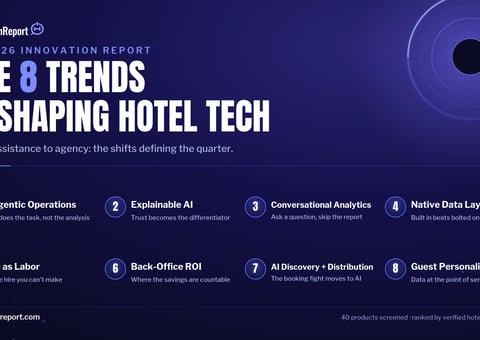
Hotel Tech Innovation Report: AI Trends & Tactics (Q2 2026)
The Q2 2026 Innovation Report from HITEC San Antonio: forty products, eight trends, and one shift from advice to action.
 Hotel Tech Report
How To Turn Guest Review Data Into Operational Decisions
Most hotels already have the data needed to improve operations and increase revenue—they're just looking at it the wrong way.
 Hotel Speaker

Why Hotels Are Optimizing Revenue and Losing Profit
The question is no longer just whether you priced the room well. It is whether the strategy you ran actually delivered the profit your hotel needed, and whether you have the visibility to know.
Hotel Tech Report
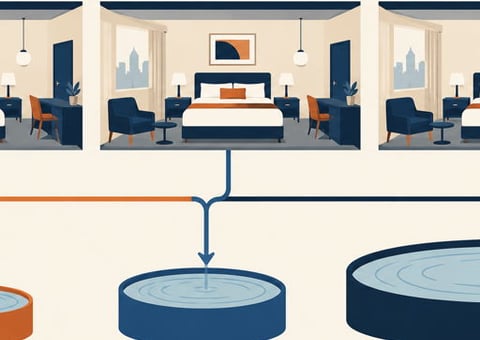
5 Signs Your Resort Operations Are More Inefficient Than You Think
A single system designed to manage your resort’s daily operations can remove the friction, reduce the manual work, and give your team the clarity they need to perform at their best.
 Eleanor

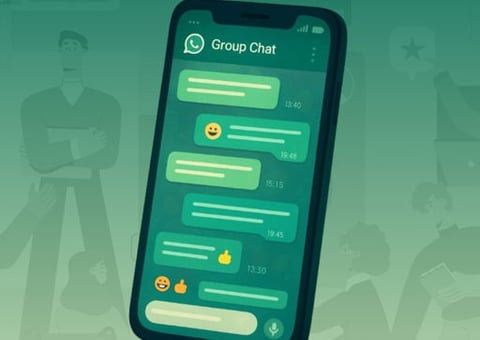
Critical Hotel Data Is Sitting in Your Team Chat on Personal Devices
Your hotel's most critical operational and guest data is currently sitting on your departing employees' personal phones. Learn why relying on consumer apps is a serious data security risk and how to regain control of your data infrastructure.
 Jordan Hollander
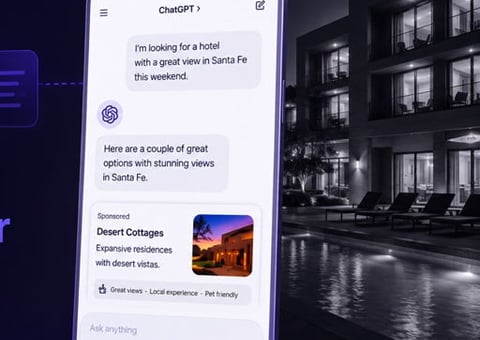
ChatGPT Hotel Ads: They're Here and OTAs Already Have First-Mover Advantage
OpenAI began testing ads in ChatGPT on Feb 9, 2026, showing sponsored placements to Free and Go users only, with paid tiers remaining ad-free. Ads appear below responses, are clearly labeled, and do not influence organic recommendations. Travel is among the first impacted categories as AI reshapes discovery: 56% of travelers used AI last year, and 78% booked based on it. Since ChatGPT returns just a few options, organic inclusion is critical before ads matter.
Jordan Hollander
ITB Berlin 2026 Innovation Report: Decision Speed Is Becoming a Hotel’s Competitive Advantage
At ITB Berlin 2026, the most notable hotel tech innovation wasn’t any single product category—it was a wave of tools designed to shorten the time between signals (guest inquiries, demand shifts, operational issues) and the decisions hotels make in response.
Hotel Tech Report
Hotel Tech Report Unveils Winners of the 2026 HotelTechAwards, the Industry’s Most Data-Driven Hotel Technology Rankings
Hotel Tech Report, the global hotel software research platform used by more than 1.5 million hotel technology buyers each year, today announced the winners of the 2026 HotelTechAwards.HotelTechReport’s platform is used by hotel owners, operators, and management companies across the globe, with representation from 100% of the world’s top 10 global hotel chains. Now in its eighth year, the HotelTechAwards have become the industry’s definitive benchmark for evaluating hotel technology, ranking the world’s best software companies and products using verified, real-world customer data not panels, sponsorships, or popularity contests. The Industry’s Most Competitive and Elite Data-Backed Awards ProgramThe 2026 HotelTechAwards evaluated 3,013 hotel technology companies worldwide, with 245 products qualifying for final consideration after meeting strict eligibility and data-quality thresholds.Awards were determined using authentic, timely reviews from verified hotel owners and operators with hands-on experience using each product. Rankings span the entire hotel technology stack, including: Property Management Systems Revenue Management Systems Channel Managers Guest Messaging and Contactless Check-In Hotel Operations, CRM, and Upselling Platforms In addition to category awards, the program recognizes: The 10 Overall Hotelier’s Choice Award winners, honoring the most customer-centric companies in the industry The 10 Best Places to Work in Hotel Tech, recognizing companies with outstanding internal culture as rated by employees Built to Help Hoteliers Cut Through the NoiseAs the hotel technology landscape continues to expand—bringing thousands of software options and increasingly complex buying decisions the role of independent, data-backed validation has become more critical than ever. “We originally created the HotelTechAwards as a democratized way to help hoteliers quickly identify best-of-breed technology partners using data they can trust,” said Jordan Hollander, CEO of Hotel Tech Report.“The scale of competition this year reflects how dramatically the hotel technology market has evolved. Our methodology is simple, transparent, and unbiased built on publicly available data and crowdsourced insights from verified hoteliers with real operational experience.” Industry leaders say that transparency and peer-driven insight are what make the HotelTechAwards especially relevant in a crowded market.“HotelTechReport provides the most transparent, customer feedback-led information that industry professionals can rely on to make confident decisions,” said Sean Fitzpatrick, CEO of Lighthouse. “Hoteliers value being able to share honest, unfiltered feedback with peers in an open forum. The HotelTechAwards surface the very best of those insights, and that’s why hoteliers trust them.”Sankar Narayan, CEO of SiteMinder, added, “Openness is core to what we stand for at SiteMinder, and the HotelTechAwards align perfectly with that value. The program’s data-driven and transparent process sets a clear industry standard for credibility.” 2026 Platform Award WinnersThe HotelTechAwards Platform Awards recognize hotel technology companies building true end-to-end platforms—across e-commerce, operations, and guest experience. These awards honor vendors whose integrated product suites enable hoteliers to execute critical workflows within a single business domain, reflecting the industry’s shift toward holistic platforms as hotel technology buying matures. Winners are evaluated using verified customer data, HTScores across constituent products, and platform interoperability, highlighting companies delivering comprehensive, scalable solutions for modern hotel operations. Best eCommerce Platform: SiteMinder Best Guest Experience Platform: Canary Technologies Best Hotel Operations Platform: hotelkit 2026 Overall Hotelier’s Choice Award WinnersThe 2026 Hotelier’s Choice Awards recognize the 10 most customer-centric hotel technology companies in the world, based entirely on verified hotelier reviews and proprietary performance data from HotelTechReport.com. Part of the annual HotelTechAwards, this distinction compares companies across the entire hotel technology ecosystem—making it the most competitive award in the program. Winners demonstrate sustained customer satisfaction, global adoption, and consistently high likelihood-to-recommend scores, reflecting real-world performance at global scale.The Overall Hotelier’s Choice Awards recognize the most customer-centric hotel technology companies across all categories: SiteMinder Canary Technologies Lighthouse Cloudbeds Mews Asksuite MARA Solutions Duve RoomPriceGenie GuestRevu Learn more about the Hotelier's Choice Award 10 Best Places to Work in Hotel TechThe 2026 Best Places to Work in Hotel Tech recognizes the companies setting the standard for workplace quality in hospitality technology. Based on 3,011 verified employee survey responses, this data-driven list reflects how teams experience leadership, growth, fairness, and direction in practice—not in marketing. As hotel technology becomes core infrastructure for the industry, these organizations stand out for scaling with clarity, trust, and long-term sustainability. RoomPriceGenie Asksuite Cloudbeds Snapfix Actabl Mews Duve Inn-Flow hotelkit Canary Technologies Learn more about the 10 Best Places to Work
Jordan Hollander
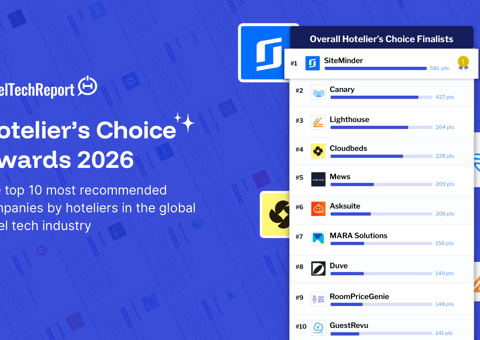
The Best Hotel Tech Apps of 2026
Discover the top rated hotel tech products to run & grow your hotel business in 2026 based on real product reviews from verified hoteliers at the world’s leading hotel companies.
Hotel Tech Report
The 10 Best Places to Work in Hotel Tech 2026
For the 2026 edition of our list, we analyzed survey responses from 3,011 hotel tech professionals across the globe. Respondents rated their employers on key factors that define an exceptional workplace.
Jordan Hollander
Why Hotels Must Rethink Rate Intelligence to Drive Better Decisions
In hospitality, data is supposed to empower decisions. But today, it often does the opposite.From pricing shifts to parity gaps, city-level demand spikes, and competitor benchmarking, hotel commercial teams are surrounded by an avalanche of data. Yet, paradoxically, decision-making is getting slower, not faster. Recent industry data highlights the depth of the problem: 80% of hotels report spending up to two full workdays each week on manual data reconciliation. For many, data has stopped being a competitive edge — and started becoming a full-time job. The Core Challenge: Too Much Data, Too Little ClarityAcross property types and regions, hotel teams echo the same concerns: data is fragmented, sources don’t align, and dashboards keep multiplying. 4 in 5 independent hotels say they can’t adjust pricing quickly enough due to limited visibility and scattered insights. 82% of large chains struggle with managing disconnected platforms and data vendors, leading to missed revenue opportunities. What hotels need isn’t more data — it’s better interpretation. Less dashboard shuffling, more decision clarity. The Shift Toward Actionable IntelligenceAs hospitality evolves, there’s a growing need to move beyond raw numbers and focus on revenue-driving signals.This is where actionable intelligence comes in — the ability to not just report what’s happening, but why it’s happening, and what needs to be done. The idea is to cut through the clutter, surface the most urgent opportunities, and empower teams to act — fast.Imagine being told not just that your competitor changed rates, but that you’re losing market share on high-demand dates due to a price gap. That’s the kind of shift that moves the needle. What the Next Generation of Rate Intelligence Must DeliverThe future of rate intelligence isn’t about flashier dashboards or more granular filters. It’s about helping hoteliers make faster, smarter pricing decisions with confidence.Here’s what that requires: Unified Intelligence: Bringing rate, parity, and demand insights together. Visual Simplicity: Interfaces that prioritize clarity over complexity. Signal Prioritization: Tools that identify the right data at the right time. Contextual Insights: Understanding the “why,” not just the “what.” Hotels that master this shift will free up their teams, act ahead of the market, and unlock real revenue impact — not just reports. A Call to EvolveThis isn’t just a technology conversation. It’s a strategic one. The hospitality industry can’t afford to treat intelligence as a passive resource — it must become an active driver of outcomes.The challenge is no longer access to data. It’s the ability to interpret it and act with confidence.As hotel leaders look to streamline operations and elevate commercial performance, now is the time to ask: Are your teams empowered by your data — or buried under it?
 RateGain
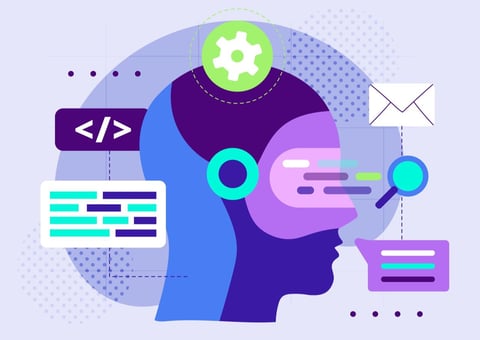
How AI Is Redefining Hotel Operations And Guest Experiences
As hotels face higher guest demands and operational challenges, artificial intelligence (AI) is emerging as a key tool to improve efficiency and elevate the guest experience. From automating front-desk operations to predicting guest preferences, AI is helping hotels operate smarter, faster, and more profitably. As margins tighten and staff shortages persist, AI-driven systems are becoming indispensable to sustaining both efficiency and personalization. In this article, we break down how AI is redefining every aspect of hotel operations and how modern platforms are enabling this transformation at scale. Understanding How AI Is Powering The Next Generation Of Hotel OperationsArtificial intelligence in hospitality extends far beyond chatbots. It combines machine learning, natural language processing (NLP), and predictive analytics to automate decision-making and improve outcomes in real time.According to Deloitte’s 2024 Travel and Hospitality Outlook, more than 60% of hotel executives identified AI-driven automation as their top technology priority for the next 18 months.Today, AI is reshaping hotel operations across multiple functions: Smart concierge and guest communication: AI-powered assistants respond to guest calls, WhatsApp messages, and pre-booking inquiries instantly — handling reservations, add-on services and amenity requests without delay. Automated task management: Predictive models assign housekeeping or maintenance tasks based on occupancy data, and staff availability, reducing downtime. Dynamic resource management: Machine learning monitors inventory, energy usage, and staffing levels to optimize resources. Predictive insights: AI forecasts occupancy, identifies guest behavior trends, and helps managers make data-backed operational decisions. Transforming The Concierge Experience Through AITraditional concierge desks rely heavily on manpower — assisting guests with cab bookings, reservations, sightseeing, or handling special requests. With staffing challenges and growing guest volumes, this manual approach can be inefficient.AI now enables 24/7 digital concierge assistants that manage all guest communications through chat or voice, automating routine inquiries such as: “What’s the pool timing?” “Can I get a late checkout?” “Book me a table for dinner.” These systems reduce manual workload while improving accuracy and response speed. They can also escalate complex requests to on-duty staff when needed.Forbes Hospitality Council notes, “AI is not replacing the concierge; it’s scaling hospitality by ensuring no guest query ever goes unanswered.”AI-driven guest messaging, AI-assisted self-check-in, AI operational assistant, is embedded in PMS platforms like that helps hotels manage guest interactions and thousands of communications across multiple channels seamlessly, reducing the dependency on manual follow-ups while maintaining a personalized touch. Enhancing Guest Journeys With AI-Based Pre-Booking And CommunicationAI is also transforming the pre-booking phase of the guest journey. Intelligent booking assistants can showcase room views, recommend amenities, and simulate virtual tours — responding instantly to guest queries via chat or WhatsApp.According to McKinsey (2024), hotels using AI-based booking assistance see a 15–25% increase in direct bookings due to faster responses and personalized recommendations. AI And The Future Of Zero-Interface Hotel OperationsOne of the most powerful trends in hospitality tech is zero-UI (zero user interface) operations — where staff and guests interact with hotel systems through natural language commands instead of complex dashboards.Voice-enabled AI tools now allow hoteliers to issue instructions such as:“Amend guest stay for room 206.”“Process early check-in.”“Log maintenance request for AC unit.”AI interprets and executes these commands directly through integrated property management systems. Guests can also manage stays, request upgrades, or check out digitally — eliminating long queues or repetitive front-desk interactions. Smarter Revenue Management Through AI-Powered Dynamic PricingAI has fundamentally changed dynamic pricing in hospitality. By analyzing booking trends, competitor rates, seasonality, and local demand signals, AI models continuously optimize room prices to maximize revenue and occupancy.Unlike rule-based systems, AI dynamically reacts to real-time market changes — ensuring every rate adjustment aligns with demand elasticity and guest behavior.Skift Research (2024) found that AI-driven pricing systems can yield 10–15% higher RevPAR compared to static or manually managed strategies. Measurable Impact Of AI On Hotel PerformanceHotels implementing AI-driven automation report measurable operational gains: 20–30% faster response times to guest requests (Skift Research, 2024) Up to 25% reduction in front desk workload Higher guest satisfaction scores, driven by speed and personalization 10–15% increase in direct revenue through dynamic pricing and intelligent upselling These systems ensure efficiency without sacrificing the human element — allowing staff to focus on empathy and personalized experiences while AI handles repetitive administrative tasks. Overcoming Implementation ChallengesAdopting AI requires thoughtful planning and change management. Common challenges include: Challenge Strategy Data accuracy Validate and train AI models on verified data through pilot programs before full-scale deployment. Staff resistance Emphasize AI as a support tool; offer skill-building programs to increase adoption. Legacy integration Use API-first platforms to connect AI modules incrementally to existing systems. Budget concerns Build a business case around measurable labor savings and service consistency improvements. The Road Ahead: From Reactive To Predictive HospitalityAs hotels consolidate their digital ecosystems, AI will evolve from reactive automation to predictive, autonomous operations. Systems will soon anticipate maintenance needs, adjust staffing levels dynamically, and personalize guest touchpoints automatically.Chip Rogers, President & CEO of the American Hotel & Lodging Association, notes: “AI is not replacing hospitality—it’s redefining it, empowering teams to deliver the personalized service guests have always valued.” (AHLA, 2024).For hotels, adopting AI is not just about technology — it’s about building resilience, agility, and guest-centricity.
 Yanolja Cloud Solution

Hotels Are Ditching Email for WhatsApp and Guests Love It
As inboxes overflow and response times lag, hotels are turning to WhatsApp for real-time, personalized guest messaging that email can’t match.
 dailypoint™

From Emails to Upsells: Hotels Are Finally Getting Messaging Right
Guest communications in hospitality remain highly fragmented. From boutique resorts in Europe to branded city hotels across Asia and the Americas, the same challenge emerges. Today’s travelers expect more than a room. They expect a seamless flow of communication—from booking confirmations to welcome messages, from personalized mid-stay offers to post-departure follow-ups. Each touchpoint influences how they perceive the hotel and whether they choose to return. Too often, however, communication breaks down: Pre-arrival emails are sent from one system, in-stay promotions from another, and loyalty follow-ups from yet another. Messages are duplicated, delayed, or lost altogether. Front desk staff spend hours manually sending reminders about check-in, upsells, or surveys. The result is more work for staff and a less cohesive experience for guests. The solution lies not in adding more tools, but in developing a structured communication strategy managed from a single hub. Done well, guest communication becomes a revenue generator, a loyalty builder, and a critical part of guest satisfaction.
 Hoteza

Trending Success Stories





Get Your Free AI Analyst Report
Custom recommendations tailored to your property


