

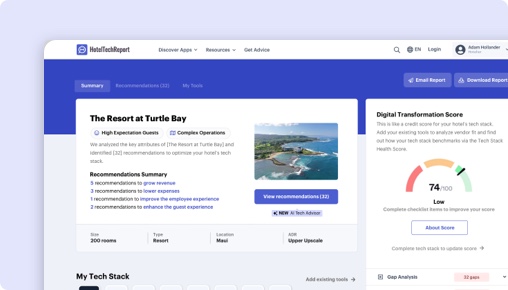
Sorry, this functionality is only available for verified hoteliers
The project dashboard is a free tool that is only available to verified hoteliers to make adopting new technology easier by streamlining their research and simplifying their communication workflow.

DayPass vs. Duve Upselling:
Which Is Right for You?


TLDR
We analyzed 473 verified hotelier reviews, compared feature sets, pricing, and real-world case studies to break down where each platform delivers. The right choice depends on your property type and priorities:
Duve shines in upselling and ancillary revenue growth — especially for limited-service properties (4.8/5), with exclusive features like Mobile Friendly and SMS text messaging.
How Does DayPass Compare to Duve Upselling?
Side-by-side ratings based on 473 verified hotelier reviews on HTR.
| HTScore |
|
|
| Likelihood to Recommend |
|
|
| Ease of Use |
|
|
| Customer Support |
|
|
| Value for Money |
|
|
| Starting Price | From $100/mo | From $900/mo |
| Verified Reviews | 1 | 472 |
What Are the Pros and Cons of DayPass vs Duve Upselling?
After analyzing 473 verified reviews, DayPass users most value its , while Duve users highlight upselling and ancillary revenue growth, usability, setup, and operational flexibility, guest messaging and communication hub. Click any theme to see what reviewers say.
|
DayPass
|
Duve
|
|---|---|
| Pros | |
|
+
Upselling and ancillary revenue growth
▾
|
|
|
+
Usability, setup, and operational flexibility
▾
|
|
|
+
Guest messaging and communication hub
▾
|
|
|
+
Pre-arrival check-in and faster guest arrival workflow
▾
|
|
| Cons | |
|
−
System integration and PMS synchronization
▾
|
|
DayPass vs Duve: Rankings by Hotel Segment
How each product ranks among Upselling Software vendors for different property sizes, types, and regions — based on verified reviews from hoteliers in each segment.
By Hotel Size
| Segment |
DayPass
|
Duve
|
|---|---|---|
| Small (10-24 rooms) ▾ | — | #2 76 reviews |
| Mid-Size (25-74 rooms) ▾ | — | #3 145 reviews |
| Large (75-199 rooms) ▾ | #22 1 reviews | #3 91 reviews |
| X-Large (200+ rooms) ▾ | #23 0 reviews | #3 42 reviews |
By Property Type
| Segment |
DayPass
|
Duve
|
|---|---|---|
| Boutique ▾ | — | #3 144 reviews |
| Luxury ▾ | #27 1 reviews | #3 160 reviews |
| Branded / Chain ▾ | — | #3 107 reviews |
| Extended Stay ▾ | #26 0 reviews | #2 49 reviews |
By Region
| Segment |
DayPass
|
Duve
|
|---|---|---|
| North America ▾ | — | #3 40 reviews |
| Europe ▾ | — | #2 160 reviews |
| Asia Pacific ▾ | — | #5 18 reviews |
| Middle East ▾ | #15 0 reviews | #1 115 reviews |
Is DayPass or Duve Better for Hotels?
DayPass and Duve both target ancillary revenue growth through upselling, but they serve different operational needs and hotel segments. DayPass specializes in managing and distributing leisure day experiences such as pool, beach, and F&B day packages. Its focus is narrow but effective for branded hotels with resort-style amenities aiming to monetize day use of facilities. Duve, by contrast, is a comprehensive guest engagement platform offering personalized upselling across multiple in-house services, room upgrades, digital check-in, messaging, and marketplace integrations. It caters to a broad range of hotel types including luxury hotels, boutique properties, hostels, and vacation rentals.
Both platforms solve the core problem of increasing ancillary revenue while reducing front desk workload. DayPass automates leisure package sales, directly linking ARI (availability, rates, inventory) management and distribution via OTA and direct channels. Duve provides a unified communication and upsell workflow, allowing guests to request and pay for services pre-arrival or in-stay via mobile apps and messaging channels. The choice depends on property type, scale, and the scope of upselling needs.
DayPass vs Duve: Which Should Your Hotel Choose?
If your hotel is a branded resort or luxury property with pool, beach, or F&B day-use packages and you prioritize a streamlined system designed solely for leisure experience sales, DayPass fits well. Its $100 base price and focused ARI management suit smaller portfolios or properties seeking a specialized solution for day packages. However, this assessment is based on a single review from a branded resort hotel segment, limiting the breadth of operational evidence.
If you run a multi-segment hotel operation, including luxury, boutique, city center hotels, or vacation rentals, and need an all-in-one guest engagement platform with upselling, digital check-in, guest messaging, and extensive integrations, Duve is the better choice. Duve’s 4.6 rating across 451 reviews with 132 in the last six months reflects widespread adoption and consistent performance. Its $900 base price aligns with its broader feature set and integration depth. For large chains or diverse portfolios requiring customization and multi-channel upselling, Duve’s scalability and analytics capabilities provide measurable ROI.
Properties without a strong focus on day-use packages or those needing a unified guest journey platform should lean toward Duve. For hotels exclusively selling leisure day experiences, DayPass may suffice but lacks the broader operational tools found in Duve.
Is DayPass or Duve Easier to Use?
DayPass has an ease-of-use rating of 4.0/5 from a single reviewer who appreciated the straightforward guidance and fast responses during implementation. Duve’s ease-of-use stands at 4.7/5 across 451 reviews, with users praising its intuitive interface and smooth onboarding despite occasional setup complexity.
Reviewers of Duve note that staff adoption is eased by its integration of guest messaging, upselling, and check-in workflows into a single platform, reducing manual tasks. Some initial configuration challenges exist but comprehensive onboarding and support mitigate these. DayPass’s limited review data means ease of use is less validated across diverse hotel types.
Edge: Even.
Which Has Better Features: DayPass or Duve?
Duve offers 30 features unique to its platform, such as mobile check-in, WhatsApp integration, automated replies, messaging guest surveys, room service ordering, automatic translations, and an analytics dashboard. These features enable personalized upselling based on guest profiles, multi-channel communication, and operational automation that directly impact front desk workflows and guest engagement. For example, Duve’s automated opt-in/consent collection reduces compliance risks while its offer orchestration personalizes upsells from booking through post-stay.
DayPass provides no unique features outside of a core set of 13 shared upselling capabilities. Its strength lies in leisure day package ARI management and distribution via OTA and direct booking engines, but it lacks broader guest communication or digital check-in options.
Duve’s feature breadth supports operational efficiency, personalized guest experiences, and expanded revenue streams beyond day packages. This makes it more suitable for hotels seeking an integrated upsell and guest engagement solution.
Edge: Duve.
Which Has Better Customer Support: DayPass or Duve?
DayPass scores 5.0/5 in customer support from a single review praising the team’s fast response time, proactive communication, and reliability. The reviewer highlighted that DayPass quickly implements needed changes and keeps clients informed, which fosters trust.
Duve’s customer support rating is 4.6/5 across 451 reviews. Users frequently commend Duve’s professional support team and effective onboarding, citing helpful account managers and timely issue resolution. However, some reviews mention sporadic delays and challenges with PMS integrations that occasionally impact service quality.
Given the volume and diversity of Duve’s support experiences, its rating is more representative. DayPass’s limited data prevents a definitive edge.
Edge: Even.
Which Has More Integrations: DayPass or Duve?
DayPass has 2 verified partners, including Oracle Hospitality, but only one partner is shared with Duve. Duve boasts 72 verified partners across PMS, payment providers, and third-party vendors, including Oracle Hospitality, Priority Software, RoomRaccoon, HOTELTIME, and apaleo GmbH.
Duve’s extensive integration ecosystem supports various hotel operations and guest service workflows, allowing seamless data exchange for upselling, check-in, and payments. This is critical for properties requiring multi-system interoperability, especially larger chains or diversified portfolios.
DayPass’s limited integrations constrain its scalability and operational flexibility compared to Duve’s broad connectivity.
Edge: Duve.
Which Do Hoteliers Rate Higher: DayPass or Duve?
DayPass holds a 4.5/5 overall rating from a single review in the branded luxury resort segment, insufficient to draw segment-wide conclusions. Duve maintains a 4.6/5 rating across 451 reviews with 132 recent reviews, reflecting sustained high satisfaction.
Duve’s ratings by segment include 4.7/5 for luxury hotels (187 reviews), 4.8/5 for city center hotels (163 reviews), 4.7/5 for vacation rentals & villas (108 reviews), 4.7/5 for boutique hotels (165 reviews), and 4.8/5 for branded hotels (130 reviews). This indicates broad acceptance and success across property types.
The recency and volume of Duve’s reviews provide a reliable performance snapshot, while DayPass’s single review limits confidence.
Edge: Even.
How Much Do DayPass and Duve Cost?
DayPass charges a base price of $100 with no freemium, monthly flat, or per-room pricing, and no implementation fee or trial. Its pricing model suits smaller properties focused on leisure day package sales.
Duve’s base price is $900, reflecting its comprehensive feature set and integration capabilities. Like DayPass, it has no freemium, monthly flat, or per-room pricing, and no implementation fee or trial.
The pricing difference corresponds to the breadth of functionality. Hotels must weigh the cost against operational needs and expected ROI.
What Type of Hotel Should Use DayPass?
- Hotels that are branded resorts or luxury properties with substantial pool, beach, or F&B day-use amenities.
- Properties focused exclusively on leisure experience ancillary revenue.
- Teams seeking a simple platform to manage and distribute day packages via OTA and direct booking.
- Operations with limited need for integrated guest communication or check-in automation.
Not ideal if:
- Your property requires multi-channel guest messaging or digital check-in.
- You operate multiple hotel segments or need extensive PMS integrations.
- You seek advanced analytics dashboards for performance tracking.
- You need a guest app or personalized upselling workflows beyond day packages.
What Type of Hotel Should Use Duve?
- Hotels across luxury, boutique, city center, and branded segments seeking an integrated guest engagement and upselling platform.
- Properties requiring mobile check-in, guest messaging via SMS and WhatsApp, and personalized upsell offers.
- Teams wanting centralized communication hubs to reduce front desk workload.
- Operations needing extensive integrations with PMS, payment providers, and third-party vendors.
- Hotels with multi-property portfolios seeking scalable and customizable guest experience tools.
Not ideal if:
- Your hotel’s upselling focus is solely on leisure day packages.
- You require a lower-cost solution with a narrow feature set.
- Your team prefers minimal initial setup complexity.
DayPass vs Duve: The Bottom Line for Hotels
DayPass and Duve both address upselling and ancillary revenue but diverge sharply in scope and operational impact. DayPass focuses exclusively on managing and selling day-use leisure packages with a simple ARI and distribution platform suited to branded resorts. Duve offers a full guest engagement suite that integrates upselling, messaging, digital check-in, and marketplace services across diverse hotel types.
Choose DayPass if your property prioritizes managing pool, beach, and F&B day packages and values a straightforward, lower-cost system dedicated to leisure experiences. Its strong direct support and quick responsiveness are advantages when managing a small portfolio of branded resorts.
Choose Duve if your hotel requires a comprehensive upselling and guest communication platform with extensive PMS integrations, mobile check-in, and personalized guest journeys. Duve’s wide adoption across 451 reviews and across luxury, boutique, and city center hotels confirms its versatility. Its advanced features, analytics, and multi-channel messaging drive higher ancillary revenues and operational efficiency despite a higher price point and occasional setup complexity.
Feature Comparison: DayPass vs Duve Upselling
These are the features each vendor has configured, organized by feature group — the same data shown in the vendor dashboard. Expand a group to compare features side by side.
| Feature |
DayPass
|
Duve
|
|---|---|---|
|
▾
Offer Delivery
|
|
|
| Offer Orchestration (Booking → Pre-Arrival → Arrival → In-Stay → Post-Stay) | ||
| Multi-Channel Delivery (Email, SMS, WhatsApp, Chat) | ||
| Guest Segmentation & Targeting | ||
| Digital Acceptance & Payment Capture | ||
| Check-In & On-Property Upsell Support | ||
| Post-Stay & Future Stay Offers | ||
|
▾
Offers & Merchandising
|
|
|
| Offer Templates Library | ||
| Dynamic Upgrade Pricing | ||
| Room Upgrade Merchandising | ||
| Ancillary Product Merchandising | ||
| Gift Vouchers & Prepaid Experiences | ||
| Segmentation | ||
|
▾
Operations & Fulfillment
|
|
|
| Type 2 SOC 2 Certified (Data Security) | ||
| Automated Fulfillment Task Routing | ||
| Multi-Channel Delivery (Email, SMS, WhatsApp, Chat) | ||
| Gift Vouchers & Prepaid Experiences | ||
| Inventory & Eligibility Controls | ||
| Reservation & Folio Update Workflow | ||
| Staff & Department Fulfillment Visibility | ||
| Exception, Refund & Override Handling | ||
|
▾
Performance & Control
|
|
|
| Segmentation | ||
| Type 2 SOC 2 Certified (Data Security) | ||
| Offer Suppression & Approval Controls | ||
| Performance Reporting & Offer Analytics | ||
| Multi-Property/Chain Dashboard | ||
| Offer Experimentation & A/B Testing | ||
| Offer Performance Analytics |
Real-World Results: DayPass vs Duve by Business Goal
We analyzed 8 verified case studies to compare what hotels actually achieve with each platform across four key business objectives.
DayPass
No published case study for this goal yet.
סטאי תל אביב - The Setai, Tel Aviv
Large
"Duve was a game changer for our customer service. I knew the platform would help us connect with guests but I was amazed at how cleverly simple it all is, even guests who are not v..."
 DayPass
No published case study for this goal yet.
Brown Hotels
Large
"While scaling up and growing in terms of more hotel rooms and more hotels in different countries we found it difficult to communicate with our guests in a very personal way. Duve f..."
DayPass vs Duve: The Bottom Line
What hoteliers love
The most common value cited is Duve’s ability to drive incremental revenue through automated upselling of room upgrades, services, and packages. Users... The most common value cited is Duve’s ability to drive incremental revenue through automated upselling of room upgrades, services, and packages. Users say it helps hotels monetize pre-arrival and in-stay demand with little extra staff effort, improving ancillary sales and TRevPAR.
Reviewers often say Duve is generally easy to use, but they also point to areas where workflows need more flexibility or polish, such as date-range up... Reviewers often say Duve is generally easy to use, but they also point to areas where workflows need more flexibility or polish, such as date-range upsells, navigation, layout, and more intuitive configuration. These comments suggest the product is effective, but some hotel teams want faster administration and fewer manual steps.
Reviewers consistently describe Duve as a central hub for communicating with guests before arrival, during the stay, and around check-out. They value... Reviewers consistently describe Duve as a central hub for communicating with guests before arrival, during the stay, and around check-out. They value the ability to message through multiple channels, respond faster, and reduce repetitive front-office work while keeping guest interactions organized in one place.
Where hoteliers push back
Integration quality is a major operational theme, especially connections with Opera, Cloudbeds, Mews, and channel managers. While many reviewers say D... Integration quality is a major operational theme, especially connections with Opera, Cloudbeds, Mews, and channel managers. While many reviewers say Duve works well once connected, others report sync delays, settings changes, or data mismatches that create manual work and operational risk.
Ranks higher for
Unique capabilities
Frequently Asked Questions About DayPass vs Duve Upselling
Can DayPass replace Duve Upselling?
It depends on your requirements. DayPass and Duve Upselling share many core Upselling Software features, but each has unique capabilities. DayPass offers 2 verified integration partners, while Duve Upselling offers 72. Review the feature comparison above to see where they differ before switching.
Which is better for small or independent hotels?
Small hotels should prioritize ease of use and fast onboarding. Duve Upselling leads in ease of use at 4.7/5 vs 4.0/5. Look for transparent pricing and a trial or demo option. Filter reviews on each product page by property size to hear from hotels like yours.
Do DayPass or Duve Upselling offer a free plan?
DayPass: No. Duve Upselling: No. Neither product currently offers a free tier. Most Upselling Software vendors offer demos or trials — request one from each to evaluate before committing.
How Does HTR Evaluate and Rank DayPass and Duve Upselling?
The HT Score is a composite ranking that considers 4 criteria groups and over a dozen variables to help hoteliers objectively compare hotel technology products. DayPass has an HT Score of 0 and Duve has 96. Here is how the score is calculated.
| Criteria Group | Weight | What It Measures |
|---|---|---|
| Customer Ratings & Reviews |
|
How highly do users recommend this product? Ratings Score, Review Volume, Share of Voice, Review Depth, Review Recency, Success Stories ▾ The most heavily weighted factor. Analyzes average satisfaction ratings (likelihood to recommend, ease of use, support, ROI), total review count relative to category peers, review recency (at least 20 reviews in the trailing 6 months), and share of voice across unique hotel clients to detect selection bias. |
| Partner Ecosystem |
|
How highly do tech partners recommend this company? Partner Recommendations, Integration Quantity, Integration Quality ▾ Evaluates partner recommendations as expert votes of confidence, the number of verified integrations, and ecosystem quality — the average HT Scores of integration partners. Products with higher-quality integration ecosystems are more likely to deliver a connected tech stack. |
| Customer Centricity |
|
How customer-centric is this organization? Certified Support, Review Consistency, Profile Completeness ▾ Assesses whether the company has earned HTR Customer Support Certification, maintains consistent review collection over time (an indicator of feedback-driven culture), and keeps product profiles complete with capabilities, screenshots, pricing, and features. |
| Reach, Staying Power & Resources |
|
How extensive is this company's reach and resourcing? Geographic Reach, Staying Power, Company Resources, Trending Score ▾ Measures global presence (countries and regions served), years in business as a stability proxy, team headcount as a resource proxy, and a trending score based on trailing-twelve-month buyer inquiries, reviews, partner recommendations, and press activity. |
Customer ratings and reviews are by far the most important factor in the HT Score algorithm. HTR does not accept payment for higher rankings. All reviews are verified — only hotel industry practitioners with confirmed affiliations can submit ratings. View full HT Score methodology →
What Other Upselling Software Comparisons Are Hoteliers Reading?
Explore more head-to-head comparisons based on verified hotelier reviews.



Contents
Get Your Free AI Analyst Report
Custom recommendations tailored to your property


Let´s lookup your hotel information
Still weighing your upselling software options?
A few popular systems from our upselling software guide — or let our AI score each one against your specific property in about two minutes.


