Sorry, this functionality is only available for verified hoteliers
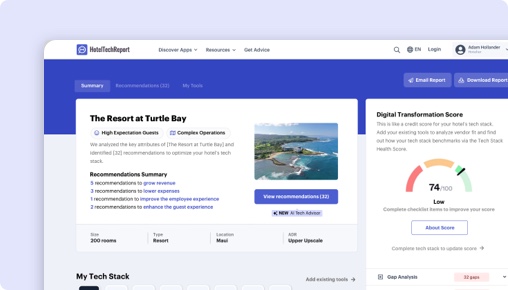
The project dashboard is a free tool that is only available to verified hoteliers to make adopting new technology easier by streamlining their research and simplifying their communication workflow.

Pod.Camp vs. protel PMS (by Planet):
Which Is Right for You?

TLDR
We analyzed 108 verified hotelier reviews, compared feature sets, pricing, and real-world case studies to break down where each platform delivers. The right choice depends on your property type and priorities:
Pod.Camp shines .
Planet shines in ease of use and customer support — especially for brand properties (5.0/5) , with exclusive features like On premise and Revenue management module.
How Does Pod.Camp Compare to protel PMS (by Planet)?
Side-by-side ratings based on 108 verified hotelier reviews on HTR.
| HTScore |
|
|
| Likelihood to Recommend |
|
|
| Ease of Use |
|
|
| Customer Support |
|
|
| Value for Money |
|
|
| Starting Price | Contact sales | From $500/mo |
| Verified Reviews | 0 | 108 |
What Are the Pros and Cons of Pod.Camp vs protel PMS (by Planet)?
After analyzing 108 verified reviews, Pod.Camp users most value its , while Planet users highlight functionality and features, ease of use, multi-property management. Click any theme to see what reviewers say.
| Pod.Camp |
Planet
|
|---|---|
| Pros | |
|
+
Functionality and Features
▾
|
|
|
+
Ease of Use
▾
|
|
|
+
Multi-property Management
▾
|
|
| Cons | |
|
−
Support Issues
▾
|
|
|
−
Customization and Flexibility
▾
|
|
|
−
System Performance and Reliability
▾
|
|
Pod.Camp vs Planet: Rankings by Hotel Segment
How each product ranks among Property Management Systems vendors for different property sizes, types, and regions — based on verified reviews from hoteliers in each segment.
By Hotel Size
| Segment | Pod.Camp |
Planet
|
|---|---|---|
| Small (10-24 rooms) ▾ | — | #27 32 reviews |
| Mid-Size (25-74 rooms) ▾ | — | #15 50 reviews |
| Large (75-199 rooms) ▾ | — | #15 10 reviews |
| X-Large (200+ rooms) | — | #17 3 reviews |
By Property Type
| Segment | Pod.Camp |
Planet
|
|---|---|---|
| Boutique ▾ | — | #21 42 reviews |
| Luxury ▾ | — | #21 34 reviews |
| Branded / Chain ▾ | — | #17 33 reviews |
| Extended Stay ▾ | — | #20 9 reviews |
By Region
| Segment | Pod.Camp |
Planet
|
|---|---|---|
| North America ▾ | — | #29 6 reviews |
| Europe ▾ | — | #10 79 reviews |
| Middle East | — | #15 2 reviews |
The Decision
Choosing a property management system (PMS) is pivotal in enhancing your hotel's operations, guest experience, and revenue. Pod.Camp by Pod.Camp and protel PMS by Planet address these needs but diverge significantly in scope, maturity, and user feedback. Pod.Camp, a podcast management platform, is not designed for hotel operations, whereas protel PMS is a comprehensive hotel-centric system with proven industry adoption. How do these differences impact your decision?
Pod.Camp aims to streamline podcast content management using AI, while protel PMS focuses on automating and optimizing hotel processes. Their core purposes are distinctly different, making the choice clear: are you seeking a specialized podcast tool or a full-fledged hotel management solution?
Is Pod.Camp or protel PMS Better for Hotels?
Pod.Camp by Pod.Camp is a platform built for podcast creators, not hoteliers. It offers AI-driven content summaries and recommendations, which are irrelevant for hotel operations. Conversely, protel PMS is a mature, feature-rich hotel management platform with over 1,200 integrations and a global presence, specifically designed to streamline hotel workflows.
While Pod.Camp might serve as a niche tool for podcast hosts, it has no reviews related to hotel management, and its ratings are zero. Protel, on the other hand, boasts over 105 reviews in the last six months alone, with an overall rating of 4.11/5 and a strong 7.7/5 NPS score. The recent reviews underscore its ongoing support and relevance. Are you evaluating a tool for hotel management or podcasting?
Pod.Camp vs protel PMS: Which Should Your Hotel Choose?
Your decision hinges on your hotel’s needs. If your hotel requires a versatile, well-supported PMS capable of managing reservations, billing, integrations, and revenue management, protel PMS is the clear choice. It caters to a wide range of hotel types, from independent properties to resorts, with proven results like increased reservations and streamlined workflows.
If, however, your hotel is exploring a niche for audio content creation or podcast management, Pod.Camp's AI features might be appealing—though it’s irrelevant for hotel operations. For your hotel, protel’s extensive functionality, support, and proven industry presence make it the better investment.
Is Pod.Camp or protel PMS Easier to Use?
Pod.Camp’s user interface and experience are not rated, but as a niche podcast platform, ease of use is likely minimal compared to its purpose. Protel PMS scores 4.12/5 for ease of use, with reviews highlighting its intuitive interface and straightforward onboarding process. Users praise its quick learning curve and helpful support staff, despite some comments about the complexity of advanced features.
Edge: protel PMS.
Which Has Better Features: Pod.Camp or protel PMS?
Pod.Camp offers no hotel-related features, focusing solely on podcast AI summaries and recommendations. Protel PMS boasts over 46 features, including revenue management, multi-currency handling, guest profiles, online booking, integrated payments, and detailed reporting. Notable unique features include a booking engine, guest CRM, and shift planning—facets critical to hotel operations.
Given the feature count and hotel relevance, protel PMS is far superior. Edge: protel PMS.
Which Has Better Customer Support: Pod.Camp or protel PMS?
Pod.Camp’s support information is nonexistent, with no reviews indicating support quality. Protel PMS has a support rating of 3.95/5, with reviews praising helpful, friendly responses and rapid assistance. However, some users note long response times post-Planet acquisition, which can impact daily operations.
Still, with over 105 recent reviews and a 7.7/5 NPS score, protel’s support is more established. Edge: protel PMS.
Which Has More Integrations: Pod.Camp or protel PMS?
Pod.Camp, as a podcast platform, has zero verified integration partners. protel PMS supports over 1,200 integrations, including channel managers, RMS, CRM, and revenue tools, making it highly adaptable to hotel ecosystems. Many hotel-specific integrations are available, such as booking engines, digital registration, and payment systems.
For hotel operations, protel’s extensive ecosystem is crucial. Edge: protel PMS.
Which Do Hoteliers Rate Higher: Pod.Camp or protel PMS?
Pod.Camp’s reviews are non-existent, indicating no hotel-specific user feedback. By contrast, protel PMS is rated 4.11/5 overall, with hotel segments like independent properties rating it 4.5/5 and branded hotels rating it 5/5. Recent reviews from hotels emphasize its ability to double reservations, streamline check-in processes, and enhance revenue.
Its long-standing presence and positive feedback across diverse hotel types make protel PMS the preferred choice. Edge: protel PMS.
How Much Do Pod.Camp and protel PMS Cost?
Pod.Camp offers no pricing details or trial info, indicating it’s not a commercial hotel management tool. protel PMS costs $500/month, with no free tier or trial information available, reflecting a typical enterprise SaaS pricing model.
Given the lack of transparent pricing for Pod.Camp, the investment in protel PMS is more straightforward for hotels seeking a reliable system.
What Type of Hotel Should Use Pod.Camp?
Pod.Camp is suitable for:
- Podcasters or media creators seeking AI-driven episode management
- Content creators aiming to streamline podcast reviews and recommendations
- Small teams or individuals focusing on audio content monetization
- Not ideal if your hotel needs property management or guest service tools
- Not suitable for hospitality operations or multi-property management
- Not recommended if your hotel prioritizes revenue, reservations, or integrations
In essence, Pod.Camp is designed for podcast production, not hotels.
What Type of Hotel Should Use protel PMS?
Protel PMS is ideal for:
- Independent hotels seeking a flexible, customizable PMS
- Small to large hotel chains looking for scalable management tools
- Resorts and mixed-use properties requiring complex revenue management
- Hotels that prioritize integrations with other systems (over 1,200 partners)
- Teams wanting detailed reporting and automation capabilities
- Not ideal if your hotel prefers a simple, minimal system with basic functionalities
- Not suitable for hotels with very limited budgets, given the $500/month cost
- Not recommended for properties that require rapid, bug-free multi-property management without ongoing support concerns
Protel suits hotels looking for a comprehensive, scalable PMS.
Protel PMS vs Pod.Camp: The Bottom Line for Hotels
Protel PMS is a full-featured, globally adopted hotel management system with extensive integrations and proven results. Its strengths lie in managing complex operations, multi-property setups, and revenue optimization, backed by a large user base and recent positive reviews.
Pod.Camp is a niche podcast platform, not intended or suitable for hotel management. If your goal is operational efficiency, guest satisfaction, and revenue growth, protel PMS is the clear choice.
For hotels seeking a reliable, supported, and feature-rich PMS, go with protel. If you’re exploring podcast content creation, Pod.Camp might serve your media needs, but it’s not relevant to hotel operations.
In summary: Choose protel PMS if your hotel needs a proven, integrated solution capable of scaling with your business. Select Pod.Camp only if you require a podcast-specific platform, not a hotel management tool.
Which Features Does Pod.Camp Have That protel PMS (by Planet) Doesn't (and Vice Versa)?
According to HTR's product database, Pod.Camp and protel PMS (by Planet) share 0 features. Here are the key differences — features one has that the other lacks.
| Feature | Pod.Camp |
Planet
|
|---|---|---|
| Booking Engine | ||
| Cloud based | ||
| Multi-currency | ||
| Multi-lingual | ||
| On premise | ||
| Revenue management module |
Showing top differences. 34 more features differ between these products.
Real-World Results: Pod.Camp vs Planet by Business Goal
We analyzed 4 verified case studies to compare what hotels actually achieve with each platform across four key business objectives.
No published case study for this goal yet.
Bergwelt Grindelwald Resort
Small
"It feels like a partnership, not a product. Our feedback is always heard and acted on. We’re working together for the shared goal of great guest service."

Pod.Camp vs Planet: The Bottom Line
What hoteliers love
Users appreciate Protel's extensive features for managing single properties, with comprehensive tools for reporting, room plans, and rate management.... Users appreciate Protel's extensive features for managing single properties, with comprehensive tools for reporting, room plans, and rate management. However, many reviews expressed disappointment that a lot of these functionalities are incomplete, buggy, or missing entirely when dealing with more complex setups or multi-property environments. Custom reports and seamless integration with other tools are also highlighted as beneficial.
The user interface is generally praised for being intuitive and easy to navigate. Many users found Protel Air particularly user-friendly and noted the... The user interface is generally praised for being intuitive and easy to navigate. Many users found Protel Air particularly user-friendly and noted the efficiency in managing daily operations. However, certain updates have made certain functions more complex and less intuitive than before.
Protel's performance in catering to multi-property environments received mixed feedback. While some users praised its organizational tools and interfa... Protel's performance in catering to multi-property environments received mixed feedback. While some users praised its organizational tools and interfaces, many found the system frustratingly limited for multi-location setups, highlighting significant bugs and reduced functionalities.
Where hoteliers push back
Customer support is a consistent area of concern. Reviews mentioned long waiting times for support requests, lack of phone availability, and poor resp... Customer support is a consistent area of concern. Reviews mentioned long waiting times for support requests, lack of phone availability, and poor response times after the acquisition by Planet. Users recommend improving the speed and reliability of customer service.
Users are generally happy with the level of customization available in Protel, allowing them to adapt the system to better fit their specific needs. H... Users are generally happy with the level of customization available in Protel, allowing them to adapt the system to better fit their specific needs. However, this flexibility often comes at a high cost, and some required features are only available through paid custom development.
Unique capabilities
Where the ratings diverge most
Frequently Asked Questions About Pod.Camp vs protel PMS (by Planet)
Can Pod.Camp replace protel PMS (by Planet)?
It depends on your requirements. Pod.Camp and protel PMS (by Planet) share many core Property Management Systems features, but each has unique capabilities. Pod.Camp offers 0 verified integration partners, while protel PMS (by Planet) offers 194. Review the feature comparison above to see where they differ before switching.
Which is better for small or independent hotels?
Small hotels should prioritize ease of use and fast onboarding. protel PMS (by Planet) leads in ease of use at 4.1/5 vs 0.0/5. Look for transparent pricing and a trial or demo option. Filter reviews on each product page by property size to hear from hotels like yours.
Do Pod.Camp or protel PMS (by Planet) offer a free plan?
Pod.Camp: No. protel PMS (by Planet): No. Neither product currently offers a free tier. Most Property Management Systems vendors offer demos or trials — request one from each to evaluate before committing.
How Does HTR Evaluate and Rank Pod.Camp and protel PMS (by Planet)?
The HT Score is a composite ranking that considers 4 criteria groups and over a dozen variables to help hoteliers objectively compare hotel technology products. Pod.Camp has an HT Score of 0 and Planet has 33. Here is how the score is calculated.
| Criteria Group | Weight | What It Measures |
|---|---|---|
| Customer Ratings & Reviews |
|
How highly do users recommend this product? Ratings Score, Review Volume, Share of Voice, Review Depth, Review Recency, Success Stories ▾ The most heavily weighted factor. Analyzes average satisfaction ratings (likelihood to recommend, ease of use, support, ROI), total review count relative to category peers, review recency (at least 20 reviews in the trailing 6 months), and share of voice across unique hotel clients to detect selection bias. |
| Partner Ecosystem |
|
How highly do tech partners recommend this company? Partner Recommendations, Integration Quantity, Integration Quality ▾ Evaluates partner recommendations as expert votes of confidence, the number of verified integrations, and ecosystem quality — the average HT Scores of integration partners. Products with higher-quality integration ecosystems are more likely to deliver a connected tech stack. |
| Customer Centricity |
|
How customer-centric is this organization? Certified Support, Review Consistency, Profile Completeness ▾ Assesses whether the company has earned HTR Customer Support Certification, maintains consistent review collection over time (an indicator of feedback-driven culture), and keeps product profiles complete with capabilities, screenshots, pricing, and features. |
| Reach, Staying Power & Resources |
|
How extensive is this company's reach and resourcing? Geographic Reach, Staying Power, Company Resources, Trending Score ▾ Measures global presence (countries and regions served), years in business as a stability proxy, team headcount as a resource proxy, and a trending score based on trailing-twelve-month buyer inquiries, reviews, partner recommendations, and press activity. |
Customer ratings and reviews are by far the most important factor in the HT Score algorithm. HTR does not accept payment for higher rankings. All reviews are verified — only hotel industry practitioners with confirmed affiliations can submit ratings. View full HT Score methodology →
What Other Property Management Systems Comparisons Are Hoteliers Reading?
Explore more head-to-head comparisons based on verified hotelier reviews.



Contents
Get Your Free AI Analyst Report
Custom recommendations tailored to your property


Let´s lookup your hotel information
Still weighing your property management systems options?
A few popular systems from our property management systems guide — or let our AI score each one against your specific property in about two minutes.