

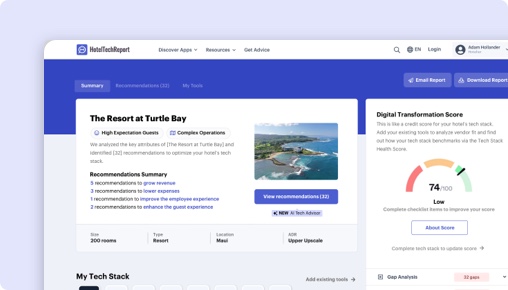
Sorry, this functionality is only available for verified hoteliers
The project dashboard is a free tool that is only available to verified hoteliers to make adopting new technology easier by streamlining their research and simplifying their communication workflow.

Duler vs. Unifocus:
Which Is Right for You?

TLDR
We analyzed 49 verified hotelier reviews, compared feature sets, pricing, and real-world case studies to break down where each platform delivers. The right choice depends on your property type and priorities:
Duler stands out with exclusive features like Occupancy Forecast Integration.
Unifocus shines in maintenance monitoring — especially for extended-stay properties (4.7/5), with exclusive features like Tip Pooling and Tasks & To Do Lists.
How Does Duler Compare to Unifocus?
Side-by-side ratings based on 49 verified hotelier reviews on HTR.
| HTScore |
|
|
| Likelihood to Recommend |
|
|
| Ease of Use |
|
|
| Customer Support |
|
|
| Value for Money |
|
|
| Starting Price | From $100/mo | Contact sales |
| Verified Reviews | 9 | 40 |
What Are the Pros and Cons of Duler vs Unifocus?
After analyzing 49 verified reviews, Duler users most value its , while Unifocus users highlight maintenance monitoring, preventive maintenance scheduling, ease of use. Click any theme to see what reviewers say.
|
Duler
|
Unifocus
|
|---|---|
| Pros | |
|
+
Maintenance monitoring
▾
|
|
|
+
Preventive maintenance scheduling
▾
|
|
|
+
Ease of use
▾
|
|
|
+
Operational usefulness
▾
|
|
| Cons | |
Duler vs Unifocus: Rankings by Hotel Segment
How each product ranks among Scheduling & Workforce Management vendors for different property sizes, types, and regions — based on verified reviews from hoteliers in each segment.
By Hotel Size
| Segment |
Duler
|
Unifocus
|
|---|---|---|
| Small (10-24 rooms) | — | #4 2 reviews |
| Mid-Size (25-74 rooms) ▾ | — | #5 10 reviews |
| Large (75-199 rooms) ▾ | — | #4 19 reviews |
| X-Large (200+ rooms) ▾ | — | #4 7 reviews |
By Property Type
| Segment |
Duler
|
Unifocus
|
|---|---|---|
| Boutique ▾ | — | #5 6 reviews |
| Luxury ▾ | — | #4 20 reviews |
| Branded / Chain ▾ | — | #4 17 reviews |
| Extended Stay ▾ | — | #4 5 reviews |
By Region
| Segment |
Duler
|
Unifocus
|
|---|---|---|
| North America ▾ | — | #4 34 reviews |
| Europe | — | #2 4 reviews |
| Asia Pacific | — | #1 0 reviews |
| Middle East | — | #1 1 reviews |
Is Duler or Unifocus Better for Hotels?
Duler and Unifocus both address hotel scheduling and workforce management but diverge sharply in scope and operational focus. Duler excels in simple, department-level labor scheduling tightly integrated with occupancy forecasts, ideal for hoteliers seeking to align labor with demand while minimizing administrative overhead. In contrast, Unifocus offers a broader platform emphasizing workforce management, including task management, maintenance workflows, and multi-departmental communication, suited for larger or more complex properties with diverse operational needs.
Both products solve the core problem of hotel labor efficiency—balancing staffing levels to control costs while meeting guest service standards. Duler accomplishes this with a low-lift scheduling approach using occupancy data to produce right-sized labor plans, whereas Unifocus extends beyond scheduling into detailed task and maintenance management, making it a comprehensive operations platform. The choice depends on whether the hotel prioritizes streamlined labor scheduling or a full-featured workforce and operational management tool.
Duler vs Unifocus: Which Should Your Hotel Choose?
If you operate a small to mid-sized hotel or a multi-property group needing straightforward, occupancy-driven labor scheduling and easy schedule approvals, Duler fits well. Its 4.7/5 rating from 9 reviews, all recent, with a 94% likelihood to recommend, supports strong satisfaction among users who value simple, department-specific scheduling and real-time employee notifications. Properties emphasizing labor cost control through integrated forecast data drawn from GRO will benefit from Duler’s approach.
For medium to larger hotels, resorts, or properties with complex maintenance, task workflows, and cross-department communication needs, Unifocus is more appropriate. It has 40 reviews with a 4.2/5 overall rating and serves a broader market including 31% resorts and 20+ luxury hotel reviews. Unifocus’s 32 verified integrations and features like task lists, time clock app, and benefit accruals support multifaceted operations. However, recent review volume is low (1 in last six months), so current user sentiment is less certain.
The data on extended stay and boutique hotels favors Duler’s high ratings in smaller segments but suffers from low review counts, limiting definitive guidance there. Overall, choose Duler for focused labor scheduling with occupancy insight; choose Unifocus for comprehensive workforce and operational management in larger or distributed properties.
Is Duler or Unifocus Easier to Use?
Duler scores 4.8/5 on ease of use and onboarding across 9 recent reviews, emphasizing a user-friendly interface with clear department views and an intuitive approval process. Reviewers highlight the simplicity of building and reviewing schedules without scrolling through long lists and appreciate color coding and targeted employee notifications. Unifocus has a lower ease of use rating of 4/5 from 40 reviews, with some users describing navigation as difficult and the learning curve steep, especially in regions needing more training.
Despite these differences, both products have onboarding ratings within 0.8 points and offer interfaces that staff can adopt with adequate training. Duler’s streamlined design appeals to managers and schedulers seeking minimal complexity, while Unifocus provides more features that may complicate initial use. However, given the rating thresholds and review volumes, the evidence supports an equal edge.
Edge: Even.
Which Has Better Features: Duler or Unifocus?
Unifocus offers a broader feature set with 6 unique capabilities: tip pooling, tasks and to-do lists, a time clock app, team communication tools, benefit accruals, and benchmarking. These features transform Unifocus into a workforce management platform that handles payroll-related processes, operational task management, and interdepartmental coordination—critical for properties with complex labor and maintenance demands.
Duler’s unique feature is occupancy forecast integration, which pulls data from GRO to align labor scheduling with projected business demand. This directly impacts labor cost control and staffing accuracy in scheduling workflows.
Both products share 8 common features, but Unifocus’s additional capabilities enable hotels to manage labor beyond scheduling, including task tracking and employee communications. This makes Unifocus preferable for hotels needing a multipurpose tool that unifies workforce and operational functions.
Edge: Unifocus.
Which Has Better Customer Support: Duler or Unifocus?
Duler’s customer support rating is 4.8/5 across 9 reviews, combining high marks for responsiveness and onboarding. Reviewers praise fast resolution times and helpfulness during implementation. Unifocus scores 4.2/5 on support with 40 reviews, with feedback noting helpfulness but also suggesting more training resources, especially for specific regions.
Both products receive positive commentary on support quality, with Duler’s smaller but recent review pool indicating strong, focused support and Unifocus offering broader but less consistently highlighted assistance. Onboarding satisfaction is similarly high for both.
Edge: Even.
Which Has More Integrations: Duler or Unifocus?
Unifocus leads integration capabilities with 32 verified partners, including industry-relevant names such as Kronos, Uniguest, and React Mobile. These integrations facilitate seamless connections to PMS, timekeeping, and operational tools, benefiting hotels requiring connected systems for workforce and property management.
Duler currently lists zero verified integrations, limiting its ability to connect with external systems beyond occupancy data import. This restricts workflow automation and data centralization, making it less suitable for hotels relying on integrated tech stacks.
Edge: Unifocus.
Which Do Hoteliers Rate Higher: Duler or Unifocus?
Duler holds a higher overall rating at 4.7/5 from 9 recent reviews, though below the review threshold of 10 required for a definitive rating edge. Unifocus has a 4.2/5 rating from 40 reviews spanning various hotel types. Both products have no last-six-month ratings meeting review minimums for recent rating analysis.
Segment data favors Duler in boutique, branded, and bed & breakfast hotels with scores from 4.7 to 5/5, while Unifocus shows strength in resorts (4.2/5 from 22 reviews), luxury hotels (4.3/5 from 20 reviews), and extended stay (4.7/5 from 5 reviews). Review volume for Unifocus is heavier in larger property types.
Given the diversity and volume of Unifocus reviews, its 4.2/5 overall rating represents stable satisfaction. Duler’s higher rating but limited review count suggests strong but less broadly tested approval.
Edge: Even.
How Much Do Duler and Unifocus Cost?
Duler publishes a base price starting at $100.00 with no freemium, monthly flat, or per-room pricing, and no implementation fee or trial offered. This transparent pricing gives hotels a clear upfront cost for access to the platform.
Unifocus does not publish pricing details, leaving cost unknown without vendor contact. This limits direct cost comparison and requires interested buyers to engage sales for quotes.
What Type of Hotel Should Use Duler?
- Hotels that prioritize occupancy-driven labor scheduling with integrated forecast data from GRO to optimize staffing.
- Teams that require simple, department-focused schedule building with clear approval workflows.
- Properties seeking real-time schedule notifications to affected employees, reducing unnecessary team-wide alerts.
- Small to mid-sized hotels and branded properties, supported by 9 reviews with ratings above 4.7/5.
- Operations wanting a low-lift, intuitive platform without complex feature sets or extensive integrations.
Not ideal if:
- Your property requires extensive integrations with PMS, payroll, or operational systems.
- You need workforce management features beyond scheduling, such as task lists or benefit tracking.
- You operate a large resort or multi-property complex with diverse departmental needs.
What Type of Hotel Should Use Unifocus?
- Medium to large hotels, resorts, and properties with complex workforce and operational management needs.
- Teams requiring integrated task management, time clock functionality, and interdepartmental communication tools.
- Hotels that benefit from a broad set of integrations with PMS, Kronos, and other operational platforms.
- Properties where maintenance department management and preventive maintenance scheduling are priorities.
- Organizations that want benchmarking and benefit accrual features within their workforce management system.
Not ideal if:
- You seek a simple, low-complexity scheduling tool with minimal training requirements.
- Your operation demands transparent, published pricing upfront.
- You prioritize rapid onboarding without possible navigation complexity.
Duler vs Unifocus: The Bottom Line for Hotels
The core difference between Duler and Unifocus lies in scope and complexity. Duler concentrates on occupancy-based labor scheduling with a clean, department-level focus, designed for ease and speed in aligning labor with projected demand. Unifocus extends beyond scheduling into a comprehensive workforce and operations platform, integrating task management, communications, and maintenance workflows.
Choose Duler if your hotel needs an intuitive, forecast-driven scheduling tool with strong user satisfaction and real-time employee notifications. It offers direct control over labor costs with minimal rollout friction and tight departmental scheduling, supported by 4.7/5 ratings from recent users praising its simplicity and accuracy.
Choose Unifocus if your property requires an all-in-one workforce management solution that handles employee scheduling, time clocking, payroll-related features, task workflows, and maintenance operations. Its 32 integrations and broader feature set support complex operations in resorts and large hotel brands, despite a steeper learning curve and less transparent pricing. Unifocus fits operations that value operational breadth and integration over minimalism.
This comparison reflects current verified reviews, feature sets, and integration data. Duler serves properties valuing simplicity and occupancy-driven scheduling, while Unifocus appeals to hotels demanding comprehensive workforce and operational management capabilities.
Feature Comparison: Duler vs Unifocus
These are the features each vendor has configured, organized by feature group — the same data shown in the vendor dashboard. Expand a group to compare features side by side.
| Feature |
Duler
|
Unifocus
|
|---|---|---|
|
▾
Shifts & Scheduling
|
|
|
| Shift Swapping | ||
| Auto Scheduling | ||
| Time clock app | ||
| Dynamic Scheduling | ||
| Labor Standards | ||
|
▾
Time Tracking
|
|
|
| Time clock app | ||
|
▾
Analytics & Benchmarking
|
|
|
| Benchmarking | ||
| Reporting & Analytics | ||
| Corporate Visibility | ||
| Automated Labor Monitoring | ||
| Labor Standards | ||
| Occupancy Forecast Integration | ||
|
▾
Tasks & Checklists
|
|
|
| Tasks & To Do Lists | ||
|
▾
Messaging & Communication
|
|
|
| Team Communication | ||
| Mobile App | ||
|
▾
Benefits Management
|
|
|
| Benefit Accruals | ||
| Tip Pooling |
Duler vs Unifocus: The Bottom Line
Unique capabilities
What hoteliers love
Reviewers highlight Brand as a useful support tool for monitoring maintenance activities and keeping visibility on ongoing engineering work. This give... Reviewers highlight Brand as a useful support tool for monitoring maintenance activities and keeping visibility on ongoing engineering work. This gives hotel operators better control over property upkeep and helps ensure nothing falls through the cracks.
A key use case mentioned is planned preventive maintenance, with reviewers noting that Brand supports scheduling routine upkeep before issues become s... A key use case mentioned is planned preventive maintenance, with reviewers noting that Brand supports scheduling routine upkeep before issues become service disruptions. This helps hotels protect equipment reliability and reduce costly downtime.
Users describe Brand as user friendly and easy to use, which matters for adoption by hotel staff who need a straightforward system for recurring maint... Users describe Brand as user friendly and easy to use, which matters for adoption by hotel staff who need a straightforward system for recurring maintenance tasks. The simplicity appears to reduce friction in daily use and makes the tool easier to rely on operationally.
Unique capabilities
Frequently Asked Questions About Duler vs Unifocus
Can Duler replace Unifocus?
It depends on your requirements. Duler and Unifocus share many core Scheduling & Workforce Management features, but each has unique capabilities. Duler offers 0 verified integration partners, while Unifocus offers 32. Review the feature comparison above to see where they differ before switching.
Which is better for small or independent hotels?
Small hotels should prioritize ease of use and fast onboarding. Duler leads in ease of use at 4.8/5 vs 4.0/5. Look for transparent pricing and a trial or demo option. Filter reviews on each product page by property size to hear from hotels like yours.
Do Duler or Unifocus offer a free plan?
Duler: No. Unifocus: No. Neither product currently offers a free tier. Most Scheduling & Workforce Management vendors offer demos or trials — request one from each to evaluate before committing.
How Does HTR Evaluate and Rank Duler and Unifocus?
The HT Score is a composite ranking that considers 4 criteria groups and over a dozen variables to help hoteliers objectively compare hotel technology products. Duler has an HT Score of 0 and Unifocus has 73. Here is how the score is calculated.
| Criteria Group | Weight | What It Measures |
|---|---|---|
| Customer Ratings & Reviews |
|
How highly do users recommend this product? Ratings Score, Review Volume, Share of Voice, Review Depth, Review Recency, Success Stories ▾ The most heavily weighted factor. Analyzes average satisfaction ratings (likelihood to recommend, ease of use, support, ROI), total review count relative to category peers, review recency (at least 20 reviews in the trailing 6 months), and share of voice across unique hotel clients to detect selection bias. |
| Partner Ecosystem |
|
How highly do tech partners recommend this company? Partner Recommendations, Integration Quantity, Integration Quality ▾ Evaluates partner recommendations as expert votes of confidence, the number of verified integrations, and ecosystem quality — the average HT Scores of integration partners. Products with higher-quality integration ecosystems are more likely to deliver a connected tech stack. |
| Customer Centricity |
|
How customer-centric is this organization? Certified Support, Review Consistency, Profile Completeness ▾ Assesses whether the company has earned HTR Customer Support Certification, maintains consistent review collection over time (an indicator of feedback-driven culture), and keeps product profiles complete with capabilities, screenshots, pricing, and features. |
| Reach, Staying Power & Resources |
|
How extensive is this company's reach and resourcing? Geographic Reach, Staying Power, Company Resources, Trending Score ▾ Measures global presence (countries and regions served), years in business as a stability proxy, team headcount as a resource proxy, and a trending score based on trailing-twelve-month buyer inquiries, reviews, partner recommendations, and press activity. |
Customer ratings and reviews are by far the most important factor in the HT Score algorithm. HTR does not accept payment for higher rankings. All reviews are verified — only hotel industry practitioners with confirmed affiliations can submit ratings. View full HT Score methodology →
What Other Scheduling & Workforce Management Comparisons Are Hoteliers Reading?
Explore more head-to-head comparisons based on verified hotelier reviews.

Contents
Get Your Free AI Analyst Report
Custom recommendations tailored to your property


