
Sorry, this functionality is only available for verified hoteliers
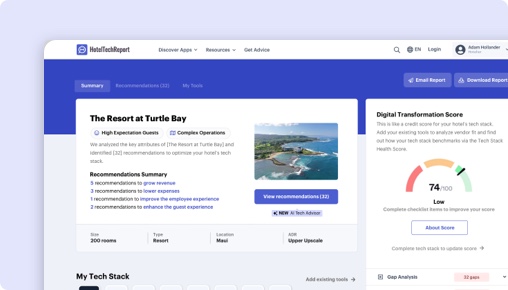
The project dashboard is a free tool that is only available to verified hoteliers to make adopting new technology easier by streamlining their research and simplifying their communication workflow.

D-EDGE - Smart Channel Manager vs. AI Channel Manager:
Which Is Right for You?


TLDR
We analyzed 260 verified hotelier reviews, compared feature sets, pricing, and real-world case studies to break down where each platform delivers. The right choice depends on your property type and priorities:
D-Edge shines in support and training — especially for vacation rental properties (4.8/5), with exclusive features like Meta search marketing and Metasearch connectivity.
Lighthouse shines in Value for Money — especially for bed & breakfast properties (4.8/5), with exclusive features like Derived Rates.
How Does D-EDGE - Smart Channel Manager Compare to AI Channel Manager?
Side-by-side ratings based on 260 verified hotelier reviews on HTR.
| HTScore |
|
|
| Likelihood to Recommend |
|
|
| Ease of Use |
|
|
| Customer Support |
|
|
| Value for Money |
|
|
| Starting Price | Contact sales | From $400/mo |
| Verified Reviews | 221 | 39 |
What Are the Pros and Cons of D-EDGE - Smart Channel Manager vs AI Channel Manager?
After analyzing 260 verified reviews, D-Edge users most value its support and training, channel manager, rate and availability management, while Lighthouse users highlight channel distribution and ota management, ease of use and setup, support and customer success responsiveness. Click any theme to see what reviewers say.
|
D-Edge
|
Lighthouse
|
|---|---|
| Pros | |
|
+
Support and Training
▾
|
+
Channel distribution and OTA management
▾
|
|
+
Channel Manager
▾
|
+
Ease of use and setup
▾
|
|
+
Rate and Availability Management
▾
|
+
Support and customer success responsiveness
▾
|
|
+
Booking Engine
▾
|
+
Segmentation and drilldown reporting
▾
|
| Cons | |
|
−
Self-Mapping
▾
|
−
Feature availability and product gaps
▾
|
|
−
Little Yielder
▾
|
−
Parity and rate shopping
▾
|
|
−
Integration quality and connection issues
▾
|
|
D-Edge vs Lighthouse: Rankings by Hotel Segment
How each product ranks among Channel Managers vendors for different property sizes, types, and regions — based on verified reviews from hoteliers in each segment.
By Hotel Size
| Segment |
D-Edge
|
Lighthouse
|
|---|---|---|
| Small (10-24 rooms) ▾ | #8 84 reviews | #29 4 reviews |
| Mid-Size (25-74 rooms) ▾ | #7 91 reviews | #10 17 reviews |
| Large (75-199 rooms) ▾ | #7 28 reviews | #12 2 reviews |
| X-Large (200+ rooms) ▾ | #9 5 reviews | #3 4 reviews |
By Property Type
| Segment |
D-Edge
|
Lighthouse
|
|---|---|---|
| Boutique ▾ | #7 77 reviews | #17 10 reviews |
| Luxury ▾ | #6 64 reviews | #16 6 reviews |
| Branded / Chain ▾ | #7 39 reviews | #10 13 reviews |
| Extended Stay ▾ | #7 21 reviews | #19 2 reviews |
By Region
| Segment |
D-Edge
|
Lighthouse
|
|---|---|---|
| North America ▾ | #30 3 reviews | #28 14 reviews |
| Europe ▾ | #5 181 reviews | #39 8 reviews |
| Asia Pacific ▾ | #9 27 reviews | #27 3 reviews |
| Middle East | #20 3 reviews | #19 4 reviews |
Is D-EDGE - Smart Channel Manager or AI Channel Manager by Lighthouse Better for Hotels?
D-EDGE and Lighthouse both solve the fundamental problem of managing multiple online distribution channels to prevent overbookings and rate discrepancies. Their core purpose is to centralize rate and availability updates across OTAs and booking platforms, reducing manual workload while aiming to maximize occupancy and revenue. The two diverge primarily in their approach: D-EDGE offers a broader global reach with 117 verified partners and specialized metasearch marketing tools, making it suitable for properties needing extensive channel coverage and advanced marketing support. Lighthouse focuses on AI-powered automation with features like RevPak integration and distribution health analysis, appealing to hotels prioritizing intelligent segmentation and real-time pricing insights.
Both platforms address the operational challenge of synchronizing rates and availability across channels, but D-EDGE emphasizes scale and marketing integration, while Lighthouse emphasizes AI-driven decision support and revenue optimization. This distinction aligns with different hotel operational priorities and market footprints.
D-EDGE vs AI Channel Manager by Lighthouse: Which Should Your Hotel Choose?
If your hotel operates across multiple international markets or requires connectivity to a vast network of channels—including metasearch platforms—D-EDGE’s 117 verified partners spanning 35 countries provide a compelling advantage. Its features like metasearch surveillance and e-commerce consulting support sophisticated marketing strategies that benefit mid-sized to large independents or groups. This recommendation is based on review volume (221 reviews) indicating stable performance and a user base spread across city center hotels (17%), resorts (18%), and boutique properties (15%).
If your hotel prioritizes AI-driven pricing automation, segmentation analytics, and integrated third-party intelligence like the STR report, Lighthouse is preferable. Its RevPak integration and distribution health tools enhance revenue management workflows for properties focused on data-driven decision-making. Lighthouse’s user base includes a higher share of branded hotels (8%) and a concentration in airport/conference hotels (13 reviews) where automation and market segmentation are critical. However, its smaller review volume (37 reviews) and limited geographic presence (17 countries) suggest the data is less robust for broad generalization.
For smaller or budget properties, neither platform explicitly publishes flexible, room-based pricing, but Lighthouse’s clear pricing model starting at $400 and emphasis on automated revenue management may offer better ROI, as reflected in its 4.8 value rating versus D-EDGE’s 4.3.
Is D-EDGE or AI Channel Manager by Lighthouse Easier to Use?
Ease of use ratings are closely matched: D-EDGE scores 4.6/5 and Lighthouse 4.7/5 for ease of use, with onboarding ratings of 4.5 and 4.7 respectively. Reviewers praise D-EDGE’s intuitive interface and simple channel management dashboard that accelerates rate updates and minimizes overbooking risk. Lighthouse users highlight its clear data presentation and consolidated reporting, which reduce complexity and improve team adoption. Both products support straightforward workflows for front desk and revenue managers to update rates and monitor distribution health from a single platform.
Despite minor criticisms about D-EDGE’s campaign manager and self-mapping challenges, and Lighthouse’s occasional glitches with Marriott integrations, neither product shows significant usability gaps in reviews. The similar onboarding ratings suggest comparable implementation experiences.
Edge: Even.
Which Has Better Features: D-EDGE or AI Channel Manager by Lighthouse?
D-EDGE offers five features unique from Lighthouse, notably metasearch marketing, metasearch connectivity, metasearch surveillance, e-commerce consulting, and a marketing dashboard. These features enable hotels to monitor and optimize performance on metasearch engines, a critical source of direct bookings, and receive expert marketing insights. For properties targeting metasearch traffic, these capabilities reduce manual monitoring and support proactive rate adjustments, directly impacting revenue.
Lighthouse’s unique feature is derived rates, which automates the creation of rate variations based on base prices. This streamlines pricing adjustments for hotels managing multiple rate plans, supporting dynamic pricing strategies with less manual input.
Both products share 14 core channel management features, including real-time rate and availability synchronization, multi-property management, and reporting tools. D-EDGE’s additional marketing features create operational advantages for hotels investing in metasearch channels, while Lighthouse’s derived rates simplify rate plan management.
Edge: D-EDGE.
Which Has Better Customer Support: D-EDGE or AI Channel Manager by Lighthouse?
D-EDGE and Lighthouse have equal customer support ratings of 4.6/5, with D-EDGE’s onboarding at 4.5 and Lighthouse’s at 4.7. D-EDGE reviewers frequently commend the support team’s responsiveness and helpfulness, although some note delayed responses during peak periods. Lighthouse users report mixed support experiences; the best reviews highlight clear and helpful service, while some mention difficulty receiving timely responses.
Both companies provide account management and assistance during onboarding, but Lighthouse’s smaller review sample (37) suggests its support rating is less broadly validated. D-EDGE’s extensive user base and longer market presence provide stronger evidence of consistent support quality.
Edge: Even.
Which Has More Integrations: D-EDGE or AI Channel Manager by Lighthouse?
D-EDGE leads with 117 verified partners versus Lighthouse’s 75, a 56% increase. Shared integrations include major PMS and revenue management systems such as RevControl, GuestCentric, Bookassist, and SHR Group. D-EDGE’s exclusive integrations include Priority Software, Hospitality Software Development Services, and several communication and marketing platforms like HiJiffy and Customer Alliance, which enhance operational workflows beyond channel management. These integrations support tasks like guest messaging and reputation management that benefit front desk and marketing teams.
Lighthouse’s unique partners include Visual Matrix PMS, RoomRaccoon, Profitroom, STR, and RateBoard GmbH, which cater to specific hotel segments needing advanced revenue analytics and benchmarking. However, Lighthouse lacks metasearch integrations present in D-EDGE, limiting distribution scope for hotels targeting those channels.
Edge: D-EDGE.
Which Do Hoteliers Rate Higher: D-EDGE or AI Channel Manager by Lighthouse?
Overall ratings are close: D-EDGE holds a 4.6/5 across 221 reviews, and Lighthouse a 4.7/5 across 37 reviews. D-EDGE’s volume and consistent ratings over time provide more robust evidence. Lighthouse’s smaller but recent review count (7 in last 6 months) shows stable satisfaction.
Segment ratings vary. D-EDGE scores 4.7/5 in airport/conference hotels (37 reviews) and 4.7/5 in B&Bs (63 reviews), while Lighthouse posts 4.8/5 in airport/conference hotels (13 reviews) and 4.8/5 in B&Bs (15 reviews). Boutique hotels rate D-EDGE at 4.5/5 (78 reviews) and Lighthouse at 4.7/5 (10 reviews), favoring Lighthouse but with fewer reviews. Limited service and budget hotels rate D-EDGE at 4.6/5 (39 reviews) and Lighthouse at 4.5/5 (9 reviews), slightly favoring D-EDGE.
Luxury hotels rate D-EDGE higher at 4.7/5 from 64 reviews versus Lighthouse’s 4.3/5 from 7 reviews, indicating D-EDGE’s better reception among upscale properties.
Edge: Even.
How Much Do D-EDGE and AI Channel Manager by Lighthouse Cost?
D-EDGE does not publish pricing details; no base price, freemium, monthly flat, or per-room fees are disclosed, and there is no trial. Some reviews mention pricing may be high for smaller properties, especially regarding new channel mappings.
Lighthouse’s pricing starts at $400 with no freemium or trial, also without per-room or flat monthly fees. Its transparent pricing model helps smaller and mid-sized properties estimate costs upfront.
Without D-EDGE’s pricing transparency, comparing cost-effectiveness is limited. Lighthouse’s published pricing and higher value-for-money rating (4.8 vs 4.3) suggest better ROI for budget-conscious buyers.
What Type of Hotel Should Use D-EDGE?
Hotels that:
- Operate across multiple international markets, leveraging D-EDGE’s 117 verified partners in 35 countries.
- Require metasearch marketing and surveillance to optimize direct booking channels and reduce reliance on OTAs.
- Manage multiple properties needing centralized control with robust channel coverage.
- Value integrated e-commerce consulting and marketing dashboards to support revenue management teams.
- Have staff trained to utilize advanced data analytics tools like Data Cruncher and Little Yielder for dynamic pricing.
Not ideal if:
- You operate a small property with a tight budget and need transparent, predictable pricing.
- Your team requires a more streamlined interface without some reported self-mapping challenges.
- You prioritize AI-driven automation and segmentation analytics not yet fully developed in D-EDGE.
What Type of Hotel Should Use AI Channel Manager by Lighthouse?
Hotels that:
- Focus on AI-driven pricing automation and segmentation analytics to optimize revenue management.
- Need integration with third-party reports like STR via RevPak for consolidated market intelligence.
- Operate branded or airport/conference hotels where detailed rate parity and distribution health monitoring are critical.
- Prefer clear, accessible data presentation for multi-department teams managing pricing and distribution.
- Value a transparent pricing model with upfront costs and potentially stronger ROI for smaller properties.
Not ideal if:
- Your property requires extensive metasearch marketing or connectivity beyond Lighthouse’s 75 verified partners.
- You depend on integrations with PMS or systems not currently supported, such as Marriott or Priceline.
- You prefer a vendor with a larger global footprint or more extensive user base for broader benchmarking.
D-EDGE vs AI Channel Manager by Lighthouse: The Bottom Line for Hotels
D-EDGE and Lighthouse both address the essential hotel challenge of managing online distribution efficiently, but they differ in scale, feature focus, and market presence. D-EDGE’s strength lies in its expansive channel network and metasearch marketing capabilities, supporting hotels with complex distribution needs. Lighthouse emphasizes AI-powered pricing automation and integrated market intelligence tools, appealing to data-driven revenue management teams.
Choose D-EDGE if your property requires broad international channel coverage, specialized metasearch marketing, and integrated e-commerce consulting. Its extensive integration ecosystem and 221 user reviews support reliability at scale, especially for city center hotels, resorts, and boutique properties.
Choose Lighthouse if your hotel prioritizes AI-driven automation, clear segmentation analytics, and consolidated revenue reports like STR via RevPak, with a transparent pricing model starting at $400. Its features suit branded and airport/conference hotels that need actionable market insights and efficient rate parity monitoring.
Where D-EDGE excels in scale and marketing depth, Lighthouse leads in AI automation and data accessibility, guiding the choice based on operational priorities and property profile.
How Much Do D-EDGE - Smart Channel Manager and AI Channel Manager Cost?
Channel Managers pricing is rarely straightforward. Here is what we know from each vendor's public pricing data. Always request a custom quote for your property size.
|
D-Edge
|
Lighthouse
|
|
|---|---|---|
| Starting Price | — | From $400/mo |
Feature Comparison: D-EDGE - Smart Channel Manager vs AI Channel Manager
These are the features each vendor has configured, organized by feature group — the same data shown in the vendor dashboard. Expand a group to compare features side by side.
| Feature |
D-Edge
|
Lighthouse
|
|---|---|---|
|
▾
Rate Management
|
|
|
| Support for Weekly & Monthly Rates | ||
| Yield Rules | ||
| Derived Rates | ||
| Inventory Management | ||
| Inventory grid | ||
|
▾
Room Type Mapping
|
|
|
| Channel Self-Mapping | ||
|
▾
Automation & Syncing
|
|
|
| Bulk Updates & Multiple Restrictions | ||
| 2-way real time integrations | ||
| PMS connectivity | ||
|
▾
Administration & Settings
|
|
|
| Multi-lingual | ||
| Centralized user & role management | ||
| Multi-Currency Support | ||
| Inventory grid | ||
| Integrated Payment Processing | ||
|
▾
Analytics & Reporting
|
|
|
| Analytics dashboard | ||
| Booking Performance and Pace Reporting |
Real-World Results: D-Edge vs Lighthouse by Business Goal
We analyzed 2 verified case studies to compare what hotels actually achieve with each platform across four key business objectives.
D-Edge
No published case study for this goal yet.
XO Hotels Amsterdam
Mid-Size
"We strongly recommend everyone who works with two or more channels to use Channel Manager. Not only to implement rate parity but also to provide an advantage to direct guests and t..."

D-Edge vs Lighthouse: The Bottom Line
What hoteliers love
While D-Edge generally receives positive feedback on account management and support services, some users have pointed out delays in response times, pa... While D-Edge generally receives positive feedback on account management and support services, some users have pointed out delays in response times, particularly during peak seasons. There are suggestions to offer more online training resources and videos to help users navigate complex features more effectively.
The Channel Manager is praised for its simplicity, real-time synchronization, and broad connectivity with many OTAs. The platform enables users to man... The Channel Manager is praised for its simplicity, real-time synchronization, and broad connectivity with many OTAs. The platform enables users to manage multiple properties effortlessly from a single interface. However, some have noted the need for improved self-mapping capabilities and quicker updates on rate changes.
Users appreciate D-Edge's efficient handling of rates and inventory, making it easy to update and manage pricing strategies. This feature significantl... Users appreciate D-Edge's efficient handling of rates and inventory, making it easy to update and manage pricing strategies. This feature significantly reduces the time spent on manual updates and helps avoid overbooking, making the platform suitable for real-time rate adjustments and minimizing errors.
Where hoteliers push back
Self-mapping is highlighted as an area needing enhancement. Several users note difficulties with mapping new channels and recommend making this proces... Self-mapping is highlighted as an area needing enhancement. Several users note difficulties with mapping new channels and recommend making this process more user-friendly and error-resistant. Increased autonomy in managing self-mapping without requiring support intervention is a common request.
Users mention that while the Little Yielder tool is innovative and helps manage room rates automatically, it still has room for improvement. Suggestio... Users mention that while the Little Yielder tool is innovative and helps manage room rates automatically, it still has room for improvement. Suggestions include adding more functionalities like reopening rates when availability increases and integrating more dynamic pricing options.
Ranks higher for
Unique capabilities
What hoteliers love
Many reviews mention SiteMinder's ability to centralize channel management across OTAs and third-party sites. Hotels say it helps them track distribut... Many reviews mention SiteMinder's ability to centralize channel management across OTAs and third-party sites. Hotels say it helps them track distribution health, compare rankings, and manage bookings across channels from one place, improving visibility and control over sales.
Users often describe SiteMinder as easy to set up, intuitive, and straightforward to use in daily operations. This matters to hotel teams because it s... Users often describe SiteMinder as easy to set up, intuitive, and straightforward to use in daily operations. This matters to hotel teams because it shortens onboarding time and helps staff work quickly without needing constant training.
Support is one of the most positively mentioned areas, with reviewers saying the team responds quickly and helps them when they are stuck. Several com... Support is one of the most positively mentioned areas, with reviewers saying the team responds quickly and helps them when they are stuck. Several comments contrast SiteMinder's responsiveness favorably against competitors, which suggests strong service is part of the product's value proposition.
Where hoteliers push back
A few reviewers point out missing or plan-gated capabilities, such as mobile app access, history of user actions, or more flexible field options. Thes... A few reviewers point out missing or plan-gated capabilities, such as mobile app access, history of user actions, or more flexible field options. These comments suggest that while the core channel management is strong, some hotels may need additional features or higher-tier plans to fully match their workflow needs.
Users frequently call out parity tools and rate shopping as key reasons they use SiteMinder. These features help hotels monitor how rates appear acros... Users frequently call out parity tools and rate shopping as key reasons they use SiteMinder. These features help hotels monitor how rates appear across sites, spot issues affecting bookings, and better protect revenue through competitive rate visibility.
Ranks higher for
Unique capabilities
Where the ratings diverge most
Frequently Asked Questions About D-EDGE - Smart Channel Manager vs AI Channel Manager
Can D-EDGE - Smart Channel Manager replace AI Channel Manager?
It depends on your requirements. D-EDGE - Smart Channel Manager and AI Channel Manager share many core Channel Managers features, but each has unique capabilities. D-EDGE - Smart Channel Manager offers 117 verified integration partners, while AI Channel Manager offers 75. Review the feature comparison above to see where they differ before switching.
Which is better for small or independent hotels?
Small hotels should prioritize ease of use and fast onboarding. AI Channel Manager leads in ease of use at 4.7/5 vs 4.6/5. Look for transparent pricing and a trial or demo option. Filter reviews on each product page by property size to hear from hotels like yours.
Do D-EDGE - Smart Channel Manager or AI Channel Manager offer a free plan?
D-EDGE - Smart Channel Manager: No. AI Channel Manager: No. Neither product currently offers a free tier. Most Channel Managers vendors offer demos or trials — request one from each to evaluate before committing.
How Does HTR Evaluate and Rank D-EDGE - Smart Channel Manager and AI Channel Manager?
The HT Score is a composite ranking that considers 4 criteria groups and over a dozen variables to help hoteliers objectively compare hotel technology products. D-Edge has an HT Score of 71 and Lighthouse has 79. Here is how the score is calculated.
| Criteria Group | Weight | What It Measures |
|---|---|---|
| Customer Ratings & Reviews |
|
How highly do users recommend this product? Ratings Score, Review Volume, Share of Voice, Review Depth, Review Recency, Success Stories ▾ The most heavily weighted factor. Analyzes average satisfaction ratings (likelihood to recommend, ease of use, support, ROI), total review count relative to category peers, review recency (at least 20 reviews in the trailing 6 months), and share of voice across unique hotel clients to detect selection bias. |
| Partner Ecosystem |
|
How highly do tech partners recommend this company? Partner Recommendations, Integration Quantity, Integration Quality ▾ Evaluates partner recommendations as expert votes of confidence, the number of verified integrations, and ecosystem quality — the average HT Scores of integration partners. Products with higher-quality integration ecosystems are more likely to deliver a connected tech stack. |
| Customer Centricity |
|
How customer-centric is this organization? Certified Support, Review Consistency, Profile Completeness ▾ Assesses whether the company has earned HTR Customer Support Certification, maintains consistent review collection over time (an indicator of feedback-driven culture), and keeps product profiles complete with capabilities, screenshots, pricing, and features. |
| Reach, Staying Power & Resources |
|
How extensive is this company's reach and resourcing? Geographic Reach, Staying Power, Company Resources, Trending Score ▾ Measures global presence (countries and regions served), years in business as a stability proxy, team headcount as a resource proxy, and a trending score based on trailing-twelve-month buyer inquiries, reviews, partner recommendations, and press activity. |
Customer ratings and reviews are by far the most important factor in the HT Score algorithm. HTR does not accept payment for higher rankings. All reviews are verified — only hotel industry practitioners with confirmed affiliations can submit ratings. View full HT Score methodology →
What Other Channel Managers Comparisons Are Hoteliers Reading?
Explore more head-to-head comparisons based on verified hotelier reviews.




Contents
Get Your Free AI Analyst Report
Custom recommendations tailored to your property


Let´s lookup your hotel information
Still weighing your channel managers options?
A few popular systems from our channel managers guide — or let our AI score each one against your specific property in about two minutes.


