
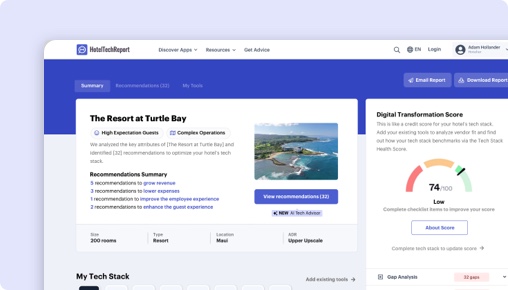
Sorry, this functionality is only available for verified hoteliers
The project dashboard is a free tool that is only available to verified hoteliers to make adopting new technology easier by streamlining their research and simplifying their communication workflow.

FornovaCI (Competitive Intelligence) vs. Lighthouse Pricing:
Which Is Right for You?

TLDR
We analyzed 1,357 verified hotelier reviews, compared feature sets, pricing, and real-world case studies to break down where each platform delivers. The right choice depends on your property type and priorities:
Fornova shines .
Lighthouse shines in onboarding — especially for independent properties (4.8/5) , with exclusive features like Performance Reporting.
How Does FornovaCI (Competitive Intelligence) Compare to Lighthouse Pricing?
Side-by-side ratings based on 1,357 verified hotelier reviews on HTR.
| HTScore |
|
|
| Likelihood to Recommend |
|
|
| Ease of Use |
|
|
| Customer Support |
|
|
| Value for Money |
|
|
| Starting Price | Contact sales | From $100/mo |
| Verified Reviews | 22 | 1,335 |
What Are the Pros and Cons of FornovaCI (Competitive Intelligence) vs Lighthouse Pricing?
After analyzing 1,357 verified reviews, Fornova users most value its , while Lighthouse users highlight rate comparison and analysis, market demand insights, user-friendly interface. Click any theme to see what reviewers say.
|
Fornova
|
Lighthouse
|
|---|---|
| Pros | |
|
+
Rate Comparison and Analysis
▾
|
|
|
+
Market Demand Insights
▾
|
|
|
+
User-Friendly Interface
▾
|
|
|
+
Customization and Alerts
▾
|
|
| Cons | |
|
−
Data Refresh Rates
▾
|
|
Fornova vs Lighthouse: Rankings by Hotel Segment
How each product ranks among Rate Shopping vendors for different property sizes, types, and regions — based on verified reviews from hoteliers in each segment.
By Hotel Size
| Segment |
Fornova
|
Lighthouse
|
|---|---|---|
| Small (10-24 rooms) ▾ | #18 1 reviews | #1 111 reviews |
| Mid-Size (25-74 rooms) ▾ | #11 7 reviews | #1 652 reviews |
| Large (75-199 rooms) ▾ | #5 8 reviews | #1 355 reviews |
| X-Large (200+ rooms) ▾ | #9 2 reviews | #1 156 reviews |
By Property Type
| Segment |
Fornova
|
Lighthouse
|
|---|---|---|
| Boutique ▾ | #8 10 reviews | #1 501 reviews |
| Luxury ▾ | #7 14 reviews | #1 552 reviews |
| Branded / Chain ▾ | #8 7 reviews | #1 705 reviews |
| Extended Stay ▾ | #15 1 reviews | #1 135 reviews |
By Region
| Segment |
Fornova
|
Lighthouse
|
|---|---|---|
| North America ▾ | #7 6 reviews | #1 344 reviews |
| Europe ▾ | #11 3 reviews | #1 419 reviews |
| Asia Pacific ▾ | #5 9 reviews | #1 280 reviews |
| Middle East ▾ | #6 2 reviews | #1 135 reviews |
The Decision
Choosing between FornovaCI and Lighthouse Pricing hinges on your hotel’s specific needs for rate shopping and competitive intelligence. While both are designed to help you monitor and analyze your market position, they diverge in scope, features, and user feedback. Fornova’s platform specializes in competitive analysis with a focus on detailed comp set data, whereas Lighthouse emphasizes real-time rate intelligence with extensive integration options. Which platform aligns more closely with your operational priorities?
Is FornovaCI or Lighthouse Pricing Better for Hotels?
Both FornovaCI and Lighthouse aim to enhance your pricing strategies and market understanding. Fornova offers comprehensive competitive intelligence, giving you a detailed view of your market position across multiple regions. Lighthouse provides real-time rate insights with granular competitor data and a broader set of features, including extensive integrations and analytics. Their review counts reflect this difference: Fornova has 20 reviews, all recent, with a high overall rating of 4.93/5, while Lighthouse boasts over 1,000 reviews, with a slightly lower rating of 4.76/5 but more recent feedback. Does your hotel prioritize detailed competitive analysis or real-time rate monitoring?
FornovaCI vs Lighthouse Pricing: Which Should Your Hotel Choose?
If your hotel needs in-depth competitive set analysis, especially to refine pricing based on detailed market positioning, Fornova is the clear choice. It's ideal for hotels looking to understand their performance relative to competitors through advanced insights. Conversely, if your team requires quick, accurate rate comparisons, dynamic market insights, and broad system integrations, Lighthouse is the better fit. Its extensive feature set and higher review volume make it suitable for hotels seeking a comprehensive rate shopping tool with reliable customer support.
Is FornovaCI or Lighthouse Pricing Easier to Use?
Lighthouse consistently outperforms Fornova in ease of use and onboarding, reflected in their respective user ratings: Lighthouse scores 4.8/5 for ease of use, compared to Fornova’s 4.53/5. Lighthouse’s interface receives praise for its simplicity and intuitive design, with many users noting it reduces their daily workload. Fornova’s platform is user-friendly but has slightly lower ratings, with some users mentioning room for stability improvements and communication enhancements. Edge: Lighthouse.
Which Has Better Features: FornovaCI or Lighthouse Pricing?
Lighthouse provides a significantly larger feature set—29 unique features—including room and rate type filtering, metasearch connectivity, custom dashboards, OTA rank tracking, and historical trend analysis. Fornova, on the other hand, offers no exclusive features but excels in comprehensive competitive intelligence through detailed comp set data. Given the broad feature array of Lighthouse, it offers more tools for diverse revenue management strategies. Edge: Lighthouse.
Which Has Better Customer Support: FornovaCI or Lighthouse Pricing?
Both platforms are highly rated for support, with Lighthouse slightly edging out Fornova in recent review scores: Lighthouse scores 4.71/5, Fornova 4.6/5. Lighthouse users frequently mention prompt, helpful support, and positive onboarding experiences across the board. However, Lighthouse’s larger customer base and more recent reviews suggest a more reliable and responsive support system. Edge: Lighthouse.
Which Has More Integrations: FornovaCI or Lighthouse Pricing?
Lighthouse offers a vast array of 71 verified partners, including popular PMS and RMS integrations, and 5 shared partners with Fornova. Fornova has only 8 verified partners, including some key systems like Mews and Duetto, but falls short in breadth. The extensive integrations of Lighthouse facilitate smoother data flow and operational efficiency, making it more suitable for hotels with complex tech stacks. Edge: Lighthouse.
Which Do Hoteliers Rate Higher: FornovaCI or Lighthouse Pricing?
Lighthouse boasts an overall rating of 4.76/5 based on 1,088 reviews, with recent feedback emphasizing its intuitive design and real-time data. Hotel segments such as independent and boutique hotels rate Lighthouse higher, with 4.75/5 and 5/5, respectively. Fornova, with 20 reviews and a perfect 4.93/5 score, appeals more to hotels valuing detailed competitive analysis, mainly in European and North American markets. Given the volume and recency of Lighthouse reviews, it scores higher in overall hotel satisfaction.
How Much Do FornovaCI and Lighthouse Pricing Cost?
Fornova’s pricing details are not publicly available, which is typical for enterprise-grade competitive intelligence platforms. Lighthouse pricing starts at $100 per month, with no free trial offered. The lower entry point and transparency in Lighthouse’s pricing make it easier for smaller hotels or those testing rate shopping solutions to evaluate its value relative to Fornova.
What Type of Hotel Should Use FornovaCI?
- Hotels that require detailed competitive analysis to shape long-term pricing strategies.
- Teams managing multiple properties or chains seeking comprehensive market positioning insights.
- Hotels in regions with complex, varying market dynamics that benefit from advanced data.
- Hotels aiming to upgrade to enterprise-level rate shopping capabilities.
- Not ideal if you need quick, real-time rate updates or a broad feature set, as Fornova’s focus is on competitive intelligence rather than instant rate monitoring.
What Type of Hotel Should Use Lighthouse?
- Hotels that need real-time rate data and swift market insights.
- Teams looking for extensive integrations with PMS, RMS, and other systems.
- Hotels seeking user-friendly interfaces and customizable reports.
- Properties wanting predictive market insights and granular competitor analysis.
- Not ideal if your primary goal is detailed competitive set analysis without a need for rapid rate updates or broad system integrations.
The Bottom Line for Hotels
FornovaCI specializes in competitive intelligence and strategic market positioning, making it ideal for hotels prioritizing detailed analysis and long-term planning. Its high rating and recent reviews demonstrate its value in understanding market performance deeply, especially for luxury and chain hotels.
Lighthouse, with a broader feature set and more recent, extensive reviews, excels as a real-time rate shopping solution. Its ease of use, broad integrations, and higher volume of hotel user feedback make it the preferred choice for hotels seeking quick, actionable rate data to optimize occupancy and revenue.
In summary, choose Fornova if your focus is strategic, competitor-based insights, and opt for Lighthouse if your needs lean toward real-time rate comparison, operational convenience, and system connectivity. The decision ultimately depends on whether you prioritize deep market analysis or immediate rate intelligence.
How Much Do FornovaCI (Competitive Intelligence) and Lighthouse Pricing Cost?
Rate Shopping pricing is rarely straightforward. Here is what we know from each vendor's public pricing data. Always request a custom quote for your property size.
|
Fornova
|
Lighthouse
|
|
|---|---|---|
| Starting Price | — | From $100/mo |
Feature Comparison: FornovaCI (Competitive Intelligence) vs Lighthouse Pricing
These are the features each vendor has configured, organized by feature group — the same data shown in the vendor dashboard. Expand a group to compare features side by side.
| Feature |
Fornova
|
Lighthouse
|
|---|---|---|
|
▾
Competitor Tracking & Benchmarking
|
|
|
| Competitor Strategy Monitoring | ||
| Discount Monitoring | ||
| Rate Type Comparisons | ||
| OTA Rank Tracking | ||
| Promotion Impact Report | ||
| Rate Intelligence | ||
| Room Rate Comparison | ||
| Vacation Rental Rate Intelligence | ||
| Metasearch connectivity | ||
| Quick rate shopping filters | ||
| Room & rate type filtering | ||
|
▾
Parity Monitoring
|
|
|
| OTA Price Monitoring | ||
| Discrepancy Alerts | ||
| 12-month Parity Monitoring | ||
| Real Time Updates | ||
| Parity Report | ||
|
▾
Data Granularity
|
|
|
| Device Type Tracking | ||
| Discount Monitoring | ||
| Rate Type Comparisons | ||
| Historical Trend Analysis | ||
| Local Event Monitoring & Database | ||
| Room Rate Comparison | ||
| Vacation Rental Rate Intelligence | ||
| Open API | ||
|
▾
Performance Reporting & Analytics
|
|
|
| OTA Rank Tracking | ||
| On the Books (OTB) Comparisons | ||
| Promotion Impact Report | ||
| Performance Reporting | ||
| Rate Intelligence | ||
| Room Rate Comparison | ||
| Multi-property Management | ||
| Analytics dashboard | ||
| Custom dashboards | ||
| Multi-property consolidation | ||
|
▾
Other
|
|
|
| In-app support |
Real-World Results: Fornova vs Lighthouse by Business Goal
We analyzed 7 verified case studies to compare what hotels actually achieve with each platform across four key business objectives.
Fornova
No published case study for this goal yet.
Furaveri Maldives
Small
"OTA Insight’s tools have transformed the way I work. They’re like a 24/7 buffet where I can get all the live data I need, any time of the day. I start with a look at Market Insight..."
 Fornova
No published case study for this goal yet.
Six Senses Douro Valley
Small
"You can tell that the product development team bases updates and new features on client feedback. This has helped them make the tools even more user-friendly and comprehensive over..."

Fornova vs Lighthouse: The Bottom Line
What hoteliers love
Lighthouse excels in rate comparison, enabling users to evaluate competitor prices seamlessly. This feature is praised for its accuracy and the ease i... Lighthouse excels in rate comparison, enabling users to evaluate competitor prices seamlessly. This feature is praised for its accuracy and the ease it brings to pricing decisions, though a few users noted delays in data refresh impacting the tool's immediacy.
The platform offers comprehensive market demand insights, allowing hotels to adapt to market trends effectively. Users appreciate the detailed data wh... The platform offers comprehensive market demand insights, allowing hotels to adapt to market trends effectively. Users appreciate the detailed data which aids in forecasting demand trends and strategizing efficiently, though some cite limitations in event integration and recommend enhancements.
The intuitive user interface of Lighthouse is consistently praised, making navigation and data interpretation easier for users of all experience level... The intuitive user interface of Lighthouse is consistently praised, making navigation and data interpretation easier for users of all experience levels. This enhances the overall user experience, though there are calls for refining certain features for better usability.
Where hoteliers push back
While users value Lighthouse's data accuracy, slow refresh rates are a frequent concern, particularly during high-demand periods, affecting hotels' re... While users value Lighthouse's data accuracy, slow refresh rates are a frequent concern, particularly during high-demand periods, affecting hotels' real-time pricing strategies. Enhancements in this area are recommended to improve operational efficiency.
Ranks higher for
Unique capabilities
Where the ratings diverge most
Frequently Asked Questions About FornovaCI (Competitive Intelligence) vs Lighthouse Pricing
Can FornovaCI (Competitive Intelligence) replace Lighthouse Pricing?
It depends on your requirements. FornovaCI (Competitive Intelligence) and Lighthouse Pricing share many core Rate Shopping features, but each has unique capabilities. FornovaCI (Competitive Intelligence) offers 8 verified integration partners, while Lighthouse Pricing offers 74. Review the feature comparison above to see where they differ before switching.
Which is better for small or independent hotels?
Small hotels should prioritize ease of use and fast onboarding. Lighthouse Pricing leads in ease of use at 4.8/5 vs 4.5/5. Look for transparent pricing and a trial or demo option. Filter reviews on each product page by property size to hear from hotels like yours.
Do FornovaCI (Competitive Intelligence) or Lighthouse Pricing offer a free plan?
FornovaCI (Competitive Intelligence): No. Lighthouse Pricing: No. Neither product currently offers a free tier. Most Rate Shopping vendors offer demos or trials — request one from each to evaluate before committing.
How Does HTR Evaluate and Rank FornovaCI (Competitive Intelligence) and Lighthouse Pricing?
The HT Score is a composite ranking that considers 4 criteria groups and over a dozen variables to help hoteliers objectively compare hotel technology products. Fornova has an HT Score of 0 and Lighthouse has 100. Here is how the score is calculated.
| Criteria Group | Weight | What It Measures |
|---|---|---|
| Customer Ratings & Reviews |
|
How highly do users recommend this product? Ratings Score, Review Volume, Share of Voice, Review Depth, Review Recency, Success Stories ▾ The most heavily weighted factor. Analyzes average satisfaction ratings (likelihood to recommend, ease of use, support, ROI), total review count relative to category peers, review recency (at least 20 reviews in the trailing 6 months), and share of voice across unique hotel clients to detect selection bias. |
| Partner Ecosystem |
|
How highly do tech partners recommend this company? Partner Recommendations, Integration Quantity, Integration Quality ▾ Evaluates partner recommendations as expert votes of confidence, the number of verified integrations, and ecosystem quality — the average HT Scores of integration partners. Products with higher-quality integration ecosystems are more likely to deliver a connected tech stack. |
| Customer Centricity |
|
How customer-centric is this organization? Certified Support, Review Consistency, Profile Completeness ▾ Assesses whether the company has earned HTR Customer Support Certification, maintains consistent review collection over time (an indicator of feedback-driven culture), and keeps product profiles complete with capabilities, screenshots, pricing, and features. |
| Reach, Staying Power & Resources |
|
How extensive is this company's reach and resourcing? Geographic Reach, Staying Power, Company Resources, Trending Score ▾ Measures global presence (countries and regions served), years in business as a stability proxy, team headcount as a resource proxy, and a trending score based on trailing-twelve-month buyer inquiries, reviews, partner recommendations, and press activity. |
Customer ratings and reviews are by far the most important factor in the HT Score algorithm. HTR does not accept payment for higher rankings. All reviews are verified — only hotel industry practitioners with confirmed affiliations can submit ratings. View full HT Score methodology →
What Other Rate Shopping Comparisons Are Hoteliers Reading?
Explore more head-to-head comparisons based on verified hotelier reviews.



Get Your Free AI Analyst Report
Custom recommendations tailored to your property


