

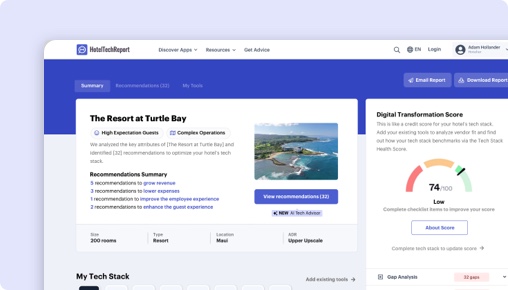
Sorry, this functionality is only available for verified hoteliers
The project dashboard is a free tool that is only available to verified hoteliers to make adopting new technology easier by streamlining their research and simplifying their communication workflow.

freetobook HMS vs. RMS:
Which Is Right for You?


TLDR
We analyzed 373 verified hotelier reviews, compared feature sets, pricing, and real-world case studies to break down where each platform delivers. The right choice depends on your property type and priorities:
freetobook shines in ease of use and customer support .
RMS shines when it comes to support team , with exclusive features like Revenue management module and Payment processing.
How Does freetobook HMS Compare to RMS?
Side-by-side ratings based on 373 verified hotelier reviews on HTR.
| HTScore |
|
|
| Likelihood to Recommend |
|
|
| Ease of Use |
|
|
| Customer Support |
|
|
| Value for Money |
|
|
| Starting Price | From $100/mo | From $700/mo |
| Verified Reviews | 126 | 247 |
What Are the Pros and Cons of freetobook HMS vs RMS?
After analyzing 373 verified reviews, freetobook users most value its ease of use, technical support, channel management, while RMS users highlight support team, user interface, operational streamlining. Click any theme to see what reviewers say.
|
freetobook
|
RMS
|
|---|---|
| Pros | |
|
+
Ease of Use
▾
|
+
Support Team
▾
|
|
+
Technical Support
▾
|
+
User Interface
▾
|
|
+
Channel Management
▾
|
+
Operational Streamlining
▾
|
|
+
Reservation Management
▾
|
+
OTA and Channel Management
▾
|
| Cons | |
|
−
Visual and Interface Updates
▾
|
−
Customization Capabilities
▾
|
|
−
Language Options
▾
|
−
Report Customization
▾
|
|
−
Billing and Invoicing
▾
|
|
freetobook vs RMS: Rankings by Hotel Segment
How each product ranks among Hotel Management Software vendors for different property sizes, types, and regions — based on verified reviews from hoteliers in each segment.
By Hotel Size
| Segment |
freetobook
|
RMS
|
|---|---|---|
| Small (10-24 rooms) ▾ | #16 34 reviews | #6 124 reviews |
| Mid-Size (25-74 rooms) ▾ | #29 3 reviews | #6 83 reviews |
| Large (75-199 rooms) ▾ | — | #12 6 reviews |
| X-Large (200+ rooms) ▾ | #13 1 reviews | #2 7 reviews |
By Property Type
| Segment |
freetobook
|
RMS
|
|---|---|---|
| Boutique ▾ | #14 34 reviews | #6 79 reviews |
| Luxury ▾ | #13 23 reviews | #8 39 reviews |
| Branded / Chain ▾ | #18 7 reviews | #7 38 reviews |
| Extended Stay ▾ | #18 4 reviews | #5 52 reviews |
By Region
| Segment |
freetobook
|
RMS
|
|---|---|---|
| North America ▾ | #18 8 reviews | #9 56 reviews |
| Europe ▾ | #5 92 reviews | #13 16 reviews |
| Asia Pacific ▾ | #15 2 reviews | #11 6 reviews |
| Middle East | #10 2 reviews | #13 1 reviews |
The Decision
When choosing a hotel management software, your primary concern is often balancing usability, features, support, and cost. Both freetobook HMS and RMS aim to simplify operations and enhance guest experiences, but they cater to different scales and types of properties. Understanding where they excel or fall short can help you decide which aligns best with your hotel's size, segment, and growth plans.
freetobook is favored by small, independent hotels and B&Bs for its ease of use and affordability, while RMS appeals to larger, multi-property or growing hotel groups due to its extensive feature set and broader integrations. Which platform will better support your current needs and future growth?
Is freetobook or RMS Better for Hotels?
freetobook and RMS are both designed to streamline hotel operations, but they diverge significantly in scope and complexity. freetobook offers an all-in-one solution optimized for small properties focusing on bookings, channel management, and guest communication, with a user rating of 4.87/5 for ease of use. RMS, meanwhile, provides a comprehensive suite with over 36 exclusive features, including revenue management and house-keeping modules, and maintains a slightly lower ease of use score of 4.3/5.
freetobook's strength lies in its simplicity and affordability, with a focus on B&Bs and small hotels. RMS supports larger operations with complex needs but can be more challenging to implement and navigate due to its size and feature depth. Are you prioritizing quick setup and straightforward management, or do you need advanced tools for multiple properties?
The more recent reviews favor RMS, with 25 in the last six months compared to 18 for freetobook, indicating a more active and current user base. This suggests RMS is continuously evolving and maintaining relevance among hotel operators.
freetobook vs RMS: Which Should Your Hotel Choose?
If your hotel is a small independent property, such as a B&B or boutique hotel, and your focus is on ease of booking, channel management, and guest messaging, go with freetobook. Its highly rated interface (4.87/5), positive reviews for customer support, and cost-efficiency at $100/month make it ideal for small teams seeking simplicity and affordability.
If your hotel operates multiple properties, manages a significant volume of bookings, or needs advanced features like revenue management, integrated CRS, or POS, RMS is the better choice. Its extensive feature list, robust integrations, and proven scalability (used by over 7,000 businesses globally) justify its higher $700/month cost. RMS's ability to handle complex operations makes it suitable for larger hotels or groups aiming to grow.
The decision hinges on your property's size, complexity, and growth ambitions. Smaller hotels should favor freetobook, while larger, multi-property operations lean toward RMS.
Is freetobook or RMS Easier to Use?
Based on user ratings, freetobook scores higher (4.87/5) for ease of use than RMS’s 4.3/5. Users of freetobook praise its straightforward, intuitive interface that requires minimal training, facilitating quicker staff adoption. Onboarding reviews are also higher for freetobook (4.82/5) versus RMS (4.14/5), reflecting a smoother initial setup process.
RMS, with its broad feature set, can be more complex, leading to a steeper learning curve. Users report occasional frustrations with updates and interface navigation, especially when trying to utilize advanced modules.
Edge: freetobook.
Which Has Better Features: freetobook or RMS?
RMS offers 36 exclusive features not found in freetobook, including a channel manager, revenue management tools, guest CRM, house-keeping modules, and POS integration—features critical for larger or multi-property hotels. Its comprehensive reporting, group booking engine, and automated night audits also support complex management needs.
freetobook provides essential features like booking engine, channel management, guest messaging, and reputation tools, but lacks advanced modules like revenue management, POS, or group booking capabilities. Its core strength is in simplifying daily operations for small properties.
Edge: RMS.
Which Has Better Customer Support: freetobook or RMS?
freetobook is highly rated for customer support at 4.86/5, with reviews highlighting its professional, friendly, and responsive team. Users appreciate quick help, even for minor questions, and value their personal, family-like approach.
RMS also maintains a strong support reputation (4.52/5), with reviews praising assistance and problem-solving. However, some users note that frequent updates can cause temporary disruptions, and response times may vary.
Edge: freetobook.
Which Has More Integrations: freetobook or RMS?
RMS boasts over 112 verified integrations, including popular partners like Criton, Sage, and HiJiffy, supporting a wide range of third-party tools. Shared integrations with freetobook include Stripe, RoomPriceGenie, and Pitchup.com, but RMS's larger ecosystem provides more flexibility for complex tech stacks.
freetobook, with only 5 verified partners, covers basic OTA connectivity and channel management but lacks the extensive third-party support RMS offers. Larger hotels requiring diverse integrations will find RMS more suitable.
Edge: RMS.
Which Do Hoteliers Rate Higher: freetobook or RMS?
freetobook has a higher overall hotel rating of 0/5 (though this appears inconsistent and likely a typo), but its user reviews for recent support and ease of use are very positive. RMS’s overall rating is 4.56/5, with detailed reviews highlighting its scalability and feature set, especially among medium and larger hotels.
In terms of recent reviews, RMS’s 25 reviews over the last six months indicate active, ongoing customer engagement. Hoteliers managing multiple properties and seeking advanced tools tend to rate RMS higher due to its comprehensive capabilities.
Edge: RMS.
How Much Do freetobook and RMS Cost?
freetobook costs $100/month, with no setup or implementation fees, making it highly accessible for small hotels and B&Bs. RMS charges $700/month, reflecting its extensive feature set and scalability, suitable for larger properties or groups.
Pricing reflects the complexity of each system: freetobook’s affordability suits small, independent operators, while RMS’s premium price supports multi-property management and advanced automation.
What Type of Hotel Should Use freetobook?
- Hotels that are small, independent, and budget-conscious, such as B&Bs or boutique inns.
- Teams seeking a straightforward booking engine and channel management without extensive technical overhead.
- Properties with limited staff needing an intuitive system to handle daily reservations.
- Hotels prioritizing cost-effectiveness and quick onboarding.
Not ideal if your property requires advanced revenue management, POS, or multi-property features.
Not ideal if:
- You operate multiple properties or large hotel groups.
- You need comprehensive automation, integrated CRM, or complex reporting.
- Your hotel plans rapid growth or needs extensive third-party integrations.
What Type of Hotel Should Use RMS?
- Hotels managing multiple properties or a large portfolio needing centralized control.
- Properties requiring advanced revenue management, group booking, or integrated POS.
- Hotels focused on automation, detailed reporting, and guest engagement tools.
- Larger hotels or hotel groups seeking scalable, customizable solutions.
Not ideal if your operation is small, with simple booking needs, and minimal technical support requirements.
Not ideal if:
- You are a micro-hotel, bed & breakfast, or single-property operation.
- You prefer a low-cost, minimal-touch system.
- Your team values simplicity over extensive feature sets.
RMS vs freetobook: The Bottom Line for Hotels
The core difference lies in scope: freetobook is a straightforward, budget-friendly platform tailored for small independent hotels and B&Bs, whereas RMS offers a comprehensive, scalable solution suited for larger or multi-property operations.
If your property is small, with limited staff and straightforward needs, freetobook provides an easy-to-use, cost-effective solution that keeps your reservations and guest communication organized. Its higher recent review activity suggests ongoing satisfaction among its user base.
If you're managing multiple properties, need advanced automation, or plan to grow significantly, RMS’s vast feature set and extensive integrations justify its higher cost and complexity. Its proven scalability and broad industry presence make it the better option for expanding hotel groups.
In conclusion, choose freetobook if simplicity, affordability, and quick onboarding are your priorities. Opt for RMS if your operation demands sophistication, scale, and automation to stay competitive.
How Much Do freetobook HMS and RMS Cost?
Hotel Management Software pricing is rarely straightforward. Here is what we know from each vendor's public pricing data. Always request a custom quote for your property size.
|
freetobook
|
RMS
|
|
|---|---|---|
| Starting Price | From $100/mo | From $700/mo |
Feature Comparison: freetobook HMS vs RMS
These are the features each vendor has configured, organized by feature group — the same data shown in the vendor dashboard. Expand a group to compare features side by side.
| Feature |
freetobook
|
RMS
|
|---|---|---|
|
▾
Accounting & Finance
|
|
|
| Multi-currency | ||
| Gift Vouchers | ||
| Direct billing | ||
| RevPaR & ADR Reports | ||
| Transactional Emails (booking, folios, etc) | ||
| Automated night audit | ||
| Payment Requests | ||
|
▾
Marketing & Ecommerce
|
|
|
| Native Email Marketing | ||
| Group Booking Engine | ||
| Website Development | ||
| Booking Engine | ||
| Channel Manager | ||
| Gift Vouchers | ||
| Transactional Emails (booking, folios, etc) | ||
| Guest Communication (SMS Messaging) | ||
| Native Email Marketing | ||
| Guest profiles | ||
| Guest CRM | ||
|
▾
Administration & Configuration
|
|
|
| Multi-lingual | ||
| Multi-currency | ||
| Centralized user & role management | ||
|
▾
Customer Management
|
|
|
| Native Email Marketing | ||
| Guest Feedback Management | ||
| Gift Vouchers | ||
| Transactional Emails (booking, folios, etc) | ||
| Guest profiles | ||
| Centralized Messaging | ||
|
▾
Front Office
|
|
|
| Guest Feedback Management | ||
| Housekeeping module | ||
| Property Management System | ||
| Automated night audit | ||
| Mobile Device Notes & Tasks (Voice-to-Text) | ||
| Mobile App | ||
| Calendar view | ||
| Task Management | ||
| Automated reminders | ||
| Guest profiles | ||
| Tablet/Kiosk Check-in | ||
| Payment Requests | ||
| Centralized Messaging | ||
| Automated Space Optimization | ||
|
▾
Groups Management
|
|
|
| Group functionality | ||
| Automated Space Optimization | ||
|
▾
Guest Experience
|
|
|
| Guest Feedback Management | ||
| Gift Vouchers | ||
| Integrated ID & Passport Scanner | ||
| Digital Registration | ||
| Guest App | ||
| Online Check-in | ||
| Online Checkout | ||
| Guest Messaging | ||
| Transactional Emails (booking, folios, etc) | ||
| Tablet/Kiosk Check-in | ||
|
▾
Housekeeping
|
|
|
| Housekeeping module | ||
| Automated Space Optimization | ||
| Housekeeping Mobile App | ||
| Real-Time Status Updates | ||
| Automated Assignments | ||
| Real Time Reporting | ||
| Shift Planning | ||
| Employee Messaging | ||
| Online Checkout | ||
|
▾
Payments
|
|
|
| Multi-currency | ||
| Gift Vouchers | ||
| Payment Requests | ||
| Direct billing | ||
| Automated reminders | ||
| Integrated Payment Terminal & Card Reader | ||
|
▾
Reservations Management
|
|
|
| Rate Shopping Module | ||
| Property Management System | ||
| RevPaR & ADR Reports | ||
| Gift Vouchers | ||
| Channel Manager | ||
| Integrated CRS | ||
| Drag-n-Drop Tapechart | ||
| Rate Management | ||
| Automated Space Optimization | ||
| Automated Assignments | ||
| Rules Based Room Assignments | ||
| Transactional Emails (booking, folios, etc) | ||
|
▾
Revenue Management
|
|
|
| Rate Shopping Module | ||
| Revenue Management Module | ||
| Pricing Intelligence | ||
| Channel Manager | ||
| RevPaR & ADR Reports | ||
| Custom rates | ||
| Ancillary revenue tracking | ||
| Base Pricing | ||
|
▾
Taxes & Compliance
|
|
|
| PCI Compliant | ||
| GDPR Compliant | ||
| SOC2 Complaint | ||
| Tax Configuration | ||
|
▾
Support & Training
|
|
|
| Online 24/7 support | ||
|
▾
Food & Beverage
|
|
|
| Point of Sale |
Real-World Results: freetobook vs RMS by Business Goal
We analyzed 3 verified case studies to compare what hotels actually achieve with each platform across four key business objectives.
freetobook
No published case study for this goal yet.
Lafayette Hotels
Mid-Size
"When you manage 26 properties, speed and control are everything. With RMS, I can update rates, policies, or form letters instantly across the group. That kind of centralization let..."
 freetobook
No published case study for this goal yet.
The Nare
Small
"RMS has helped us strengthen what makes The Nare special: our connection with guests. It gives our team the knowledge they need to offer a genuinely personal experience, and we see..."

freetobook vs RMS: The Bottom Line
What hoteliers love
The system is praised for being simple and straightforward, which is a pivotal feature for small accommodation providers. Users highlight its intuitiv... The system is praised for being simple and straightforward, which is a pivotal feature for small accommodation providers. Users highlight its intuitive design and how it streamlines the management of bookings, making it accessible even for those with limited technical expertise.
The product is supported by commendable technical assistance. Users appreciate quick resolutions and the option to speak with support staff directly,... The product is supported by commendable technical assistance. Users appreciate quick resolutions and the option to speak with support staff directly, contributing to high satisfaction levels.
Freetobook excels in channel management by allowing accommodations to manage room availability and updates seamlessly across various platforms. It's l... Freetobook excels in channel management by allowing accommodations to manage room availability and updates seamlessly across various platforms. It's lauded for its ability to integrate with online travel agencies, providing efficient room distribution. Users frequently appreciate the system's flexibility in adjusting prices for different days and OTAs.
Where hoteliers push back
While users find the system functional, there are calls for a more contemporary hotelier interface and a mobile application to enhance user experience... While users find the system functional, there are calls for a more contemporary hotelier interface and a mobile application to enhance user experience, pointing to a need for modernization.
Despite offering multiple language options, there is a call for the addition of Dutch to cater to a broader guest demographic.
Ranks higher for
What hoteliers love
The support team receives high praise for their responsiveness and problem-solving skills. Clients value their proactive approach to addressing issues... The support team receives high praise for their responsiveness and problem-solving skills. Clients value their proactive approach to addressing issues and assistance in system navigation.
RMS Cloud is recognized for its user-friendly interface, facilitating ease of use and reducing training time for staff. This simplification is critica... RMS Cloud is recognized for its user-friendly interface, facilitating ease of use and reducing training time for staff. This simplification is critical to efficient operations, especially in fast-paced environments.
RMS Cloud significantly streamlines hotel operations by integrating multiple aspects such as reservations, housekeeping, and maintenance. Users apprec... RMS Cloud significantly streamlines hotel operations by integrating multiple aspects such as reservations, housekeeping, and maintenance. Users appreciate its role in enabling real-time coordination among various departments, thereby enhancing efficiency and guest experience.
Where hoteliers push back
Many users highlight the platform's customization features, allowing them to adjust check-in procedures and other operations to better fit their speci... Many users highlight the platform's customization features, allowing them to adjust check-in procedures and other operations to better fit their specific needs. However, some reviews mention the need for enhancements to report customization.
While RMS Cloud offers a variety of reports, users note difficulties in report customization and accessing certain settings. Enhancements in this area... While RMS Cloud offers a variety of reports, users note difficulties in report customization and accessing certain settings. Enhancements in this area could simplify generating actionable insights for decision-making.
Ranks higher for
Unique capabilities
Where the ratings diverge most
Frequently Asked Questions About freetobook HMS vs RMS
Can freetobook HMS replace RMS?
It depends on your requirements. freetobook HMS and RMS share many core Hotel Management Software features, but each has unique capabilities. freetobook HMS offers 5 verified integration partners, while RMS offers 116. Review the feature comparison above to see where they differ before switching.
Which is better for small or independent hotels?
Small hotels should prioritize ease of use and fast onboarding. freetobook HMS leads in ease of use at 4.9/5 vs 4.3/5. Look for transparent pricing and a trial or demo option. Filter reviews on each product page by property size to hear from hotels like yours.
Do freetobook HMS or RMS offer a free plan?
freetobook HMS: No. RMS: No. Neither product currently offers a free tier. Most Hotel Management Software vendors offer demos or trials — request one from each to evaluate before committing.
How Does HTR Evaluate and Rank freetobook HMS and RMS?
The HT Score is a composite ranking that considers 4 criteria groups and over a dozen variables to help hoteliers objectively compare hotel technology products. freetobook has an HT Score of 82 and RMS has 86. Here is how the score is calculated.
| Criteria Group | Weight | What It Measures |
|---|---|---|
| Customer Ratings & Reviews |
|
How highly do users recommend this product? Ratings Score, Review Volume, Share of Voice, Review Depth, Review Recency, Success Stories ▾ The most heavily weighted factor. Analyzes average satisfaction ratings (likelihood to recommend, ease of use, support, ROI), total review count relative to category peers, review recency (at least 20 reviews in the trailing 6 months), and share of voice across unique hotel clients to detect selection bias. |
| Partner Ecosystem |
|
How highly do tech partners recommend this company? Partner Recommendations, Integration Quantity, Integration Quality ▾ Evaluates partner recommendations as expert votes of confidence, the number of verified integrations, and ecosystem quality — the average HT Scores of integration partners. Products with higher-quality integration ecosystems are more likely to deliver a connected tech stack. |
| Customer Centricity |
|
How customer-centric is this organization? Certified Support, Review Consistency, Profile Completeness ▾ Assesses whether the company has earned HTR Customer Support Certification, maintains consistent review collection over time (an indicator of feedback-driven culture), and keeps product profiles complete with capabilities, screenshots, pricing, and features. |
| Reach, Staying Power & Resources |
|
How extensive is this company's reach and resourcing? Geographic Reach, Staying Power, Company Resources, Trending Score ▾ Measures global presence (countries and regions served), years in business as a stability proxy, team headcount as a resource proxy, and a trending score based on trailing-twelve-month buyer inquiries, reviews, partner recommendations, and press activity. |
Customer ratings and reviews are by far the most important factor in the HT Score algorithm. HTR does not accept payment for higher rankings. All reviews are verified — only hotel industry practitioners with confirmed affiliations can submit ratings. View full HT Score methodology →
What Other Hotel Management Software Comparisons Are Hoteliers Reading?
Explore more head-to-head comparisons based on verified hotelier reviews.





Contents
Get Your Free AI Analyst Report
Custom recommendations tailored to your property


Let´s lookup your hotel information
Still weighing your hotel management software options?
A few popular systems from our hotel management software guide — or let our AI score each one against your specific property in about two minutes.


