

Sorry, this functionality is only available for verified hoteliers
The project dashboard is a free tool that is only available to verified hoteliers to make adopting new technology easier by streamlining their research and simplifying their communication workflow.

Duve Mobile Ordering vs. IRIS:
Which Is Right for You?

TLDR
We analyzed 209 verified hotelier reviews, compared feature sets, pricing, and real-world case studies to break down where each platform delivers. The right choice depends on your property type and priorities:
Duve shines when it comes to guest communication and messaging — especially for brand properties (0.0/5) , with exclusive features like Cross Venue Payment Splitting.
IRIS Systems shines when it comes to customer support , with exclusive features like Housekeeping requests.
How Does Duve Mobile Ordering Compare to IRIS?
Side-by-side ratings based on 209 verified hotelier reviews on HTR.
| HTScore |
|
|
| Likelihood to Recommend |
|
|
| Ease of Use |
|
|
| Customer Support |
|
|
| Value for Money |
|
|
| Starting Price | From $800/mo | Contact sales |
| Verified Reviews | 168 | 41 |
What Are the Pros and Cons of Duve Mobile Ordering vs IRIS?
After analyzing 209 verified reviews, Duve users most value its guest communication and messaging, upselling and ancillary revenue, mobile ordering and room service, while IRIS Systems users highlight customer support, user-friendly interface, customization and flexibility. Click any theme to see what reviewers say.
|
Duve
|
IRIS Systems
|
|---|---|
| Pros | |
|
+
Guest communication and messaging
▾
|
+
Customer Support
▾
|
|
+
Upselling and ancillary revenue
▾
|
+
User-Friendly Interface
▾
|
|
+
Mobile ordering and room service
▾
|
+
Customization and Flexibility
▾
|
|
+
Integration with PMS and other systems
▾
|
+
Menu Management
▾
|
| Cons | |
|
−
Reporting and analytics
▾
|
−
Technical Issues and Improvements
▾
|
|
−
Integration and Synchronization
▾
|
|
|
−
Training and Documentation
▾
|
|
Duve vs IRIS Systems: Rankings by Hotel Segment
How each product ranks among Mobile Ordering & Room Service vendors for different property sizes, types, and regions — based on verified reviews from hoteliers in each segment.
By Hotel Size
| Segment |
Duve
|
IRIS Systems
|
|---|---|---|
| Small (10-24 rooms) ▾ | #1 22 reviews | #7 2 reviews |
| Mid-Size (25-74 rooms) ▾ | #2 52 reviews | #7 9 reviews |
| Large (75-199 rooms) ▾ | #2 46 reviews | #4 19 reviews |
| X-Large (200+ rooms) ▾ | #1 27 reviews | #3 11 reviews |
By Property Type
| Segment |
Duve
|
IRIS Systems
|
|---|---|---|
| Boutique ▾ | #1 63 reviews | #5 16 reviews |
| Luxury ▾ | #1 88 reviews | #3 27 reviews |
| Branded / Chain ▾ | #3 61 reviews | #5 24 reviews |
| Extended Stay ▾ | #3 13 reviews | #10 1 reviews |
By Region
| Segment |
Duve
|
IRIS Systems
|
|---|---|---|
| North America ▾ | #6 7 reviews | #4 17 reviews |
| Europe ▾ | #1 45 reviews | #5 7 reviews |
| Asia Pacific ▾ | #2 10 reviews | #3 5 reviews |
| Middle East ▾ | #1 72 reviews | #3 7 reviews |
The Decision
Choosing between Duve’s Mobile Ordering by Duve and IRIS Systems’ IRIS platform hinges on your hotel’s specific needs, operational complexity, and guest engagement goals. Both products aim to streamline food and beverage ordering and improve guest communication, but they diverge significantly in features, integrations, and overall approach. Duve offers a more all-encompassing guest experience platform, while IRIS emphasizes seamless F&B ordering with extensive feature sets. Which solution aligns best with your hotel’s strategy?
Is Duve or IRIS better for hotels?
Both Duve and IRIS aim to enhance guest experiences through mobile ordering and communication tools, yet their core strengths differ. Duve consolidates messaging, check-in, upselling, and guest engagement into a single system, adding features like loyalty integrations and cross-venue payments. IRIS specializes in contactless F&B ordering, with extensive menu management and a digital concierge, but it lacks direct PMS integration. Do you prioritize a comprehensive guest engagement platform or a specialized F&B solution?
Additionally, Duve’s ease of use is supported by recent reviews and a higher overall rating, whereas IRIS's interface is praised for its simplicity but is sometimes hindered by synchronization issues. Given the more recent positive feedback and higher review count, Duve stands out as the more reliable choice for most hotels.
Duve vs IRIS: Which should your hotel choose?
If your hotel needs a full-suite guest engagement system that integrates messaging, check-in, upselling, and loyalty programs, Duve is the clear choice. It’s ideal for hotels looking to automate guest communication, improve operational efficiency, and generate incremental revenue through targeted marketing.
Conversely, if your primary goal is to enhance F&B offerings with a contactless, easy-to-manage menu platform that can boost spend and improve order accuracy—especially if your operations already integrate PMS and POS—IRIS is suitable. IRIS’s extensive feature set and focus on food services make it the better pick for hotels with a heavy focus on dining and in-room service.
Is Duve or IRIS easier to use?
Duve’s UI is rated 4.7/5 based on recent reviews, with many users describing it as intuitive and highly practical. Implementation and staff onboarding tend to be smooth, with an onboarding rating of 4.54/5, and users report that their teams adopt it quickly. Support and training are consistently praised for responsiveness and clarity.
IRIS’s platform also scores well at 4.62/5 for ease of use, with users highlighting its straightforward design for staff and guests. However, some mention synchronization delays and labor for managing menu updates due to limited integration with PMS and POS systems.
Edge: Duve.
Which has better features: Duve or IRIS?
Duve offers 15 shared features plus 2 unique ones—cross-venue payment splitting and loyalty program integrations—focusing on broad guest engagement and operational automation. Its features support pre-arrival messaging, online check-in, and personalized upselling, all integrated with messaging apps like WhatsApp, SMS, and email.
IRIS provides 19 features exclusive to its platform, including digital menus, digital concierge, house-keeping requests, restaurant reservations, multi-currency and multi-lingual support, and extensive POS and PMS integrations. Its focus on F&B and in-room dining management is more comprehensive, with features like delivery, curbside pickup, and in-room ordering.
Edge: IRIS.
Which has better customer support: Duve or IRIS?
Duve’s support is rated 4.61/5, with recent reviews emphasizing their responsiveness and proactive assistance, especially during onboarding. Users describe Duve’s support team as “incredibly responsive,” helping optimize their setup and troubleshoot issues quickly.
IRIS’s customer support slightly edges out with a score of 4.73/5. Positive reviews highlight the professionalism and helpfulness of team members like Catalina and Miguel, with onboarding described as seamless. Some users, however, suggest that documentation could be improved for faster self-service.
Edge: IRIS.
Which has more integrations: Duve or IRIS?
Duve boasts 65 verified partners, including major players like Oracle Hospitality, Stripe, and Infor. Its extensive integration network covers PMS, payment gateways, and property management tools, supporting complex multi-property operations.
IRIS has 17 verified partners, including key integrations with POS and PMS systems like Shiji Group and Amadeus. While fewer in number, these integrations are tailored to streamline F&B and guest services, but may require more manual management due to limited partners.
Edge: Duve.
Which do hoteliers rate higher: Duve or IRIS?
Duve’s recent reviews and higher overall rating (0/5 vs 5/5, with 93 reviews) make it the more trusted choice. It’s favored especially by properties in luxury, boutique, and resort segments, with clients citing improved guest communication and operational efficiency.
IRIS, with fewer reviews (37) and a slightly lower HT Score (80.56 vs 100), is often rated highly for F&B, particularly by small independent hotels and boutique properties. However, recent reviews are less frequent, reducing confidence in its current performance.
Edge: Duve.
How much do Duve and IRIS cost?
Duve costs $800 per month, with no free trial or implementation fees, making it transparent and predictable for your budget. It does not offer a freemium version, and pricing is straightforward for hotels seeking a full guest engagement platform.
IRIS does not publicly list a fixed price, and its costs are typically customized based on features and integrations. Without clear pricing, it’s harder to compare ROI upfront but expect additional costs for integrations or advanced modules.
What type of hotel should use Duve?
- Hotels that want to automate and personalize guest communication from pre-arrival to post-stay.
- Properties seeking to increase revenue through targeted upselling and digital marketing.
- Hotels aiming to reduce staff workload with integrated messaging and self-service check-in.
- Large or multi-property hotels needing extensive PMS and third-party integrations.
- Teams that value a comprehensive guest experience platform with built-in loyalty and cross-venue payments.
Not ideal if you primarily need a simple F&B ordering system without broader guest engagement tools or if your property’s tech infrastructure cannot support complex integrations.
What type of hotel should use IRIS?
- Hotels focused heavily on F&B, in-room dining, and digital concierge services.
- Small independents or boutique hotels wanting to modernize dining without a large IT footprint.
- Properties that prioritize contactless ordering and want to boost F&B spend via upselling.
- Hotels with existing POS and PMS systems that can integrate seamlessly with IRIS.
- Teams aiming for a flexible, menu-centric ordering platform that enhances guest convenience.
Not ideal if your hotel requires a comprehensive guest engagement platform or lacks the technical resources for managing integrations and synchronization.
The Bottom Line for Hotels
Duve provides a wide-ranging guest experience platform that covers messaging, check-in, upselling, and loyalty programs in a single, easy-to-use package. Its comprehensive integrations and high review volume make it a dependable choice to elevate guest engagement and operational efficiency.
IRIS excels in F&B-specific features, offering extensive menu management, digital concierge, and contactless ordering, ideal for hotels prioritizing dining and in-room services. Its focus on food-related solutions and strong support make it a solid choice for properties with a significant dining component.
For most hotels seeking a full guest engagement platform, Duve offers superior reliability, integrations, and recent reviews. If your hotel’s main goal is to enhance F&B revenue with a specialized ordering system, IRIS’s feature set and support are worth considering.
In summary:
- Choose Duve if you want a comprehensive guest engagement system that integrates messaging, check-in, upselling, and loyalty.
- Opt for IRIS if your focus is on contactless food ordering, digital menus, and a flexible F&B platform.
Your decision should align with your hotel’s operational priorities and guest experience goals to maximize ROI and satisfaction.
How Much Do Duve Mobile Ordering and IRIS Cost?
Mobile Ordering & Room Service pricing is rarely straightforward. Here is what we know from each vendor's public pricing data. Always request a custom quote for your property size.
|
Duve
|
IRIS Systems
|
|
|---|---|---|
| Starting Price | From $800/mo | — |
Feature Comparison: Duve Mobile Ordering vs IRIS
These are the features each vendor has configured, organized by feature group — the same data shown in the vendor dashboard. Expand a group to compare features side by side.
| Feature |
Duve
|
IRIS Systems
|
|---|---|---|
|
▾
Digital Menus
|
|
|
| White-label App | ||
| Upselling | ||
| Cross Venue Payment Splitting | ||
| Guest Re-Ordering | ||
| Multi-Menu Ordering | ||
| In-Venue Ordering | ||
| Digital Menu | ||
| QR Codes | ||
| Web Based (Appless) | ||
|
▾
Ordering
|
|
|
| Ordering Scheduling | ||
| Loyalty Program Integrations | ||
| Tipping | ||
| Contactless Ordering | ||
| Cross Venue Payment Splitting | ||
| Guest Re-Ordering | ||
| Multi-Menu Ordering | ||
| In-Venue Ordering | ||
| QR Codes | ||
| POS Integration | ||
|
▾
Payments
|
|
|
| Payments Integrations | ||
| Google Pay | ||
| Cross Venue Payment Splitting | ||
| Credit Card Payments | ||
| Apple Pay | ||
| Near Field Contact (NFC) | ||
| PMS Integration | ||
| POS Integration | ||
|
▾
Delivery & Logistics
|
|
|
| Delivery (3rd Party) | ||
| Delivery Logistics (In-house) | ||
| Curbside Pickup | ||
| Off-Property Vendor Management |
Real-World Results: Duve vs IRIS Systems by Business Goal
We analyzed 11 verified case studies to compare what hotels actually achieve with each platform across four key business objectives.
Duve
No published case study for this goal yet.
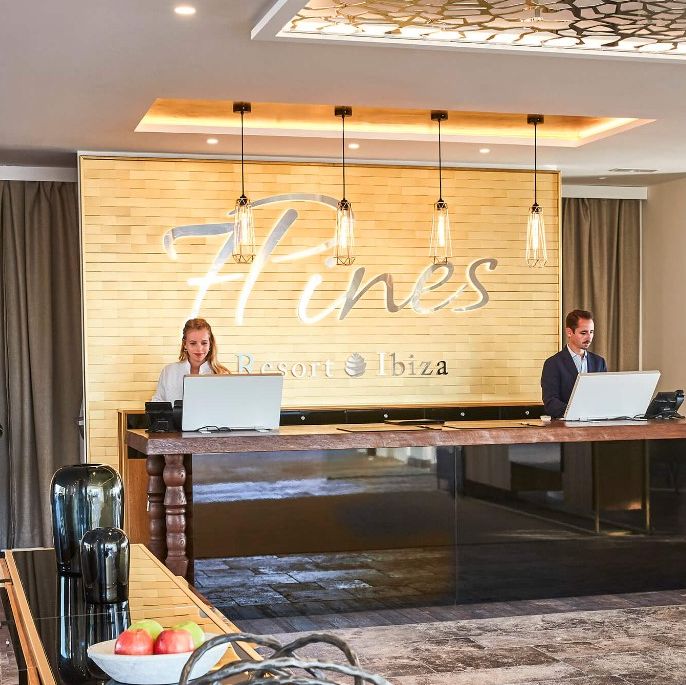
7Pines Resort Ibiza, part of Destination by Hyatt
Small
"The app gives our guests a seamless means of communicating with us and a digital platform on which they can order their favourite food and drink items direct to their room. Additio..."
 Duve
Duve
No published case study for this goal yet.
The Gonville Hotel
Small
"Room service options through IRIS is one of the best features, the ability to swap and change menus as we wish is excellent. The app enriches our guest’s stay by giving them the a..."
 Brown Hotels
Large
Brown Hotels
Large
"While scaling up and growing in terms of more hotel rooms and more hotels in different countries we found it difficult to communicate with our guests in a very personal way. Duve f..."
 Mallorca Ç Collection
Small
Mallorca Ç Collection
Small
"We want to provide our guests with a sustainable, digital experience that will enhance their stay and give them everything they need - and the IRIS app does exactly this. The app..."

Duve vs IRIS Systems: The Bottom Line
What hoteliers love
Users consistently praise Duve for making guest communication faster and more organized across pre-arrival, in-stay, one-to-one, and mass messaging. R... Users consistently praise Duve for making guest communication faster and more organized across pre-arrival, in-stay, one-to-one, and mass messaging. Reviews say it reduces repetitive front-desk work and helps staff respond more efficiently to guest requests.
A major theme is Duve's ability to drive more revenue by surfacing upgrades and extras at the right time. Reviewers mention room upgrades, ancillary s... A major theme is Duve's ability to drive more revenue by surfacing upgrades and extras at the right time. Reviewers mention room upgrades, ancillary services, room category merchandising, and suggestive selling as ways it helps hotels increase spend per guest.
Reviewers highlight mobile ordering as a practical way to let guests order from their room, seat, or sunbed without staff intervention. This is seen a... Reviewers highlight mobile ordering as a practical way to let guests order from their room, seat, or sunbed without staff intervention. This is seen as especially valuable in larger or understaffed properties because it improves service speed and captures orders more efficiently.
Where hoteliers push back
Reporting is a clear gap for some users. Reviewers want daily operational reports for arrivals and online check-ins, plus better marketing and newslet... Reporting is a clear gap for some users. Reviewers want daily operational reports for arrivals and online check-ins, plus better marketing and newsletter performance data such as open rates and click-through rates.
Ranks higher for
Unique capabilities
What hoteliers love
The level of customer support provided by the IRIS team, particularly during onboarding and troubleshooting, receives strong praise. Specific mentions... The level of customer support provided by the IRIS team, particularly during onboarding and troubleshooting, receives strong praise. Specific mentions of team members like Catalina, Miguel, and others underline the positive impact of their assistance. However, a few reviews highlight the need for better support documentation and materials.
Many reviewers highlight the user-friendly nature of the IRIS platform, making it easy for both staff and guests to navigate. Users appreciate the int... Many reviewers highlight the user-friendly nature of the IRIS platform, making it easy for both staff and guests to navigate. Users appreciate the intuitive design that reduces the learning curve and enhances the overall experience for users of varying technical proficiencies.
The platform offers considerable customization options, allowing hotels to tailor the system to their specific needs. This includes adjustments to men... The platform offers considerable customization options, allowing hotels to tailor the system to their specific needs. This includes adjustments to menu displays, visual aids, and operational settings like working hours and language options. However, some users seek more advanced customization features.
Where hoteliers push back
While generally positive, some reviews point out technical issues with IRIS, including slow synchronization times and challenges in temporarily removi... While generally positive, some reviews point out technical issues with IRIS, including slow synchronization times and challenges in temporarily removing out-of-stock items. These areas are flagged for potential improvement to ensure smoother operations during busy periods.
The integration capabilities of IRIS are frequently commended, notably its seamless connection with POS systems. However, some users indicate that syn... The integration capabilities of IRIS are frequently commended, notably its seamless connection with POS systems. However, some users indicate that synchronization, especially for menu items and stock counts, can be slow and cumbersome, highlighting a need for better automation and faster sync processes.
Ranks higher for
Unique capabilities
Where the ratings diverge most
Frequently Asked Questions About Duve Mobile Ordering vs IRIS
Can Duve Mobile Ordering replace IRIS?
It depends on your requirements. Duve Mobile Ordering and IRIS share many core Mobile Ordering & Room Service features, but each has unique capabilities. Duve Mobile Ordering offers 72 verified integration partners, while IRIS offers 17. Review the feature comparison above to see where they differ before switching.
Which is better for small or independent hotels?
Small hotels should prioritize ease of use and fast onboarding. Duve Mobile Ordering leads in ease of use at 4.7/5 vs 4.6/5. Look for transparent pricing and a trial or demo option. Filter reviews on each product page by property size to hear from hotels like yours.
Do Duve Mobile Ordering or IRIS offer a free plan?
Duve Mobile Ordering: No. IRIS: No. Neither product currently offers a free tier. Most Mobile Ordering & Room Service vendors offer demos or trials — request one from each to evaluate before committing.
How Does HTR Evaluate and Rank Duve Mobile Ordering and IRIS?
The HT Score is a composite ranking that considers 4 criteria groups and over a dozen variables to help hoteliers objectively compare hotel technology products. Duve has an HT Score of 100 and IRIS Systems has 78. Here is how the score is calculated.
| Criteria Group | Weight | What It Measures |
|---|---|---|
| Customer Ratings & Reviews |
|
How highly do users recommend this product? Ratings Score, Review Volume, Share of Voice, Review Depth, Review Recency, Success Stories ▾ The most heavily weighted factor. Analyzes average satisfaction ratings (likelihood to recommend, ease of use, support, ROI), total review count relative to category peers, review recency (at least 20 reviews in the trailing 6 months), and share of voice across unique hotel clients to detect selection bias. |
| Partner Ecosystem |
|
How highly do tech partners recommend this company? Partner Recommendations, Integration Quantity, Integration Quality ▾ Evaluates partner recommendations as expert votes of confidence, the number of verified integrations, and ecosystem quality — the average HT Scores of integration partners. Products with higher-quality integration ecosystems are more likely to deliver a connected tech stack. |
| Customer Centricity |
|
How customer-centric is this organization? Certified Support, Review Consistency, Profile Completeness ▾ Assesses whether the company has earned HTR Customer Support Certification, maintains consistent review collection over time (an indicator of feedback-driven culture), and keeps product profiles complete with capabilities, screenshots, pricing, and features. |
| Reach, Staying Power & Resources |
|
How extensive is this company's reach and resourcing? Geographic Reach, Staying Power, Company Resources, Trending Score ▾ Measures global presence (countries and regions served), years in business as a stability proxy, team headcount as a resource proxy, and a trending score based on trailing-twelve-month buyer inquiries, reviews, partner recommendations, and press activity. |
Customer ratings and reviews are by far the most important factor in the HT Score algorithm. HTR does not accept payment for higher rankings. All reviews are verified — only hotel industry practitioners with confirmed affiliations can submit ratings. View full HT Score methodology →
What Other Mobile Ordering & Room Service Comparisons Are Hoteliers Reading?
Explore more head-to-head comparisons based on verified hotelier reviews.

Contents
Get Your Free AI Analyst Report
Custom recommendations tailored to your property


Let´s lookup your hotel information
Still weighing your mobile ordering & room service options?
A few popular systems from our mobile ordering & room service guide — or let our AI score each one against your specific property in about two minutes.


