
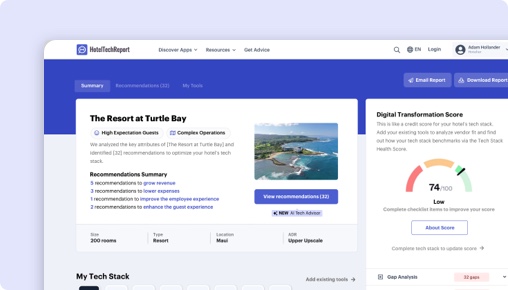
Sorry, this functionality is only available for verified hoteliers
The project dashboard is a free tool that is only available to verified hoteliers to make adopting new technology easier by streamlining their research and simplifying their communication workflow.

Oracle Simphony Point of Sale for Hotel Restaurants vs. xnPOS by Xn protel Systems:
Which Is Right for You?


TLDR
We analyzed 234 verified hotelier reviews, compared feature sets, pricing, and real-world case studies to break down where each platform delivers. The right choice depends on your property type and priorities:
Oracle Hospitality shines in ease of use and customer support — especially for brand properties (3.9/5) , with exclusive features like Guest Profiles.
Xn protel Systems shines , with exclusive features like Review Collection and Stock Alerts.
How Does Oracle Simphony Point of Sale for Hotel Restaurants Compare to xnPOS by Xn protel Systems?
Side-by-side ratings based on 234 verified hotelier reviews on HTR.
| HTScore |
|
|
| Likelihood to Recommend |
|
|
| Ease of Use |
|
|
| Customer Support |
|
|
| Value for Money |
|
|
| Starting Price | From $800/mo | From $200/mo |
| Verified Reviews | 234 | 0 |
What Are the Pros and Cons of Oracle Simphony Point of Sale for Hotel Restaurants vs xnPOS by Xn protel Systems?
After analyzing 234 verified reviews, Oracle Hospitality users most value its system reliability and support, regulatory compliance, innovation and cloud technologies, while Xn protel Systems users highlight . Click any theme to see what reviewers say.
|
Oracle Hospitality
|
Xn protel Systems
|
|---|---|
| Pros | |
|
+
System Reliability and Support
▾
|
|
|
+
Regulatory Compliance
▾
|
|
|
+
Innovation and Cloud Technologies
▾
|
|
|
+
Order Management Efficiency
▾
|
|
| Cons | |
|
−
System Performance
▾
|
|
|
−
Integration with PMS
▾
|
|
|
−
Usability and User Experience
▾
|
|
Oracle Hospitality vs Xn protel Systems: Rankings by Hotel Segment
How each product ranks among Hotel POS Systems vendors for different property sizes, types, and regions — based on verified reviews from hoteliers in each segment.
By Hotel Size
| Segment |
Oracle Hospitality
|
Xn protel Systems
|
|---|---|---|
| Small (10-24 rooms) ▾ | #3 7 reviews | — |
| Mid-Size (25-74 rooms) ▾ | #2 103 reviews | — |
| Large (75-199 rooms) ▾ | #1 93 reviews | — |
| X-Large (200+ rooms) ▾ | #1 25 reviews | — |
By Property Type
| Segment |
Oracle Hospitality
|
Xn protel Systems
|
|---|---|---|
| Boutique ▾ | #2 88 reviews | — |
| Luxury ▾ | #1 154 reviews | — |
| Branded / Chain ▾ | #1 106 reviews | — |
| Extended Stay ▾ | #3 6 reviews | — |
By Region
| Segment |
Oracle Hospitality
|
Xn protel Systems
|
|---|---|---|
| North America ▾ | #1 35 reviews | — |
| Europe ▾ | #3 42 reviews | — |
| Asia Pacific ▾ | #1 120 reviews | — |
| Middle East ▾ | #1 11 reviews | — |
The Decision
Choosing the right POS system for your hotel restaurant or F&B outlets hinges on understanding how each product addresses operational needs. Oracle Simphony POS is a mature, enterprise-grade solution with a broad feature set, extensive integrations, and a global market presence. In contrast, xnPOS offers a highly flexible, cloud-native platform designed for scalability and rapid deployment, primarily serving medium to large hospitality businesses. Which fits your hotel's current scale and future growth plans?
Both products aim to improve service speed, accuracy, and guest experience. Oracle Simphony excels in supporting complex operations, large property networks, and regulatory compliance, while xnPOS emphasizes ease of integration, cost-effectiveness, and cloud-based agility. But which system will truly meet your specific needs?
Is Oracle Simphony or xnPOS Better for Hotels?
Oracle Simphony positions itself as an all-encompassing POS system tailored for hotel restaurants, bars, cafes, and pantries, supporting operations from small independents to global chains. Its integration with Oracle’s Property Management System (OPERA) and extensive feature library provide a seamless operational backbone, especially for properties with high transaction volumes or multiple outlets.
xnPOS, on the other hand, is a flexible, cloud-native POS platform that simplifies transaction management across single or multiple sites. It’s designed for hotels and restaurants seeking an adaptable, open system that reduces complexity and supports fast, efficient service. Its core focus is operational efficiency with minimal friction, making it suitable for properties prioritizing flexibility over extensive built-in features.
While Oracle Simphony boasts a higher overall rating of 4.39/5 based on 201 reviews, xnPOS remains unreviewed but is favored for its simplicity and cost efficiency. For established, large-scale hotels needing comprehensive features and robust support, Oracle is likely the more suitable choice. Conversely, if your hotel values quick deployment and straightforward operations, xnPOS could work well.
Oracle Simphony vs xnPOS: Which Should Your Hotel Choose?
If your hotel needs a feature-rich, scalable POS system with deep integration capabilities, go with Oracle Simphony. It’s ideal for large, multi-property chains, resorts, or hotels with sophisticated F&B operations requiring extensive customization, loyalty programs, and real-time reporting.
If your hotel requires a straightforward, cloud-based POS that minimizes setup cost and complexity, choose xnPOS. This solution suits mid-sized hotels, properties expanding rapidly, or those seeking a flexible system with reliable support and faster onboarding.
For boutique hotels or properties with limited IT resources, xnPOS’s lower entry price point and simplified interface make it a compelling option. Meanwhile, Oracle’s extensive feature set and global support favor large, complex operations with existing Oracle ecosystem investments.
Is Oracle Simphony or xnPOS Easier to Use?
Oracle Simphony scores a 4.56/5 for ease of use from over 200 reviews, indicating a generally intuitive interface and manageable onboarding process. However, some users report that its complexity can be a barrier, especially for staff unfamiliar with enterprise systems, and that support sometimes requires extra charges.
xnPOS, lacking detailed review data but praised by long-term users for its simplicity and flexibility, likely offers a more straightforward experience. Its cloud-native design aims to reduce operational friction, enabling staff to learn faster and adapt quickly.
Edge: Oracle Simphony.
Which Has Better Features: Oracle Simphony or xnPOS?
Oracle Simphony surpasses xnPOS significantly in feature count, offering 28 shared features plus 12 unique ones such as gift cards, guest profiles, rewards programs, marketing campaigns, and ingredient management. These features support complex operations and loyalty initiatives, crucial for large properties.
xnPOS provides 3 unique features—review collection, stock alerts, and physical loyalty cards—focusing on operational efficiency and guest engagement at a more tactical level. It’s less comprehensive but easier to deploy and manage.
Edge: Oracle Simphony.
Which Has Better Customer Support: Oracle Simphony or xnPOS?
Oracle Simphony’s support rating of 4.1/5, combined with over 200 reviews, indicates a generally reliable support structure, especially for large clients. Users appreciate dedicated account managers but note some support charges and occasional delays.
xnPOS's support profile isn’t detailed, but its long-standing customer relationships and positive testimonials suggest reliable, attentive service. However, its smaller user base means fewer broad review insights.
Edge: Oracle Simphony.
Which Has More Integrations: Oracle Simphony or xnPOS?
Oracle Simphony boasts 391 verified partners, including major integrations with PMS, distribution, and payment providers, facilitating complex, multi-system setups. Shared integrations include top partners like SiteMinder, Profitroom, and IDeaS, supporting diverse operational needs.
xnPOS, with 26 verified partners, offers a more limited but still solid integration network, including PMS, CRM, and payment systems. Its open architecture allows for custom integrations but may require more effort to connect with enterprise systems.
Edge: Oracle Simphony.
Which Do Hoteliers Rate Higher: Oracle Simphony or xnPOS?
Oracle Simphony’s 4.39/5 rating based on 201 reviews reflects consistent satisfaction across various hotel segments, especially resorts and large properties. Its recent reviews reinforce its reliability and feature depth, with comments praising its stability and support.
xnPOS remains unrated in review scores, but anecdotal evidence from long-term clients highlights its ease of use and flexibility. For larger hotels, Oracle’s proven track record and recent positive reviews make it the more trusted choice.
Edge: Oracle Simphony.
How Much Do Oracle Simphony and xnPOS Cost?
Oracle Simphony’s base price is $800, with no trial or free tier mentioned. Its higher cost reflects its enterprise nature, extensive features, and integration depth.
xnPOS’s base price is $200, making it more accessible for mid-sized or cost-conscious hotels. Its lower price point allows quicker deployment with fewer upfront expenses but might lack some advanced features of Oracle.
What Type of Hotel Should Use Oracle Simphony?
- Hotels that operate multiple outlets or properties needing comprehensive POS features.
- Large resorts, casino hotels, or properties with complex F&B and loyalty needs.
- Teams that value deep integration with PMS, distribution, and marketing tools.
- Hotels aiming for scalability and extensive customization.
Not ideal if your hotel is small, requires a quick setup, or has limited IT resources.
What Type of Hotel Should Use xnPOS?
- Hotels or restaurants seeking a flexible, cloud-native POS with rapid deployment.
- Properties with fewer outlets or those planning to expand their F&B operations.
- Teams that prioritize operational simplicity and cost efficiency.
- Hotels that want a system with straightforward onboarding and minimal training.
Not ideal if you need extensive built-in features or deep enterprise integrations.
The Bottom Line for Hotels
Oracle Simphony offers a comprehensive, enterprise-level POS system with a broad feature set, extensive integrations, and proven market presence. It’s the best choice for large hotels, resorts, or chains requiring complex operations and scalability.
xnPOS provides a cost-effective, flexible alternative ideal for mid-sized hotels or properties seeking quick deployment and simplicity. Its cloud-native architecture and ease of use make it suitable for properties prioritizing operational agility.
If your hotel values depth, extensive features, and a global support network, Oracle Simphony is the clear choice. If flexibility, speed, and lower costs are more important, then xnPOS is the better fit.
In summary, for large-scale, feature-heavy environments, Oracle Simphony is your go-to. For adaptable, budget-friendly solutions with fast onboarding, xnPOS will serve your hotel well.
How Much Do Oracle Simphony Point of Sale for Hotel Restaurants and xnPOS by Xn protel Systems Cost?
Hotel POS Systems pricing is rarely straightforward. Here is what we know from each vendor's public pricing data. Always request a custom quote for your property size.
|
Oracle Hospitality
|
Xn protel Systems
|
|
|---|---|---|
| Starting Price | From $800/mo | From $200/mo |
Feature Comparison: Oracle Simphony Point of Sale for Hotel Restaurants vs xnPOS by Xn protel Systems
These are the features each vendor has configured, organized by feature group — the same data shown in the vendor dashboard. Expand a group to compare features side by side.
| Feature |
Oracle Hospitality
|
Xn protel Systems
|
|---|---|---|
|
▾
Order Management
|
|
|
| Self Service Table-side Ordering | ||
| Upselling | ||
| Digital Menus | ||
| Advanced Ordering | ||
| Discounts & Promotions | ||
| Mobile Ordering | ||
| Integrated Kitchen Display | ||
|
▾
Inventory Management
|
|
|
| Inventory Management | ||
| Ingredient Management | ||
| Stock Reporting | ||
| Stock Alerts | ||
| Recipe Costing | ||
| Food Cost Reporting | ||
| Report Exporting | ||
|
▾
CRM & Loyalty
|
|
|
| Customer Management | ||
| Discounts & Promotions | ||
| Guest Profiles | ||
| Rewards Program | ||
| Marketing Campaigns | ||
| Customer Insights Reports | ||
| Segmentation | ||
| Physical Loyalty Cards | ||
|
▾
Accounting
|
|
|
| Discounts & Promotions | ||
| Customer Insights Reports | ||
| Payment Log Reports | ||
| Accounting Software Integrations | ||
| Mapping | ||
| Sync Error Alerts | ||
|
▾
Payments
|
|
|
| Gift cards | ||
| Upselling | ||
| Discounts & Promotions | ||
| Customer Insights Reports | ||
| PCI Compliant | ||
| Check Splitting | ||
| Chargeback Management & Fraud Prevention | ||
| Payment Log Reports | ||
|
▾
Analytics & Insights
|
|
|
| Employee Reporting and Management | ||
| Sales Reporting | ||
| Menu Performance Reporting | ||
| Server Recommendations | ||
| Server Level Reporting | ||
| Guest Profiles | ||
| Mobile Analytics | ||
| Food Cost Reporting | ||
| Report Exporting | ||
| Customer Insights Reports | ||
|
▾
Delivery
|
|
|
| Multi-platform Consolidation | ||
| Uber Eats | ||
| Door Dash | ||
| Delivery Menu Customization | ||
| Discounts & Promotions | ||
| Review Collection | ||
| Menu Sync | ||
|
▾
Other
|
|
|
| On-Premise | ||
| Cloud Based |
Real-World Results: Oracle Hospitality vs Xn protel Systems by Business Goal
We analyzed 7 verified case studies to compare what hotels actually achieve with each platform across four key business objectives.
Mercan
Mid-Size
"In the investment arena, it’s essential to be able to quickly adapt to any change in the business environment. The cost structure of cloud requires no capital investment, and its a..."
Xn protel Systems
No published case study for this goal yet.
Hotel Mesikammen
Small
"If you’ve used OPERA Cloud and have familiarity with Oracle processes, learning how to use Distribution is almost effortless. And when there was something we didn’t know how to do,..."
Xn protel Systems
No published case study for this goal yet.
Fontenille
Small
"Oracle Hospitality’s focus on fast, simple integrations – especially with advances such as the Oracle Hospitality Integration Platform, which is built into OPERA Cloud – gives us t..."
Xn protel Systems
No published case study for this goal yet.
Oracle Hospitality vs Xn protel Systems: The Bottom Line
What hoteliers love
Users highlight Oracle's round-the-clock support and product robustness, essential for maintaining operational consistency in hotels. This support is... Users highlight Oracle's round-the-clock support and product robustness, essential for maintaining operational consistency in hotels. This support is pivotal for uninterrupted service, earning Oracle a dependable reputation.
Oracle leads in adhering to regulatory requirements, such as GST compliance, enabling businesses to stay legally compliant. Users value these updates... Oracle leads in adhering to regulatory requirements, such as GST compliance, enabling businesses to stay legally compliant. Users value these updates for sustaining seamless operations amidst changing regulations.
The system is noted for adopting cutting-edge cloud technologies, supporting modern business requirements and offering scalability, keeping Oracle at... The system is noted for adopting cutting-edge cloud technologies, supporting modern business requirements and offering scalability, keeping Oracle at the forefront of tech innovation in hospitality.
Where hoteliers push back
Some reviews point out performance issues, such as system speed and frequent log-offs, which disrupt operations. Users urge improvements in speed and... Some reviews point out performance issues, such as system speed and frequent log-offs, which disrupt operations. Users urge improvements in speed and stability to maximize efficiency during peak times.
Oracle POS allows seamless connectivity with PMS, facilitating effortless management of guest charges and reservations. While a few users appreciate t... Oracle POS allows seamless connectivity with PMS, facilitating effortless management of guest charges and reservations. While a few users appreciate this integration, others suggest enhancements for smoother interoperability.
Unique capabilities
Unique capabilities
Where the ratings diverge most
Frequently Asked Questions About Oracle Simphony Point of Sale for Hotel Restaurants vs xnPOS by Xn protel Systems
Can Oracle Simphony Point of Sale for Hotel Restaurants replace xnPOS by Xn protel Systems?
It depends on your requirements. Oracle Simphony Point of Sale for Hotel Restaurants and xnPOS by Xn protel Systems share many core Hotel POS Systems features, but each has unique capabilities. Oracle Simphony Point of Sale for Hotel Restaurants offers 393 verified integration partners, while xnPOS by Xn protel Systems offers 26. Review the feature comparison above to see where they differ before switching.
Which is better for small or independent hotels?
Small hotels should prioritize ease of use and fast onboarding. Oracle Simphony Point of Sale for Hotel Restaurants leads in ease of use at 4.6/5 vs 0.0/5. Look for transparent pricing and a trial or demo option. Filter reviews on each product page by property size to hear from hotels like yours.
Do Oracle Simphony Point of Sale for Hotel Restaurants or xnPOS by Xn protel Systems offer a free plan?
Oracle Simphony Point of Sale for Hotel Restaurants: No. xnPOS by Xn protel Systems: No. Neither product currently offers a free tier. Most Hotel POS Systems vendors offer demos or trials — request one from each to evaluate before committing.
How Does HTR Evaluate and Rank Oracle Simphony Point of Sale for Hotel Restaurants and xnPOS by Xn protel Systems?
The HT Score is a composite ranking that considers 4 criteria groups and over a dozen variables to help hoteliers objectively compare hotel technology products. Oracle Hospitality has an HT Score of 90 and Xn protel Systems has 0. Here is how the score is calculated.
| Criteria Group | Weight | What It Measures |
|---|---|---|
| Customer Ratings & Reviews |
|
How highly do users recommend this product? Ratings Score, Review Volume, Share of Voice, Review Depth, Review Recency, Success Stories ▾ The most heavily weighted factor. Analyzes average satisfaction ratings (likelihood to recommend, ease of use, support, ROI), total review count relative to category peers, review recency (at least 20 reviews in the trailing 6 months), and share of voice across unique hotel clients to detect selection bias. |
| Partner Ecosystem |
|
How highly do tech partners recommend this company? Partner Recommendations, Integration Quantity, Integration Quality ▾ Evaluates partner recommendations as expert votes of confidence, the number of verified integrations, and ecosystem quality — the average HT Scores of integration partners. Products with higher-quality integration ecosystems are more likely to deliver a connected tech stack. |
| Customer Centricity |
|
How customer-centric is this organization? Certified Support, Review Consistency, Profile Completeness ▾ Assesses whether the company has earned HTR Customer Support Certification, maintains consistent review collection over time (an indicator of feedback-driven culture), and keeps product profiles complete with capabilities, screenshots, pricing, and features. |
| Reach, Staying Power & Resources |
|
How extensive is this company's reach and resourcing? Geographic Reach, Staying Power, Company Resources, Trending Score ▾ Measures global presence (countries and regions served), years in business as a stability proxy, team headcount as a resource proxy, and a trending score based on trailing-twelve-month buyer inquiries, reviews, partner recommendations, and press activity. |
Customer ratings and reviews are by far the most important factor in the HT Score algorithm. HTR does not accept payment for higher rankings. All reviews are verified — only hotel industry practitioners with confirmed affiliations can submit ratings. View full HT Score methodology →
What Other Hotel POS Systems Comparisons Are Hoteliers Reading?
Explore more head-to-head comparisons based on verified hotelier reviews.




Get Your Free AI Analyst Report
Custom recommendations tailored to your property


