


Guest communications in hospitality remain highly fragmented. From boutique resorts in Europe to branded city hotels across Asia and the Americas, the same challenge emerges. Today’s travelers expect more than a room. They expect a seamless flow of communication—from booking confirmations to welcome messages, from personalized mid-stay offers to post-departure follow-ups. Each touchpoint influences how they perceive the hotel and whether they choose to return. Too often, however, communication breaks down:
- Pre-arrival emails are sent from one system, in-stay promotions from another, and loyalty follow-ups from yet another.
- Messages are duplicated, delayed, or lost altogether.
- Front desk staff spend hours manually sending reminders about check-in, upsells, or surveys.
The result is more work for staff and a less cohesive experience for guests. The solution lies not in adding more tools, but in developing a structured communication strategy managed from a single hub. Done well, guest communication becomes a revenue generator, a loyalty builder, and a critical part of guest satisfaction.
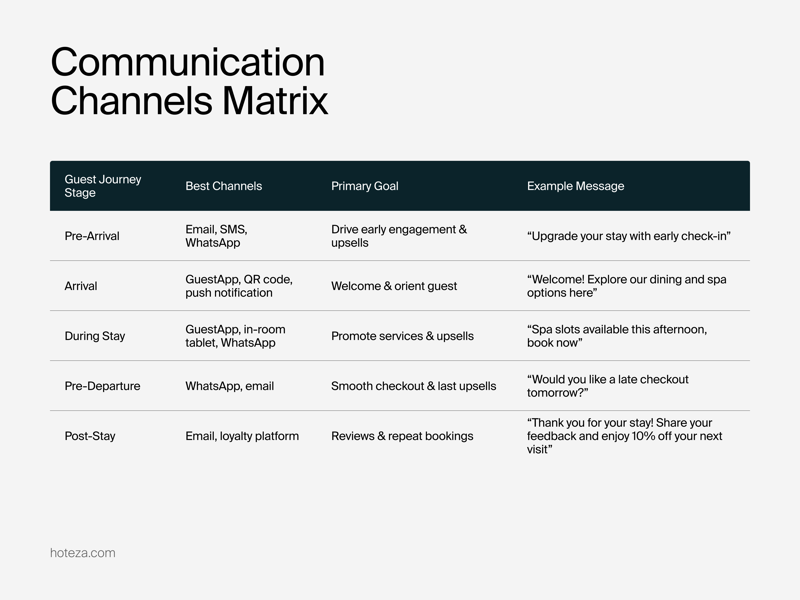
Boosting Conversions Across the Guest Journey
Every stage of the guest journey offers an opportunity. Hotels that coordinate their communications around these touchpoints see measurable improvements in conversions. Structured strategies open revenue opportunities not only before arrival but throughout the stay and beyond.
Reducing Front Desk Workload
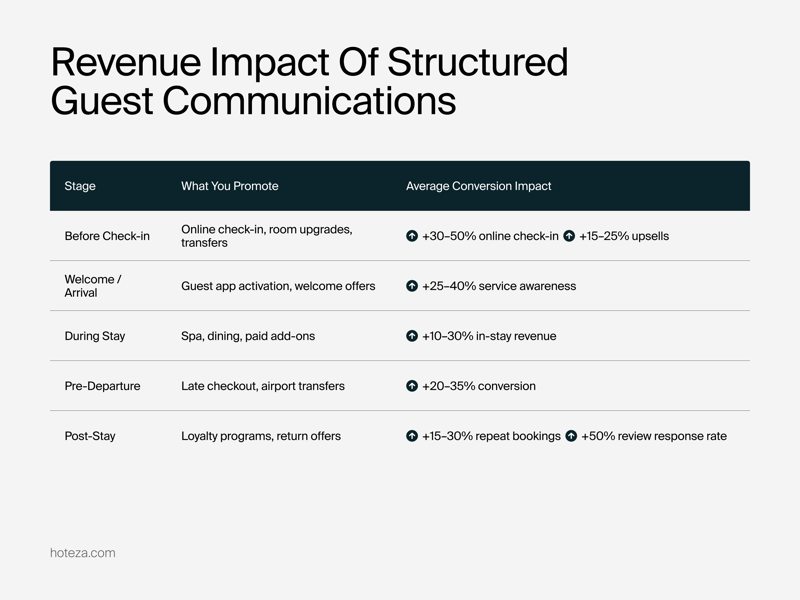
Hoteliers consistently report that their teams are stretched thin. When front desk staff spend hours on routine tasks—such as reminding guests about online check-in or sending review requests—the result is fatigue and inconsistent service.
Automation reduces this burden. On average, structured systems save staff roughly 2.5 hours per day. That time can be redirected to where hospitality matters most: face-to-face guest interactions.
 Join 100k+ executives from world's leading hotel brands and get the latest insights delivered to your inbox once a week
Choosing the Right Channels
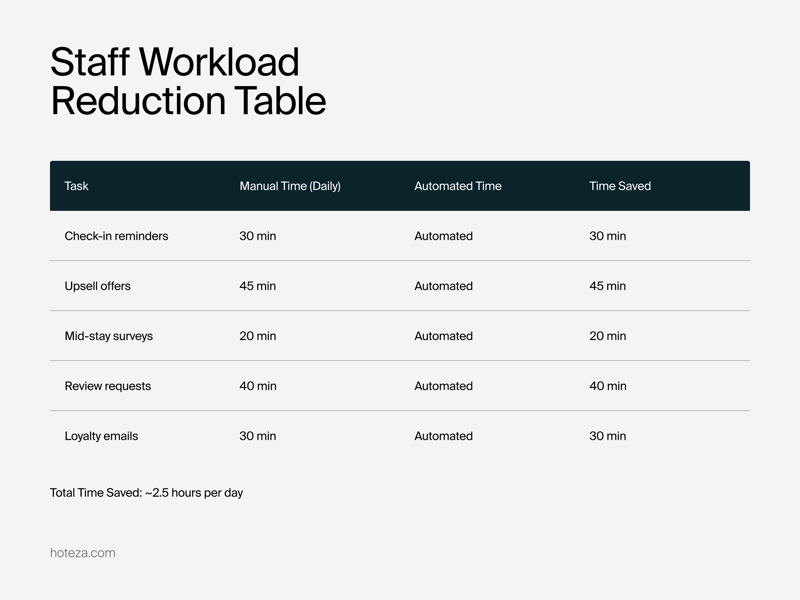
A common mistake is relying solely on email. Today’s guests live in a multi-channel world, and the best results come from aligning the message with the right channel at the right time. Hotels that adapt their communication channels not only see higher engagement but also fewer complaints about message overload.
Quality Over Hype
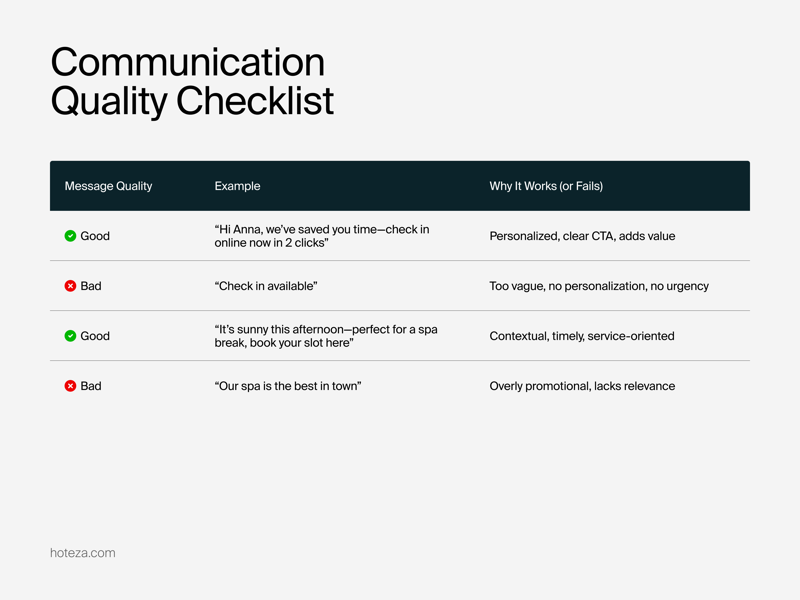
Tone matters. Too often, hotels rely on exaggerated claims—“the best spa in town” or “an unforgettable experience”—instead of clear, practical, and relevant information. The difference between good and poor communication is striking. Effective messaging feels like service, not marketing.
Enhancing Guest Satisfaction and Reviews
Structured communication naturally improves satisfaction:
-
Mid-stay surveys help resolve issues before they surface in reviews.
-
Timely offers make guests feel cared for rather than sold to.
-
Clear check-out instructions reduce friction at departure.
Hotels that adopt these practices often see stronger ratings on review platforms such as Booking.com, TripAdvisor, and Google.
Building Loyalty and Return Stays
The guest relationship does not end at check-out. High-performing hotels commit to structured post-stay communication, including:
-
Review requests within 48 hours.
-
Loyalty invitations with tailored benefits.
-
Personalized return offers a week or two after departure.
This approach transforms communication from a transaction into the foundation of long-term loyalty.
Guest Communication Self-Check
A simple self-assessment helps hotels identify gaps:
Pre-Arrival
-
Are pre-arrival emails sent 3–5 days before check-in?
-
Do they include at least one upsell option?
-
Is online check-in available digitally?
Arrival / Welcome
-
Do guests receive a welcome message immediately after check-in?
-
Are Wi-Fi details and key information clearly communicated?
During Stay
-
Are context-based offers sent at relevant times?
-
Is mid-stay feedback collected?
Pre-Departure
-
Are late check-out or transfer options promoted before departure?
-
Are check-out instructions clear and digital?
Post-Stay
-
Are review requests sent within 48 hours?
-
Is there a follow-up loyalty or return-stay offer?
Scoring:
-
8–10 checks → Excellent strategy
-
5–7 → Solid foundation with gaps
-
<5 → Fragmented, needs rethinking
Conclusion
The evidence is clear: structured guest communication leads to higher revenue, reduced staff workload, stronger satisfaction, and deeper loyalty. The future is not about sending more messages, but about sending smarter ones. Hotels that centralize and coordinate their communications are best positioned to turn every guest interaction into an opportunity.