
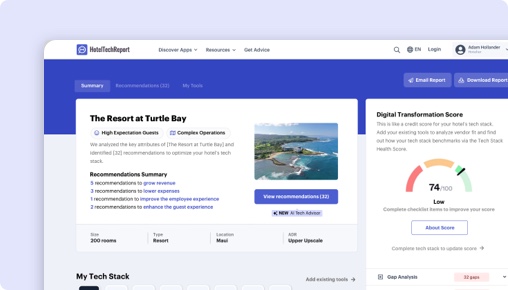
Sorry, this functionality is only available for verified hoteliers
The project dashboard is a free tool that is only available to verified hoteliers to make adopting new technology easier by streamlining their research and simplifying their communication workflow.

Hotelerum (Dynamic Package Engine) vs. openROOM:
Which Is Right for You?


TLDR
We analyzed 12 verified hotelier reviews, compared feature sets, pricing, and real-world case studies to break down where each platform delivers. The right choice depends on your property type and priorities:
Hotelerum (Dynamic Package Engine) shines .
openROOM shines in ease of use and customer support , with exclusive features like Mobile optimized/responsive and Post-stay emails.
How Does Hotelerum (Dynamic Package Engine) Compare to openROOM?
Side-by-side ratings based on 12 verified hotelier reviews on HTR.
| HTScore |
|
|
| Likelihood to Recommend |
|
|
| Ease of Use |
|
|
| Customer Support |
|
|
| Value for Money |
|
|
| Starting Price | Contact sales | From $400/mo |
| Verified Reviews | 0 | 12 |
Hotelerum (Dynamic Package Engine) vs openROOM: Rankings by Hotel Segment
How each product ranks among Booking Engine vendors for different property sizes, types, and regions — based on verified reviews from hoteliers in each segment.
By Hotel Size
| Segment |
Hotelerum (Dynamic Package Engine)
|
openROOM
|
|---|---|---|
| Small (10-24 rooms) | — | #42 1 reviews |
| Mid-Size (25-74 rooms) | — | #37 3 reviews |
| Large (75-199 rooms) | — | #32 1 reviews |
| X-Large (200+ rooms) | — | #26 1 reviews |
By Property Type
| Segment |
Hotelerum (Dynamic Package Engine)
|
openROOM
|
|---|---|---|
| Boutique | — | #41 1 reviews |
| Branded / Chain | — | #42 1 reviews |
| Extended Stay | — | #29 3 reviews |
By Region
| Segment |
Hotelerum (Dynamic Package Engine)
|
openROOM
|
|---|---|---|
| North America | — | #34 0 reviews |
| Europe ▾ | — | #40 1 reviews |
The Decision
Choosing the right booking engine is vital for your hotel's ability to attract and convert online guests. Hotelerum’s Dynamic Package Engine and openROOM both aim to boost direct bookings but serve different needs and hotel profiles. While Hotelerum is a specialized platform focusing on dynamic packages and online distribution, openROOM offers a feature-rich, highly rated booking engine designed for maximum conversion. Which one aligns better with your hotel’s goals?
Is Hotelerum or openROOM Better for Hotels?
Hotelerum’s platform is tailored primarily for hotels seeking to increase online direct sales through dynamic packages and robust channel management. It’s built to create personalized bundles, manage inventory across 200+ online agencies, and enhance online visibility. In contrast, openROOM emphasizes a streamlined booking experience with a broad feature set aimed at maximizing conversion rates, accommodating both independent hotels and chains.
Hotelerum’s reviews are scarce, with no recent feedback or user ratings, making its effectiveness and user experience uncertain. openROOM, however, boasts 10 recent reviews, a 9.8/10 NPS score, and a 4.9/5 customer support rating, indicating high customer satisfaction. Is your goal to improve online sales through custom packages or to optimize the booking process for higher conversions?
openROOM vs Hotelerum: Which Should Your Hotel Choose?
If your hotel needs to increase direct online sales, especially through flexible and personalized packages, Hotelerum’s dynamic engine is the clear choice. It’s designed for properties looking to bypass third-party sites and offer tailored packages, with the added benefit of integrated channel management. On the other hand, if your priority is a booking engine that’s easy to use, highly rated, and packed with features like multi-lingual support, discounts, and loyalty integrations, openROOM is the better fit.
For hotels that want to boost conversions and offer a seamless booking experience, openROOM’s 4.8/5 ease of use rating and comprehensive feature set make it a compelling option. Hotelerum’s focus on packages and distribution makes it suitable for properties aiming to increase online revenue through targeted offers.
Is Hotelerum or openROOM Easier to Use?
OpenROOM’s user interface receives a 4.8/5 rating, with reviews highlighting its intuitive and straightforward design. Users find onboarding quick, and staff adoption is smooth, making it ideal for hoteliers who want minimal disruption during implementation. Hotelerum, however, has no available ratings or reviews regarding its ease of use, leaving its user experience unverified.
Based on current data, edge: openROOM.
Which Has Better Features: Hotelerum or openROOM?
openROOM offers 25 features, including mobile responsiveness, multi-lingual support, multi-currency options, special offers, discounts, and loyalty program integration. It also supports multi-room bookings, Google Hotel Ads, TripAdvisor bookings, meal plans, gift vouchers, and alternative accommodation recommendations. Hotelerum, on the other hand, offers no detailed features, focusing solely on its core dynamic package engine.
Given the extensive feature set, openROOM clearly has more to offer in terms of versatility and guest engagement tools. Edge: openROOM.
Which Has Better Customer Support: Hotelerum or openROOM?
openROOM’s reviews underscore its strong support, with a 4.9/5 rating and a 9.8/10 NPS score, complemented by comments praising its approachable team and responsive communication. Hotelerum, however, has no recent reviews or ratings, making it impossible to assess its support quality.
Based on available data, edge: openROOM.
Which Has More Integrations: Hotelerum or openROOM?
Neither platform currently offers verified third-party integrations or listed partners. Both lack confirmed connections with other systems, limiting their ability to fit into a broader tech stack. Despite this, openROOM’s broader feature set and recent reviews suggest it might be more adaptable in the future.
Edge: openROOM.
Which Do Hoteliers Rate Higher: Hotelerum or openROOM?
openROOM’s 10 recent reviews with a 9.8/10 NPS and 4.9/5 support rating indicate strong customer satisfaction. Hotelerum’s lack of reviews makes it impossible to gauge user sentiment or satisfaction. For properties valuing peer feedback and current user experiences, openROOM clearly leads.
Edge: openROOM.
How Much Do Hotelerum and openROOM Cost?
Hotelerum does not list specific pricing details, implying custom or enterprise-level quotes. openROOM charges $400 per month with no additional implementation or setup fees. The clear, transparent pricing of openROOM offers easier budget planning.
Edge: openROOM.
What Type of Hotel Should Use Hotelerum?
- Hotels that want to increase direct revenue through dynamic, personalized packages.
- Properties with a strong online distribution strategy needing robust channel management.
- Hotels seeking to bypass third-party booking sites and control their offers.
- Hotels with the capacity to manage or benefit from complex package deals.
Not ideal if you’re looking for a simple booking engine without a focus on packages or distribution.
What Type of Hotel Should Use openROOM?
- Hotels focused on maximizing online booking conversion rates.
- Independent hotels and chains seeking a highly rated, feature-rich booking engine.
- Hotels that want an easy-to-use, customizable platform with multi-lingual and multi-currency support.
- Properties aiming for a seamless, guest-friendly booking process that boosts occupancy.
Not ideal if your primary goal is creating and managing dynamic packages or extensive distribution.
The Bottom Line for Hotels
Hotelerum’s platform centers on increasing online sales through dynamic packages, integrated distribution, and tailored offerings. It’s best suited for properties that want to control their offers and engage guests with personalized deals, even if support and user feedback are limited.
OpenROOM emphasizes a highly rated, conversion-focused booking engine packed with features designed to improve the guest booking experience. It is ideal for hotels that prioritize ease of use, support, and a broad set of functionalities to boost occupancy and guest satisfaction.
If your hotel needs a straightforward, highly-rated booking solution that enhances conversions, openROOM is the clear choice. If your goal is to create complex packages and manage extensive distribution channels, Hotelerum offers a more specialized approach, although its user feedback is scarce.
In summary, for most hotels looking for a proven, well-supported booking engine with recent positive reviews, openROOM stands out. Hotelerum’s niche focus on dynamic packages makes it suitable for properties with specific package and distribution needs but less support and review data to verify its effectiveness.
How Much Do Hotelerum (Dynamic Package Engine) and openROOM Cost?
Booking Engine pricing is rarely straightforward. Here is what we know from each vendor's public pricing data. Always request a custom quote for your property size.
|
Hotelerum (Dynamic Package Engine)
|
openROOM
|
|
|---|---|---|
| Starting Price | — | From $400/mo |
Which Features Does Hotelerum (Dynamic Package Engine) Have That openROOM Doesn't (and Vice Versa)?
According to HTR's product database, Hotelerum (Dynamic Package Engine) and openROOM share 0 features. Here are the key differences — features one has that the other lacks.
| Feature |
Hotelerum (Dynamic Package Engine)
|
openROOM
|
|---|---|---|
| Conversion rate reports | ||
| Facebook conversion tracking | ||
| Mobile optimized/responsive | ||
| Multi-lingual | ||
| Multi-room bookings | ||
| Special offers & discounts |
Showing top differences. 13 more features differ between these products.
Hotelerum (Dynamic Package Engine) vs openROOM: The Bottom Line
Unique capabilities
Where the ratings diverge most
Frequently Asked Questions About Hotelerum (Dynamic Package Engine) vs openROOM
Can Hotelerum (Dynamic Package Engine) replace openROOM?
It depends on your requirements. Hotelerum (Dynamic Package Engine) and openROOM share many core Booking Engine features, but each has unique capabilities. Hotelerum (Dynamic Package Engine) offers 0 verified integration partners, while openROOM offers 0. Review the feature comparison above to see where they differ before switching.
Which is better for small or independent hotels?
Small hotels should prioritize ease of use and fast onboarding. openROOM leads in ease of use at 4.8/5 vs 0.0/5. Look for transparent pricing and a trial or demo option. Filter reviews on each product page by property size to hear from hotels like yours.
Do Hotelerum (Dynamic Package Engine) or openROOM offer a free plan?
Hotelerum (Dynamic Package Engine): No. openROOM: No. Neither product currently offers a free tier. Most Booking Engine vendors offer demos or trials — request one from each to evaluate before committing.
How Does HTR Evaluate and Rank Hotelerum (Dynamic Package Engine) and openROOM?
The HT Score is a composite ranking that considers 4 criteria groups and over a dozen variables to help hoteliers objectively compare hotel technology products. Hotelerum (Dynamic Package Engine) has an HT Score of 0 and openROOM has 0. Here is how the score is calculated.
| Criteria Group | Weight | What It Measures |
|---|---|---|
| Customer Ratings & Reviews |
|
How highly do users recommend this product? Ratings Score, Review Volume, Share of Voice, Review Depth, Review Recency, Success Stories ▾ The most heavily weighted factor. Analyzes average satisfaction ratings (likelihood to recommend, ease of use, support, ROI), total review count relative to category peers, review recency (at least 20 reviews in the trailing 6 months), and share of voice across unique hotel clients to detect selection bias. |
| Partner Ecosystem |
|
How highly do tech partners recommend this company? Partner Recommendations, Integration Quantity, Integration Quality ▾ Evaluates partner recommendations as expert votes of confidence, the number of verified integrations, and ecosystem quality — the average HT Scores of integration partners. Products with higher-quality integration ecosystems are more likely to deliver a connected tech stack. |
| Customer Centricity |
|
How customer-centric is this organization? Certified Support, Review Consistency, Profile Completeness ▾ Assesses whether the company has earned HTR Customer Support Certification, maintains consistent review collection over time (an indicator of feedback-driven culture), and keeps product profiles complete with capabilities, screenshots, pricing, and features. |
| Reach, Staying Power & Resources |
|
How extensive is this company's reach and resourcing? Geographic Reach, Staying Power, Company Resources, Trending Score ▾ Measures global presence (countries and regions served), years in business as a stability proxy, team headcount as a resource proxy, and a trending score based on trailing-twelve-month buyer inquiries, reviews, partner recommendations, and press activity. |
Customer ratings and reviews are by far the most important factor in the HT Score algorithm. HTR does not accept payment for higher rankings. All reviews are verified — only hotel industry practitioners with confirmed affiliations can submit ratings. View full HT Score methodology →
What Other Booking Engine Comparisons Are Hoteliers Reading?
Explore more head-to-head comparisons based on verified hotelier reviews.






Get personalized product recommendations
Product recommendations advisor
