
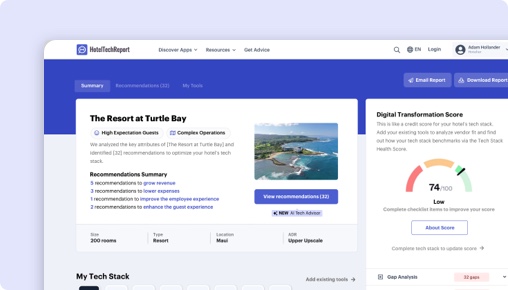
Sorry, this functionality is only available for verified hoteliers
The project dashboard is a free tool that is only available to verified hoteliers to make adopting new technology easier by streamlining their research and simplifying their communication workflow.

Goki vs. Miwa:
Which Is Right for You?


TLDR
We analyzed 174 verified hotelier reviews, compared feature sets, pricing, and real-world case studies to break down where each platform delivers. The right choice depends on your property type and priorities:
Goki shines in ease of use and customer support , with exclusive features like Guest Management Dashboard and Mobile App.
Miwa shines .
What Are the Pros and Cons of Goki vs Miwa?
After analyzing 174 verified reviews, Goki users most value its keyless entry, remote access management, guest communication, while Miwa users highlight . Click any theme to see what reviewers say.
|
Goki
|
Miwa
|
|---|---|
| Pros | |
|
+
Keyless Entry
▾
|
|
|
+
Remote Access Management
▾
|
|
|
+
Guest Communication
▾
|
|
|
+
Integration with Activities
▾
|
|
| Cons | |
|
−
Connectivity Issues
▾
|
|
|
−
Support Response Time
▾
|
|
|
−
Signal Strength
▾
|
|
Goki vs Miwa: Rankings by Hotel Segment
How each product ranks among Hotel Keyless Entry Systems vendors for different property sizes, types, and regions — based on verified reviews from hoteliers in each segment.
By Hotel Size
| Segment |
Goki
|
Miwa
|
|---|---|---|
| Small (10-24 rooms) ▾ | #1 91 reviews | — |
| Mid-Size (25-74 rooms) ▾ | #3 52 reviews | — |
| Large (75-199 rooms) ▾ | #2 13 reviews | — |
| X-Large (200+ rooms) ▾ | #2 11 reviews | — |
By Property Type
| Segment |
Goki
|
Miwa
|
|---|---|---|
| Boutique ▾ | #2 50 reviews | — |
| Luxury ▾ | #3 30 reviews | — |
| Branded / Chain ▾ | #3 16 reviews | — |
| Extended Stay ▾ | #1 20 reviews | — |
By Region
| Segment |
Goki
|
Miwa
|
|---|---|---|
| North America ▾ | #4 20 reviews | — |
| Europe ▾ | #1 45 reviews | — |
| Asia Pacific | #3 1 reviews | — |
The Decision
When choosing a hotel keyless entry system, your primary concern is seamless, secure, and reliable access management that improves guest experience while reducing operational costs. Both Goki by Goki and Miwa by Miwa aim to serve this purpose, but they diverge significantly in their offerings, support, and market presence. Goki’s extensive reviews, recent feedback, and broad feature set position it as the stronger choice for hotels prioritizing proven performance.
Does your hotel need a robust, highly-rated system with ongoing support, or are you seeking a more traditional, hardware-focused security provider? Let’s compare these solutions directly.
Is Goki or Miwa Better for Hotels?
Goki and Miwa both address access control, but Goki’s focus is on digital, app-driven, contactless entry with a suite of management tools tailored for hospitality. Miwa emphasizes on high-quality hardware and lock reliability, primarily serving as a top-tier lock manufacturer. Goki’s system is integrated with a cloud-based platform, offering remote management, guest messaging, and activity promotion, which Miwa does not explicitly provide.
Goki’s user reviews highlight operational efficiency, ease of use, and extensive integrations, whereas Miwa’s reviews lack recent feedback and detailed user experiences. Goki’s 155 reviews in the last six months, with a 4.2/5 rating and a 95% likelihood to recommend, showcase a proven, trusted solution. Miwa’s absence of recent reviews and limited publicly available feedback leave its reliability less substantiated.
Are you looking for a system with a proven track record and recent customer insights? Or is your priority a hardware provider with a long-standing reputation? The data favors Goki’s recent performance.
Goki vs Miwa: Which Should Your Hotel Choose?
If your hotel needs a user-friendly, cloud-based keyless entry system that integrates with your PMS and offers guest messaging, go with Goki. Its extensive feature set—including remote check-in, notifications, multi-property management, and developer SDK—caters well to properties looking to streamline operations and enhance guest communication.
Choose Miwa if your hotel prioritizes high-security hardware, reliability, and long-term hardware quality, especially if you operate in markets where hardware durability is paramount. Miwa’s dual-card technology and control over manufacturing quality appeal to properties that prefer traditional, hardware-centric security solutions.
For properties like hostels, boutique hotels, or those with a focus on digital guest experiences, Goki’s features better align with your operational goals. Larger chains seeking integrated management and robust support should lean toward Goki, given its established presence and recent reviews.
Is Goki or Miwa Easier to Use?
Goki’s UI and onboarding rates are excellent, with a 4.79/5 ease of use rating and a 4.58/5 onboarding score based on recent reviews. Users praise its simple app interface, quick setup, and straightforward guest instructions. Many reviewers mention that staff adoption was smooth, and the platform’s automation reduces manual work.
In contrast, Miwa’s reviews do not provide recent usability ratings or detailed user feedback. Given Miwa’s hardware focus, its user experience depends heavily on installation quality and hardware durability, but lacks the same level of software usability feedback.
Edge: Goki.
Which Has Better Features: Goki or Miwa?
Goki offers 12 features, including guest management dashboards, notifications, multi-property management, remote check-in, mobile app, door hardware, access management (cloud and server-based), door lock upgrade kits, developer SDK, and an Apple Watch app. These features support a comprehensive, flexible guest access experience.
Miwa’s feature set appears to focus solely on lock hardware and control without additional management or communication features. It’s a manufacturer of locks rather than a system offering extensive management tools.
Edge: Goki.
Which Has Better Customer Support: Goki or Miwa?
Goki’s customer support scores a 4.75/5, with recent reviews praising quick responses and helpful onboarding. Many users highlight that Goki’s support team is responsive and proactive, helping resolve connectivity issues and system queries efficiently.
Miwa offers no recent customer support ratings or reviews, which makes its support quality difficult to assess. As a hardware manufacturer, its support is typically hardware-centric and less focused on full system integration.
Edge: Goki.
Which Has More Integrations: Goki or Miwa?
Goki boasts 20 verified partners, including major PMS and OTA integrations like Bookboost, Preno, WebRezPro, RMS, Mews, Cloudbeds, and more. This extensive network enables seamless integration with various hotel systems, simplifying operations.
Miwa only has 2 verified integrations, with one shared partner (Yanolja Cloud Solution). Its limited integration options suggest it’s less suitable for properties seeking a connected, automated experience.
Edge: Goki.
Which Do Hoteliers Rate Higher: Goki or Miwa?
Goki’s recent reviews reveal a 4.2/5 rating from 155 reviews, with a 95% likelihood to recommend, especially among hostels, boutique hotels, and small properties. Reviewers emphasize its ease of use, support, and operational benefits.
Miwa’s lack of recent reviews and feedback make it impossible to gauge user satisfaction. Without current data, Goki’s proven customer approval strongly favors it.
Edge: Goki.
How Much Do Goki and Miwa Cost?
Goki’s pricing begins at $400 as a base price, with no mention of monthly fees or implementation costs. Its straightforward pricing model includes a single upfront fee, making budgeting predictable.
Miwa’s pricing details are unavailable, which could indicate custom quotes or higher hardware costs. As a hardware manufacturer, Miwa’s system may involve hardware purchases without comprehensive service packages.
Given Goki’s transparent and accessible pricing, it offers better value for hotels seeking clear investment expectations.
What Type of Hotel Should Use Goki?
- Hotels that want a contactless, app-based keyless entry system with remote management.
- Properties prioritizing guest messaging, activity promotion, and operational automation.
- Hostels or boutique hotels aiming to attract younger, tech-savvy guests.
- Hotels seeking extensive integrations with PMS, OTA platforms, and management tools.
- Teams that want a proven, well-supported system with recent customer feedback.
Not ideal if:
- Your hotel only requires basic hardware access without software management.
- You operate in a market where internet connectivity is unreliable.
- You prefer a hardware-focused, traditional lock system over digital management.
What Type of Hotel Should Use Miwa?
- Hotels that require high-quality, hardware-focused lock solutions with a long-standing manufacturing reputation.
- Properties in markets where hardware durability and security are top priorities.
- Hotels seeking a lock manufacturer with extensive R&D and control over every lock component.
- Facilities that prefer offline, traditional access control with minimal reliance on cloud systems.
Not ideal if:
- You want a fully integrated, cloud-based access management platform.
- Your hotel values frequent software updates or guest messaging features.
- You prefer modern, app-driven systems with remote management capabilities.
Goki vs Miwa: The Bottom Line for Hotels
Goki provides a full-featured, software-enabled access control system with a strong track record of recent reviews, high user satisfaction, and extensive integrations. Its cloud-based platform supports remote management, guest communication, and operational automation, making it a versatile choice for properties that want modern, contactless access.
Miwa delivers reliable hardware locks with a focus on quality and durability, ideal for hotels prioritizing hardware security over integrated management. However, without recent reviews or expanded features, its value for hotels seeking a digital, seamless experience is less clear.
If your hotel values proven performance, ease of use, and comprehensive management tools, Goki is the recommended choice. For traditional, hardware-focused security needs, Miwa remains a reputable option, but its suitability depends on your specific operational priorities.
In conclusion, for most hotels looking to modernize and improve operational efficiency, Goki’s recent reviews and extensive features make it the superior option.
Feature Comparison: Goki vs Miwa
These are the features each vendor has configured, organized by feature group — the same data shown in the vendor dashboard. Expand a group to compare features side by side.
| Feature |
Goki
|
Miwa
|
|---|---|---|
|
▾
Door Hardware
|
|
|
| Door Hardware and Locks | ||
| Door Lock Upgrade Kit | ||
|
▾
Access Management
|
|
|
| Access Management (Cloud Based) | ||
| Access Management Solution (Server Based) | ||
| Guest Management Dashboard | ||
| Google Wallet Integration | ||
| Multi-Property Management | ||
| Notifications | ||
|
▾
Guest App
|
|
|
| Mobile App | ||
| Whitelabel Capability | ||
| Remote Checkin | ||
| Keyless Entry | ||
| Apple Watch App | ||
|
▾
Compatibility
|
|
|
| Door Lock Upgrade Kit | ||
| Apple Watch App | ||
| Developer SDK | ||
| Google Wallet Integration |
Real-World Results: Goki vs Miwa by Business Goal
We analyzed 8 verified case studies to compare what hotels actually achieve with each platform across four key business objectives.
Stayland Hostels
Mid-Size
"We want our competitive advantage to be our Efficiency, we seek to differentiate ourselves from the positioning of traditional hostels that run manual operations and define our ide..."
 Miwa
Miwa
No published case study for this goal yet.
The BLUE Hotel
Small
"THE BLUE was one of the first fully digital hotels in Australia and with goki having the integration to our preferred PMS it was a no brainer to give it a go. With a contactless an..."
 Miwa
Miwa
No published case study for this goal yet.
Goki vs Miwa: The Bottom Line
What hoteliers love
Goki's keyless entry system is praised for providing a seamless experience and improving security by abolishing the need for physical keys. Guests app... Goki's keyless entry system is praised for providing a seamless experience and improving security by abolishing the need for physical keys. Guests appreciate the convenience, and hoteliers highlight its contribution to smoother check-ins and enhanced operational efficiency.
Reviewers discussed the value of managing room access remotely, allowing for flexibility in guest arrivals and reducing the workload at the front desk... Reviewers discussed the value of managing room access remotely, allowing for flexibility in guest arrivals and reducing the workload at the front desk, particularly beneficial for properties with limited staff or no 24-hour operation.
The integrated messaging feature allows hotels to communicate efficiently with guests, enhancing the guest experience by addressing concerns or prefer... The integrated messaging feature allows hotels to communicate efficiently with guests, enhancing the guest experience by addressing concerns or preferences quickly. It has been particularly praised for transparency in informing guests about events or issues.
Where hoteliers push back
A few reviewers mentioned connectivity issues with Goki's system, such as problems when the internet goes down. These interruptions can affect the sys... A few reviewers mentioned connectivity issues with Goki's system, such as problems when the internet goes down. These interruptions can affect the system's efficacy, suggesting room for improvement in offline capabilities.
While Goki's support team is generally responsive, some users noted delays in communication, particularly those based in areas with significant time z... While Goki's support team is generally responsive, some users noted delays in communication, particularly those based in areas with significant time zone differences from Goki's support team.
Unique capabilities
Where the ratings diverge most
Frequently Asked Questions About Goki vs Miwa
Can Goki replace Miwa?
It depends on your requirements. Goki and Miwa share many core Hotel Keyless Entry Systems features, but each has unique capabilities. Goki offers 22 verified integration partners, while Miwa offers 2. Review the feature comparison above to see where they differ before switching.
Which is better for small or independent hotels?
Small hotels should prioritize ease of use and fast onboarding. Goki leads in ease of use at 4.8/5 vs 0.0/5. Look for transparent pricing and a trial or demo option. Filter reviews on each product page by property size to hear from hotels like yours.
Do Goki or Miwa offer a free plan?
Goki: No. Miwa: No. Neither product currently offers a free tier. Most Hotel Keyless Entry Systems vendors offer demos or trials — request one from each to evaluate before committing.
How Does HTR Evaluate and Rank Goki and Miwa?
The HT Score is a composite ranking that considers 4 criteria groups and over a dozen variables to help hoteliers objectively compare hotel technology products. Goki has an HT Score of 100 and Miwa has 0. Here is how the score is calculated.
| Criteria Group | Weight | What It Measures |
|---|---|---|
| Customer Ratings & Reviews |
|
How highly do users recommend this product? Ratings Score, Review Volume, Share of Voice, Review Depth, Review Recency, Success Stories ▾ The most heavily weighted factor. Analyzes average satisfaction ratings (likelihood to recommend, ease of use, support, ROI), total review count relative to category peers, review recency (at least 20 reviews in the trailing 6 months), and share of voice across unique hotel clients to detect selection bias. |
| Partner Ecosystem |
|
How highly do tech partners recommend this company? Partner Recommendations, Integration Quantity, Integration Quality ▾ Evaluates partner recommendations as expert votes of confidence, the number of verified integrations, and ecosystem quality — the average HT Scores of integration partners. Products with higher-quality integration ecosystems are more likely to deliver a connected tech stack. |
| Customer Centricity |
|
How customer-centric is this organization? Certified Support, Review Consistency, Profile Completeness ▾ Assesses whether the company has earned HTR Customer Support Certification, maintains consistent review collection over time (an indicator of feedback-driven culture), and keeps product profiles complete with capabilities, screenshots, pricing, and features. |
| Reach, Staying Power & Resources |
|
How extensive is this company's reach and resourcing? Geographic Reach, Staying Power, Company Resources, Trending Score ▾ Measures global presence (countries and regions served), years in business as a stability proxy, team headcount as a resource proxy, and a trending score based on trailing-twelve-month buyer inquiries, reviews, partner recommendations, and press activity. |
Customer ratings and reviews are by far the most important factor in the HT Score algorithm. HTR does not accept payment for higher rankings. All reviews are verified — only hotel industry practitioners with confirmed affiliations can submit ratings. View full HT Score methodology →
What Other Hotel Keyless Entry Systems Comparisons Are Hoteliers Reading?
Explore more head-to-head comparisons based on verified hotelier reviews.

Contents
Get Your Free AI Analyst Report
Custom recommendations tailored to your property


