

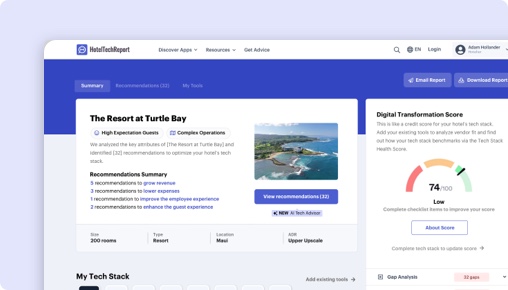
Sorry, this functionality is only available for verified hoteliers
The project dashboard is a free tool that is only available to verified hoteliers to make adopting new technology easier by streamlining their research and simplifying their communication workflow.

Canary Upsells vs. Duve Upselling:
Which Is Right for You?

TLDR
We analyzed 1,405 verified hotelier reviews, compared feature sets, pricing, and real-world case studies to break down where each platform delivers. The right choice depends on your property type and priorities:
Canary Technologies shines in upsells and room upgrades — especially for motel properties (4.9/5).
Duve shines in guest messaging and communication hub — especially for hostel properties (4.8/5), with exclusive features like Mobile Friendly and SMS text messaging.
How Does Canary Upsells Compare to Duve Upselling?
Side-by-side ratings based on 1,405 verified hotelier reviews on HTR.
| HTScore |
|
|
| Likelihood to Recommend |
|
|
| Ease of Use |
|
|
| Customer Support |
|
|
| Value for Money |
|
|
| Starting Price | From $200/mo | From $900/mo |
| Verified Reviews | 955 | 450 |
What Are the Pros and Cons of Canary Upsells vs Duve Upselling?
After analyzing 1,405 verified reviews, Canary Technologies users most value its upsells and room upgrades, automation, efficiency, and front-desk workload reduction, guest messaging and broadcasts, while Duve users highlight guest messaging and communication hub, upselling and ancillary revenue generation, operational efficiency and time savings. Click any theme to see what reviewers say.
|
Canary Technologies
|
Duve
|
|---|---|
| Pros | |
|
+
Upsells and room upgrades
▾
|
+
Guest messaging and communication hub
▾
|
|
+
Automation, efficiency, and front-desk workload reduction
▾
|
+
Upselling and ancillary revenue generation
▾
|
|
+
Guest messaging and broadcasts
▾
|
+
Operational efficiency and time savings
▾
|
|
+
Contactless / pre-arrival check-in
▾
|
+
Guest app and branded guest journey
▾
|
| Cons | |
|
−
PMS and inventory integration
▾
|
−
Customization and branding flexibility
▾
|
|
−
AI messaging and chatbot accuracy
▾
|
−
Support, onboarding, and training
▾
|
|
−
PMS/integration sync and operational data flow
▾
|
|
Canary Technologies vs Duve: Rankings by Hotel Segment
How each product ranks among Upselling Software vendors for different property sizes, types, and regions — based on verified reviews from hoteliers in each segment.
By Hotel Size
| Segment |
Canary Technologies
|
Duve
|
|---|---|---|
| Small (10-24 rooms) ▾ | #1 80 reviews | #2 76 reviews |
| Mid-Size (25-74 rooms) ▾ | #1 586 reviews | #3 145 reviews |
| Large (75-199 rooms) ▾ | #1 166 reviews | #3 91 reviews |
| X-Large (200+ rooms) ▾ | #2 57 reviews | #3 42 reviews |
By Property Type
| Segment |
Canary Technologies
|
Duve
|
|---|---|---|
| Boutique ▾ | #1 420 reviews | #3 144 reviews |
| Luxury ▾ | #1 327 reviews | #3 160 reviews |
| Branded / Chain ▾ | #1 418 reviews | #3 107 reviews |
| Extended Stay ▾ | #1 70 reviews | #2 49 reviews |
By Region
| Segment |
Canary Technologies
|
Duve
|
|---|---|---|
| North America ▾ | #1 767 reviews | #3 40 reviews |
| Europe ▾ | #6 43 reviews | #2 160 reviews |
| Asia Pacific ▾ | #6 18 reviews | #5 18 reviews |
| Middle East ▾ | #5 10 reviews | #1 115 reviews |
Is Canary Upsells by Canary Technologies or Duve Upselling by Duve Better for Hotels?
Canary Upsells and Duve Upselling both automate guest communication and upselling to increase hotel revenue and reduce front desk workload. They diverge primarily in feature scope and operational focus. Canary focuses on a streamlined upselling and guest messaging platform with strong fraud prevention and paperless workflows, excelling in hotels that prioritize quick deployment and operational efficiency. Duve offers a broader guest experience platform with a dedicated guest app, multi-channel messaging, and extensive customization, making it suitable for hotels seeking a comprehensive engagement tool that extends beyond upselling into personalized guest journeys.
Both platforms solve the core problem of maximizing ancillary revenue from upsells like room upgrades, early check-in, and late check-out while reducing manual front desk interactions. They integrate upselling offers into the guest journey from pre-arrival through checkout, improving guest satisfaction and operational flow.
Canary Upsells vs Duve Upselling: Which Should Your Hotel Choose?
If you operate a small to medium independent or branded hotel focused on rapid revenue gains from upsells and streamlined front desk operations, choose Canary Upsells. It has 950 reviews with a 4.8 overall rating and strong performance in boutique, branded, and limited service hotels, supporting properties with high turnover and frontline staff constraints. Canary’s modular platform and PCI-level fraud prevention ease adoption and reduce chargebacks, critical for operationally sensitive hotels. Its 62 verified integrations cover major PMS providers common in North America and Europe, aligning with its broad regional footprint.
If your property prioritizes a multi-functional guest engagement platform with personalized upselling, mobile apps, and multi-channel messaging, Duve Upselling fits better. Duve’s 449 reviews average 4.6 overall, and it supports a wider range of features including WhatsApp integration, mobile check-in, payments, and a marketplace for third-party services. This makes it ideal for large chains, resorts, and hotels targeting differentiated guest experiences with tailored offers. Duve’s 72 integrations and presence in 52 countries support complex setups and multi-property portfolios, though reviews indicate setup complexity and PMS sync issues in some cases.
Data on vacation rentals and extended stay properties is thinner but shows Duve’s user base has a higher share here, suggesting better fit for those segments. Canary’s case studies emphasize ROI in upselling and front desk efficiency, a decisive factor for smaller properties with limited staff.
Is Canary Upsells by Canary Technologies or Duve Upselling by Duve Easier to Use?
Both platforms score similarly on ease of use, with Canary at 4.9 and Duve at 4.7, and onboarding ratings at 4.7 and 4.6 respectively. Reviewers of Canary praise its intuitive interface requiring minimal setup, no guest app downloads, and straightforward modular adoption. Staff adoption benefits from simplicity and clear workflows, with many noting rapid time savings at check-in and fewer guest calls.
Duve reviews commend its user-friendly design and visually appealing guest app that enhances direct guest interaction. However, some users report setup complexity and integration challenges that can delay full adoption. Training resources vary in quality, with larger properties reporting a learning curve for staff.
Operationally, Canary’s simpler, focused system reduces friction in day-to-day use, while Duve’s broader feature set demands more initial training and configuration. Both platforms support staff with automation that cuts repetitive tasks, but Canary’s lower complexity benefits hotels with limited technical resources.
Edge: Even.
Which Has Better Features: Canary Upsells by Canary Technologies or Duve Upselling by Duve?
Duve offers a substantial feature advantage with 24 unique features not found in Canary. These include multi-channel guest messaging (SMS, WhatsApp), a dedicated mobile app, automated replies, open API, mobile check-in/out, room service ordering, payments, multi-lingual automatic translations, and multi-property dashboards. These features enable Duve to serve as a full guest engagement platform, transforming upselling into a personalized digital concierge experience. Hotels gain flexibility to present localized recommendations, handle payments seamlessly, and scale across portfolios.
Canary focuses exclusively on upselling, digital check-in, contactless payment authorizations, fraud prevention, and guest messaging integrated within a modular platform. Although it has no unique features beyond the shared 19, its depth lies in PCI Level 1 compliance, paperless contract signing, and digital tipping—features critical for secure payment handling and staff morale. It automates upsells and integrates tightly with PMS to reduce chargebacks and front desk workload.
Operationally, Duve’s wider feature set enables properties aiming for full-service digital guest journeys to consolidate platforms, while Canary’s targeted upselling and secure payment workflows suit hotels prioritizing revenue uplift with operational simplicity.
Edge: Duve Upselling by Duve.
Which Has Better Customer Support: Canary Upsells by Canary Technologies or Duve Upselling by Duve?
Customer support ratings are close: Canary scores 4.7 and Duve 4.6 overall, with onboarding at 4.7 and 4.6 respectively. Canary reviewers highlight responsive, collaborative support that aids integration and troubleshooting. Multiple testimonials note strong account management and quick resolution, especially around PMS connectivity and fraud prevention.
Duve’s support is described as professional and efficient by many, with specific praise for account managers like “Gal.” However, some reviewers report difficulty reaching support, slow email responses, and occasional gaps in hotel-specific expertise. This inconsistency is more common among larger properties with complex setups.
Both companies invest in onboarding and training, but Canary’s simpler platform appears to translate into smoother ramp-up experiences. Duve’s broader system complexity can extend support needs, though many hotels receive excellent assistance.
Edge: Even.
Which Has More Integrations: Canary Upsells by Canary Technologies or Duve Upselling by Duve?
Duve leads with 72 verified integrations versus Canary’s 62, a 16% difference. Both share 30 core partners including major PMS platforms like ROOMRACCOON, eviivo, WebRezPro, and SiteMinder. Canary’s exclusive integrations include innRoad, RoomKey PMS, FLEXIPASS Keyless Access, and Springer-Miller Systems, supporting properties with legacy or specialized PMS requirements.
Duve offers unique integrations with apaleo, Sirvoy, Guesty, Access Hospitality, Yanolja Cloud, and others, covering a broader range of cloud-native and chain management systems. Its open API and multi-property dashboard further extend integration flexibility.
Hotels with complex PMS environments or multi-property portfolios will find Duve’s larger integration ecosystem better suited. Canary covers most mid-market PMS needs solidly and excels with robust fraud and payment system partnerships.
Edge: Even.
Which Do Hoteliers Rate Higher: Canary Upsells by Canary Technologies or Duve Upselling by Duve?
Canary Upsells holds a higher overall rating of 4.8/5 across 950 reviews, including 98 recent ones at 4.8, compared to Duve’s 4.6/5 from 449 reviews, with 130 recent reviews also at 4.6. The volume and recency of Canary’s reviews indicate stable and current satisfaction, suggesting more consistent product maturity.
Segment ratings favor Canary in boutique hotels (4.8 vs 4.7), branded hotels (4.8 vs 4.8 but fewer reviews for Duve), and limited service/budget hotels (4.8 vs 4.8). Duve scores comparably or slightly better in vacation rentals and hostels but with fewer reviews, limiting confidence.
Luxury hotels rate Canary at 4.8 across 334 reviews and Duve at 4.7 across 186 reviews. Canary’s higher review count across segments lends weight to its ratings, especially in small to medium independent and branded hotels.
Edge: Even.
How Much Do Canary Upsells by Canary Technologies and Duve Upselling by Duve Cost?
Canary Upsells publishes a base price of $200 with no implementation fees, per-room or monthly flat fees, and no trial available. This straightforward pricing supports smaller properties and mid-market hotels seeking predictable costs.
Duve’s base price is $900, also without implementation fees or trials. This higher entry price aligns with its broader feature set and suitability for larger properties or chains. Duve does not publish per-room or flat monthly pricing either.
The significant price gap reflects Canary’s focus on upselling efficiency and Duve’s comprehensive guest engagement platform. Hotels with tight budgets or limited tech staff may prefer Canary’s lower cost.
What Type of Hotel Should Use Canary Upsells by Canary Technologies?
- Hotels that prioritize rapid upsell revenue with minimal setup and staff training, supported by 950 reviews and a 4.8 rating.
- Properties seeking secure PCI Level 1 payment authorization and fraud prevention to reduce chargebacks.
- Hotels aiming to reduce front desk workload with automated guest communication and digital check-in/check-out workflows.
- Boutique, branded, and limited-service hotels, as reflected by strong segment ratings and case studies.
- Teams needing a modular platform to customize features without committing to a full suite upfront.
Not ideal if...
- Your hotel requires multi-channel guest messaging across SMS, WhatsApp, and email.
- A dedicated guest app with room service ordering and payment processing is critical.
- You operate a large multi-property chain needing a centralized dashboard.
What Type of Hotel Should Use Duve Upselling by Duve?
- Hotels and chains seeking a full guest engagement platform combining upselling, messaging, mobile app, and contactless check-in.
- Properties that want to personalize upsell offers extensively based on guest profiles, loyalty, and seasonal demand.
- Resorts, luxury hotels, and vacation rentals with complex guest journeys and third-party marketplace needs.
- Teams that require multi-channel communication including WhatsApp, SMS, and automated replies.
- Hotels managing multiple properties that benefit from Duve’s multi-property dashboard and open API.
Not ideal if...
- Your hotel requires a simple, focused upselling tool with minimal complexity.
- Your staff or tech resources cannot support a longer setup and training phase.
- You need robust PCI Level 1 fraud prevention and digital tipping features.
Canary Upsells by Canary Technologies vs Duve Upselling by Duve: The Bottom Line for Hotels
Canary Upsells and Duve Upselling address the same core hospitality challenge: increasing incremental revenue through upselling while streamlining front desk operations. Canary is a focused upselling and guest messaging tool with strong security and ease of use, favored by boutique and branded hotels that want fast ROI and operational simplicity. Duve offers a broader guest engagement platform with extensive features, multi-channel messaging, and personalization, better suited to larger properties and portfolios seeking a unified guest journey solution.
Choose Canary Upsells if you value PCI-compliant fraud prevention, digital tipping, and a modular platform that integrates tightly with PMS to reduce chargebacks and front desk workload. Its 950 reviews averaging 4.8/5 and numerous case studies demonstrate consistent revenue and efficiency gains in properties up to medium size.
Choose Duve Upselling if you require a comprehensive digital guest experience platform with a dedicated mobile app, WhatsApp integration, payments, and a marketplace for third-party services. Duve’s 72 integrations and multi-property management capabilities support complex operations and personalized upsell campaigns across large hotel groups, despite a steeper learning curve and higher entry cost.
Both products provide valuable upselling and guest communication capabilities, but your choice should reflect your property’s size, operational priorities, and desired depth of guest engagement.
How Much Do Canary Upsells and Duve Upselling Cost?
Upselling Software pricing is rarely straightforward. Here is what we know from each vendor's public pricing data. Always request a custom quote for your property size.
|
Canary Technologies
|
Duve
|
|
|---|---|---|
| Starting Price | From $200/mo | From $900/mo |
Feature Comparison: Canary Upsells vs Duve Upselling
These are the features each vendor has configured, organized by feature group — the same data shown in the vendor dashboard. Expand a group to compare features side by side.
| Feature |
Canary Technologies
|
Duve
|
|---|---|---|
|
▾
Offer Delivery
|
|
|
| Offer Orchestration (Booking → Pre-Arrival → Arrival → In-Stay → Post-Stay) | ||
| Multi-Channel Delivery (Email, SMS, WhatsApp, Chat) | ||
| Guest Segmentation & Targeting | ||
| Digital Acceptance & Payment Capture | ||
| Check-In & On-Property Upsell Support | ||
| Post-Stay & Future Stay Offers | ||
|
▾
Offers & Merchandising
|
|
|
| Offer Templates Library | ||
| Dynamic Upgrade Pricing | ||
| Room Upgrade Merchandising | ||
| Ancillary Product Merchandising | ||
| Gift Vouchers & Prepaid Experiences | ||
| Segmentation | ||
|
▾
Operations & Fulfillment
|
|
|
| Type 2 SOC 2 Certified (Data Security) | ||
| Automated Fulfillment Task Routing | ||
| Multi-Channel Delivery (Email, SMS, WhatsApp, Chat) | ||
| Gift Vouchers & Prepaid Experiences | ||
| Inventory & Eligibility Controls | ||
| Reservation & Folio Update Workflow | ||
| Staff & Department Fulfillment Visibility | ||
| Exception, Refund & Override Handling | ||
|
▾
Performance & Control
|
|
|
| Segmentation | ||
| Type 2 SOC 2 Certified (Data Security) | ||
| Offer Suppression & Approval Controls | ||
| Performance Reporting & Offer Analytics | ||
| Multi-Property/Chain Dashboard | ||
| Offer Experimentation & A/B Testing | ||
| Offer Performance Analytics |
Real-World Results: Canary Technologies vs Duve by Business Goal
We analyzed 16 verified case studies to compare what hotels actually achieve with each platform across four key business objectives.
Made Hotel
Small
"In short, we’ve been able to improve the guest experience, eliminate fraud, and drive incremental revenue from upsells."
 Duve
No published case study for this goal yet.
Canary Technologies
No published case study for this goal yet.
סטאי תל אביב - The Setai, Tel Aviv
Large
"Duve was a game changer for our customer service. I knew the platform would help us connect with guests but I was amazed at how cleverly simple it all is, even guests who are not v..."
 The Commonwealth
Small
"Anytime a software works well and makes my life easier, I like it and Canary has done exactly that. I absolutely recommend the platform to all other hotel operators."
 Brown Hotels
Large
"While scaling up and growing in terms of more hotel rooms and more hotels in different countries we found it difficult to communicate with our guests in a very personal way. Duve f..."

Canary Technologies vs Duve: The Bottom Line
What hoteliers love
Users most often praise Canary for turning upgrades, add-ons, and paid conveniences into incremental hotel revenue with little manual effort. Reviews... Users most often praise Canary for turning upgrades, add-ons, and paid conveniences into incremental hotel revenue with little manual effort. Reviews consistently mention room upgrades, early check-in, late check-out, pet fees, packages, and other ancillary sales as the core revenue driver. Several users also note that this helps properties capture revenue they would otherwise miss at the desk.
Beyond specific features, many users describe Canary as a workflow tool that reduces desk congestion, cuts paperwork, and frees staff to focus on serv... Beyond specific features, many users describe Canary as a workflow tool that reduces desk congestion, cuts paperwork, and frees staff to focus on service. The biggest operational wins cited are faster arrivals, fewer phone calls, simpler request handling, and less manual posting. Hotels also mention improved coordination across front desk, housekeeping, and management.
Hotels value Canary as a fast communication layer for before-arrival, in-stay, and post-stay messaging. Users say it reduces calls, helps staff answer... Hotels value Canary as a fast communication layer for before-arrival, in-stay, and post-stay messaging. Users say it reduces calls, helps staff answer questions quickly, and makes it easier to send broadcasts about events, renovations, or urgent updates. A recurring benefit is that it keeps the team organized and improves guest satisfaction by centralizing conversations.
Where hoteliers push back
Integration with the PMS is a major buying criterion because hotels want offers and check-in data to sync instantly with room inventory and folios. Re... Integration with the PMS is a major buying criterion because hotels want offers and check-in data to sync instantly with room inventory and folios. Reviewers repeatedly ask for better live inventory control, faster posting of upsells, and fewer manual steps when requests are approved. The negative feedback is most concentrated around delays, partial syncs, and systems that do not fully reflect availability or billing details in real time.
Reviewers see AI as useful for handling repetitive questions and saving staff time, but they also flag accuracy and tone issues. Common complaints inc... Reviewers see AI as useful for handling repetitive questions and saving staff time, but they also flag accuracy and tone issues. Common complaints include robotic responses, incorrect answers, overconfident messaging, and AI sending replies when staff would rather approve them first. Hotels want tighter controls, better context awareness, and clearer escalation paths to a human.
Ranks higher for
What hoteliers love
Users repeatedly say Duve centralizes guest communication across channels like SMS, WhatsApp, email, and in-app chat, making it easier to answer quest... Users repeatedly say Duve centralizes guest communication across channels like SMS, WhatsApp, email, and in-app chat, making it easier to answer questions quickly and keep guests informed before and during the stay. Many note that this reduces repetitive front-office work and creates a faster, more consistent guest experience.
The most common value cited is Duve’s ability to drive additional revenue through room upgrades, late check-out, early check-in, packages, and other e... The most common value cited is Duve’s ability to drive additional revenue through room upgrades, late check-out, early check-in, packages, and other extras. Reviewers say the platform makes offers easy to manage and helps hotels monetize unsold inventory while supporting TRevPAR and overall profitability.
Reviewers commonly describe Duve as a tool that reduces manual work for front desk and guest service teams by centralizing tasks and automating routin... Reviewers commonly describe Duve as a tool that reduces manual work for front desk and guest service teams by centralizing tasks and automating routine communication. This efficiency is seen as especially valuable for busy hotels, allowing staff to focus more on service and less on repetitive admin.
Where hoteliers push back
Users often want more control over the look, layout, and configuration of the guest app and related workflows. While Duve is seen as flexible, reviewe... Users often want more control over the look, layout, and configuration of the guest app and related workflows. While Duve is seen as flexible, reviewers say larger groups especially need better tools for category management, branding, and property-specific customization.
Support quality is mixed: some reviewers praise fast help and strong implementation assistance, while others say response times, hotel-specific expert... Support quality is mixed: some reviewers praise fast help and strong implementation assistance, while others say response times, hotel-specific expertise, or follow-up can be lacking. Several also want better training resources for new staff so teams can use the platform consistently and manage changes more confidently.
Ranks higher for
Unique capabilities
Frequently Asked Questions About Canary Upsells vs Duve Upselling
Can Canary Upsells replace Duve Upselling?
It depends on your requirements. Canary Upsells and Duve Upselling share many core Upselling Software features, but each has unique capabilities. Canary Upsells offers 62 verified integration partners, while Duve Upselling offers 72. Review the feature comparison above to see where they differ before switching.
Which is better for small or independent hotels?
Small hotels should prioritize ease of use and fast onboarding. Canary Upsells leads in ease of use at 4.9/5 vs 4.7/5. Look for transparent pricing and a trial or demo option. Filter reviews on each product page by property size to hear from hotels like yours.
Do Canary Upsells or Duve Upselling offer a free plan?
Canary Upsells: No. Duve Upselling: No. Neither product currently offers a free tier. Most Upselling Software vendors offer demos or trials — request one from each to evaluate before committing.
How Does HTR Evaluate and Rank Canary Upsells and Duve Upselling?
The HT Score is a composite ranking that considers 4 criteria groups and over a dozen variables to help hoteliers objectively compare hotel technology products. Canary Technologies has an HT Score of 100 and Duve has 98. Here is how the score is calculated.
| Criteria Group | Weight | What It Measures |
|---|---|---|
| Customer Ratings & Reviews |
|
How highly do users recommend this product? Ratings Score, Review Volume, Share of Voice, Review Depth, Review Recency, Success Stories ▾ The most heavily weighted factor. Analyzes average satisfaction ratings (likelihood to recommend, ease of use, support, ROI), total review count relative to category peers, review recency (at least 20 reviews in the trailing 6 months), and share of voice across unique hotel clients to detect selection bias. |
| Partner Ecosystem |
|
How highly do tech partners recommend this company? Partner Recommendations, Integration Quantity, Integration Quality ▾ Evaluates partner recommendations as expert votes of confidence, the number of verified integrations, and ecosystem quality — the average HT Scores of integration partners. Products with higher-quality integration ecosystems are more likely to deliver a connected tech stack. |
| Customer Centricity |
|
How customer-centric is this organization? Certified Support, Review Consistency, Profile Completeness ▾ Assesses whether the company has earned HTR Customer Support Certification, maintains consistent review collection over time (an indicator of feedback-driven culture), and keeps product profiles complete with capabilities, screenshots, pricing, and features. |
| Reach, Staying Power & Resources |
|
How extensive is this company's reach and resourcing? Geographic Reach, Staying Power, Company Resources, Trending Score ▾ Measures global presence (countries and regions served), years in business as a stability proxy, team headcount as a resource proxy, and a trending score based on trailing-twelve-month buyer inquiries, reviews, partner recommendations, and press activity. |
Customer ratings and reviews are by far the most important factor in the HT Score algorithm. HTR does not accept payment for higher rankings. All reviews are verified — only hotel industry practitioners with confirmed affiliations can submit ratings. View full HT Score methodology →
What Other Upselling Software Comparisons Are Hoteliers Reading?
Explore more head-to-head comparisons based on verified hotelier reviews.


Get Your Free AI Analyst Report
Custom recommendations tailored to your property


Let´s lookup your hotel information
Still weighing your upselling software options?
A few popular systems from our upselling software guide — or let our AI score each one against your specific property in about two minutes.


