
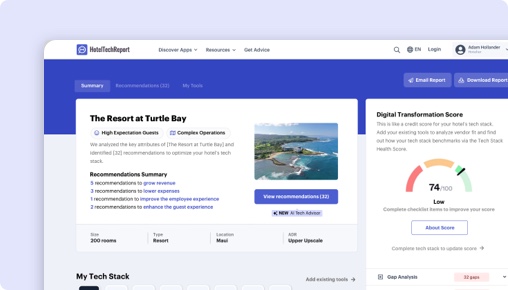
Sorry, this functionality is only available for verified hoteliers
The project dashboard is a free tool that is only available to verified hoteliers to make adopting new technology easier by streamlining their research and simplifying their communication workflow.

Unified Inbox by Bookboost vs. Trilyo:
Which Is Right for You?


TLDR
We analyzed 196 verified hotelier reviews, compared feature sets, pricing, and real-world case studies to break down where each platform delivers. The right choice depends on your property type and priorities:
Bookboost shines when it comes to guest messaging speed and responsiveness — especially for brand properties (5.0/5) , with exclusive features like SMS text messaging and Guest History.
Trilyo shines in ROI .
How Does Unified Inbox by Bookboost Compare to Trilyo?
Side-by-side ratings based on 196 verified hotelier reviews on HTR.
| HTScore |
|
|
| Likelihood to Recommend |
|
|
| Ease of Use |
|
|
| Customer Support |
|
|
| Value for Money |
|
|
| Starting Price | From $400/mo | Contact sales |
| Verified Reviews | 195 | 1 |
What Are the Pros and Cons of Unified Inbox by Bookboost vs Trilyo?
After analyzing 196 verified reviews, Bookboost users most value its guest messaging speed and responsiveness, automation, templates, and bots, centralized multichannel inbox, while Trilyo users highlight . Click any theme to see what reviewers say.
|
Bookboost
|
Trilyo
|
|---|---|
| Pros | |
|
+
Guest messaging speed and responsiveness
▾
|
|
|
+
Automation, templates, and bots
▾
|
|
|
+
Centralized multichannel inbox
▾
|
|
|
+
Guest journey personalization
▾
|
|
| Cons | |
|
−
Search, stability, and notification issues
▾
|
|
|
−
Team assignment and multi-property workflow
▾
|
|
Bookboost vs Trilyo: Rankings by Hotel Segment
How each product ranks among Guest Messaging Software vendors for different property sizes, types, and regions — based on verified reviews from hoteliers in each segment.
By Hotel Size
| Segment |
Bookboost
|
Trilyo
|
|---|---|---|
| Small (10-24 rooms) ▾ | #7 31 reviews | #23 1 reviews |
| Mid-Size (25-74 rooms) ▾ | #6 96 reviews | #30 0 reviews |
| Large (75-199 rooms) ▾ | #9 18 reviews | — |
| X-Large (200+ rooms) ▾ | #3 37 reviews | — |
By Property Type
| Segment |
Bookboost
|
Trilyo
|
|---|---|---|
| Boutique ▾ | #4 105 reviews | #28 1 reviews |
| Luxury ▾ | #3 88 reviews | #28 1 reviews |
| Branded / Chain ▾ | #4 84 reviews | #31 0 reviews |
| Extended Stay ▾ | #3 23 reviews | — |
By Region
| Segment |
Bookboost
|
Trilyo
|
|---|---|---|
| North America | #24 1 reviews | — |
| Europe ▾ | #2 167 reviews | — |
| Asia Pacific ▾ | #5 15 reviews | #8 1 reviews |
The Decision
Choosing the right guest messaging software is crucial for your hotel’s operational efficiency and guest satisfaction. Both Unified Inbox by Bookboost and Trilyo aim to streamline guest communication, but they do so with different strengths. While Bookboost offers a feature-rich platform with extensive integrations, Trilyo focuses on AI-driven voice and chat solutions tailored for engaging modern travelers. Which one aligns better with your hotel’s needs?
Is Unified Inbox by Bookboost or Trilyo Better for Hotels?
Both platforms aim to centralize guest communication, but they approach this goal differently. Bookboost’s Unified Inbox consolidates all guest interactions across multiple channels into a single dashboard, reducing response delays and miscommunications. Trilyo, meanwhile, emphasizes AI-powered voice and chat solutions designed to enhance engagement with millennial travelers, fostering direct bookings. Are you looking for a broad communication management system or specialized AI engagement?
The main divergence lies in their core functionalities: Bookboost’s strength is in managing multiple channels and automating operational tasks, while Trilyo’s is in conversational AI and personalized guest experiences. If your team needs a robust multi-channel platform, Bookboost is likely the better choice. If your focus is on leveraging AI to attract and retain younger guests, Trilyo may be more suitable. Does your hotel prioritize comprehensive communication management or AI-driven guest engagement?
Bookboost vs Trilyo: Which Should Your Hotel Choose?
If your hotel needs a platform with proven multi-channel messaging management, automation, and integrations, go with Bookboost. Its extensive feature set, including SMS, email, WhatsApp, Facebook Messenger, and automation workflows, makes it ideal for hotels that want to streamline operations and improve guest communication.
If your hotel aims to attract millennials or Gen Z travelers through AI-powered voice and chat solutions, Trilyo offers a tailored approach. Its focus on conversational AI, guest sentiment analysis, and direct booking enhancement suits properties targeting modern, tech-savvy guests.
Your choice depends on whether you value broad communication features or specialized AI-driven guest interactions. Which profile best fits your hotel’s strategic goals?
Is Unified Inbox by Bookboost or Trilyo Easier to Use?
Bookboost’s interface is designed for ease, with a user rating of 4.73/5 and 162 reviews emphasizing its intuitive dashboard and straightforward setup. Users highlight its simplicity, noting, "The dashboard is very easy to use and helps us respond quickly." On the other hand, Trilyo scores a perfect 5/5 with a focus on ease of use, and reviews praise its mobile-friendly design and quick responsiveness.
While both platforms are highly rated, Bookboost’s broader feature complexity might necessitate a slightly longer onboarding process. Edge: Trilyo.
Which Has Better Features: Bookboost or Trilyo?
Bookboost offers over 51 unique features, including photo sharing, automated replies, message routing, guest history, digital check-in, and extensive automation workflows. It also integrates with 35 verified partners like PMS systems, digital keys, and booking engines, providing a comprehensive communication toolkit.
Trilyo, however, does not list specific features beyond its voice and chat AI solutions, focusing solely on conversational engagement and sentiment analysis. It lacks the extensive multi-channel management and automation features of Bookboost. Edge: Bookboost.
Which Has Better Customer Support: Bookboost or Trilyo?
Both platforms excel in support, with Trilyo receiving a perfect 5/5 rating and numerous reviews emphasizing its quick response times and attentive team. Users say, “Trilyo’s team is very responsive, always ready to implement new ideas,” and highlight its reliability in streamlining communication.
Bookboost also scores highly at 4.8/5, with reviews praising its proactive support and dedicated onboarding assistance. Customers note that “the Bookboost team is always there to help whenever we have questions” and value their ongoing engagement.
Edge: Trilyo, due to the recent and consistent high praise.
Which Do Hoteliers Rate Higher: Bookboost or Trilyo?
Bookboost’s reviews are more numerous, with 162 recent reviews, and consistently high ratings of 4.98/5. Hoteliers across segments—luxury, boutique, branded, and city center hotels—appreciate its all-in-one communication management and automation.
Trilyo, with just one review, rates a perfect 5/5, but the limited data makes it difficult to gauge broader hotel sentiment. Given the volume and recency of Bookboost’s reviews, it holds the stronger reputation among hoteliers. Edge: Bookboost.
How Much Do Bookboost and Trilyo Cost?
Bookboost’s pricing starts at $400 per month, with no free trials or freemium options. It’s a flat monthly fee, making budgeting straightforward for hotels seeking a comprehensive guest messaging platform.
Trilyo’s pricing details are not publicly available, which might indicate a customized quote or enterprise-level pricing. Its lack of transparent costs makes direct comparison difficult, but the absence of publicly stated prices suggests it’s targeted at larger or more specialized operations.
What Type of Hotel Should Use Bookboost?
- Hotels that require a multi-channel, feature-rich guest communication platform.
- Teams that need automation workflows for operational efficiency.
- Properties managing multiple locations or brands.
- Hotels seeking integration with PMS, digital keys, and marketing tools.
- Hotels that value detailed analytics and guest profiling.
Not ideal if your hotel prioritizes simple, minimal communication tools or has limited IT support.
What Type of Hotel Should Use Trilyo?
- Hotels targeting millennial and Gen Z guests through engaging voice and chat.
- Properties focused on personalized, conversational guest experiences.
- Hotels seeking to increase direct bookings via AI-driven interactions.
- Brands that want to analyze guest sentiment and feedback automatically.
- Small to medium-sized hotels that benefit from quick setup and mobile use.
Not ideal if your hotel needs extensive multi-channel management or integrated automation workflows.
Truly the Bottom Line for Hotels
Bookboost and Trilyo serve different core needs. Bookboost excels as a multi-channel communication hub, while Trilyo is best for AI-driven guest engagement and sentiment analysis.
Choose Bookboost if you want a broad, integrated system that handles messaging, automation, and multi-property management, especially if you value proven customer support and extensive features. Its large review base and recent positive feedback confirm its reliability.
Opt for Trilyo if your hotel’s success hinges on engaging younger travelers through conversational AI and voice solutions, especially if you seek innovative ways to increase direct bookings. Its focus on personalized AI conversations makes it a compelling choice for modern, digitally oriented properties.
If your hotel needs a comprehensive guest communication platform with proven track record and high ratings, go with Bookboost. For innovative AI guest engagement aimed at Millennials and Gen Z, Trilyo offers a distinctive approach.
Feature Comparison: Unified Inbox by Bookboost vs Trilyo
These are the features each vendor has configured, organized by feature group — the same data shown in the vendor dashboard. Expand a group to compare features side by side.
| Feature |
Bookboost
|
Trilyo
|
|---|---|---|
|
▾
Unified Inbox
|
|
|
| Team Messaging | ||
| Broadcast Messaging | ||
| Desktop App (non-web based) | ||
| Photo Sharing | ||
| Mobile App | ||
| Mobile Friendly | ||
| Live Translations | ||
| Website Livechat | ||
|
▾
Multi-Channel
|
|
|
| Whatsapp Integration | ||
| Facebook Messenger Integration | ||
| SMS text messaging | ||
| Website Livechat | ||
|
▾
Automation
|
|
|
| Message Routing | ||
| Automated Replies | ||
| Chatbot Booking Agent | ||
| Broadcast Messaging | ||
| Upsell Fulfillment Tracking | ||
| Open API | ||
| Automated Workflows | ||
|
▾
Upselling & Ancillaries
|
|
|
| Upsell Marketplace | ||
| Offer Campaigns | ||
| Upsell Fulfillment Tracking | ||
| Purchase Links | ||
| Charge to Folio | ||
| Room Upgrades Campaigns | ||
| Upselling Campaigns | ||
|
▾
Task & Request Management
|
|
|
| Ticketing System | ||
| Tasks & Checklists | ||
| Inspections | ||
| Recurring Tasks | ||
| Upsell Fulfillment Tracking | ||
|
▾
Surveys & Feedback
|
|
|
| Messaging Guest Surveys | ||
| TripAdvisor Review Partner | ||
| Guest Reviews Campaigns | ||
|
▾
Reporting & Analytics
|
|
|
| Analytics dashboard | ||
| Guest History | ||
| Upsell Fulfillment Tracking | ||
| Team KPIs Dashboard | ||
| Custom Goal Setting | ||
|
▾
Compliance & Privacy
|
|
|
| Automated Opt-In/Consent Collection | ||
| Secured Data Protection | ||
| Open API | ||
|
▾
Digital Registration & Check-in
|
|
|
| Document & Passport Scanning | ||
| Credit Card Authorization | ||
| Mobile Keys | ||
| Custom Fields | ||
|
▾
Pre-Stay
|
|
|
| Chatbot Booking Agent | ||
| Booking Recovery Campaigns | ||
| Behavioral Marketing Campaigns | ||
| Email to Chatbot Automation | ||
| Smooth Handover to Human Agents | ||
| Click to Call | ||
| Lead Qualification | ||
| OTA Price Comparison | ||
| Interface Personalization | ||
|
▾
In-Stay & Post Stay
|
|
|
| Digital Check-in | ||
| Room Upgrades Campaigns | ||
| Upselling Campaigns | ||
| Automated Workflows | ||
| Custom Routing and Escalations | ||
| Pre-programmed Guest Notifications | ||
| Guest Reviews Campaigns | ||
| Retention Campaigns | ||
|
▾
Back-Office
|
|
|
| Unified Omnichannel Inbox | ||
| Status Tabs in Inbox Navigation | ||
| Assigning Agents | ||
| Canned Responses | ||
| User Profile Customizations | ||
| Multi Property Management | ||
| Customizable Working Hours | ||
| Unlimited Users | ||
|
▾
Artificial Intelligence
|
|
|
| Chatbot Booking Agent | ||
| Sentiment Analysis | ||
| Self-Learning NLP | ||
| Syntax & Semantic Analysis | ||
| Behavioral Analysis | ||
| Customer Profiling | ||
| Prediction & Forecasting |
Real-World Results: Bookboost vs Trilyo by Business Goal
We analyzed 8 verified case studies to compare what hotels actually achieve with each platform across four key business objectives.
Northern Lights Village
Small
"Bookboost is an efficient and reliable tool, which aggregates all our messaging channels into one intuitive interface. The integration with our PMS allows us to have all relevant i..."
 Trilyo
No published case study for this goal yet.
LINDEMANN HOTELS®
Small
"Whether it’s on the website, after the booking has been made or during and after a stay, Bookboost enables us to have control over all incoming and outgoing communication which mak..."
 Trilyo
No published case study for this goal yet.
Bookboost vs Trilyo: The Bottom Line
What hoteliers love
Many reviews highlight how Bookboost speeds up guest response times and makes communication feel immediate. Hotels say this helps them resolve request... Many reviews highlight how Bookboost speeds up guest response times and makes communication feel immediate. Hotels say this helps them resolve requests faster, improve guest satisfaction, and reduce the effort compared with phone calls or back-and-forth email.
Users value templates, bots, and automated messaging for handling repetitive guest requests and speeding up replies. Several reviewers want stronger A... Users value templates, bots, and automated messaging for handling repetitive guest requests and speeding up replies. Several reviewers want stronger AI-generated responses, better automatic phrases, and more control over timing and triggers to make automation feel more personal and effective.
Users most often praise Bookboost for bringing guest communication into one inbox, combining emails, chats, WhatsApp, and OTA messages. This helps hot... Users most often praise Bookboost for bringing guest communication into one inbox, combining emails, chats, WhatsApp, and OTA messages. This helps hotel teams manage requests faster, avoid missed messages, and keep operations organized across properties and departments.
Where hoteliers push back
A meaningful set of reviews points to usability problems such as weak search, lag, missed messages, noisy notifications, and occasional instability. T... A meaningful set of reviews points to usability problems such as weak search, lag, missed messages, noisy notifications, and occasional instability. These issues matter because hotels depend on the product to catch every guest request quickly and keep inbox handling reliable.
Reviewers often mention the value of assigning conversations to the right person or team and managing multiple properties from one place. This is espe... Reviewers often mention the value of assigning conversations to the right person or team and managing multiple properties from one place. This is especially useful for larger hotel groups, though some note issues with inbox routing, team visibility, and messages being assigned when staff are off.
Ranks higher for
Unique capabilities
Frequently Asked Questions About Unified Inbox by Bookboost vs Trilyo
Can Unified Inbox by Bookboost replace Trilyo?
It depends on your requirements. Unified Inbox by Bookboost and Trilyo share many core Guest Messaging Software features, but each has unique capabilities. Unified Inbox by Bookboost offers 36 verified integration partners, while Trilyo offers 1. Review the feature comparison above to see where they differ before switching.
Which is better for small or independent hotels?
Small hotels should prioritize ease of use and fast onboarding. Trilyo leads in ease of use at 5.0/5 vs 4.7/5. Look for transparent pricing and a trial or demo option. Filter reviews on each product page by property size to hear from hotels like yours.
Do Unified Inbox by Bookboost or Trilyo offer a free plan?
Unified Inbox by Bookboost: No. Trilyo: No. Neither product currently offers a free tier. Most Guest Messaging Software vendors offer demos or trials — request one from each to evaluate before committing.
How Does HTR Evaluate and Rank Unified Inbox by Bookboost and Trilyo?
The HT Score is a composite ranking that considers 4 criteria groups and over a dozen variables to help hoteliers objectively compare hotel technology products. Bookboost has an HT Score of 91 and Trilyo has 0. Here is how the score is calculated.
| Criteria Group | Weight | What It Measures |
|---|---|---|
| Customer Ratings & Reviews |
|
How highly do users recommend this product? Ratings Score, Review Volume, Share of Voice, Review Depth, Review Recency, Success Stories ▾ The most heavily weighted factor. Analyzes average satisfaction ratings (likelihood to recommend, ease of use, support, ROI), total review count relative to category peers, review recency (at least 20 reviews in the trailing 6 months), and share of voice across unique hotel clients to detect selection bias. |
| Partner Ecosystem |
|
How highly do tech partners recommend this company? Partner Recommendations, Integration Quantity, Integration Quality ▾ Evaluates partner recommendations as expert votes of confidence, the number of verified integrations, and ecosystem quality — the average HT Scores of integration partners. Products with higher-quality integration ecosystems are more likely to deliver a connected tech stack. |
| Customer Centricity |
|
How customer-centric is this organization? Certified Support, Review Consistency, Profile Completeness ▾ Assesses whether the company has earned HTR Customer Support Certification, maintains consistent review collection over time (an indicator of feedback-driven culture), and keeps product profiles complete with capabilities, screenshots, pricing, and features. |
| Reach, Staying Power & Resources |
|
How extensive is this company's reach and resourcing? Geographic Reach, Staying Power, Company Resources, Trending Score ▾ Measures global presence (countries and regions served), years in business as a stability proxy, team headcount as a resource proxy, and a trending score based on trailing-twelve-month buyer inquiries, reviews, partner recommendations, and press activity. |
Customer ratings and reviews are by far the most important factor in the HT Score algorithm. HTR does not accept payment for higher rankings. All reviews are verified — only hotel industry practitioners with confirmed affiliations can submit ratings. View full HT Score methodology →
What Other Guest Messaging Software Comparisons Are Hoteliers Reading?
Explore more head-to-head comparisons based on verified hotelier reviews.





Contents
Get Your Free AI Analyst Report
Custom recommendations tailored to your property


Let´s lookup your hotel information
Still weighing your guest messaging software options?
A few popular systems from our guest messaging software guide — or let our AI score each one against your specific property in about two minutes.


