


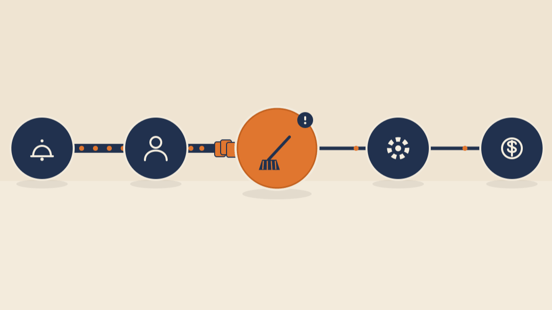
In many cases, inefficiency hides in plain sight - inside spreadsheets, group messaging platforms, scattered tools, and workarounds your team has learned to accept.
If you’ve ever wondered whether your operations are as efficient as they could be, here are five signs worth paying attention to.
1. You’re relying on spreadsheets, group messaging apps, or multiple different tools to get through the day
Spreadsheets feel familiar and easy to start with, but over time, they become difficult to manage - especially when multiple people need to update them, cross-reference information, or rely on them for real-time decisions.
The same goes for using multiple different apps to manage different parts of your operations. What starts as a solution often turns into confusion with a lot of overhead.
Not to mention the 30+ group chats your heads of departments belong to, disrupting them continuously as they sift through the 300+ daily messages most of which are simply not relevant to what they’re working on.
If your team is constantly switching between tools or relying on any of the above types of systems for their daily operations, it’s a strong sign your system isn’t efficient.
 Join 100k+ executives from world's leading hotel brands and get the latest insights delivered to your inbox once a week
2. Your team loses time dealing with inefficient systems to keep things running
Your team's focus should be getting their job done - not having their time wasted time due to inefficient tools and systems. If daily tasks involve chasing updates, duplicating information, or fixing avoidable errors, inefficiency is already baked into your processes.
Your team might still be getting things done; but at what cost to productivity?
You shouldn’t have to lose time dealing with inefficient operations or systems just to keep things running.
3. Things fall through the cracks (even with a good team)
Missed tasks. Forgotten requests. Delayed responses. These issues are rarely about people - they’re usually about inefficent systems.
When operations are spread across disconnected tools or manual processes, visibility becomes limited. And when visibility is limited, mistakes become inevitable.
If you’ve ever thought, “How did this get missed?”, it’s worth looking at how your operations are structured, not just how your team is performing.
4. There’s no clear, real-time view of what’s happening or what guests are doing
Can you see everything that’s happening across your resort - at any moment? Or do you need to check multiple systems, ask different team members, and piece together the full picture?
A lack of real-time visibility slows down decision-making and creates unnecessary stress. Instead of being proactive, your team ends up being reactive, albeit very often too late.
Efficient operations aren’t just about getting things done. They’re about having clarity and control without extra effort.
5. “That’s just how we do things” has become the norm
One of the biggest signs of inefficiency is acceptance. When workarounds become standard practice, and inefficiencies are seen as unavoidable, it’s easy to stop questioning them. But just because something has always been done a certain way doesn’t mean it’s the best way. In reality, many resorts are operating with systems that were never designed for the level of complexity they now face.
If any of these signs feel familiar, you’re not alone - many of today's resorts are still relying on a mix of spreadsheets, group messaging platforms or multiple stand-alone apps to manage their operations - simply because that’s what’s always been available.
From Inefficient to Effortless Operations
But operations don’t have to feel this heavy. There is a shift happening: from fragmented, time-consuming processes to a more unified, streamlined way of working.
A single system designed to manage your resort’s daily operations can remove the friction, reduce the manual work, and give your team the clarity they need to perform at their best.
Because at the end of the day, the goal isn’t just efficiency. It’s being able to run your resort operations effortlessly - without constant firefighting, without unnecessary complexity, and without losing time to systems that should be helping you.