


Each year, Hotel Tech Report surveys thousands of professionals across the global hotel technology ecosystem to understand a question that matters more than ever: which companies are actually good places to work—and why?
What makes this research distinctive isn’t volume alone. It’s rigor. With first-party employee survey data, long-form qualitative responses, and a methodology designed specifically for the hospitality technology sector, this analysis has become the industry’s most trusted benchmark for workplace quality in hotel tech.
The stakes have never been higher. Hotel technology is entering a new phase of maturity, where software is no longer a supporting function but core infrastructure. Revenue management systems, guest experience platforms, operations software, and AI-driven tools are now central to how hotels compete, staff, and scale. As demand for these solutions accelerates, so does competition for the people who build, sell, and support them.
But growth alone doesn’t create great workplaces. In fact, rapid expansion often exposes the cracks: unclear leadership, burnout disguised as ambition, and cultures that scale headcount faster than trust. The companies that stand out today are not just those growing quickly, but those growing deliberately—without losing operational clarity or human sustainability.
For the 2026 edition of our Best Places to Work in Hotel Tech, we analyzed 3,011 verified survey responses from hotel technology professionals worldwide. Employees rated their companies across the dimensions that actually define day-to-day experience, including:
-
Work-life balance
-
Opportunities for personal and professional development
-
Gender equality and fairness
-
Confidence in company direction
-
Alignment between stated values and real behavior
This was the most competitive year we’ve ever measured. Expectations have risen across the industry, and surface-level perks are no longer enough to differentiate. As a result, this list goes beyond rankings. The company profiles that follow are grounded in what employees actually said—how work gets done, how leadership shows up under pressure, and how growth feels from the inside.
How We Built the List
The 2026 10 Best Places to Work in Hotel Tech is based on the largest and most relevant dataset in the industry—significantly larger and more specialized than generalist platforms like Glassdoor. Every company met strict participation thresholds and was evaluated using a consistent, transparent scoring model built specifically for hotel technology businesses.
Rather than relying on employer-submitted materials or anecdotal reputation, this list reflects how employees experience these companies in practice.
Why This List Matters
Workplace culture is not a soft metric. It is foundational to how hotel technology companies perform—and to the outcomes their customers experience.
-
Product innovation improves when teams are stable, trusted, and able to think long-term.
-
Customer support strengthens when employees stay longer and build real domain expertise.
-
Sales and growth become more durable when motivation is sustained rather than forced.
This list is designed to serve two audiences:
-
Professionals evaluating where to build their careers in hotel tech, and
-
Hotel operators who want partners that prioritize organizational health, not just feature velocity.
The companies that follow are not perfect—but they are doing something right. And in an industry where people are increasingly the differentiator, that matters.
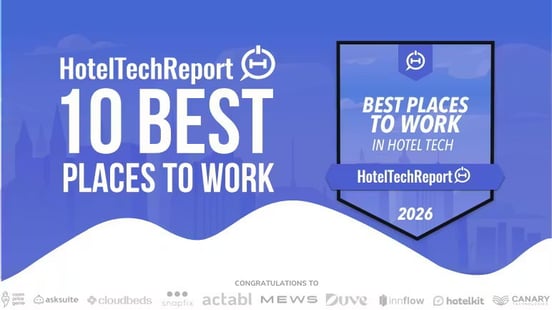
Without further ado, here are the 10 Best Places to Work in Hotel Tech for 2026.
1. RoomPriceGenie
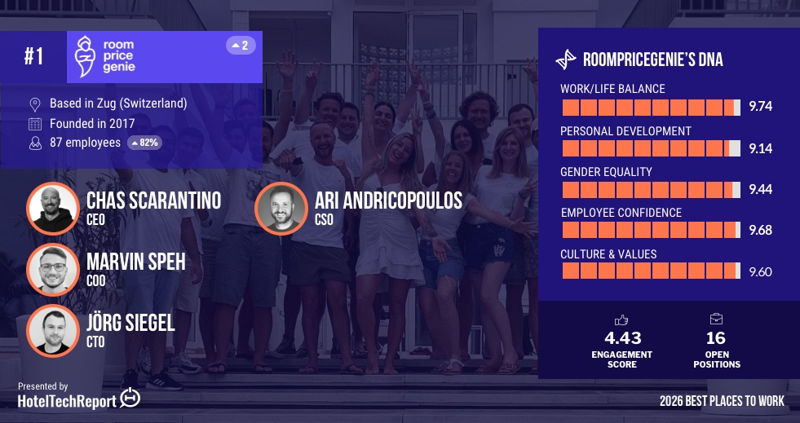
RoomPriceGenie is building a company designed to scale without manufacturing urgency. That may sound subtle, but it’s unusually difficult in a venture-backed software environment, and it shows up clearly in how employees describe their year. Rather than highlighting moments of intensity or crisis, people talk about steadiness: feeling supported, trusted, and able to do their work without unnecessary pressure.
Several employees reflected on the past year by noting how consistent that experience felt, even as the company grew. One described looking back and realizing that what stood out most was “how supported and trusted I feel in my role,” not because of a single event, but because that feeling never went away. Another emphasized that leadership did not respond to growth with micromanagement, describing an environment where leaders were “always available when needed and supportive of different approaches.”
That internal stability matters when viewed alongside RoomPriceGenie’s most significant milestone: a $75M growth investment from Five Elms Capital and a CEO transition. These are the kinds of moments that often introduce tension into an organization. Internally, however, employees do not describe disruption. Instead, they talk about continuity the same pace, the same expectations, the same trust.
One employee pointed to seeing “how smoothly we handled growth while still maintaining a healthy work-life balance,” adding that the balance was real, not aspirational. Another referenced a summer team meetup the first in-person interaction for many remote colleagues and described it as confirmation that the culture people experienced day-to-day translated seamlessly into real life.
Growth at RoomPriceGenie appears to increase scope without increasing stress. Trust is granted early and reinforced through structure rather than oversight. Onboarding is described as thoughtful and well-organized, with new hires given clarity and autonomy from the start.
This environment is well suited to operators who value predictability, ownership, and long-term contribution. It is less oriented toward adrenaline-driven performance or constant reinvention. RoomPriceGenie’s culture is hard to replicate precisely because it is calm by design and maintaining that calm through funding and leadership change requires discipline most companies underestimate.
 Join 100k+ executives from world's leading hotel brands and get the latest insights delivered to your inbox once a week
2. Asksuite
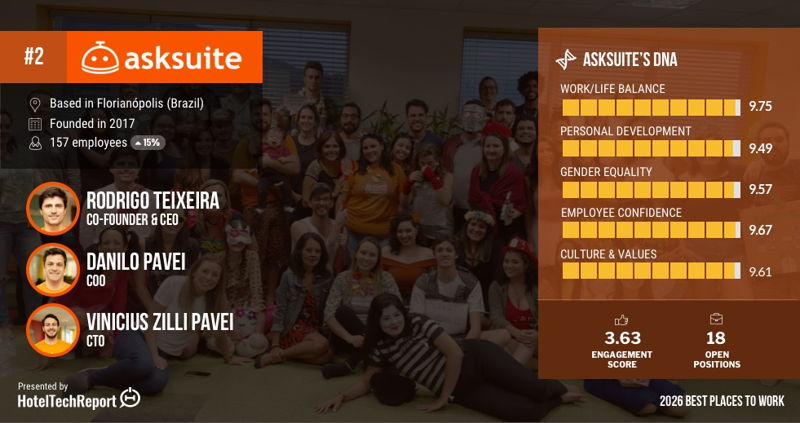
Several employees described being new to the company and immediately finding themselves learning at an accelerated pace. One noted “being able to grow and learn so much in a short time,” while another emphasized “having the opportunity to contribute and be trusted early on.” The pattern is consistent: responsibility is not something earned slowly through tenure, but something extended quickly and reinforced through performance.
That internal experience maps closely to Asksuite’s external milestones. Winning the HotelTechAwards was cited repeatedly by employees as a defining moment, not because of external recognition, but because it validated internal effort. One employee described it simply as “without a doubt the most memorable moment,” framing it as a shared win rather than a leadership achievement.
Asksuite’s broader growth including the launch of Sophia AI and rapid expansion of its customer base appears to reinforce this operating model. Employees describe seeing the team “hit big goals together,” suggesting that pace is coordinated rather than chaotic. Decision-making seems distributed, with accountability following ownership.
Growth at Asksuite is front-loaded. People who thrive here are those comfortable with ambiguity, visibility, and fast learning cycles. Trust increases through execution, and learning happens through doing, not formalized programs.
This is not an environment designed for slow ramp-ups or tightly scoped roles. It rewards initiative and resilience, and it expects people to keep up. What makes Asksuite difficult to replicate is not speed alone, but how quickly trust is operationalized a choice that many companies hesitate to make at scale.
3. Cloudbeds
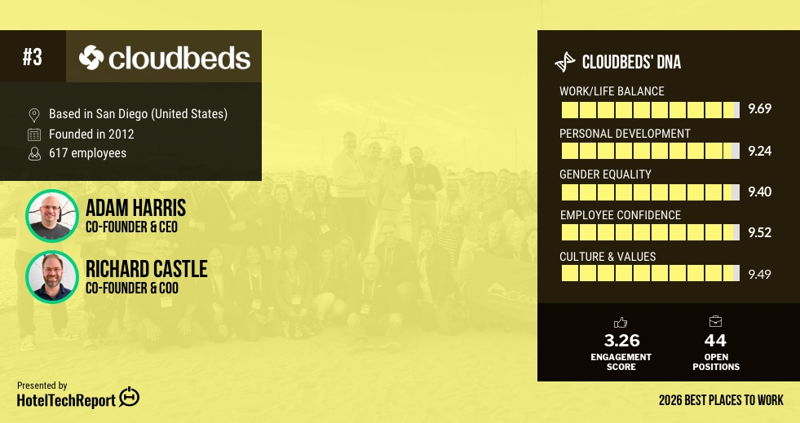
Cloudbeds is operating through a rare transition: evolving a mature, global PMS business into an AI-first hospitality platform without destabilizing its internal systems. Employees describe a company where scale is ever-present, but individual contribution has not been erased by it.
Much of the employee experience centers on coordination. One person described “working cross-functionally across teams and regions” as the most memorable aspect of the year. Another reflected on “seeing how much the company has grown and evolved,” framing work as part of a long arc rather than a series of sprints.
Human connection remains a defining theme. Several employees pointed to finally meeting international colleagues in person after years of remote collaboration, describing those moments as validating proof that the global operating model worked not just structurally, but relationally.
These internal experiences coincided with Cloudbeds’ strategic shift in 2025: the launch of Cloudbeds Labs and Signals, its causal AI foundation. While employees do not reference product names directly, their language around evolution, scale, and enterprise complexity aligns closely with this repositioning.
Enterprise deals were another stress test. One employee cited closing several large deals as a defining achievement, signaling that coordination across teams, products, and geographies held up under pressure.
Growth at Cloudbeds is experienced as exposure to complexity rather than rapid personal acceleration. This environment suits operators who are comfortable owning pieces of large systems and working through long feedback loops. It is less suited to those who want tight cycles and immediate validation.
What makes Cloudbeds hard to replicate is its ability to pursue reinvention without abandoning operational maturity a balance that requires patience, structure, and restraint.
4. Snapfix
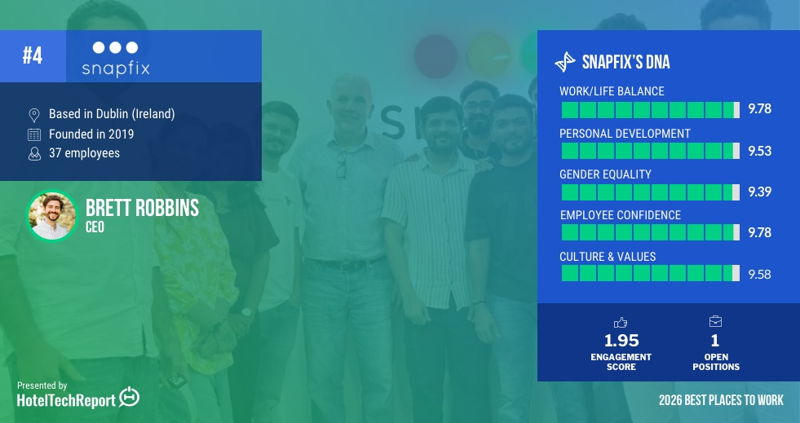
Snapfix is building a company where cohesion is not a byproduct of success, but a prerequisite for it. Employees consistently describe their experience through relationships rather than metrics or milestones, and that emphasis appears to shape how the company executes.
One employee described the most memorable part of the year as “genuinely enjoying working with everyone on the team.” Another pointed to a moment when the small team gathered in person, describing how it strengthened relationships and made collaboration smoother afterward. These are not described as morale interventions, but as foundational experiences.
That cohesion mattered as Snapfix expanded its product footprint in 2025 with launches like Multi-Site Console, Snapfix Chat, and Snapfix Comply. These initiatives required close coordination across a small organization, and employee responses suggest that trust made execution feel manageable rather than stressful.
Decision-making at Snapfix appears informal but accountable. In a close-knit team, ownership is visible and responsibility is implicit. Employees do not describe layers of approval or rigid process; instead, work moves forward through familiarity and mutual respect.
Growth here is relational rather than hierarchical. Trust is the default, not a reward. This environment suits people who prefer clarity through connection rather than structure through policy.
Snapfix is difficult to replicate because genuine trust does not scale easily. Many companies try to codify cohesion; Snapfix appears to have earned it through consistency.
5. Actabl
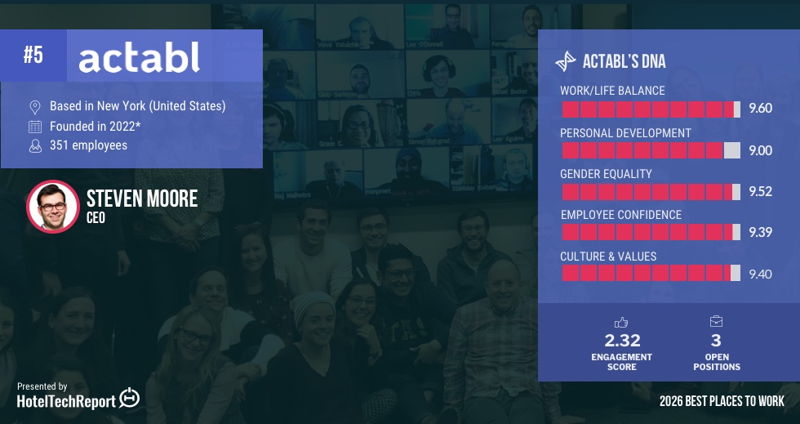
Actabl is building a company rooted in operational discipline rather than spectacle. Employees do not describe their work in terms of dramatic breakthroughs or sudden pivots; instead, they talk about progress slow, cumulative, and coordinated across teams. That framing alone distinguishes Actabl from many fast-growing hospitality technology firms that emphasize disruption over durability.
One employee described the most memorable aspect of the year as “seeing the amount of progress we made across teams.” The phrasing matters. Progress is framed as collective, not individual, and as something observed over time rather than delivered in bursts. Another employee summarized the year as “very productive and rewarding,” again emphasizing consistency over intensity.
Recognition at Actabl is notable for where it is directed. One employee highlighted Housekeeping Week as a defining moment, pointing to how the company takes time to acknowledge frontline hospitality roles. This is not incidental. It signals that Actabl sees itself as part of the operational fabric of hotels, not simply a software vendor abstracted from day-to-day realities.
Externally, 2025 was a visible year for Actabl: multiple HotelTechAwards wins and the launch of HotelData.com brought increased attention and credibility. Internally, employees do not describe these milestones as disruptive. There is no language of scramble or recalibration. Instead, the milestones appear to affirm a way of working that was already in place.
Decision-making at Actabl appears deliberate and structured. Employees do not reference constant reprioritization or leadership volatility. Work moves forward through alignment rather than urgency. Accountability exists, but it is embedded in process rather than enforced through pressure.
Growth at Actabl is experienced as deepening expertise. Trust is not granted through charisma or speed, but through competence and reliability. Employees who thrive here are those who value professionalism, predictability, and long-term contribution. Those seeking rapid role expansion or loosely defined environments may find the pace measured.
What makes Actabl difficult to replicate is its refusal to confuse momentum with effectiveness. The company has chosen operational seriousness as its cultural anchor and maintained it through growth.
6. Mews
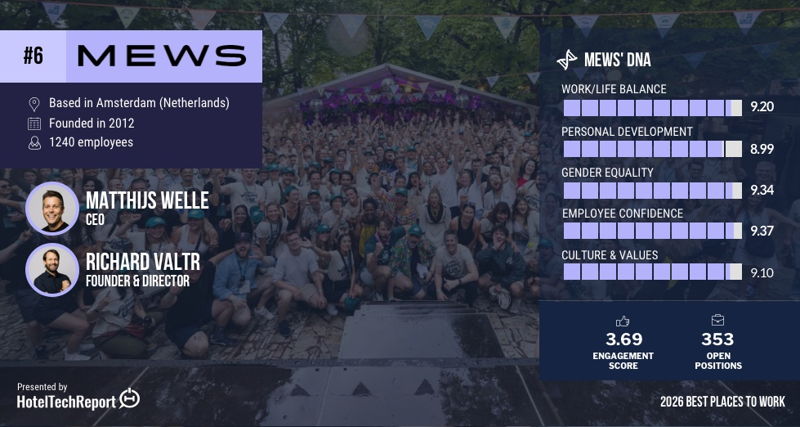
Mews is building a company where growth is treated as a shared responsibility rather than an executive-only concern. Employees consistently describe awareness of where the company is headed and a sense of participation in that trajectory. Growth is not something that happens around them; it is something they feel involved in.
One employee described “contributing to where the company is heading” as the most memorable aspect of the year. Another emphasized “seeing how fast the company is growing” as motivating rather than destabilizing. These responses suggest that scale is not hidden behind abstraction employees understand what is happening and why.
Fundraising stands out as a cultural signal. One employee explicitly referenced being involved in “very exciting fundraising efforts,” language that implies inclusion rather than distance. In many organizations, capital events increase opacity. At Mews, they appear to have increased engagement.
That approach was tested again during the acquisition of Flexkeeping. While employees do not reference the acquisition by name, their reflections during the same period emphasize ambition and innovation rather than disruption. The expansion of the platform into housekeeping and service delivery appears to have reinforced, not strained, internal alignment.
Work at Mews moves quickly, but employees do not describe chaos. Decision-making appears contextual: people understand the direction and are trusted to operate within it. Pace is high, but it is anchored to strategy rather than reaction.
Growth at Mews increases scope rather than immediately changing titles. Employees gain exposure to more complex systems, customers, and decisions. This environment favors people comfortable with ambiguity and long feedback loops. Those who prefer narrowly scoped roles or slower organizational movement may struggle.
Mews is hard to replicate because it pairs ambition with transparency. Many companies grow fast; fewer are willing to let employees see the machinery of that growth.
7. Duve
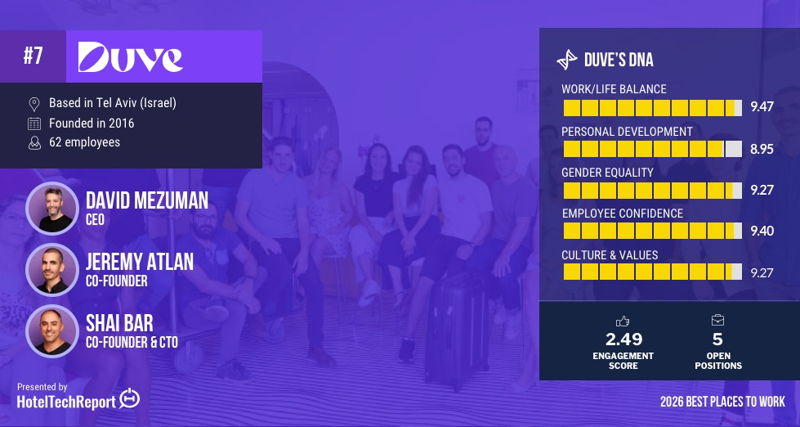
Duve is building a company organized around proximity to impact. Employees repeatedly describe being close to consequential moments large deals, fundraising, and major product launches rather than insulated from them. Responsibility here is tangible, not symbolic.
One employee described collaborating on one of the largest deals the company closed. Another talked about owning a major product launch from ideation through execution. These are not minor initiatives; they are core to the business. The fact that employees reference them as personal experiences suggests that decision-making authority is pushed outward, not upward.
That operating model was tested during Duve’s $60M Series B raise. Employees describe the fundraising period as exciting rather than destabilizing, again using inclusive language. One employee referred to “very exciting fundraising efforts,” framing the milestone as shared context rather than leadership-only activity.
Another employee highlighted deepening a major enterprise partnership as a defining achievement. Partnerships of that scale typically introduce complexity and pressure. At Duve, they appear to have expanded ownership rather than constrained it.
Work at Duve moves fast, but not without clarity. Employees do not describe confusion or constant reprioritization. Instead, they emphasize execution, ownership, and proximity to decisions.
Growth at Duve is experiential. Trust is extended early and reinforced through delivery. This environment suits builders who want to see the consequences of their work directly and are comfortable with accountability. It may be challenging for those who prefer gradual exposure or narrowly defined roles.
Duve is difficult to replicate because proximity erodes naturally as companies scale. Maintaining it requires intentional design and Duve appears to have made that choice.
8. Inn-Flow
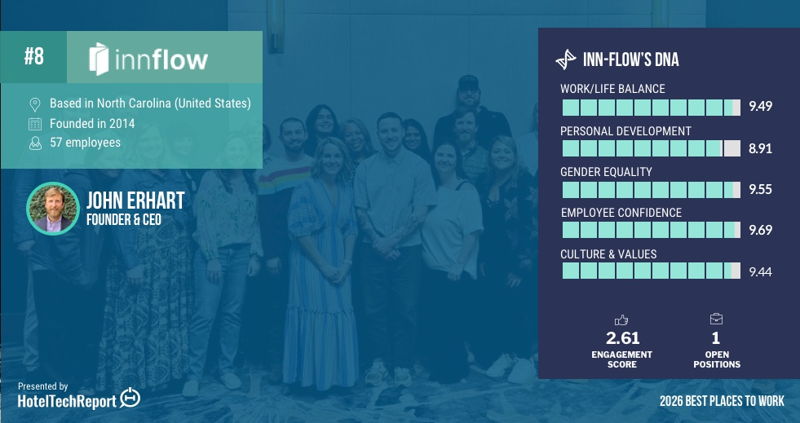
Inn-Flow is building a company centered on mastery rather than momentum. Employees describe meaningful work through concrete, operational achievements rather than abstract growth narratives. Credibility here is earned through execution.
One employee cited “getting my first demo booked” as the most memorable moment of the year. Another described working through a complex budget cycle and seeing it come together as deeply satisfying. These are not flashy milestones, but they are consequential and they reflect how success is defined internally.
Employees describe work as structured and deliberate. Decision-making follows planned cycles rather than urgency. Accountability is attached to deliverables, not speed. Even onboarding reflects this approach: one employee who joined late in the year emphasized how welcomed and supported they felt, suggesting integration is treated as intentional work.
Externally, 2025 included growth investment and HotelTechAwards recognition. Internally, employees do not describe these milestones as altering how work gets done. The absence of disruption language suggests systems held up under pressure.
Growth at Inn-Flow is incremental. Trust is earned through readiness and reliability. Employees who thrive here value clarity, depth, and long-term contribution. Those seeking rapid promotion or constant novelty may find the pace measured.
Inn-Flow is hard to replicate because it resists urgency as a cultural default even when growth would justify it.
9. hotelkit
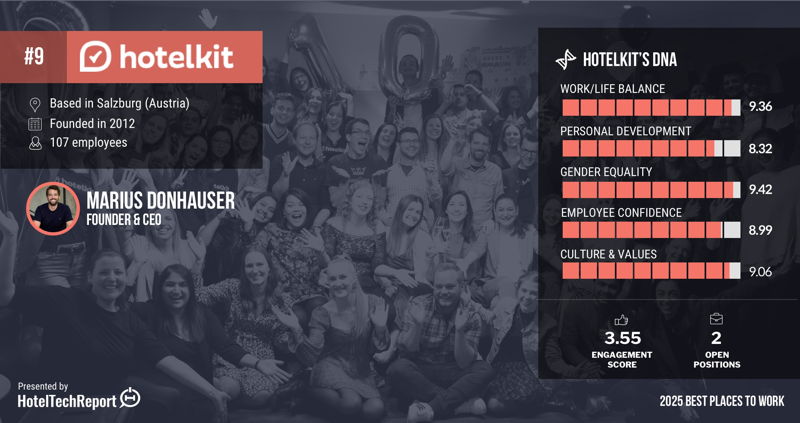
hotelkit is building a company defined by reliability. Employees do not describe dramatic change, pressure, or volatility. Instead, they talk about support, teamwork, and consistency qualities that are easy to undervalue and difficult to sustain.
One new hire emphasized how smooth onboarding felt, describing “amazing” support from colleagues. Another pointed to teamwork itself as the most memorable achievement of the year. These responses suggest that collaboration is not episodic or situational; it is the baseline.
Team events are described as reinforcing existing relationships rather than repairing strained ones. One employee noted that a team event strengthened relationships across the company, framing it as confirmation rather than correction.
Decision-making appears accessible. Employees emphasize knowing where to go for help and feeling comfortable asking. Accountability is shared, and escalation is normalized rather than stigmatized.
hotelkit did not experience major public funding or acquisition events during the period covered, and that absence is culturally relevant. Employees do not describe stress tests or inflection points. Instead, they describe steadiness.
Growth here is relational rather than hierarchical. Trust is built through consistency. This environment suits professionals who value clarity, collaboration, and psychological safety over intensity.
hotelkit is difficult to replicate because calm execution rarely draws attention but sustaining it over time requires discipline most companies lack.
10. Canary Technologies
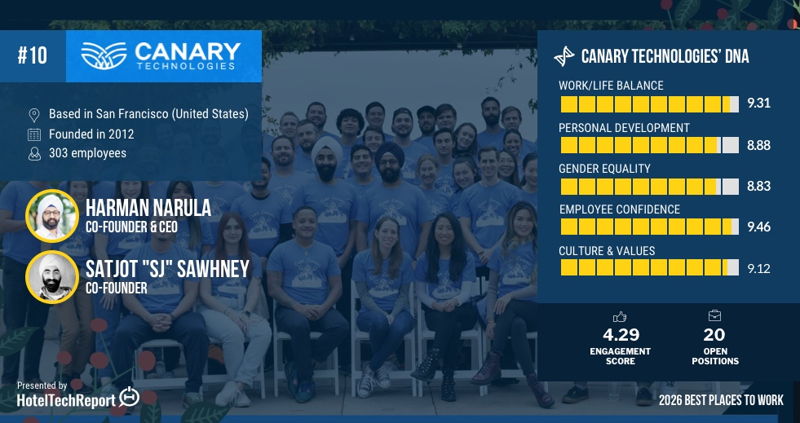
Canary Technologies is building a company where performance expectations are explicit and paired with real organizational support. Employees do not describe an environment of implied pressure or unspoken standards; instead, they talk about outcomes, scale, and growth in language that suggests clarity rather than stress. This is a place where ambition is acknowledged openly and where people understand what is expected of them.
Several employees framed their most memorable moments around enterprise-level execution. One cited “several of the enterprise-level deals” as defining achievements of the year, pointing to work that requires credibility, persistence, and coordination across teams. Another emphasized “collaborating with teammates on major wins,” suggesting that even as deal sizes and customer complexity increase, execution remains collective rather than siloed.
That internal experience coincided with one of Canary’s most significant milestones: its Series D funding round. Late-stage funding often introduces organizational strain—tighter scrutiny, shifting priorities, and pressure to professionalize quickly. Employees, however, did not describe distance or opacity during this period. One explicitly referenced “the company’s journey to securing Series D funding” as a meaningful experience, framing it as something employees were aware of and connected to, not shielded from.
Another employee noted that Canary “brings everyone along as the company grows,” a statement that speaks directly to how leadership manages scale. Growth does not appear to be abstracted behind executive layers. Employees feel informed about direction and momentum, which seems to function as a stabilizer as the company continues to win larger, more complex customers.
Day-to-day work at Canary appears outcome-oriented. Employees do not describe heavy process, excessive oversight, or constant reprioritization. Accountability is tied to delivery, and pace is driven by real customer demands rather than internal theatrics. One employee reflected that Canary “does a very good job at making a singular team feel connected even as we scale,” indicating deliberate effort to maintain cohesion as headcount and scope expand.
Growth at Canary increases responsibility rather than inflating titles. Trust appears to be earned through execution and reinforced through inclusion. This environment is well suited to professionals who want to be challenged, who are comfortable being measured against tangible outcomes, and who value working in a company where expectations are clear and communicated.
Canary is difficult to replicate because it balances two forces that often conflict: high standards and transparency. Many companies pursue performance culture; fewer sustain it as scale increases without eroding trust. Canary’s ability to grow aggressively while keeping employees aligned and informed reflects leadership choices that prioritize clarity over control.