


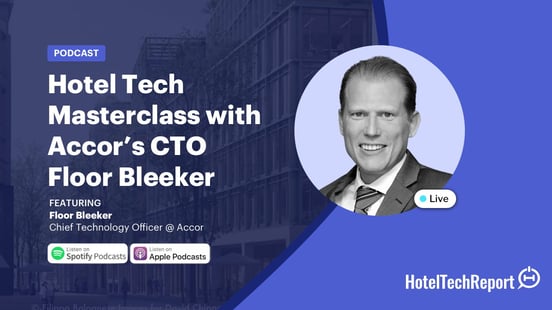
Have you ever wondered how some of the world's largest hotel groups stay ahead in the ever-evolving landscape of technology? Imagine the challenges and triumphs of managing over 5,600 properties and 300,000 employees globally. In our latest conversation, we dive deep into these topics with Floor Bleeker, the Chief Technology Officer of Accor, one of the most successful hotel companies worldwide.
As you read on, you'll uncover how Accor leverages cutting-edge technology to enhance every aspect of their operations, from cybersecurity to sustainability and guest experience. Floor Bleeker's insights will not only inform you but also inspire you to think about how technology can transform your own business practices.
Are you curious about how a global hotel giant manages its digital transformation? Do you want to learn about the strategies that can help you stay competitive in the hospitality industry? This article will address these questions and more, providing you with valuable knowledge and practical solutions.
Join us as we explore Accor's innovative approaches and discover how you can apply similar strategies to achieve your goals. Whether you're looking to improve your guest experience, streamline operations, or enhance security, this conversation with Floor Bleeker offers a wealth of insights that you won't want to miss. Dive in and see how you can take your hospitality business to the next level.
Prefer to listen on Spotify? Click here
Delivery Robots Revolutionizing Guest Services
One of the standout innovations discussed was the use of delivery robots in hotels, particularly in China. These robots are not just a novelty but are fully integrated into the hotel's operations, providing a seamless and secure way to deliver food to guests.
"They had a problem, like many of us have around the world, where delivery services of food became super popular. And that means that you constantly have delivery people in your lobby, in your hotel, trying to deliver food. And it's not good for the image of the hotel. It's not secure. It's not safe to have people that are not registered walking around in a hotel."
These robots are discreetly positioned where delivery personnel can drop off food, which the robot then delivers directly to the guest's room. The robot navigates the hotel, calls the elevator, and even notifies the guest upon arrival. This innovation not only enhances security but also elevates the guest experience by ensuring timely and hygienic food delivery.
 Join 100k+ executives from world's leading hotel brands and get the latest insights delivered to your inbox once a week
The Shift from Multi-PMS to a Single Cloud-Based PMS
Accor initially adopted a multi-PMS (Property Management System) strategy to quickly reflag and open hotels. However, the company has since shifted to a single, cloud-based PMS to streamline operations and improve data management.
"We tried this very hard for two years... but none of them did it perfectly. So we've changed our strategy to a single vendor again, based on a cloud platform."
The move to a single PMS allows for better control over data, privacy, and security. It also simplifies the rollout of new functionalities and ensures compliance with local data regulations. This strategic shift highlights the importance of adaptability and the need to leverage technological advancements to optimize operations.
AI and Smart Automation for Operational Efficiency
Accor has established an AI and Smart Automation Center of Excellence in Bangkok, focusing on robotic process automation (RPA) and other AI-driven initiatives. This center aims to identify and implement use cases that can significantly improve operational efficiency.
"The first focus for them is actually RPA, and they have identified a number of use cases in hotels where RPA can really help, and we're currently implementing that."
One of the key areas of focus is automating back-office processes that do not add direct value to customer interactions. By leveraging AI and RPA, Accor aims to streamline these processes, allowing employees to focus more on enhancing the guest experience. This initiative underscores the potential of AI to transform not just guest-facing services but also internal operations.
Cybersecurity: Adopting a Zero Trust Philosophy
Cybersecurity is a top priority for Accor, with a focus on adopting a zero trust security philosophy. This approach ensures that security measures are applied at the asset or application level, rather than relying solely on perimeter-based defenses.
"We try to establish a zero trust security philosophy where we want to make it as easy as possible for our employees or partners to connect and use the systems that we have but that we apply the security in the center."
This strategy is crucial in mitigating modern cybersecurity threats, such as impersonation and sophisticated phishing attacks. By securing applications and data at the core, Accor aims to protect its operations and customer information more effectively, highlighting the evolving nature of cybersecurity in the hospitality industry.
Sustainability Through Technology
Sustainability is a core focus for Accor, and technology plays a pivotal role in achieving the company's environmental goals. From smart thermostats to AI-driven food waste management systems, Accor is leveraging technology to reduce its carbon footprint.
"We have invested in a company called full soon... they handle, use AI to handle food waste to predict the food that need to prepare it much better and it really reduces the waste of what we have in hotel."
Accor's commitment to sustainability is evident in its efforts to measure and reduce energy consumption, manage food waste, and provide guests with information to make eco-friendly choices. These initiatives not only contribute to environmental conservation but also enhance the brand's reputation as a responsible and forward-thinking hospitality leader.
These highlights from the episode provide valuable insights into how Accor is navigating the complexities of modern hospitality through innovative technology and strategic foresight. Whether you're a hotelier or a tech enthusiast, there's plenty to learn from Accor's approach to digital transformation.
Accor's Tech Stack and Strategy Breakdown
Floor Bleeker, the CTO of Accor, approaches compiling his tech stack with a strategic mindset that differs from many hoteliers. Instead of building everything in-house, Bleeker emphasizes a "build versus buy" strategy. He advocates for purchasing commodity technologies from vendors who can deliver them more efficiently and cost-effectively than Accor could internally. This approach allows Accor to focus its development efforts on areas that provide a competitive advantage, such as their loyalty program or custom apps.
Bleeker also highlights the importance of flexibility and adaptability in technology procurement. He mentions that Accor initially tried a multi-PMS strategy to quickly reflag or open hotels, but shifted back to a single cloud-based PMS due to advancements in cloud technology and the challenges of managing multiple vendors. This shift allows for better control over data, privacy, security, and functionality.
Furthermore, Bleeker's approach includes leveraging innovations from acquisitions and partnerships, as well as integrating successful technologies discovered in regional or brand-specific implementations into the broader organization. This bottom-up approach complements the top-down strategy of identifying and implementing necessary systems through a structured procurement process.
Overall, Bleeker's strategy is characterized by a pragmatic balance between in-house development and external procurement, a focus on leveraging cloud technologies, and an openness to adopting innovations from various sources within the organization.
1. Delivery Robots
Description: Floor Bleeker highlights the use of delivery robots, particularly inspired by their partner in China, Wazoo. These robots are integrated into the hotel's operations to handle food deliveries efficiently and securely.
Usage:
-
Integration: The robots are discreetly positioned where delivery personnel can drop off food. The robot then navigates through the hotel, calls the elevator, and delivers the food directly to the guest's room.
-
Security and Cleanliness: This system ensures that delivery personnel do not roam around the hotel, maintaining security and cleanliness.
-
Guest Experience: The robots provide a seamless and innovative experience for guests, enhancing the hotel's image.
Recommendation: Floor recommends this tool for its ability to improve operational efficiency and guest satisfaction while maintaining high security and hygiene standards.
2. Cloud PMS (Property Management System)
Description: Accor has shifted from a multi-PMS strategy to a single cloud-based PMS to streamline operations and improve data management.
Usage:
-
Centralization: The cloud PMS allows for centralized control over data, privacy, security, and functionality.
-
Ease of Implementation: The cloud-based system is easier to implement and less expensive from a migration perspective.
-
Data Management: It provides better control over data, which is crucial for leveraging AI and other advanced technologies.
Recommendation: Floor suggests that a cloud PMS is essential for modern hotel operations due to its scalability, cost-effectiveness, and enhanced data management capabilities.
3. AI and Smart Automation
Description: Accor has established an AI and Smart Automation Center of Excellence in Bangkok to explore various use cases for AI in hotel operations.
Usage:
-
RPA (Robotic Process Automation): The center focuses on implementing RPA to automate back-office processes that do not add direct value to guest interactions.
-
Sustainability: AI is used to measure and reduce the hotel's carbon footprint, such as automating the processing of energy bills and analyzing food waste.
-
Guest and Employee Services: AI-driven services are being developed to enhance both guest experiences and employee efficiency.
Recommendation: Floor emphasizes the importance of AI and automation in improving operational efficiency, sustainability, and overall service quality.
4. Smart Thermostats
Description: Smart thermostats are used to manage energy consumption in hotel rooms efficiently.
Usage:
-
Energy Management: These devices adjust the room temperature based on occupancy and guest preferences, significantly reducing energy usage.
-
Cost-Effective: They are inexpensive to install and provide immediate energy savings.
Recommendation: Floor recommends smart thermostats for their simplicity, cost-effectiveness, and substantial impact on energy conservation.
5. HR System
Description: Accor has implemented a new HR system to manage the complete employee lifecycle.
Usage:
-
Employee Management: The system provides a single view of employees from onboarding to retirement.
-
Talent Development: It includes modules for learning, development, and performance management, helping to identify and nurture talent within the organization.
-
Global Mobility: The system supports the global movement of employees, allowing them to transfer between properties seamlessly.
Recommendation: Floor advises that a robust HR system is crucial for managing a large, diverse workforce and promoting career development within the hotel industry.
6. Sustainability Measurement Tools
Description: Accor uses various tools to measure and manage their sustainability efforts.
Usage:
-
Carbon Footprint: Tools are used to measure the carbon footprint from energy bills and other sources.
-
Food Waste: AI-driven tools help predict and reduce food waste, contributing to overall sustainability goals.
-
Guest Choices: The website features green badges to inform guests about the sustainability measures taken by different hotels.
Recommendation: Floor stresses the importance of sustainability tools in meeting environmental goals and enhancing the hotel's reputation among eco-conscious travelers.
As the hospitality industry continues to evolve, the conversation with Floor Bleeker, CTO of Accor, on Hotel Tech Insider offers a treasure trove of insights that hoteliers can leverage to stay ahead of the curve. Bleeker's discussion underscores the transformative power of technology in reshaping hotel operations, enhancing guest experiences, and driving sustainability.
One of the most compelling takeaways is Accor's strategic approach to technology procurement and implementation. Bleeker emphasizes the importance of distinguishing between building proprietary solutions and buying off-the-shelf products. "We build only if it gives us a competitive advantage," he notes, highlighting the company's focus on developing unique applications like loyalty programs and apps while relying on market solutions for more commoditized needs.
Accor's digital transformation journey is also marked by a significant shift towards cloud-based systems, which has streamlined operations and improved data management. This move has not only enhanced the efficiency of back-office processes but also paved the way for innovative guest-facing technologies. The integration of AI and smart automation, particularly in sustainability efforts, showcases how technology can drive both operational excellence and environmental responsibility. Bleeker shares an intriguing example of AI-driven food waste management, which predicts food preparation needs and significantly reduces waste.
Moreover, the conversation sheds light on the critical role of cybersecurity in today's digital landscape. Accor's adoption of a zero-trust security philosophy ensures robust protection of their systems while maintaining ease of access for employees and partners. This approach is crucial in an era where cyber threats are becoming increasingly sophisticated.
The discussion also touches on the importance of enhancing the digital journey for both guests and employees. Accor's efforts to extend personalized guest experiences from online interactions to in-stay engagements are particularly noteworthy. By leveraging the Accor app and integrating various digital tools, the company aims to provide a seamless and enriched experience for guests across different brands and regions.
For hoteliers looking to emulate Accor's success, the key lies in embracing a holistic approach to digital transformation. This involves not only adopting cutting-edge technologies but also fostering a culture of innovation and continuous improvement. As Bleeker aptly puts it, "Successful digital transformation is all about consistent small experiments over a long period of time."
To gain a deeper understanding of these strategies and explore more actionable insights, we highly recommend listening to the full podcast episode. The conversation with Floor Bleeker is a masterclass in leveraging technology to drive growth, efficiency, and sustainability in the hospitality industry.