Independent hotel operators have more technology choices than ever before, from AI rate optimization engines and smart room systems to chatbots and loyalty platforms. But having so many options can quickly feel overwhelming.
The real problem usually isn't having too little tech; it's ending up with too many fragmented systems. A patchwork of disconnected tools creates more operational friction than it solves.
So, what does a lean, high-performing tech stack actually look like? Let’s break down the core software foundation every independent operator should consider to run efficiently, compete with bigger brands, and deliver a great guest experience without overspending or overcomplicating daily operations.
The Essential Hotel Tech Stack
Think of this as your operational foundation. Miss a piece here, and you're likely creating manual work, lost revenue, or guest friction somewhere along the line.
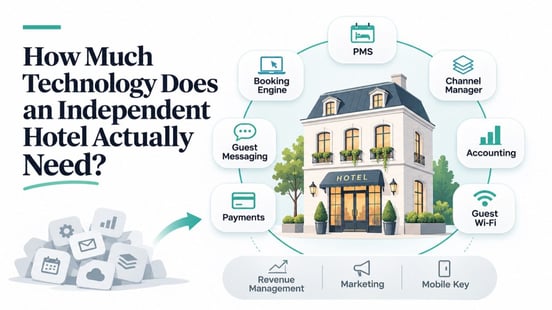
1. A Cloud-Based Property Management System (PMS)
Your PMS sits at the center of your property’s operations. Reservations, check-ins and check-outs (including self check-in/out), billing, guest records, and housekeeping schedules all live here. Built-in reporting also gives you visibility into occupancy trends, ADR, RevPAR, housekeeping turnaround, and booking sources so you can make better business decisions. A true cloud-based platform means your team can securely manage all of this from anywhere, on any device, with real-time data instead of yesterday's outdated spreadsheet.
2. A Direct Booking Engine
Your booking engine lets guests book straight from your website, helping you increase direct reservations. For independent properties operating on tight margins, that adds up fast: more of every reservation stays in your pocket instead of going to an OTA. Beyond commission savings, an integrated booking engine gives you total control over the guest experience from day one. It lets you capture vital first-party guest data, showcase room upgrades, and highlight add-ons or special packages at the moment of booking.
3. A Channel Manager
A channel manager keeps your distribution in sync, automatically updating availability and rates in real time across every OTA you work with. Instead of manually juggling multiple extranets, which inevitably leads to delayed updates, human error, and costly double bookings, a channel manager ensures your inventory is accurate and up to date everywhere at once.
4. Integrated Payment Processing
When payments run directly through your PMS, transactions are secure, deposit collection is automated, and check-ins and check-outs take seconds. Both online and on-property payments automatically post to folio records in real time. Managing payments within a single integrated system creates a smooth guest experience and eliminates the reconciliation headaches caused by mismatched receipts and manual entry.
5. Automated Guest Communication Tools
Guests now expect a baseline of digital communication to guide and enhance their stay. Automated booking confirmations, pre-arrival emails, check-in instructions, and post-stay follow-ups ensure every guest receives timely, personalized information without adding to your workload. Automating routine messages frees up your front desk team to focus on meaningful, high-touch interactions with the guests standing right in front of them.
6. A Hotel Accounting System
This one's easy to overlook, but accurate financial data is just as essential to operational efficiency as managing reservations. Without it, you (or your bookkeeper) end up manually reconciling numbers between your PMS and your ledger every month, which takes time and invites errors. A PMS with built-in hotel accounting ensures daily revenue, taxes, and transactions flow straight into your books automatically, with no manual double entry or third-party integration required.
7. Reliable, Integrated Guest Wi-Fi
Fast, free Wi-Fi isn't a differentiator anymore—it's an expectation, right up there with hot water and clean linens. What sets your property apart is Wi-Fi infrastructure that communicates directly with your PMS. An integrated network can automatically authenticate returning guests, display personalized landing pages using reservation data, and securely sync with in-room smart TVs or casting devices so guests can stream their own content safely without cross-room interference.
For independent operators, the good news is that building this foundation doesn't require stitching together numerous separate vendors. A modern cloud PMS brings reservations, housekeeping, reporting, a direct booking engine, channel management, payments, guest communication, and built-in accounting together under one roof. Specialized components like Wi-Fi gateways and smart TV solutions can then plug in seamlessly through dedicated integrations.
When Should You Add More Hotel Technology?
With a strong operational core in place, secondary tools can add real value—as long as they connect directly to your PMS rather than operate around it.
A Revenue Management System (RMS): Automated rate optimization based on demand, pace, and competitor pricing can meaningfully lift revenue, especially for seasonal properties. But an RMS only earns its keep if rate recommendations push to your PMS automatically. Otherwise, you've just added a time-consuming, manual step.
A Guest Marketing Platform: Automated email marketing, review management, and upselling tools can increase repeat stays, direct bookings, and guest lifetime value. These platforms deliver the best ROI when they pull live guest and reservation data straight from your PMS, allowing you to segment guests automatically rather than relying on stale, manually exported lists.
A Mobile Key Solution: Once digital registration is in place, the natural next step is adding mobile key technology to offer a fully contactless arrival experience. A modern cloud PMS already includes native digital check-in tools that let guests complete arrival paperwork, ID verification, and payment before they reach the front desk. It also connects to mobile key partners, making true contactless check-in possible without adding friction for your team.
What really matters is that every additional tool should serve your central platform, not create a separate data silo someone has to maintain. A standalone system that doesn't communicate with your PMS isn't saving your team time, it's just costing you money.
Keep Your Hotel Tech Stack Simple and Connected
A complete, cloud-based PMS that includes a direct booking engine, channel management, payment processing, housekeeping tools, automated guest communication, and built-in accounting powers everything your property needs to run smoothly and profitably.
Everything beyond that base layer should earn its place by solving a specific problem and plugging cleanly into the system you already rely on.
In hotel tech, more isn't necessarily better. Connected is better.