


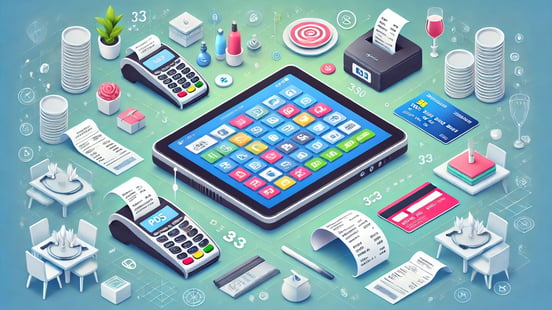
The Point of Sale (POS) system is important in managing payments, tracking sales, and keeping restaurant operations efficient in the restaurant industry. These systems automate tedious tasks such as order tracking and inventory management, allowing staff to focus on providing excellent service.
Are you wondering which POS systems are the best in the industry and which is right for you? Let's explore six top POS systems that help hotels run better restaurant operations.
Whether you own a small cafe or several fine-dining establishments, understanding the differences between these options can help you select the right system for your business.
What is a Restaurant POS System?
A restaurant POS system is an integrated solution that manages various aspects of a restaurant business. It speeds up service and reduces human error by facilitating order processing, payment handling, and inventory management.
Modern POS systems help restaurants thrive in a competitive market by offering top-of-the-line features like real-time sales tracking and integrated customer databases. Some of the key functionalities of a good restaurant POS system are:
-
Order Management: This feature allows servers to input orders directly into the system, which are immediately sent to the kitchen team.
-
Payment Processing: Handles various payment methods, including cash, credit cards, and mobile payments, making sure that billing is accurate.
-
Inventory Tracking: Monitors stock levels in real-time, helping restaurants manage perishable items effectively and reduce waste.
-
Sales Reporting: Generates detailed reports on sales trends and performance metrics, allowing restaurant owners to make data-driven decisions.
 Join 100k+ executives from world's leading hotel brands and get the latest insights delivered to your inbox once a week
6 Best Restaurant POS Systems in 2024
Over the years, several restaurant POS systems have stood out for their innovative features, reliability, and adoption rate. Here’s a closer look at six of the best options available today:
1. Toast POS
Toast POS is well-known in the industry for its user-friendly interface and comprehensive features that are designed for restaurants. It’s more expensive than other POS systems, but it is well worth it for busy medium to large-sized restaurants
Toast offers tools for online ordering, staff management, stock tracking, and integrated marketing solutions. It also provides detailed analytics that helps owners make data-driven decisions that maximize profits.
2. Square for Restaurants
Square for Restaurants simplifies payment processing with its intuitive design. It supports various payment methods and offers table management and employee scheduling features. This POS system also integrates with Square’s larger ecosystem of apps, allowing owners seamless financial tracking and reporting.
3. TouchBistro
TouchBistro stands out with its cloud-based system installed on iOS devices. It allows staff to punch guests’ orders at the tableside, increasing order accuracy and speed. It also has built-in offline capabilities, allowing restaurants to keep operating with minimal disruption in case of an internet outage. This system is designed specifically for restaurants, offering features like menu management, online ordering, and integrated reservations.
4. Lightspeed Restaurant
Lightspeed Restaurant is a POS system that seamlessly integrates with a Property Management System (PMS), making it ideal for restaurants in a hotel or similar establishment. Its cloud-based nature allows owners to access it at any time, from any device, to monitor sales, stock levels, and performance insights.
Lightspeed Restaurant also provides free 1:1 onboarding, taking the burden of training away from restaurant owners.
5. Clover POS
While Clover POS is not restaurant-specific, its customizable features provide flexibility and effectiveness for restaurants of any size. Clover POS can be configured to handle various tasks, from payment processing and sales monitoring to inventory tracking and performance reports. They also offer a variety of devices specific to Clover POS that you can order depending on your needs.
6. SkyTab
SkyTab is an all-in-one restaurant POS solution that focuses on online functionality. This system allows mobile ordering and payment from an app or QR code, reservation and waitlist input, and many third-party app integrations. SkyTab also provides marketing and loyalty tools such as memberships and e-gift cards.
How to Select the Right POS for Your Restaurant
Choosing the right POS system requires careful consideration of several factors:
-
Cost: Evaluate both upfront pricing and ongoing fees associated with the system and whether these costs can fit your budget.
-
Features: Identify and choose essential features that align with your restaurant’s operational needs.
-
Compatibility: Ensure the chosen system integrates well with existing hardware or software.
-
Customer Support: Look for providers that offer reliable support and training resources throughout the system's lifetime.
-
User Reviews: Research feedback from other restaurant owners to gauge satisfaction levels with different systems.
Cloud-based vs. Traditional POS Systems for Restaurants
When considering a POS system for your restaurant, you’ll encounter two primary types: cloud-based and traditional systems. Each has its distinct advantages and disadvantages:
|
Feature |
Cloud-based POS Systems |
Traditional POS Systems |
|
Connectivity |
|
|
|
Data Access |
|
|
|
Cost Structure |
|
|
|
Updates & Maintenance |
|
|
|
Integration Capabilities |
|
|
In general, cloud-based systems offer greater flexibility and scalability, which makes them suitable for modern restaurants that aim to optimize operations across multiple locations.
However, a traditional POS system may work better for small, single-location restaurants with limited internet access.
How To Set Up POS Software in Your Restaurant
Setting up a POS system in your restaurant can be complicated, but breaking the installation into simple steps will make it much easier. Here’s a step-by-step guide to effectively install and configure your POS software:
-
Define Your Restaurant Layout: Determine how many POS terminals you need and where they will be located. Consider areas for order taking, payment processing, and kitchen communication.
-
Install the Software: Download the POS software on your devices or access it via a web browser if it’s cloud-based. Follow the installation prompts provided by the software. If compatible, connect the POS system with your restaurant billing software.
-
Create Your Account: Launch the software and log in using your credentials. Enter business information such as restaurant name, location, and tax settings.
-
Set Up Your Menu: Input all menu items into the system. Include details like item names, prices, descriptions, and images. Organize items into categories for easier navigation.
-
Configure Payment Options: Link your POS system to your payment processor to set up payment processing. Ensure it supports various payment types, such as credit/debit cards and mobile payments.
-
Add User Accounts: Create individual accounts for staff members using the POS system. Assign admin, manager, or cashier roles to control access levels.
-
Connect Hardware: Install hardware options such as chip card readers, cash drawers, receipt printers, terminals, and barcode scanners. Ensure all devices are correctly connected to the POS system.
-
Customize Settings: Adjust settings according to your restaurant’s operational needs. This may include table layouts, service types (dine-in, takeout), and loyalty programs.
-
Test the System: Run a few test transactions to ensure everything functions correctly. Check that orders are processed accurately and receipts print as expected.
Following these steps will help you correctly set up your restaurant’s POS software, allowing it to operate smoothly from day one.
Final Verdict: What’s the Best Restaurant POS System?
Of the various POS systems available in 2024, Toast POS stands out as the best overall option. Its features cater to restaurant-specific needs, making it ideal for both small establishments and larger chains.
Toast offers an intuitive interface that simplifies order management and payment processing. Its standout features include:
-
Integrated Online Ordering: Toast allows restaurants to manage online orders seamlessly alongside in-house transactions.
-
Comprehensive Reporting Tools: The system provides detailed analytics on sales trends, inventory levels, and employee performance.
-
Customer Relationship Management (CRM): Toast includes tools for managing customer data and loyalty programs, enhancing customer engagement.
Additionally, its ability to integrate with various third-party applications, such as restaurant bookkeeping software, makes it compatible with different business models. The strong customer support provided by Toast further justifies its position as a top choice for restaurant owners looking to optimize their operations.
Frequently Asked Questions
Can Restaurant POS Software Work Offline?
Yes, many modern restaurant POS systems can operate through built-in offline modes. This allows staff to continue taking orders and processing payments with minimal disruption, even when internet connectivity is unavailable. However, there are limitations. For example, while basic functions like order entry can continue offline, features that need real-time data synchronization will be unavailable until an internet connection is restored.
How Long Does it Take to Set up a POS System?
The typical time to install and set up a POS system can vary based on its complexity and the training required to operate it. Complete setup and staff training can take as little as one day to around a week.
Does Restaurant POS Software Offer Mobile Compatibility?
Yes, most modern restaurant POS systems support mobile devices such as tablets and smartphones. This mobile compatibility can improve the efficiency of restaurant operations and increase customer satisfaction through a wide array of capabilities. These include the ability for staff to input orders and process payments while away from a terminal, the capability for owners to remotely monitor sales data and manage operations through a mobile app or web interface, and the option for implementing QR code menus and online ordering apps.