

Popular en Operations
La mejor opción de Sistemas de Gestión de Hoteles (PMS) de 2026
El sistema operativo central de su hotel para gestionar sin esfuerzo las reservas, la experiencia de los huéspedes y las operaciones.
La mejor opción de Herramientas de colaboración del personal de 2026
Mejora la colaboración en equipo con mensajería en tiempo real, uso compartido de tareas y actualizaciones centralizadas en todos los departamentos.
La mejor opción de Software de contabilidad para hoteles de 2026
Herramientas para gestionar la contabilidad, el presupuesto y la planificación financiera de su hotel.
Popular en Revenue Management
La mejor opción de Sistemas de gestión de ingresos de 2026
Maximice sus ingresos con precios dinámicos, previsión de la demanda y análisis de datos automatizados.
La mejor opción de Gestores de canal de 2026
Software de distribución hotelera que sincroniza tarifas, disponibilidad e inventario a través de canales de terceros.
La mejor opción de Inteligencia de negocios de 2026
Dígale adiós a las hojas de cálculo y aproveche las herramientas de BI modernas para visualizar sus datos y descubrir información oculta.
Popular en Marketing
La mejor opción de CRM y marketing por correo electrónico para hoteles de 2026
Convierta los datos de los huéspedes en acciones con ofertas personalizadas, comunicación dirigida y flujos de trabajo automatizados.
La mejor opción de Motor de reservas de 2026
El carrito de compras de comercio electrónico para el sitio web de su hotel.
La mejor opción de Software de gestión de metabúsquedas hoteleras de 2026
Configure, administre y optimice campañas publicitarias en todos los canales para generar reservas directas.
Popular en Guest Experience
La mejor opción de Aplicaciones para huéspedes de hotel de 2026
Mejore la experiencia de los huéspedes con una aplicación que ofrece información sobre los servicios, mensajería, pedidos móviles y oportunidades de venta adicional.
La mejor opción de Registro sin contacto de 2026
Ofrezca a sus huéspedes una experiencia de registro en línea sencilla, autorizaciones digitales y ventas adicionales sin complicaciones.
La mejor opción de Software de mensajería para invitados de 2026
Conéctese con los huéspedes al instante mediante mensajería en tiempo real, respuestas automatizadas y una comunicación fluida.
Lo sentimos, esta funcionalidad solo está disponible para hoteleros verificados
El panel de proyectos es una herramienta gratuita disponible únicamente para hoteleros verificados, que facilita la adopción de nuevas tecnologías al agilizar su investigación y simplificar sus flujos de comunicación.

Únase a 100.000 ejecutivos de las principales marcas como Accor, Marriott, Viceroy, Shangri-La, Rosewood, Expedia y AirBnB y reciba las últimas innovaciones y conocimientos en su bandeja de entrada una vez por semana.
El mejor software de gestión de propiedades en alquiler a corto plazo
In this article, we explore the best property management software options for property managers. Also, we will show you the key features of a PMS that take your property management to the next level.
 Jordan Hollander

Los 5 mejores programas de gestión de propiedades de Airbnb: soluciones todo en uno
In this article, we analyze the best Airbnb property management software for your vacation rentals. We present our picks for Airbnb PMSs so you can choose the best one for your property.
Jordan Hollander

La guía definitiva para la gestión de ingresos por alquileres vacacionales
Are you wondering where to start getting more reservations at your vacation rental? Or maybe you’re looking for tips as you refine your vacation rental revenue management strategy. Capturing revenue and maximizing profitability isn’t as easy as setting your rates and moving on. In the vacation rental space, revenue management is key to booking high rates during peak demand times and generating demand in the slow season. Effective revenue management is accessible to any property manager or operator, even if you have a lean budget and a small team. In this article, we’ll cover the basics of revenue management in the vacation rental space and share actionable steps you can take to stay competitive, make more money, and delight your guests.
 Adrienne Fors

Productos de la estrategia de precios de Booking.com y cómo pueden ayudar a su empresa
Over the last 2 years we have witnessed a positive comeback in tourism, gradually reaching pre-pandemic levels. However, it's important to acknowledge that the behavior and expectations of travelers have changed during this period. Optimizing your pricing strategy has become paramount to ensure your rooms and offers remain visible to potential guests.When it comes to booking.com, leveraging the right channel manager can significantly enhance your pricing strategy and boost your bookings.
 Planet
Las 6 mejores herramientas de fijación de precios de Airbnb en 2026
In this article, we’ll introduce you to five Airbnb pricing solutions and give you the rundown on each so you can make a well informed decision for your business.
 Hotel Tech Report

Estrategia de precios de Airbnb: esto es lo que necesita saber
Whether you’re considering launching an Airbnb listing or you’re already a Superhost, one crucial part of your Airbnb strategy is pricing. But pricing isn’t so straightforward; in order for your Airbnb listing to succeed financially, you need to find the prices that travelers are willing to pay for your property. A plethora of factors are at play here, including seasonality, your review scores, your competitors’ prices, your property’s amenities, your photos – all of which can influence the prices travelers are willing to pay.Since you probably don’t have a crystal ball at your fingertips, you’ll have to settle for the next best thing: a solid Airbnb pricing strategy. In this article, we’ll explain your options for setting prices on your Airbnb listing and walk through several strategies popular among Airbnb hosts. By the end of this article, you’ll be able to make educated pricing decisions that will help you secure the reservations you want – and perhaps even achieve Superhost status.
Hotel Tech Report
La lista de verificación de limpieza definitiva de Airbnb (paso a paso)
What’s one of the most effective ways to score five-star reviews and stand out among the competition? It’s easier said than done, but maintaining a sparkling-clean Airbnb will make your property a winner in guests’ eyes. Cleanliness is essential, especially in post-pandemic times: guests who check into an Airbnb that’s dirty will post a one-star review and never come back, and, if it’s really bad, guests can report the situation to Airbnb, which could get your listing suspended or fined.But it can be difficult to uphold cleaning standards due to turnover in cleaning staff or training challenges. We’ve found that one of the best solutions to ensure accountability is a simple, yet detailed, cleaning checklist. This article contains a comprehensive list of cleaning steps to follow no matter what kind of Airbnb property you operate. If you mark off each item between every guest stay, you’ll be well on your way to those five-star reviews and the elusive Superhost badge.
Hotel Tech Report

Guesty: todo lo que necesita saber sobre esta popular aplicación de alquiler de vacaciones
Searching for a property management system for your vacation rental business? Or perhaps you’re seeking to upgrade to a system with more functionality? If you’ve done any shopping around, you’ve probably come across Guesty, one of the most popular systems in the vacation rental space. But it can be difficult to draw conclusions about any potential technology vendor simply by browsing their salesy website. That’s why, in this article, we’ll share an unbiased, in-depth review of Guesty so you can decide whether it’s a good contender for your business. We’ll walk through Guesty’s main features, some pros and cons, and the onboarding process so you can get a good picture of what it would be like to use the system. Let’s dive in!
Hotel Tech Report
Aumente los ingresos de F&B del hotel con la gestión del flujo de trabajo
Today’s hotel guests are not only looking for a comfortable place to stay, but memorable dining experiences as well. Over the past couple of years, however, new trends have significantly reshaped the hotel industry’s F&B operations and workforce. Hoteliers must find new ways to satisfy guest demand and increase profit margins. The right technology helps you better manage F&B workflow and boost your bottom line.Today’s hotel guests are not only looking for a comfortable place to stay, but memorable dining experiences as well. With consumer’s pent-up demand for restaurant service remaining high, food-and-beverage (F&B) service can be a major contributor to your hotel’s positioning in the market, helping you drive unique guest experiences and differentiating your business from competitors. Yet the past couple of years have reshaped the hotel industry’s F&B operations in ways that have significantly impacted profit margins. According to the 2022 State of the Restaurant Industry Report, food, labor and occupancy costs are expected to remain elevated. And 40 percent of restaurant operators are not yet open to full capacity for on-premises dining, with 7 in 10 reporting that it’s due to staffing shortages. On top of this, there’s increased demand for curbside pick-up, take-out and delivery services.A key way of addressing these challenges lies in choosing technology solutions that optimize management of F&B workflow. The right solutions can mean the difference between becoming more lucrative or experiencing a quick demise. With an advanced hotel application, you can improve key aspects of your F&B workflow as well as your bottom line. Create Efficiencies with Mobile ReservationsMaking restaurant reservations via phone calls is quickly becoming a thing of the past. A hotel app that offers guests the ability to book a table online offers a number of benefits for the guest and your F&B workflow. First, it improves the guest experience by giving them the freedom to plan in advance and make their bookings while on-the-go. Research from the 2021 Customer Engagement Technology Study revealed that 53 percent of your guests expect the ability to make their dining reservations online.On the operations side, a mobile-first reservation system helps you better manage waitlists and provide speedier seating, eliminating the cost and hassle of pagers by letting you text guests when their table is ready. An automated system eliminates reservation mix-ups and accidental double bookings that can occur due to the stress of front-of-house (FOH) staff dealing with constantly ringing phones. And because an app offers the capability to include additional comments, you can plan ahead to personalize service for those guests needing a high chair or celebrating a special event. Streamline In-House Dining with Online OrderingProviding the ability for guests to place F&B orders via your hotel app using their personal mobile devices is another efficient and easy-to-use digital option that benefits workflow. For in-house dining, because you’ll no longer require servers to take each order, you can operate effectively with less staff. In fact, 80 percent of restaurant operators say that labor savings is a top benefit they’ve experienced when implementing online ordering, along with easier order processing and higher average checks.The entire system is expedited because guests can place orders as soon as their ready. This translates to less wait time, faster table turnover, and thus greater revenue. Online ordering increases accuracy since guests are communicating any meal customization and special requests themselves. And it satisfies the expectations of today’s guests, particularly younger travelers, with 43 percent of Millennials and 55 percent of Gen Z-ers preferring to order food and beverages via an app on their smartphone. Improve Food Delivery Services with Online OrderingMobile ordering also creates efficiencies with room service and food delivery. Since no human is required to take orders, guests are no longer stuck on hold while team members juggle calls during peak hours. And GPS location within an app makes it easy to deliver food or cocktails directly to guests on your property, whether they’re in their room or lounging poolside. The self-service aspect of online ordering simplifies the process and allows for revenue-lifting increases in order volume. On average, restaurant operators see a 43 percent increase in order frequency for takeout and a 29 percent increase for delivery orders.Another benefit is that apps collect F&B analytics from guest orders. Hotel restaurant operators can use this data to track fulfillment and delivery times, monitor inventory and analyze which dishes are most popular. The data also allows you to develop promotions designed to build off-peak demand, target specific guest segments and create discount strategies. Over half of restaurant operators state that these tailored promotions are much more effective than standard promotions. Digital Options Improve Menu Management & MarketingSwitching from physical to digital menus gives you the flexibility to include multiple menus within your hotel app, such as separate menus for your in-house restaurant, room service and group events. You can also develop custom menus, reducing time-consuming phone calls with questions about ingredients or gluten-free options, and satisfying the majority of your guests that expect the ability to preview menus and nutritional information online.Menus can be changed and updated instantly without the need for staff to physically swap them out in the restaurant or waste time replacing them inside in-room compendiums. Unavailable options can be removed in real time, helping you avoid guest disappointment. You can also boost revenue and streamline F&B marketing by promoting specific menu options at optimal times, such as offering a special on warm, comfort foods during cold days, suggesting specific food and drink pairings, and highlighting menu options that give you the highest profit margin. Enhance Internal Communication with In-App Text & ChatIn hotels, texting or chat for internal communication offers immediacy as well as the ability to track conversations. It speeds up workflow by allowing tasks to be communicated and handled more quickly. And it also expedites the tedious and time-consuming job of employee scheduling. Contacting a large number of staff via email or phone call isn’t practical, especially when it comes to time-sensitive notifications such as shift changes and event updates. Automated text messaging within a hotel app creates an efficient way for hotel restaurant operators to instantly contact staff. It also makes it quick and easy for employees to handle tasks such as searching for substitutes, trading shifts with co-workers or requesting vacation time. Mobile Payment Simplifies BOH OperationsThe standard payment process is time consuming, requiring manual card entry, verification, reconciliation, chargebacks and disputes. Mobile payment through an integrated app allows restaurants to simplify back-of-house (BOH) operations by directly linking dining POS systems to your hotel’s PMS. This lets you easily assign a specific guest room to an F&B order so that the invoice is applied to the guest’s account with just one click. When guests pay directly through your app, it also diminishes mistakes and drastically reduces reconciliation times. Furthermore, you enhance satisfaction and loyalty because you’re meeting guests’ expectations, with 84 percent of all demographic groups preferring restaurants accept digital, contactless payment options. In Summary An integrated hotel application provides an ideal platform for improving overall hotel F&B performance by incorporating self-service reservation booking, mobile menu options, online ordering and payment solutions along with internal chat and texting features. When you implement the right solution, you create a winning synergism that delivers significant efficiencies to your F&B workflow while improving guest satisfaction and profitability at the same time.
 Runtriz
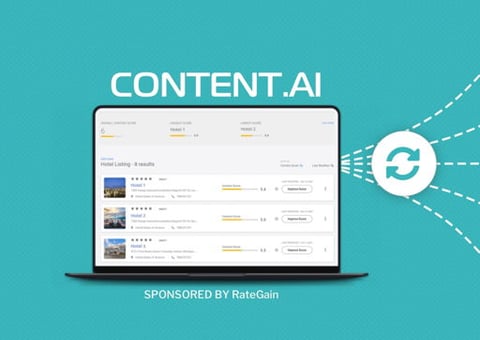
Cómo administrar y distribuir fácilmente el contenido de su hotel entre los socios de demanda utilizando Content.AI
Prior to the pandemic, travel bookings were abundant which led to many hoteliers becoming complacent in their distribution strategies. As bookings dried up, hotels needed to get more creative about how and where they generated demand from. Many of the savviest hoteliers began optimizing their content across 3rd party distribution channels to drive more visibility and increase conversion by standing out from the compset - but with so many channels out there the task has become unmanageable (especially with labor shortages).Managing digital content, like amenity information, descriptions, and photos, is an important component of any online hotel content distribution strategy. And far too often, it gets deprioritized in favor of what seem like more urgent tasks.Great content is the key to travel and accommodations bookings. All else equal, hotels who display the best and most accurate content to 3rd party channels will receive the most bookings. Airbnb co-founder Joe Gebbia credits the firm’s early success to a strategic shift in content distribution. After the startup implemented a strategy to display better content, Airbnb doubled it’s revenue within a week. While your hotel may not double revenue in a week like Airbnb, there are massive gains to be had by optimizing your content distribution tools and strategy.What if we told you that there’s a way to optimize your content using automated tools without needing to hire a team or take hours out of your already slammed schedule?In this article, we’ll explain why it’s so important to maintain correct, complete, and consistent content, and explore how Content.AI by RateGain addresses the common pain points of content distribution.
Hotel Tech Report
50 estadísticas de la industria del alquiler vacacional que no creerás
In this article we curated a list of the 50 most eye opening statistics that tell the state of the vacation rental industry and grouped them for easy navigation.
Hotel Tech Report

Informe de HITEC Dallas: más de 50 innovaciones en tecnología hotelera que necesita saber
Not able to make it to Dallas to check out the latest innovations at HITEC? Not to worry, Hotel Tech Report has you covered. Our team reviewed 96 product/feature launches to create a curated list of the most exciting innovations in the market and synthesize them into six key market trends
Hotel Tech Report

La guía definitiva de tecnología para la hostelería (2026)
This guide explores key hospitality technology and software solutions that help modernize hotel operations, streamline processes, and enhance guest experiences.
Hotel Tech Report
Los 9 hoteles de alta tecnología más futuristas del mundo
The pandemic accelerated technological transformation across the hospitality industry. Contactless has become a must-have, fitness centers have gone virtual, guest communications have moved to mobile, and self-service has become standard.While some hotels found themselves rapidly deploying new technologies, other hotels have been playing the tech-long game for years. Here are some of the world’s most notable high-tech hotels.We've covered the tech strategies of great hotel groups like Viceroy and Noble House who implement everything from contactless check-in to digital concierge but this article focuses on some more wacky tech implementations with a bit of focus on form over function. This list features some pretty cool hi-tech gadgets and hotel room amenities that go above and beyond the typical flat-screen tv. Some of the cutting-edge technology on this list may off-put more traditional travelers but will undoubtedly hit the spot for tech-savvy millennials.Rather than layer technology onto the operation, these properties embed technology into the fabric of the operation, making it a focal point and key feature. Some use it as an Instagrammable moment at a specific location while others structure their entire brand around the tech-enabled guest experience. Either way, technology is front-and-center at these hotels.
Hotel Tech Report
Hotel vs. Airbnb: Is that Even the Right Question?
Hot on the heels of an IPO that saw Airbnb’s stock pop over 100% over its initial asking price, the hype around the home-sharing platform has reached a fever pitch. Airbnb’s splashy debut in the public market has brought renewed attention to the classic “Airbnb vs Hotels'' debate.Surveys suggest that Airbnb hosts do indeed pull guests away from hotel rooms. Goldman Sachs found that those who use home-sharing end up preferring it over hotels: 79% prefer traditional hotels but, once they experience a vacation rental, that number dropped to 40%. In other words, home-sharing siphons off 39% of hotels’ target market. Another survey found that 60% who use both hotels and Airbnb prefer Airbnb versus hotelsOf course, these surveys are only snapshots that don’t necessarily reflect how people choose where to stay. If the price was identical between an Airbnb and a St. Regis, Viceroy, or Montage-type property hotel rates, where would you stay for your next trip? Likely the luxury property, right? But what if it was for a family reunion or bachelor party? The trip type certainly would influence your decision on where to stay. So is Airbnb vs Hotels even the right question in a world where hotel chains like Marriott are launching their own vacation rental services and Airbnb now owns HotelTonight? The Answer: It DependsThe reality is that no one is exclusively a single category traveler. The same person might prefer an Airbnb on one trip and a hotel on the next one. To choose which one is right for a certain trip, you’ll need to ask yourself a few questions: What do I care about? What combination of space, amenities, cost, service, and location are most important? What kind of experience do I want? Am I looking to be pampered or self-catered? Are you looking for a private room or multiple occupancy shared space with other renters and guests? Is this a business or vacation? Who else is joining me? What kind of experience do they want? Are there kids? What’s my budget? Is flexibility important to me or am I certain I won’t need to cancel or adjust my reservation? Do you care about hotel amenities like concierge or room service? How important is safety? Do I want 24/7 staffing to feel more secure? How do I feel about my contribution to any issues around housing being taken from locals by short-term rentals? What are the short-term rental laws? Where are you going? Airbnbs are limited in certain markets like New York City, so that makes it a no-brainer. Of course, the pandemic has added new dimensions to this discussion, as the NY Times rightly points out: “Social distancing, hygiene and refund policies may be the new game-changers.” What are the cleanliness procedures? Is there an additional cleaning fee? Is there flexible cancellation in the event of a surge in cases or a sickness? What are the capacity restrictions? Can I maintain an adequate distance from other guests? There's a lot that goes into choosing an Airbnb over a hotel. It’s not so straightforward! Let’s compare side by side. Comparing Airbnb vs. Hotels Side-by-Side Airbnb Hotel Security Each property is different Most often staffed 24/7, with locks and deadbolts on each door Consistency Varies. While Airbnb provides training to hosts, there are no guarantees of what you’ll get. And each property has its own House Rules. Brand standards provide confidence in the consistency of experience Business-friendly Airbnb for Work provides some basic guarantees for items like workspaces; check-in may be difficult overnight Brand standards provide the consistency ideal for business travelers; 24/7 staffing makes last-minute stays and overnight check-ins easier Quality Varies; user reviews offer insights into the quality of specific property Varies; brand name and hotel category offer certain quality guarantee Service Self-catered Depends on category; nearly always some sort of service on-site Value for Money Depends on the number of guests, location, geography, dates, property type; lower cost of things like WiFi and meals Depends on the number of guests, location, geography, dates, property type; often pay extra for add-ons and meals. Convenience self-service check-in at many properties has made it much more convenient, although there is rarely someone on-site to help With 24/7 staffing, its often easier to check-in and there can't be helped for any issues experienced during stay Cleanliness Hosts do all the cleaning with no guarantees by Airbnb Brand standards ensure a similar level of cleanliness Cancellation Policies Varies by host but rarely flexible or fully refundable Flexible, often with full refunds prior to 48 hours before arrival Variety All types of accommodations, including quirky options like teepees and Airstreams Fairly standard spectrum of options, as defined by the hotel category Trust Airbnb does not verify individual hosts, but user reviews provide a level of trust in the community Hotel brand is the placeholder for trust; you have an idea of what to expect based on the brand Safety, Privacy and Legality In a Morgan Stanley survey, more than 50% of people do not use Airbnb due to safety, privacy, or legality. From shifting local laws to hidden cameras and uneven safety features, Airbnbs are not all created equally. Hotels have operated under long-standing rules and regulations around safety, privacy and legal operations. Technology Differences Between Airbnb and HotelsIn the early days of Airbnb rentals, it cemented its competitive advantage by a focus on the user experience that set it apart from historically clunky hotel booking experiences.There was an easy-to-use interface for searching and booking that made excellent use of visuals and maps. Reservations were managed digitally with few phone calls and user reviews were the currency of trust. A mobile app became the centerpiece of interactions between guests and hosts, while also making it easy to manage upcoming reservations, get directions and find house rules.Now, hotels have become much savvier with guest messaging, mobile apps, in-room tablets and keyless entry to provide an enhanced experience that differentiates it from Airbnb. No more horrible entertainment options thanks to Apple TV for Hospitality, no more front desk with keyless entry and contactless check-in, no more waiting on hold thanks to guest messaging software, no more antiquated booking systems with better booking engines. In many respects, hotel tech has advanced to push it past Airbnb, allowing hotels to offer a better experience than ever before.In general, Airbnb stays and hotel stays are on a convergence path solidified by Airbnb's acquisition of HotelTonight.When is Airbnb Better?Airbnb is ideally suited under certain circumstances: Trip types: group trips (friends, family reunions, bachelor/bachelorette trips) are perfect for Airbnb’s because they have more space and the cost can be spread among many people; trips to vacation destinations where there may be fewer hotels; extended stays, when feeling at home matters greatly. Traveler types: Independent travelers looking to save money on accommodations and self-cater meals; “live like a local” travelers that want to experience what it’s like to live in the destination; those who want more space and to avoid the crowds, such as pet owners and families with kids. When are Hotels Better?Other trips are better suited for hotels. The most obvious use case a business trips, as68% of business travelers have had a negative experience using Airbnb for work and thus prefer hotels. Airbnb has made strides in this department come out there's still a level of inconsistency that turns off business travelers.Hotels are also often better for: Trip types: Urban getaways focused less on spending time at the property; family trips where the kids want access to amenities; wellness retreats that prioritize on-site spa treatments; pampered getaways where no one wants to lift a finger. Traveler types: Loyalty members that want to earn points; those who value consistency of experience; design-minded travelers that enjoy experiencing hotel properties Business Differences Between Airbnb and HotelsOn the business side of things, there are some obvious differences between Airbnb and hotels. First and foremost, is the regulatory environment. Short-term rentals have a constantly shifting legal landscape, with many cities cracking down on rampant rentals. Airbnb’s long-standing practice of ruthlessly fighting regulations may be backfiring, as coalitions of residents and hotels have rigorously pushed back.A big portion of this fight was related to short term rental taxes and paying their fair share. Airbnbs in many locations now pay a similar accommodation tax to hotels. Similar to hotels paying taxes on income, hosts are also on the hook for all necessary taxes related to their operations. The operating models also differ greatly. Compared with hotels, which operate with continuous staffing, Airbnb has remote customer service that isn't exactly known as world-class. This keeps overhead lower and gives Airbnb an advantage on operating margin, as they can invest further in the technology-driven user experience.Airbnb also operates under an “asset-light” model, Which means that it doesn't own any of the properties listed on its website. It's a Marketplace the connects hosts with gas. On the other hand, hotel operators generally have a direct relationship with the property owner. In most cases, a property owner hires a management company to run the hotel. the management company then either pays a franchise fee to a hotel brand (based on the target demographic) or runs the hotel independently under its own flag. Airbnb's decentralized model, in which hosts list their own properties on the platform, disperse its listings across geographies. However, similar to hotels, there’s a concentration of urban listings, where density delivers more options. Airbnb is also quite strong in vacation destinations, which have a long-standing familiarity with vacation rentals. While there may be fewer hotels in these areas, there’s no shortage of Airbnbs. However, local pushback may threaten this strength, as many areas crack down on both legal and illegal rentals. When it comes to market share, Airbnb definitely dominates. It’s not only become more valuable than the top 3 hotel companies combined, but it’s also bigger by sheer listing count. As you can see in the graphic below from Scott Galloway, Airbnb eclipses all major hotel brands in total room count. It’s just no comparison -- and it’s that strength that propels Airbnb ahead of hotels on market share. (For comparison, Booking.com has 6.2 million listings). On the revenue side of the equation, the global hotel industry hovers around a $600 billion market size. That’s massive compared to Airbnb’s reported $4.81 billion in revenue. The disparity underlines one fact about Airbnb's market share: all listings are not created equal. Some are for entire homes available year-round, while others are shared rooms only periodically available. Therefore listing count does not necessarily equate to market dominance! Wrapping it UpThere is no clear winner and unlike what most media likes to spew - the future holds opportunity for both Airbnb and hotels. In fact, some hotels may benefit from listing on Airbnb to gain visibility with a new guest segment. Hotels should also look carefully at nearby Airbnbs and iterate (or emphasize) product features that resonate more with why guests stay at Airbnbs (see chart above). For example, if a limited-service hotel doesn’t win on service they may need to need to win on consistency, security, self-catering options, and convenience to lure more guests. When it comes to Airbnb versus hotels, it's not an either-or decision; there are few “Airbnb only” travelers. Hotels can compete head-to-head with Airbnbs by finding property attributes that appeal to specific segments and trip types -- and then marketing that message directly to those travelers!
Hotel Tech Report

Administración de alquileres vacacionales 101: una guía paso a paso para lanzar su imperio de viviendas compartidas
In this article, we’ll explain how you can make money and delight guests through a vacation rental business. Vacation rentals aren’t just a niche for family reunions or spring break parties; travelers are increasingly choosing extra space and privacy that comes with a home of their own over a traditional hotel room. Are you a homeowner that wants to get a piece of the pie and start your own short-term rental business but don't have experience as a property manager? This guide will walk you through the 8 essential steps to starting a vacation rental empire of your own.Let’s get right to it. Here are the 8 steps to launching your homesharing empire.
Hotel Tech Report

Historias de éxito populares





Obtenga su informe gratuito de analista de IA.
Recomendaciones personalizadas adaptadas a su hotel


