
In this interview, HotelTechReport sat down with Jens Egemalm, Director of Distribution for Pandox AB, one of the largest hotel companies in Europe, with 160 hotels owned or operated. With years of experience in revenue management and distribution, Jens shares valuable insights on why direct isn't always the best strategy, how hoteliers can advance beyond basic KPIs like RevPAR, and the innovative strategies Pandox is using to differentiate from the competition and achieve maximum profitability.
This interview is a must-read for anyone in the hospitality industry looking to stay ahead of the curve and drive revenue growth.
Career background
Can you give us a little background into your journey and hospitality?
Jens: My primary professional experience has been in the hospitality industry, where I received my education in hotel management. I began my career in revenue management, which provided me with a solid foundation in strategic thinking and problem-solving. Initially, I worked as a revenue manager for reputable brands such as Accor and Sofitel. In the past five years, my focus has shifted towards distribution and digital platforms, which have been continually evolving in the industry. For the last seven years, I have had the privilege of working with Pandox, a leading hotel ownership company. I have collaborated on various exciting projects related to distribution, digital marketing, and technology implementation, with a diverse range of properties, including major hotel chains and independent establishments. It has been an exhilarating journey, and I am always keen to take on new challenges within this dynamic industry.
Currently, Pandox has a portfolio of slightly over 160 hotels. My primary focus lies on the operational side of that portfolio, which represents approximately 20% of the total portfolio, although it can vary slightly. This portfolio is a mixture of international and regional brands, as well as independent hotels.
Our approach is centered on evaluating individual properties based on their specific characteristics. We focus on distribution and strive to remain channel and brand agnostic. For instance, the distribution requirements for a leisure hotel in a city center may differ significantly from those of a large airport-based conference center. Our aim is to find the best distribution solution for each property in its respective market, rather than adopting a one-size-fits-all approach. To ensure consistent performance across various brands and independent properties, we have established guidelines such as KPIs and distribution efficiency metrics. These standards help us maintain optimal distribution practices while providing a customized approach for each property's unique needs.
 Join 100k+ executives from world's leading hotel brands and get the latest insights delivered to your inbox once a week
Hotel KPIs
Can you give some examples of the KPIs Pandox cares most about today?
Jens: Certainly. One of my significant interests and projects at Pandocs, which I have been overseeing for several years, is the Net RevPAR and Distribution Cost initiative. We launched this project in 2015, and now we have seven years of extensive data on distribution costs for properties. Our data is highly granular, and only a few companies can boast such depth of insight into their distribution costs. Our motivation for undertaking this project was the recognition of the increasing acquisition costs in the industry, and we felt the need to address this issue. As a hotel owner, Pandocs places great importance on the bottom line as it is the critical factor in value creation for the company. Thus, we needed to find a way to focus on this aspect and develop a methodology to manage distribution costs efficiently.
We established specific KPIs, with NetRevPAR being our leading indicator, which is calculated as RevPAR after all acquisition costs have been deducted. The calculation of NetRevPAR is slightly more intricate as it considers two main cost indicators, namely channel yield and sales and marketing efficiency. Channel yield evaluates the efficiency of our channel mix, whereas sales and marketing efficiency measures the effectiveness of our sales and marketing investments. By managing these two cost indicators simultaneously, we have developed our overall distribution efficiency, which we refer to as our Net RevPAR capture rate. This metric is our ultimate goal as we use it to compare properties and evaluate their performance. It helps us to identify high and low-performing properties and make strategic decisions accordingly.
Challenges with new KPIs
Are there any challenges you’ve run into as you've introduced and institutionalized new KPIs within the organization?
Jens: The challenge we faced was introducing a new performance indicator in hotels that would have a significant impact on everyone. When this indicator is tied to bonus schemes, it creates a strong motivation for everyone to understand its meaning. Over the years, RevPAR has been the widely understood indicator, but with the introduction of Net RevPAR, it became crucial to communicate its significance in a straightforward manner to all levels of the organization. We had to educate and communicate with our teams to ensure that everyone was on the same page.
We realized that taking action based on this indicator required input from everyone in the organization, from distribution to marketing, front office, and even down to email capture rates during check-in. Failure to understand why we were doing it could lead to seemingly trivial practices like referring guests to booking.com during check-in, which could negatively impact the company's bottom line. Therefore, it is vital to ensure that everyone understands the reasons behind specific actions taken to improve Net RevPAR, as it ultimately benefits the company.
Distribution costs
How do you at Pandox approach the issue of notoriously complex distribution costs in our industry?
Jens: Yes, I believe that the first step in understanding distribution costs is to take an overall view and obtain a complete picture of all the costs involved in acquiring reservations for your property, beyond just the OTA commission. This involves reviewing your P&L data line by line and identifying the cost centers. It can be a time-consuming task that requires determining where your distribution costs are currently allocated and how they can be ordered and tracked. It's important to conduct an audit to ensure that everyone is counting the same costs, particularly if you have multiple hotels in a group. This guarantees an apples-to-apples comparison and avoids any inconsistencies that could cause problems later on. For example, a hotelier may not know where their GDS pass-through fee cost is located.
Once you have standardized the process and identified the costs, the next challenge is to automate the calculation of distribution costs. Hotel distribution is one of the most complex distribution landscapes, even more so than airlines, making it a challenge. Fortunately, we have been working with Juyo Analytics, a technology provider that has enabled us to automate the calculations. Initially, we started with a tedious Excel-based exercise of identifying the costs, which was extremely time-consuming. However, Juyo Analytics allowed us to automate the collection of cost contracts tied to reservations. We identify the majority of our costs by attaching them to reservations based on certain criteria, such as an Expedia booking, which is considered a direct acquisition cost. The second cost bucket is referred to as indirect acquisition costs, which encompasses expenses that influence all channels, including OTAs, photography, website, payroll, and related expenses.
The system is connected to the Property Management System (PMS) at the reservation level and integrates with revenue analytics and external data, allowing us to have a centralized platform with distribution costs as one component of the reporting module. This enables us to analyze data in various ways, such as determining which days we spend the most on Booking.com commission or which day of the week is the most efficient. Additionally, we can analyze the net contribution of rate in terms of Average Daily Rate (ADR). For instance, we can identify profitable corporate accounts that offer a net rate that is more favorable than Expedia package rates.
However, NetADR is not currently a significant focus in the industry. Establishing certain KPIs and standards, such as benchmarking NetRevPAR and having an NRGI, depends on hoteliers agreeing on the cost centers included in such calculations. While revenue-based contracts and fees paid based on revenue generation may discourage focusing on net rates, it is crucial to note that unprofitable hotels would negatively affect the entire industry's jobs. Therefore, it would be beneficial for all involved to generate more profitable revenue collectively.
 HT Score

Learn More

Rate codes
Most hoteliers use rate codes as their only tool to understand distribution mix and cost - in your opinion are rate codes enough to understand distribution costs?
Jens: You might assume that rate code would suffice, but that's not the case, is it? For example, within a particular brand, the commission level would vary depending on lead time and day of the week. So rate code alone is insufficient. It's actually a combination of rate code, source code/origin, and the travel agency we work with. This underscores the importance of everyone working towards the same goal within the organization. It's essential to fill in all this information because it is relevant to our work. Otherwise, it doesn't make sense, and some might question why we need this info. But in reality, we are using it for important purposes.
Data collection
As an industry do you think we are even collecting data in the right ways?
Jens: I believe that historical data is not a straightforward matter. Both recent and past historical data have value when making decisions and predictions. However, newer external data sources, such as search behavior data, have become increasingly important since COVID and are likely to play a more prominent role in the future. Revenue management systems are now placing greater emphasis on recent data, and those with more intelligent algorithms that consider other data sources are becoming more favorable. Market Insight, a product from OTA Insight, is an excellent data source that allows hotels to forecast demand without relying on historical data. Other available data sources include Demand 360, vacation rental data, and others. Overall, there is a wealth of data and technology available to assist with forecasting and decision-making.
 HT Score
Learn More
 ×
×
 HT Score
Learn More
 ×
×
Hotel digital marketing
What’s working for Pandox right now in terms of digital marketing strategy data?
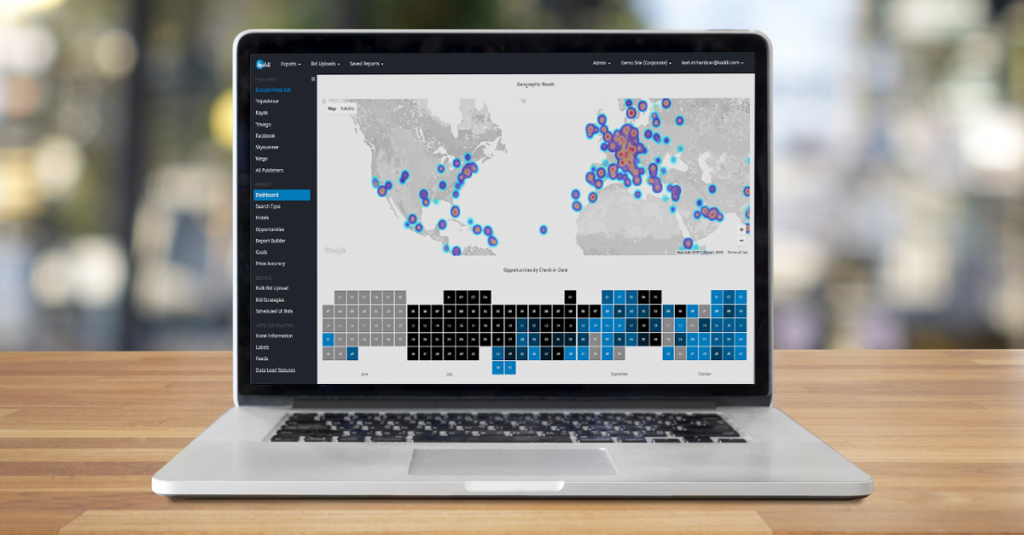
Our primary focus is on net-based revenue, and we do not favor direct bookings over other channels. Our decision-making is based on achieving net revenue, and as long as that is accomplished, we consider it the right decision. However, for certain brands, we have noticed a trend towards introducing centralized platforms that allow hotels to invest in various digital marketing channels. For instance, Koddi provides an ad center for both IHG and Hilton, enabling them to bid on meta search, OTA marketing, and Google Hotel ads. This direction is likely to continue because it offers value to us by allowing us to influence revenue generation during specific periods.
Incrementality is a crucial factor in digital marketing as we want to understand how much incremental value can be expected from a particular action. When deciding to add another channel, we need to consider the incrementality factor of that channel, both in terms of geography and impact. While it would be ideal to work with all channels and boutique channels, the reality is that the more channels we have, the more complex it becomes, and there is a greater risk of rate redistribution. Therefore, we must prioritize where the greatest impact can be achieved.
 HT Score
Learn More
 ×
×
Commercial tech stacks
How would you describe your philosophy around tech stack composition?
Jens: I think that maintaining agility is critical in today's business environment. Planning a technology project for 18-24 months is not realistic as the industry moves rapidly, and the hotel may not even exist within that time frame. Hence, it is crucial to find technology that can be implemented quickly. Additionally, it is important to partner with innovative technology providers who continually improve their products. If a product has not evolved over the past two years, it may not be a suitable choice for us. We need to prioritize ongoing innovation in technology.
I believe that a well-functioning Property Management System (PMS) and Central Reservation System (CRS) are essential for any business. However, when it comes to technologies that can offer a competitive edge, I think an on-stay personalization tool is a game-changer. This tool can leverage data to personalize every interaction with the guest, and if implemented effectively, it can provide a substantial advantage.
Direct isn't always best
What's the one thing you hold to be true about hotel technology that most people in the industry don't agree with?
Jens: I'd like to share something that you may not have considered, though it may be related to technology in some ways. My statement is that "direct is not always best." As someone with a revenue management background, I may be biased, but I believe that having a data-driven mindset and a desire to understand the reasons behind performance figures is crucial. By seeking out information and backing up decisions with data, it can lead to better outcomes in most scenarios.
Conclusion
It is becoming increasingly important for hotel owners to leverage data and question conventional norms to stay competitive in the hospitality industry. With the advent of new technologies and platforms, data-driven decision-making has become an essential component of successful hotel operations.
By analyzing data, hotel owners can gain valuable insights into their guests' behavior, preferences, and needs. This information can be used to tailor the guest experience, improve customer satisfaction, and increase revenue. Furthermore, data-driven decision-making enables hotel owners to make informed decisions based on evidence rather than intuition or guesswork. This can help to minimize risk and increase the chances of success.
In addition to identifying trends and patterns that inform future business strategies, data analysis can help optimize operations, reduce costs, and increase profitability. By using data to monitor and analyze business processes, hotel owners can identify inefficiencies and areas for improvement. This, in turn, can lead to better resource allocation, enhanced customer satisfaction, and increased revenue.
Defining and tracking Key Performance Indicators (KPIs) that are relevant to their business objectives can help hotel owners measure their success and make adjustments as needed. KPIs can help to ensure that the business is aligned with their goals and that they are achieving the results they want.
With the help of data-driven decision-making and new KPIs, hotel owners can gain valuable insights, make informed decisions, optimize operations, and measure success. By embracing data and questioning norms, hotel owners can remain competitive and offer superior guest experiences.