

Is the hotel of the future going to be run by robots? Or has the robot revolution already begun? With so much new technology becoming popular in the hotel industry, it can be hard to keep up. And many tech companies tout lofty promises of cost savings and operational efficiencies, so it’s difficult to know what’s truly available now and what’s still in development. In this article, we’ll give you the rundown on the current state of hotel robots. We’ll explain what technology hoteliers are adopting today and what’s still in the development stage so you can make educated decisions about technology investment at your hotel.
Fact: Chatbots
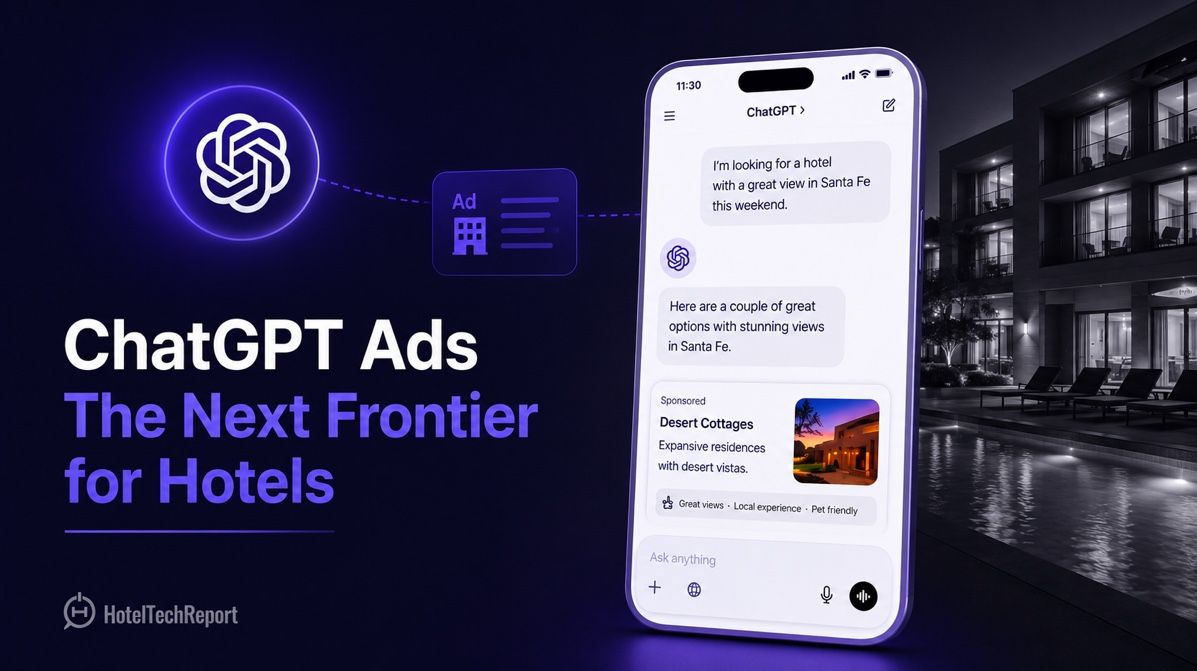
One of the most common hotel “robots” isn’t really a robot in the traditional sense, but rather a digital “bot” that lives on your hotel website or in your app. Chatbots, or digital assistants, can handle guest inquiries, facilitate bookings, and support the guest experience from the moment a potential guest lands on your site. Chatbots offer tangible benefits like more personalized guest experiences and a reduction in front desk agent time spent on repetitive tasks. For example, an AI-driven vendor like Asksuite, Quicktext or HiJiffy can support multiple languages and send automated messages, which boosts direct bookings and reduces manual labor needed to manage basic guest requests.
Fact: Kitchen robots
It’s true, robots are popping up in kitchens and bars, although we’ve yet to see one in a chef’s hat. While some kitchen robots are intended to cut costs and make operations more efficient, others provide creative ways to set an F&B outlet apart from the competition. For instance, Royal Caribbean recently debuted a robot bartender on several of its ships, and based on the intensive research and development that went into the robot, cost-cutting doesn’t seem like it was Royal Caribbean’s primary objective. Instead, the cruise line expects the robot bar to be a buzzy attraction and a one-of-a-kind experience. However, AUSCA, a robot employed by M Social Singapore, does offer some cost savings by efficiently serving up egg dishes during the hotel’s breakfast service.
 Join 100k+ executives from world's leading hotel brands and get the latest insights delivered to your inbox once a week
Fact: Automated call center robots
Any reservations agent will tell you that they answer the same questions again and again, so the call center or back office is ripe for automation. Robots can take those repetitive inquiries off your agents’ plates – and robots can handle them with exceptional reliability and a fast response rate. Automation doesn’t stop with inbound inquiries, though; you can configure entire automated communication programs that continue after booking, during the guest’s stay, and after checkout to build loyalty and brand affinity.
Fact: AI-driven revenue management
Like chatbots, some of the most impactful (and approachable) “robots” that hoteliers are adopting today are revenue management tools that leverage artificial intelligence to make rate recommendations. While you might not see a revenue management robot on Star Wars, these tools will help you achieve higher ADR and RevPAR without needing to hire additional revenue managers. Sophisticated revenue management software, like Duetto, IDeaS and Atomize are now enabling hotels across the world to become more profitable and competitive.
Fact: Air cleaning robots
Having come onto the hotel robot scene during the pandemic, robots that purify indoor air are an up-and-coming option for health-conscious guests and hoteliers. These germ-zapping devices often use ultraviolet light to kill viruses and bacteria on surfaces in just a few minutes. The robot sterilizes a room much faster than a housekeeper could, so it has the potential to be a fantastic partner to housekeeping teams, like it is at the Westin Houston Medical Center, where the robot has already been implemented.
Fiction: Housekeeping bots
While robots can clean the air and deliver extra towels, true housekeeping bots that can complete all housekeeping tasks are still well into the future. The technology needed to build a robot that can make a bed, clean a toilet, and replenish minibars is not yet mainstream enough to become affordable. One exciting new technology is on the horizon, an AI-driven robot vacuum that’s designed especially for hotels, but it’s still not a full replacement for a human housekeeper.
Fiction: Robot front desk agents
It’s possible to automate many elements of the check-in experience, like with chatbots, check-in kiosks, and interactive concierge systems, but robot front desk agents aren’t coming to your front office anytime soon. Not only is the technology still in development and prohibitively expensive, many guests still prefer some human element during their hotel experience, as was evident when Japanese robot-run hotel Henn-na actually switched their operating model to include human staff shortly after opening.
The future of hotel robots in the hospitality industry is rapidly evolving. Room service, check-in, and front desk tasks are increasingly being handled by hotel robots, particularly in Japan, where the Henn na Hotel has been using service robots for years. The COVID-19 pandemic has accelerated the adoption of delivery robots and other automation in hotels, as a way to reduce human-to-human contact and improve guest safety. In California, companies like Relay Robotics are developing robot butlers and concierges that can assist hotel guests with tasks such as vacuuming, delivering linens and toiletries, and even providing personalized service. These robots are powered by artificial intelligence and are able to understand and respond to guests' requests. This technology is expected to be adopted by hoteliers such as Hilton, Aloft Hotels and Yotel.
However, it's important to note that hotel robots are not intended to replace human staff but rather to augment staffing and improve the guest experience. Some hoteliers have already implemented chatbots, which can answer guests' questions and help them with check-in and other tasks. Additionally, some hotels are testing robots that can help guests with tasks such as room delivery and even providing wifi access.
The hotel industry is facing a labor shortage, particularly in cities like Los Angeles and New York, and hotel management is looking at ways to use robots to fill that gap. Amazon is also testing robots for room delivery in hotels. However, the use of robots in hotels is still in the early stages and it remains to be seen how this technology will be adopted in the long term. But one thing is for sure, the advancements in hotel technology will certainly bring new possibilities for the hotel guests and the hoteliers.
Whether you already employ a hotel robot or you’re considering investing in one, it’s certain that more and more automation will become mainstream in the hotel industry. Benefits like cost savings, improvements to the guest experience, and uniqueness make robots a compelling solution for operational challenges in the front office, kitchen, and housekeeping departments.