






Subscribe to our weekly newsletter, Hotel Tech Insider
Join 100,000 executives from top brands like Accor, Marriott, Viceroy, Shangri-La, Rosewood, Expedia and AirBnB and get the latest innovations and insights delivered to your inbox once a week.
Popular in Operations
Best Property Management Systems of 2026
Your hotel's core operating system to effortlessly manage bookings, guest experiences, and operations.
Best Staff Collaboration Tools of 2026
Enhance team collaboration with real-time messaging, task sharing, and centralized updates across departments.
Best Hotel Accounting Software of 2026
Tools to manage your hotel's accounting, budgeting and financial planning.
Popular in Revenue Management
Best Revenue Management Systems of 2026
Maximize revenue with dynamic pricing, demand forecasting, and automated data insights.
Best Channel Managers of 2026
Hotel distribution software that syncs rates, availability and inventory across 3rd party channels
Best Business Intelligence of 2026
Say goodbye to spreadsheets and leverage modern BI tools to visualize your data and uncover hidden insights.
Popular in Marketing
Best Hotel CRM & Email Marketing of 2026
Turn guest data into action with personalized offers, targeted communication, and automated workflows.
Best Booking Engine of 2026
The eCommerce shopping cart for your hotel's website.
Best Hotel Metasearch Management Software of 2026
Setup, manage and optimize advertising campaigns across channels to drive direct bookings.
Popular in Guest Experience
Best Hotel Guest Apps of 2026
Enhance stays with a guest app offering amenities info, messaging, mobile ordering, and upsell opportunities.
Best Contactless Check-in of 2026
Empower guests with easy online check-in, digital authorizations, and seamless upsells.
Best Guest Messaging Software of 2026
Connect with guests instantly through real-time messaging, automated responses, and seamless communication.
The project dashboard is a free tool that is only available to verified hoteliers to make adopting new technology easier by streamlining their research and simplifying their communication workflow.

 Jordan Hollander
Jordan Hollander
CEO @ Hotel Tech Report
Jordan is the co-founder of HotelTechReport, the hotel industry's app store where millions of professionals discover tech tools to transform their businesses. He was previously on the Global Partnerships team at Starwood Hotels & Resorts. Prior to his work with SPG, Jordan was Director of Business Development at MWT Hospitality and an equity analyst at Wells Capital Management. Jordan received his MBA from Northwestern’s Kellogg School of Management where he was a Zell Global Entrepreneurship Scholar and a Pritzker Group Venture Fellow.
517
articles contributed
QUICK SUMMARY
Looking to find the best PMS software for your hotel? We've spent the last 9-years testing 50+ hotel property management systems in actual hotel environments. We wanted to cut through the marketing fluff and answer one simple question: which platforms actually make hoteliers' lives easier while boosting profit?
We then help you find the best fit hotel PMS systems for your business as quickly and painlessly as possible. Notice I said systems? That's because no matter what any individual vendor tells you. For most hotels I work with (as well as the one's I'm personally invested in) - there are usually a handful of solutions that could be a potential fit and our job is to help you find those solutions. The way we do that is through our massive proprietary review dataset, research, through live demos (check out our Youtube) with our team and by using our buyer tools like our famous hotel property management system finder which you'll see more about below.
I’ve spent the past 15 years working in hotel management, operations and technology -supporting everything from boutique independents to global chains like Marriott (technically I was at Starwood pre-acquisition). At HotelTechReport, I lead a team of industry analysts who specialize in evaluating hospitality software. We’ve demoed dozens of platforms and collected over 549 verified interviews with hoteliers across 53 countries to create this comprehensive guide.
Inside you’ll find everything you need to know including top vendors, feature comparisons, price benchmarking, required integrations and more.
Here are 10 of top Hotel Property Management Systems that are covered in this guide:

A hotel PMS helps hoteliers manage rates and reservations, check-ins/checkout, housekeeping, maintenance & more. Modern hotel PMS systems like Cloudbeds and Mews automate room assignments, process payments & integrate booking channels.
Choosing the right Property Management Systems for your hotel depends on several variables some of which come down to personal preference but most of which come down to the characteristics of your property. Is your hotel a small property with limited budget? Or is your property a luxury resort with lots of outlets and high ADR? Below are HTR’s defined key personas based on common property characteristics that typically indicate similar product choices.
Based on HTR's Q2 2026 quarterly Property Management Systems survey insights, these are the products that are currently most recommended by each size of hotel.
Based on HTR's Q2 2026 quarterly Property Management Systems survey insights, these are the products that are currently most recommended by each size of hotel.
| Best for | Hoteliers | Recommended | |
|---|---|---|---|
Best Property Management Systems for Small Hotels (up to 49 rooms)
Small
up to 49 rooms
|
5.2k Hoteliers |
17 products recommended
Cloudbeds
, Mews
, ThinkReservations
and 14 others
|
|
|
|
|||
Best Property Management Systems for Mid-sized Hotels (50-99 rooms)
Mid-sized
50-99 rooms
|
1.6k Hoteliers | ||
|
|
|||
Best Property Management Systems for Large Hotels (100-499 rooms)
Large
100-499 rooms
|
1.9k Hoteliers | ||
|
|
|||
Best Property Management Systems for Enterprise Hotels (500+ rooms)
Enterprise
500+ rooms
|
318 Hoteliers |
5 products recommended
Stayntouch
, Mews
, Agilysys Hospitality Solutions
and 2 others
|
|
|
|
|||
Join 1.5M+ hoteliers making data-driven decisions


By proceeding you agree to our Terms of Service and Privacy Policy




No matching results
Currently site personalization is enabled which sorts results tailored to your property. If you apply manual filters this will disable site personalization. Press continue to switch to manual filtering and disable site personalization.

 100 HT Score
 2026 FINALIST
This product is trending
 82 HT Score
 76 HT Score
 99 HT Score
 2026 WINNER
This product is trending
 74 HT Score
 91 HT Score
 89 HT Score
 87 HT Score
 85 HT Score
 76 HT Score
A property management system (PMS) is a hotel management software suite that property owners and front desk workers use to manage their business by coordinating reservations, online booking availability, payments, and reporting in one central place.
A cloud hotel PMS streamlines operations for front office staff and guest services in a hotel business to check-in and check-out guests, see room availability, make adjustments to existing reservations, and even can have back office functionality (schedule housekeeping or maintenance). With a central system, hoteliers can better manage and monitor the key metrics needed to run their business (e.g. average daily rate, occupancy, and RevPAR).
Operational efficiency and cost control. Property management software or hotel PMS is the backbone of hospitality industry operations; the PMS eliminates costly overbookings by managing room availability, coordinates with any connected channel managers to improve room occupancy, accepts payments, and performs key day-to-day functions such as transferring guests, updating room rates, and managing housekeeping tasks.
Automation and intelligence. The PMS can automate and improve a hotel’s business operations by providing competitive intelligence, automatically adjusting prices based on availability, and providing analytics and reporting functionality.
Guest experience enhancement. The PMS enhances the guest experience by remembering customer preferences and sending pre and post-stay communications.
System integration and extensibility. Many PMS systems can also integrate with other technologies such as point of sale systems, payment processors, hardware manufacturers, and guest experience software.
Managing a hotel is no easy feat, but thanks to technology, hoteliers can now rely on hotel property management systems (PMS) to make daily operations more efficient and streamlined. A PMS is a software solution that offers a range of features to manage a hotel's front desk operations, room statuses, maintenance requests, and financial reports.
Whether you're running a boutique property or a multi-property portfolio, the right PMS brings all your operations into one unified platform. Below are the critical features to look for when evaluating a hotel PMS.
Feature | What It Does | Why It Matters |
|---|---|---|
User-Friendly Interface | Intuitive dashboard with minimal training required | Reduces staff errors and onboarding time |
Check-In / Check-Out | Manage arrivals, departures, room moves, and modifications | Prevents overbookings and speeds up front desk workflows |
Central Dashboard | Real-time overview of reservations, tasks, and KPIs | Keeps staff aligned on daily priorities |
Custom Taxes & Policies | Configure taxes, fees, and cancellation rules | Ensures compliance and protects revenue |
Feature | What It Does | Why It Matters |
|---|---|---|
Messaging & Notifications | Communicate with guests and staff in real time | Improves service responsiveness |
Automated Guest Communication | Pre- and post-stay emails and confirmations | Saves time and enhances professionalism |
Post-Stay Feedback | Collect and manage guest reviews | Supports service improvement and reputation management |
Upselling & Personalization | Offer add-ons and mobile self-service options | Increases ancillary revenue and guest satisfaction |
Feature | What It Does | Why It Matters |
|---|---|---|
Maintenance Management | Track and assign work orders | Reduces downtime and protects guest experience |
Housekeeping Coordination | Real-time room status updates | Improves turnover efficiency |
Customizable Workflows | Tailor templates and task processes | Aligns software with operational needs |
Feature | What It Does | Why It Matters |
|---|---|---|
Revenue Management Tools | Support pricing and occupancy optimization | Maximizes RevPAR and profitability |
Reporting Suite | Generate financial and production reports | Enables data-driven decision-making |
Payment Processing | Secure credit card handling and reconciliation | Ensures compliance and cash flow efficiency |
Tax & Regulatory Compliance | Support for local reporting requirements | Reduces financial risk and audit exposure |
Feature | What It Does | Why It Matters |
|---|---|---|
Channel Manager Connectivity | Sync inventory across OTAs, GDS, and direct | Prevents overbookings and maximizes occupancy |
Booking Engine Integration | Manage direct reservations | Reduces OTA commission dependency |
Third-Party Integrations | Connect CRM, RMS, POS, accounting tools | Creates a unified tech ecosystem |
Feature | What It Does | Why It Matters |
|---|---|---|
Mobile App | Enables staff to manage reservations, housekeeping, check-ins, and tasks from smartphones or tablets | Improves responsiveness, reduces desk dependency, and increases operational agility |
Automation | Automates check-in/out, payment processing, confirmations, task assignments, and guest messaging | Saves time, reduces manual errors, and ensures consistency |
User-Friendly & Interactive UI | Intuitive workflows and minimal training curve | Speeds onboarding and reduces costly operational mistakes |
Real-Time Data | Live visibility into occupancy, room status, and financial performance | Enables faster decision-making and proactive adjustments |
Cloud-Based Architecture | Web-based system accessible from anywhere | Reduces IT burden, enables remote management, and ensures continuous updates |
Streamlined Front Desk Workflows | Optimized check-in experience with guided workflows | Prevents bottlenecks and enhances guest first impressions |
Your hotel's property management system (PMS) is an indispensable tool for managing daily operations in the hospitality industry. A hotel PMS software solution should have key features such as automation, integrations, revenue management, messaging, mobile app, customizable templates, user-friendly interface, real-time data, maintenance upgrades, and post-stay feedback.
By using a hotel PMS, hoteliers can improve the guest experience, maximize revenue, and streamline their daily operations.
There are certain types of property management systems (PMS) used in hotels that have key features, functionalities, and advantages. Understanding them is crucial when considering the right choice of technology to help effectively manage hotel operations and guest satisfaction. Here are two main types of hotel PMS:
On-Premise Hotel PMS: It’s installed on servers located in the hotel and is available on every computer from which hoteliers can access the PMS. It provides the security of data that is stored on-site, but its maintenance and security is attributed to the hotel.Ongoing maintenance and technical support from the hotel's IT team will be required to maintain functionality
Cloud-Based Hotel PMS: A cloud-based PMS simplifies all day-to-day tasks because hotel staff can access the system from anywhere with an internet connection, so data is always up-to-date. The convenient thing is that the maintenance costs are low
Cloud-based PMS pricing is typically structured per room, per month and scales with room count, property size, and feature depth.
Most vendors offer online pricing calculators to estimate monthly or annual costs. However, base subscription rates often don’t tell the full story — additional fees, integrations, and premium modules can materially increase total cost.
Tier | Typical Price | Best For | What You Get |
|---|---|---|---|
Budget PMS | $3–$8 | Small hotels, B&Bs, limited-service properties | Core reservations, front desk, housekeeping, reporting |
Standard PMS | $8–$15 | Boutique & independent hotels | Core features + improved integrations & automation |
Premium / Enterprise PMS | $15–$25+ | Large hotels, multi-property groups | Advanced integrations, automation, revenue tools, premium support |
Most standard plans include:
Reservations management
Front desk operations
Housekeeping coordination
Basic reporting
Payment processing support
Higher-tier plans typically bundle:
Integrated channel manager
Booking engine
CRM & guest engagement tools
Revenue management modules
Portfolio-level dashboards
Premium support
Common Additional Fees & Premium Add-Ons
Many vendors advertise a base monthly rate, but add-on fees can significantly increase total cost.
Fee / Feature | What It Covers | Impact on Cost |
|---|---|---|
Commission on Bookings | % fee on direct or OTA reservations | Can materially increase cost at scale |
Setup & Implementation | Training, onboarding, data migration | One-time upfront fee |
Interface / Integration Fees | Connecting CRM, RMS, POS, accounting tools | Recurring or one-time |
Advanced Revenue Tools | AI pricing & forecasting modules | Premium monthly add-on |
Integrated Channel Manager | OTA synchronization | Often bundled in higher tiers |
Built-In Booking Engine | Direct booking functionality | May be bundled or separate |
CRM & Marketing Automation | Guest segmentation & lifecycle marketing | Premium tier feature |
Full-Service Onboarding | Dedicated success manager | Higher-tier plans |
Premium Support | 24/7 support, priority response | Enterprise plans |
Multi-Property Features | Portfolio dashboards & shared inventory | Enterprise pricing |
Custom API Access | Advanced integrations or internal systems | Often higher-tier |
Bottom line. If you don’t need advanced automation, integrations, or enterprise controls, you can often reduce costs significantly by choosing a streamlined PMS.
Most modern cloud PMS platforms take 1–3 weeks to implement, depending on:
Number of rooms and properties
Volume of reservations to import
Custom configurations required
Whether vendor assists with migration
Property management systems range from simple tools for basic reservation management to cutting-edge tech that can support the needs of a modern hotel or resort. Property management systems can be cloud-based or on-premise, and many systems offer integrations with point-of-sale systems, revenue management tools, channel managers, and more.
A hotel without a property management system is like running a business without using email. Without a PMS, hotel staff cannot manage hotel operations in one central system. A PMS allows various staff members to book and manage reservations, check guests in and out, collect payment, and run reports at the same time, from any computer.
A property management system is software used by a hotel to manage all rooms, rates, reservations, and guest billing. Each room is represented in the system so staff can manage nightly rates and reservations for that room, plus track whether it’s clean or dirty. The PMS also holds all guest contact info, history, and billing information.
A cloud PMS is a cloud-based property management system that helps hoteliers streamline front desk operations, automate workflows, and manage reservations, payments, and guest data in real time to boost profitability and guest satisfaction.
A Hotel Property Management System (Hotel PMS) is an all-in-one software solution designed to streamline the day-to-day operations of hotels, B&Bs, hostels, inns, vacation rentals, and other property types in the hospitality industry. This cloud-based or on-premise system automates and integrates various functions of hotel management, enhancing the guest experience, increasing occupancy, and boosting profitability.
The core functionality of a Hotel PMS revolves around reservation management, where it includes a booking engine that allows guests to make direct bookings through the hotel's website or through OTAs (Online Travel Agencies) like Booking.com and Airbnb. It seamlessly integrates with a channel manager to ensure real-time updates of room inventory across all distribution channels, minimizing the risk of overbookings.
Front desk operations are significantly optimized with a PMS. It provides front office modules for guest check-in and check-out, room assignment, and invoicing. Payment processing is also streamlined, supporting various payment gateways and methods, including credit card transactions and contactless payments, ensuring a swift and secure process for hotel staff and guests.
Hotel PMS extends its functionality to the back office as well, offering tools for revenue management and pricing strategies to maximize RevPAR (Revenue Per Available Room). It includes reporting features for a detailed analysis of hotel operations, helping hoteliers make data-driven decisions.
In the realm of guest service, a Hotel PMS can store guest profiles, preferences, and historical data, which can be used for personalized messaging, upselling, and CRM (Customer Relationship Management), fostering guest loyalty and repeat business. Integration with POS (Point of Sale) systems further enhances the guest experience, allowing for additional services and amenities to be offered seamlessly during their stay.
Modern PMS solutions are designed to be intuitive and user-friendly, accessible on mobile devices and equipped with features like self-service kiosks, mobile apps, and open APIs for integration with other hotel technology systems. This enables hotel staff to focus more on providing quality guest service rather than being bogged down by manual administrative tasks.
Providers of PMS software, like Cloudbeds, offer robust customer support and continuously update their systems with new features, ensuring that hoteliers are equipped with the latest tools to manage their properties efficiently. By leveraging a PMS, hoteliers can automate hotel operations, from front desk to back office, enhance guest experiences, and ultimately drive the success of their hotel business.
A property management system is “mission control” of a hotel. The PMS houses all reservation information, guest profiles, room status (clean, dirty, or out of order), room types and rate plans, folios and invoices, and reporting. Staff from nearly all hotel departments use the PMS, from front desk and housekeeping to sales and accounting.
The standard fee for a hotel management contract varies widely and depends on various factors such as the size of the hotel, location, and services provided. Typically, hotel management companies charge a percentage of the hotel's gross operating revenue, ranging from 4% to 12%. Some hotel management companies may also charge an additional flat fee or a performance-based bonus. The exact terms of a hotel management contract can be negotiated between the hotel owner and the management company, so it is recommended to obtain a written agreement that clearly outlines the terms and fees involved. This compares to the multi-family residential industry where property owners typically pay between 8% and 10% of monthly rent revenue to a property manager. Vacation rental property management is more expensive; management fees are usually between 20% and 30% of revenue. However, when considering the time and expertise needed to manage a property, hiring a property manager is often worth the expense.
Central Reservation System: core hotel industry data to help run your hotel (note that many hotel chains have proprietary CRS systems) while independent hotels typically use off the shelf solutions. A CRS allows your hotel to distribute efficiently via major GDS platforms like Travelport, Amadeus and Sabre
Revenue Management System: increase revenue with better rate management
Booking Engine: online booking engines display PMS inventory to take online reservations
Channel Manager: channel management software helps manage connectivity to OTAs like Expedia, Booking.com or even a vacation rentals platform like AirBnB
Hotel operations software: Your PMS absolutely must integrate with key service optimization and hotel staff collaboration software
Hotel CRM: A PMS is the nucleus of your hotel centered around inventory; however, to operate efficiently hoteliers also need a CRM system centered around guest profiles. Your CRM must be able to pull data from your PMS to populate profiles and calculate key metrics like recency, frequency, and monetary value
* all integrations should ideally be facilitated via API in order to improve connectivity and mitigate errors or downtime
Channel availability and integration - While hotel property management software doesn't always have an integrated channel manager, it's critical that your software vendor has a strong integration to a top rated channel manager if this functionality is not integrated. Premium vendors allow you to sync your availability to multiple channels in real-time and provide booking engine functionality. Some vendors offer an all-in-one hotel software solution that reduces the overhead of managing and learning multiple systems. Depth of reporting and analytics - In addition to basic reporting functionality, some PMS’s allow you to monitor market data, create automated rules and triggers adjust prices and provide insights related to pace, pickup, and occupancy. Group functionality - A premium PMS can scale across multiple properties and grow with your business. Check-in kiosk - In the age of covid it's critical that your hotel can facilitate contactless check-in for guests and a kiosk is one of the best ways to deliver that comfort and safety Automation - a great PMS can be programmed to automate key processes within your hotel from check-in to chargebacks and more
The unique characteristics of motels compared to hotels can impact the choice of hotel management software that they use. Motels may require software that can handle last-minute bookings, shorter stays, smaller numbers of rooms, and simpler rate structures. In contrast, hotels may require more complex software that can handle longer stays, group bookings, larger numbers of rooms, and more sophisticated rate structures. The choice of software ultimately depends on the specific needs of the property.
The unique characteristics of resorts compared to hotels can impact the choice of hotel management software that they use. Resorts may require software that can handle a variety of accommodation types, complex rate structures, and a wide range of amenities, activities, and services such as spas and loyalty programs. The software may need to be comprehensive, integrated, and provide a seamless guest experience. The choice of software ultimately depends on the specific needs of the property.
A property management system (PMS) is an essential tool for managing hotel operations. A hotel property management system is a type of management software that offers several functions to streamline daily operations in the hotel business. Some of the key functions of a property management system include:
Check-in and check-out: A hotel PMS offers functionality to manage guest check-in and check-out processes, which can be crucial in delivering an excellent guest experience.
Front desk operations: A hotel PMS offers a range of features to manage front desk operations such as room inventory, room status, and available rooms. These features can help front desk staff work more efficiently and respond to guest needs in real-time.
Revenue management: A hotel PMS offers revenue management functionality to help set pricing and maximize occupancy. This feature can help hoteliers make data-driven decisions to optimize revenue.
Messaging and notifications: A hotel PMS offers messaging and notifications to guests and staff, which can help improve the guest experience and streamline communication.
Automation: A hotel PMS offers automation for administrative tasks, such as invoicing, which can save time and reduce errors.
Channel management: A hotel PMS offers channel management functionality to manage distribution channels, such as OTAs and travel agents, which can be crucial for maximizing revenue.
Cloud-based and real-time data: A hotel PMS is cloud-based and offers real-time data on room statuses, occupancy, and financial metrics. This feature can help hoteliers make data-driven decisions and respond to changes in real-time.
Point of sale: A hotel PMS offers point of sale functionality to manage guest payments, which can be crucial for delivering an excellent guest experience.
User-friendly and interactive: A hotel PMS is user-friendly and interactive, with an intuitive interface and easy-to-use features. This can help staff quickly learn the software and reduce the learning curve.
Mobile app: A hotel PMS offers a mobile app that enables staff to manage daily operations from their smartphones. This feature can help staff work more efficiently and respond to guest needs in real-time.
A property management system is an essential tool for managing daily operations in the hotel industry. A hotel PMS offers functions such as check-in, front desk operations, revenue management, messaging, automation, channel management, cloud-based and real-time data, point of sale, user-friendly and interactive features, and a mobile app. By using a property management solution, hoteliers can streamline their daily operations, improve the guest experience, and maximize hotel performance.
A cloud-based property management system (PMS) provides numerous benefits compared to traditional on-premise PMS solutions. Here are some key advantages of using a cloud-based PMS:
Accessibility and Mobility: A cloud-based PMS allows hoteliers and hotel staff to access and manage hotel operations and guest data from anywhere with an internet connection. It enables mobile check-in, streamlines front desk tasks, and enhances the guest experience by utilizing mobile devices.
Scalability and Flexibility: Cloud-based PMS solutions are highly scalable, making them suitable for hotels of any size, from independent hotels to hotel chains and hostels. They offer modules for various functionalities such as reservation systems, channel managers, rate management, point of sale (POS), and more. Cloud PMS can accommodate evolving hotel needs and occupancy levels while maintaining ease of use and profitability.
Cost Savings: Implementing a cloud-based PMS eliminates the need for on-premise servers, reducing hardware and maintenance costs. It operates on a subscription-based model, allowing hotels to pay for the features and resources they require. Additionally, the cloud PMS provider handles system updates and maintenance, further reducing costs.
Data Security and Reliability: Cloud-based PMS providers prioritize data security and employ robust infrastructure to protect guest profiles, reservations, and hotel data. They ensure data integrity through encryption, real-time backups, and redundancy across geographically distributed data centers.
Integration and Automation: Cloud-based PMS solutions integrate seamlessly with other hotel technology systems and software, such as channel managers, online booking engines, payment gateways, messaging platforms, and more. This integration streamlines operations, automates processes, and enhances the guest service experience.
Support and User-Friendliness: Cloud-based PMS providers offer customer support services, ensuring hotel staff have access to technical assistance and training. Cloud PMS platforms are designed to be user-friendly, with intuitive interfaces and features that simplify daily operations. They often provide mobile apps and self-service kiosks for a more efficient guest experience.
A cloud-based PMS is a comprehensive hotel management solution that enhances efficiency, improves guest service, and boosts profitability. It provides a user-friendly interface, automates processes, integrates with other hotel systems, ensures data security, and offers ongoing customer support. By leveraging cloud-based systems, hoteliers can streamline operations, increase direct bookings, and stay competitive in the dynamic hospitality industry.
A Hotel Property Management System (Hotel PMS) and a Point of Sale (POS) system are integral components of hotel operations, serving distinct yet complementary functions within the hospitality industry.
Hotel PMS: A Hotel PMS is an all-in-one software solution designed to streamline day-to-day hotel operations, enhancing the guest experience and improving the profitability of hoteliers. It primarily focuses on front office tasks such as guest check-in and check-out, room inventory management, reservation management, and guest profiles. It's a vital tool for hotel management, from independent hotels to hotel chains, B&Bs, and vacation rentals. A Hotel PMS integrates various systems including the booking engine, channel manager, and revenue management system, enabling direct bookings, managing occupancy, and optimizing pricing in real-time. It also offers back office functionalities, aiding in revenue management and business intelligence. Additionally, a cloud-based PMS ensures that hotel staff can access the system on mobile devices, offering flexibility and enhancing guest service. Hotel PMS software is the backbone of hotel operations, ensuring smooth coordination across different departments and distribution channels.
POS: On the other hand, a POS system, or Point of Sale system, is used to manage transactions within the hotel. It's primarily utilized in areas where services are sold directly to guests, such as restaurants, bars, kiosks, and sometimes for services like spa treatments or room upgrades. The main function of a POS is to process sales transactions, handle payment processing via various payment gateways, and manage credit card or contactless payments. It plays a crucial role in the guest service experience, ensuring a seamless and efficient process during their stay. While a POS system is more focused on the operational aspect of sales and payment, it's often integrated with the Hotel PMS to ensure that charges are accurately posted to guest profiles and room bills.
While both Hotel PMS and POS are essential in the hotel business for efficient hotel management and optimizing the guest experience, the PMS focuses on overall hotel management software, covering everything from reservation management to guest check-in and hotel operations, while the POS is specifically tailored for managing on-site financial transactions and payment processing. Together, they provide a comprehensive solution for managing hotel operations, from the front desk to the back office, ensuring that hoteliers can effectively manage their properties and deliver top-notch service to their guests.
A Property Management System (PMS) can play a pivotal role in enhancing the guest experience by streamlining operations and enabling highly personalized service. At the core of this improvement is the PMS's ability to collect and utilize detailed guest profiles, allowing hotels to understand and cater to individual preferences, from room setup to special requests. Efficient check-in and checkout processes are another key benefit, as PMS solutions often enable seamless experiences through self-service kiosks or mobile apps, significantly reducing wait times and increasing guest satisfaction.
Mobile integration is equally transformative, allowing guests to manage their stay directly from their smartphones, including booking services, requesting amenities, and communicating with staff. PMS platforms also make it easy to implement and manage loyalty programs, offering guests rewards and exclusive offers that build loyalty and strengthen relationships. Additionally, real-time communication and updates through the PMS ensure prompt responses to guest requests, whether it’s housekeeping services or special accommodations, leading to faster resolutions and a smoother overall experience.
The PMS can also help hotels offer targeted packages and services by analyzing guest data to tailor offerings based on specific preferences or travel patterns. This not only boosts engagement but also enhances the perceived value of the stay. Ensuring data compliance and security is another critical aspect, as a PMS that adheres to data protection regulations builds guest trust by safeguarding their personal information. Finally, the PMS’s reporting and analytics capabilities provide insights that allow hotels to continuously refine their offerings, align with guest expectations, and identify service gaps. Together, these features make the PMS an indispensable tool for delivering a more personalized, seamless, and secure guest experience.
A cloud-based Property Management System (PMS) can significantly enhance revenue management by offering hotels the flexibility, data insights, and automation necessary to optimize pricing and drive profitability. Central to this optimization is the system’s capability to support dynamic pricing, adjusting room rates in real-time based on demand fluctuations, occupancy levels, and market trends. This ensures that rates are always competitive and aligned with current market conditions, maximizing both revenue per available room (RevPAR) and average length of stay (ALOS).
Cloud-based PMSs also streamline availability management by providing accurate, up-to-date visibility into inventory across distribution channels, including direct booking platforms. This allows hotels to better manage room availability and implement effective overbooking strategies to minimize vacancy rates. Direct integration with revenue management systems (RMS) further enhances these efforts, as the PMS can share data that helps the RMS refine pricing decisions and track key performance indicators (KPIs), such as occupancy rate and RevPAR.
Moreover, cloud-based systems facilitate better monetization of ancillary services, such as spa treatments, dining, and event spaces, by enabling seamless bundling and upselling of services during the booking process. This not only drives incremental revenue but also adds value to the guest experience. The enhanced connectivity of a cloud-based PMS ensures smooth communication with hotel sales offices, enabling them to access live data for improved group booking management and sales strategies.
By enabling these capabilities, a cloud-based PMS becomes an essential tool for modern revenue management, providing hotels with the agility, insight, and control needed to maximize profitability in a competitive market.
Switching systems requires effort — but staying on outdated software carries opportunity cost.
A modern cloud PMS can:
Reduce overbookings
Improve direct booking conversion
Enable dynamic pricing
Increase operational efficiency
Strengthen reporting visibility
Real-world impact: Hotels that migrate to modern cloud PMS platforms often report improved operational efficiency and measurable profitability gains within the first few months — frequently offsetting implementation costs.
Trusted by thousands of hoteliers worldwide
Takes 2 min · No credit card needed


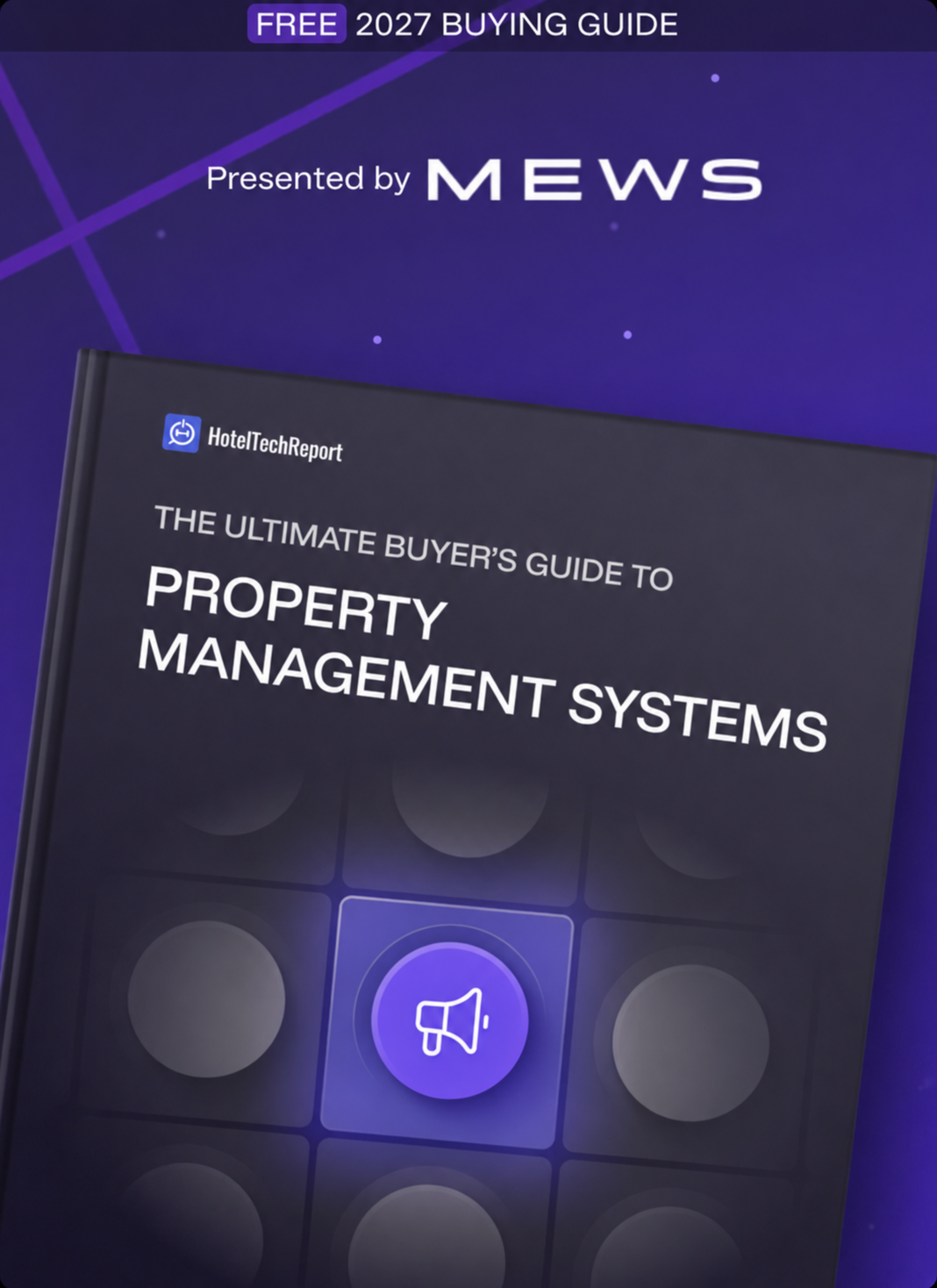
Download the Free Guide
Your guide was sent!
Your guide was successfully sent to .
Our check detected that this address may have been entered incorrectly. Please confirm or correct it before we continue:
This looks like it may contain a typo.
Trusted by thousands of hoteliers worldwide
Takes 2 min · No credit card needed
Subscribe to our weekly newsletter, Hotel Tech Insider
Join 100,000 executives from top brands like Accor, Marriott, Viceroy, Shangri-La, Rosewood, Expedia and AirBnB and get the latest innovations and insights delivered to your inbox once a week.
Custom recommendations tailored to your property


A few popular systems from our property management systems guide — or let our AI score each one against your specific property in about two minutes.