

Sorry, this functionality is only available for verified hoteliers
The project dashboard is a free tool that is only available to verified hoteliers to make adopting new technology easier by streamlining their research and simplifying their communication workflow.

10 Best Housekeeping Software for Hotels in 2026

By Jordan Hollander
Last updated on March 12, 2026

Jordan Hollander
CEO @ Hotel Tech Report
Jordan is the co-founder of HotelTechReport, the hotel industry's app store where millions of professionals discover tech tools to transform their businesses. He was previously on the Global Partnerships team at Starwood Hotels & Resorts. Prior to his work with SPG, Jordan was Director of Business Development at MWT Hospitality and an equity analyst at Wells Capital Management. Jordan received his MBA from Northwestern’s Kellogg School of Management where he was a Zell Global Entrepreneurship Scholar and a Pritzker Group Venture Fellow.
-
517
articles contributed
Our reviewers evaluate software independently. Learn how we stay transparent, read our review methodology, and tell us about any tools we missed.
This list is based on research we’ve conducted since 2017, analyzing dozens of Housekeeping Software using verified hotelier reviews, product deep dives, and our proprietary HTScore.
Housekeeping Software Shortlist
Here are 10 of top Housekeeping Software platforms that are covered in this in-depth guide:
- 1.
- 2.
- 3.
- 4.
- 5.
- 6.
- 7.
- 8.
- 9.
- 10.
Over 2M+ Leading Hotel Professionals Trust Our Advice




Get Your Custom Housekeeping Software Analyst Report
- Ranked recommendations for your property
- Real operator reviews & pricing data
- Tailored to your size, market & integrations
Trusted by thousands of hoteliers worldwide
Takes 2 min · No credit card needed
LAST UPDATED
APPS TESTED




CONTRIBUTING EXPERTS


How to Choose the Right Housekeeping Software Provider
This list is already tailored based on your hotel’s size, property type, and location. Want to refine it further? Use the filters to narrow your shortlist by region, country, and even your current PMS to see which housekeeping platforms are the best fit for your specific operational setup.
Best Housekeeping Software by Property Type
Our rankings are driven by real operator feedback, not vendor marketing. By analyzing thousands of verified reviews and performance signals across different hotel segments, we identify the housekeeping platforms that consistently deliver operational value in real-world hotel environments. The result is a set of recommendations grounded in how these systems actually perform for hotels with similar team structures, operational complexity, and service models.
Q4 2026 Housekeeping Software Survey Rankings
Based on HTR's Q4 2026 quarterly Housekeeping Software survey insights, these are the products that are currently most recommended by each size of hotel.
Q4 2026 Housekeeping Software Survey Rankings
Based on HTR's Q4 2026 quarterly Housekeeping Software survey insights, these are the products that are currently most recommended by each size of hotel.
| Best for | Hoteliers | Recommended | |
|---|---|---|---|
Best Housekeeping Software for Small Hotels (up to 49 rooms)
Small
up to 49 rooms
|
180 Hoteliers |
5 products recommended
hotelkit
, Flexkeeping
, Actabl
and 2 others
|
|
|
|
|||
Best Housekeeping Software for Mid-sized Hotels (50-99 rooms)
Mid-sized
50-99 rooms
|
334 Hoteliers |
5 products recommended
Actabl
, hotelkit
, Flexkeeping
and 2 others
|
|
|
|
|||
Best Housekeeping Software for Large Hotels (100-499 rooms)
Large
100-499 rooms
|
1k Hoteliers | ||
|
|
|||
Best Housekeeping Software for Enterprise Hotels (500+ rooms)
Enterprise
500+ rooms
|
168 Hoteliers |
4 products recommended
Actabl
, Flexkeeping
, hotelkit
and 1 others
|
|
|
|
|||
Best Housekeeping Software for Small Hotels (up to 49 rooms)
Best Housekeeping Software for Mid-sized Hotels (50-99 rooms)
Best Housekeeping Software for Large Hotels (100-499 rooms)
Best Housekeeping Software for Enterprise Hotels (500+ rooms)
Create Free Account
Join 1.5M+ hoteliers making data-driven decisions



By proceeding you agree to our Terms of Service and Privacy Policy
What you'll get




Best Housekeeping Software Reviews
Housekeeping Software Features & Comparison


 100 HT Score
95 HT Score
76 HT Score
18 HT Score
82 HT Score
98 HT Score
100 HT Score
95 HT Score
76 HT Score
18 HT Score
82 HT Score
98 HT Score
Discover popular comparisons
How We Evaluate Housekeeping Software
Housekeeping has a direct impact on hotel profitability, and the tools teams use to manage daily room turnover matter more than ever. Modern housekeeping software replaces manual processes like paper boards, radios, and spreadsheets with mobile workflows that track room status, coordinate teams, and surface maintenance issues in real time—helping hotels prepare rooms faster and keep inventory available for arriving guests.
To help hoteliers navigate the growing number of options, we surveyed 1762 hoteliers across 79 countries and combined verified user reviews with hands-on product analysis. This guide brings together rankings, feature comparisons, pricing insights, and integration considerations to help you evaluate housekeeping software and find the solution that best fits your operation.
How we determine the types
At first glance, many housekeeping platforms appear very similar. Most vendors demonstrate features like mobile task lists, digital room boards, inspections, and maintenance reporting. During a demo, it can be difficult to see meaningful differences between products.
In practice, however, these systems are built very differently. Some are purpose-built housekeeping tools, others are part of broader hotel operations platforms, and many PMS providers now offer housekeeping as a native add-on module within their core system. These architectural differences affect how the software integrates with the rest of the tech stack, how workflows are automated, and which teams ultimately rely on the system day to day.
To help buyers make sense of the market, we focus on the underlying product structure rather than surface-level features. The main factors that separate solutions include:
System architecture. whether the product operates independently, as part of an operations platform, or inside the PMS
Operational scope. whether the system focuses strictly on housekeeping or manages broader operational workflows
Integration model. how deeply the platform connects with the PMS and other hotel systems
Departmental ownership. which teams typically manage and use the software
Using these factors, most housekeeping solutions fall into three clear categories.
Comparison Preview
Type | Primary Differentiator | Best For | Team Involvement / Control Model | Typical Integration Requirements | Tradeoffs |
|---|---|---|---|---|---|
Standalone Housekeeping Software | Dedicated system focused entirely on housekeeping operations | Hotels seeking specialized operational tools | Primarily managed by housekeeping leadership | Requires PMS integration | Adds another system to manage |
Operations Platforms | Unified operations platform covering housekeeping, maintenance, and service workflows | Full-service hotels with complex operations | Used across operations teams | PMS plus maintenance/service integrations | Broader rollout and operational change management |
PMS Housekeeping Modules | Housekeeping functionality built directly into the PMS | Smaller hotels prioritizing simplicity | Managed within the PMS by operations teams | Native PMS functionality | Often less advanced than dedicated tools |
Standalone Housekeeping Software
Standalone housekeeping platforms are designed specifically to manage the day-to-day workflows of housekeeping teams. They replace traditional tools like paper boards, radios, and spreadsheets with mobile task assignments, real-time room status updates, and digital inspection workflows.
These systems typically integrate with the PMS to receive departure and arrival data, but the housekeeping workflows themselves run inside the platform.
Category | Details |
|---|---|
Typical Buyer | Executive housekeeper, director of rooms, operations leader, or general manager |
Best Fit Properties | Mid-size hotels, independent properties modernizing from manual processes, hotels with dedicated housekeeping leadership |
Strengths | • Deep functionality tailored to housekeeping workflows |
Tradeoffs | • Requires PMS integration to synchronize room data |
When It’s the Wrong Fit | • Hotels seeking a single platform for multiple departments |
Operations Platforms
Operations platforms take a broader approach to hotel operations. Instead of focusing only on housekeeping, these systems coordinate workflows across departments such as housekeeping, maintenance/engineering, and front office task management service teams.
In many hotels, room readiness depends on multiple teams working together. Operations platforms are designed to support that coordination by centralizing tasks, service requests, maintenance issues, and operational visibility into a single environment.
Category | Details |
|---|---|
Typical Buyer | Director of operations, general manager, corporate operations leaders |
Best Fit Properties | Full-service hotels, resorts, large urban hotels, multi-property groups |
Strengths | • Cross-department workflow coordination • Integrated maintenance reporting and task management • Centralized operational dashboards • Strong visibility into room readiness and service delivery • Scales well across large properties or portfolios |
Tradeoffs | • More complex implementation than standalone tools • Requires adoption across multiple departments • Larger operational change management effort |
When It’s the Wrong Fit | • Small properties with simple operations • Hotels only looking to digitize housekeeping assignments |
PMS Housekeeping Add-On Modules
Many property management systems now include housekeeping tools as a built-in module. These features allow hotels to manage room cleaning status, assignments, and inspections directly within the PMS interface.
Because the functionality is native to the PMS, these systems are usually simple to deploy and require very little technical setup.
Category | Details |
|---|---|
Typical Buyer | General manager, front office manager, IT team managing the PMS |
Best Fit Properties | Small hotels, boutique properties, limited-service hotels, properties prioritizing operational simplicity |
Strengths | • Native connection to reservations and room status • Simple deployment and onboarding • Fewer systems for staff to manage • Lower operational complexity |
Tradeoffs | • Limited workflow automation compared with dedicated platforms • Mobile functionality may be less advanced • Reporting and analytics capabilities can be basic |
When It’s the Wrong Fit | • Hotels with large housekeeping teams • Properties requiring advanced operational coordination or automation |
How to choose the right type
Choosing the right housekeeping software is less about checking off features and more about matching the system to how your hotel actually operates.
Hotels that want deeper housekeeping functionality often gravitate toward standalone systems. Properties with complex service operations may benefit from broader operations platforms that coordinate multiple departments. Meanwhile, smaller hotels frequently find that PMS-based modules provide enough capability without adding another system to manage.
The most important question to ask is simple: Does this platform fit the way our teams actually work day to day? When the answer is yes, adoption tends to follow naturally—and that’s where the operational gains really start to show.
Housekeeping software acts as the operational control center for one of the most labor-intensive departments in a hotel. These platforms digitize daily room turnover processes, allowing housekeeping teams to manage assignments, track room readiness, coordinate inspections, and communicate with other departments in real time.
Instead of relying on whiteboards, radios, and paper checklists, housekeeping software provides a shared digital workspace where supervisors, attendants, front desk staff, and operations leaders can see room status updates instantly. This visibility allows hotels to reduce room turnaround time, improve labor coordination, and ensure that rooms are ready for arriving guests as quickly as possible.
Capability | Description | Operational Value |
|---|---|---|
Room Assignment & Task Management | Automatically generates daily room cleaning assignments and distributes them to attendants through mobile devices or digital boards | Improves labor organization, ensures balanced workloads, and eliminates manual assignment boards |
Real-Time Room Status Tracking | Allows staff to update room status (clean, inspected, out of order, in progress) instantly as tasks are completed | Gives front desk and operations teams immediate visibility into room availability and readiness |
Mobile Housekeeping Workflows | Enables room attendants and supervisors to manage tasks, update statuses, and receive notifications directly from mobile devices | Reduces reliance on radios and improves communication speed across housekeeping teams |
Room Inspections & Quality Assurance | Supervisors can perform digital room inspections, record issues, and track failed inspections that require re-cleaning | Improves quality control and ensures brand standards are consistently maintained |
Maintenance Issue Reporting | Housekeeping staff can flag maintenance problems during cleaning and automatically generate service tickets | Accelerates engineering response times and prevents maintenance issues from being missed |
Lost & Found Tracking | Records and tracks items found in guest rooms, including storage location and guest ownership details | Reduces disputes, improves accountability, and simplifies item recovery processes |
Turnover Coordination with Front Desk | Synchronizes room status with the property management system to ensure accurate room availability for arriving guests | Helps front desk teams prioritize check-ins and reduces guest wait times |
Productivity & Labor Performance Reporting | Tracks housekeeping performance metrics such as rooms cleaned, turnaround time, and staff productivity | Provides managers with insights to optimize staffing and improve operational efficiency |
Unlike manual housekeeping coordination methods, housekeeping software provides continuous operational visibility throughout the day. Supervisors can track cleaning progress across floors or buildings, adjust assignments as occupancy changes, and identify bottlenecks before they impact guest arrivals.
Operationally, these platforms function as a central workflow layer between housekeeping, front desk, and engineering teams. When integrated with systems like the PMS, maintenance platforms, and messaging tools, they automate room readiness updates, accelerate service coordination, and provide management with data-driven insights into labor efficiency and operational performance.
At first glance, many housekeeping software platforms appear similar. Most vendors highlight features like mobile task lists, room status updates, and digital inspection checklists. On the surface, these capabilities can make platforms seem interchangeable, especially during early product demos.
However, once hotels begin evaluating how these systems actually perform during daily operations, meaningful differences quickly emerge. The reliability of PMS integrations, the flexibility of room assignment workflows, the speed of status updates, and the ability to coordinate across departments can significantly impact how effectively a platform supports hotel operations.
Our evaluation framework focuses on the areas that matter most to hotel operators: operational workflow automation, system interoperability, real-time visibility, and measurable operational efficiency improvements. Rather than focusing on long feature lists, we examine how platforms support the real-world workflows of housekeeping teams, supervisors, front desk staff, and engineering departments.
The goal of this framework is to help hoteliers distinguish between tools that simply digitize manual processes and platforms that meaningfully improve room turnover speed, labor coordination, and operational transparency across the property.
Evaluation Scorecard
Capability | Importance | What to Ask Vendors | What Good Looks Like | Red Flags / Weak Implementations |
|---|---|---|---|---|
PMS Integration | ★★★★★ | Does the platform sync room status, departures, and arrivals directly with the PMS in real time? | Bi-directional synchronization that updates room readiness instantly across systems | Delayed syncing, manual refresh requirements, or limited PMS compatibility |
Mobile Staff Workflows | ★★★★★ | How do room attendants receive and update assignments during their shift? | Intuitive mobile interface allowing staff to receive tasks, update statuses, and report issues instantly | Complex interfaces or reliance on supervisors to manually update tasks |
Automated Room Assignment | ★★★★☆ | Can the system automatically generate room assignments based on occupancy and departures? | Dynamic assignment logic that balances workloads and prioritizes early arrivals | Static task lists that require supervisors to manually build assignments |
Maintenance Issue Routing | ★★★★☆ | How are maintenance issues discovered during cleaning escalated to engineering? | Automatic ticket creation with tracking and visibility across departments | Issues logged manually or communicated outside the system |
Real-Time Operational Visibility | ★★★★☆ | Can managers monitor cleaning progress across floors or buildings in real time? | Live dashboards showing room status, inspection results, and team productivity | Delayed updates or fragmented reporting across multiple screens |
Inspection & Quality Control | ★★★☆☆ | How are room inspections performed and tracked within the platform? | Digital inspection workflows with configurable checklists and issue tracking | Paper-based inspections or limited inspection tracking features |
Cross-Department Coordination | ★★★☆☆ | How does the system coordinate housekeeping updates with front desk and operations teams? | Automatic room readiness updates visible to front desk and operations teams | Reliance on manual communication between departments |
Labor Productivity Analytics | ★★★☆☆ | What reporting tools help managers evaluate staff productivity and room turnover performance? | Clear operational dashboards showing cleaning times, task completion, and workload trends | Basic activity logs without meaningful operational insights |
Lost & Found Management | ★★☆☆☆ | Does the system track items discovered during cleaning and manage ownership records? | Structured logging and searchable tracking of found items | Informal tracking methods outside the system |
Dealbreaker Questions
Certain operational questions can quickly reveal whether a housekeeping platform is built for real hotel operations or simply replicates manual processes in digital form. Asking these early in the evaluation process can save significant time.
Does the system synchronize room status with the PMS in real time?
Housekeeping status updates should immediately reflect in the PMS so the front desk knows when rooms are ready for check-in. Delays or manual syncing can create operational confusion during peak arrival periods.
Are maintenance issues automatically routed to engineering teams?
A strong platform should convert housekeeping-reported issues into service tickets automatically. If problems must be manually communicated outside the system, response times often suffer.
Can supervisors monitor housekeeping progress across the property in real time?
Operations leaders should be able to instantly see how many rooms are clean, in progress, or awaiting inspection. Limited visibility can make it difficult to manage room readiness during busy periods.
Can room assignments be automatically generated based on departures and arrivals?
Modern platforms should reduce manual planning by dynamically assigning rooms based on occupancy data. If supervisors must manually build assignments every day, much of the operational value of the system is lost.
Housekeeping operations vary dramatically depending on the size, staffing structure, and service model of a hotel. The right platform for a large resort managing hundreds of daily room turnovers may be unnecessarily complex for a small independent property, while simple task management tools may fall short in high-volume environments.
The most important factor when selecting housekeeping software is operational fit. Hotels should evaluate how their teams coordinate daily cleaning workflows, how closely housekeeping interacts with other departments, and how much automation is required to manage room readiness efficiently.
Below is a framework that outlines how priorities and software requirements differ across common hotel segments.
Large Hotels & Resorts
Large hotels and resorts operate complex housekeeping environments with hundreds of rooms, multiple shifts, and tight coordination between housekeeping, front desk, and engineering teams. Room readiness directly impacts guest arrivals, group check-ins, and event schedules, making operational visibility critical. Technology plays a central role in coordinating staff across large properties and maintaining service standards at scale.
Defining Characteristics
Large housekeeping teams working across multiple floors or buildings
High daily room turnover and frequent early arrivals
Multiple operational departments requiring coordination
Strong reliance on structured operational processes
Higher technology budgets but greater implementation complexity
Common Needs & Preferences
Requires real-time operational dashboards for supervisors
Strong PMS integration to synchronize room readiness
Automation to optimize room assignments and labor allocation
Cross-department workflow coordination with maintenance teams
Detailed operational reporting for leadership teams
Key Features and Needs
Feature Title | Description | Why It’s Critical | Feature Type |
|---|---|---|---|
Automated Room Assignment | Generates dynamic cleaning assignments based on departures, arrivals, and room priorities | Helps supervisors coordinate large teams efficiently while balancing workloads | Feature |
PMS Room Status Sync | Bi-directional synchronization of room status between housekeeping and the PMS | Ensures front desk teams always know when rooms are ready for guest arrivals | Integration |
Real-Time Operations Dashboard | Provides a centralized view of cleaning progress, inspections, and room readiness | Allows supervisors to manage operations across large properties in real time | Feature |
Maintenance Issue Routing | Automatically converts housekeeping-reported issues into engineering work orders | Reduces delays between cleaning and repairs, improving room turnaround | Integration |
Labor Productivity Analytics | Tracks cleaning times, workload distribution, and staff productivity | Helps large hotels optimize staffing and manage labor costs | Feature |
Boutique & Independent Hotels
Boutique and independent hotels typically operate with smaller teams but maintain high service expectations. Housekeeping staff often coordinate closely with front desk teams and may handle multiple operational responsibilities. Technology in this segment needs to streamline operations without introducing unnecessary complexity.
Defining Characteristics
Smaller housekeeping teams with flexible roles
Strong focus on guest experience and room presentation
Less departmental separation between operations teams
Limited IT resources for system management
Preference for intuitive, easy-to-use platforms
Common Needs & Preferences
Simple interfaces that require minimal staff training
Mobile workflows that support flexible team coordination
Visibility into cleaning progress throughout the day
Easy communication between housekeeping and front desk
Reliable but lightweight PMS integration
Key Features and Needs
Feature Title | Description | Why It’s Critical | Feature Type |
|---|---|---|---|
Mobile Task Management | Allows attendants to receive and update cleaning assignments on mobile devices | Improves communication without requiring radios or manual coordination | Feature |
Room Status Updates | Staff can instantly update room readiness after cleaning or inspection | Helps front desk teams prepare rooms quickly for arriving guests | Feature |
Inspection Checklists | Digital inspection workflows for supervisors to verify room readiness | Ensures consistent quality standards across rooms | Feature |
PMS Room Availability Sync | Synchronizes housekeeping updates with the PMS system | Prevents front desk staff from assigning rooms that are not ready | Integration |
Cloud-Based Deployment | Platform hosted in the cloud without local infrastructure requirements | Reduces IT overhead for independent properties | Infrastructure |
Small Hotels & B&Bs
Small hotels and bed-and-breakfast properties typically operate with very small teams where staff handle multiple responsibilities. Housekeeping workflows are simpler, but staff still benefit from tools that reduce manual coordination and improve visibility into room readiness.
Technology in this segment should prioritize simplicity, low cost, and minimal setup effort.
Defining Characteristics
Very small housekeeping teams
Limited operational complexity
Staff often perform multiple roles across departments
Limited budgets for technology investments
Preference for simple tools with minimal training
Common Needs & Preferences
Easy-to-learn interfaces for staff with limited technical training
Quick setup and minimal implementation effort
Basic room status tracking
Affordable pricing models
Mobile access for small teams
Key Features and Needs
Feature Title | Description | Why It’s Critical | Feature Type |
|---|---|---|---|
Simple Room Status Tracking | Allows staff to mark rooms clean, dirty, or inspected | Provides basic visibility into room readiness without complex workflows | Feature |
Mobile Access | Enables staff to update room status from a smartphone or tablet | Helps small teams coordinate without centralized workstations | Feature |
Quick Setup Configuration | Preconfigured workflows that can be deployed quickly | Reduces the time and effort required to implement new systems | Infrastructure |
Basic PMS Integration | Syncs departures and arrivals with housekeeping task lists | Ensures staff know which rooms need to be cleaned each day | Integration |
Low-Cost Subscription Model | Pricing designed for smaller properties with limited budgets | Makes digital housekeeping tools accessible for small operators | Pricing Model |
Budget Hotels, Motels & Limited-Service Properties
Budget and limited-service hotels prioritize operational efficiency and cost control. Housekeeping teams often manage high room turnover with tight labor budgets. Technology in this segment is primarily used to streamline workflows and ensure rooms are cleaned quickly and consistently.
Solutions that reduce manual coordination and simplify daily operations are particularly valuable.
Defining Characteristics
High emphasis on operational efficiency
Lean staffing models
High daily room turnover
Limited budgets for operational software
Standardized operational procedures
Common Needs & Preferences
Fast and simple task coordination for housekeeping teams
Tools that reduce manual supervision
Reliable room status updates for front desk teams
Systems that require minimal training
Strong focus on cost efficiency
Key Features and Needs
Feature Title | Description | Why It’s Critical | Feature Type |
|---|---|---|---|
Daily Cleaning Task Lists | Generates structured task lists for attendants based on departures | Helps teams organize daily cleaning efficiently | Feature |
Supervisor Monitoring View | Allows supervisors to track cleaning progress across rooms | Helps managers oversee operations without manual check-ins | Feature |
Maintenance Flagging | Staff can report broken items or maintenance needs during cleaning | Prevents issues from going unnoticed between guest stays | Feature |
PMS Departure Sync | Automatically identifies rooms that require cleaning after checkout | Ensures cleaning tasks are aligned with daily occupancy | Integration |
Scalable Pricing Structure | Pricing designed to support high room counts at reasonable cost | Important for properties operating on tight margins | Pricing Model |
Choosing housekeeping software should ultimately reflect how a hotel operates day-to-day. Properties with large teams and complex operations benefit from advanced automation and cross-department coordination, while smaller hotels often gain the most value from simple tools that streamline communication and eliminate manual processes. The best platform is the one that aligns with the property’s operational complexity, staffing model, and service expectations.
Everything You Need to Know About Housekeeping Software
Not sure where to start with housekeeping software? This section is your crash course. We’ll walk you through what housekeeping software actually does, the core capabilities to expect, how these platforms support daily room turnover workflows, and which integrations matter most (hint: PMS, maintenance systems, and operations platforms). We’ll also cover the operational benefits, common implementation challenges, and the key trends shaping the category. It’s everything you need to get oriented—grounded in real-world insights from thousands of hotel operators.
2026 Housekeeping Software Buyer's Guide


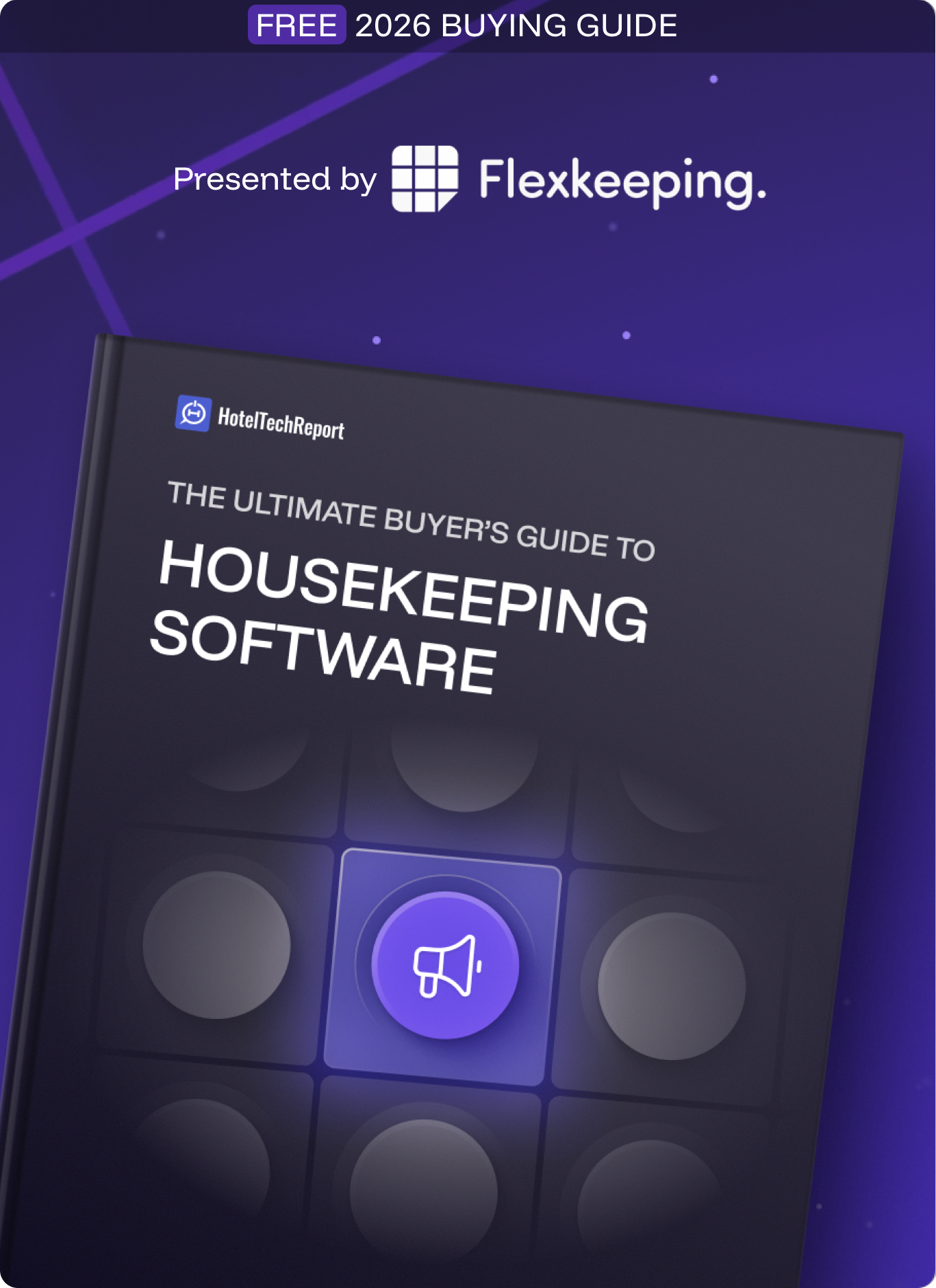
Download the Free Guide
Your guide was sent!
Your guide was successfully sent to .
This email may be incorrect
Our check detected that this address may have been entered incorrectly. Please confirm or correct it before we continue:
This looks like it may contain a typo.
Did you mean ?
What is Housekeeping Software?
Key Features to Look For in Housekeeping Software
Housekeeping software has evolved significantly from simple digital task boards into operational platforms that coordinate one of the most complex workflows in a hotel. Early systems primarily replaced paper-based assignment boards and radios with digital room status updates. Today’s platforms go much further by automating daily cleaning assignments, coordinating maintenance issues, and providing real-time visibility into room readiness across the property.
For hotel operators, these capabilities directly impact one of the most critical operational metrics: room turnaround time. When housekeeping teams can update room status instantly, supervisors can redistribute workloads, and front desk teams can see which rooms are ready for arriving guests. The result is smoother check-in experiences, better labor coordination, and fewer operational bottlenecks.
Modern platforms also function as an operational bridge between departments. By integrating with core systems such as the PMS and maintenance platforms, housekeeping software ensures that room readiness, maintenance issues, and cleaning progress are visible across the hotel’s technology stack. This level of integration helps hotels improve service delivery while giving operations leaders the data needed to manage staffing, productivity, and service standards.
Capability Area | Feature | Description |
|---|---|---|
Operations & Workflow Management | Automated Room Assignment | Automatically generates daily cleaning assignments based on departures, arrivals, and room priorities, helping supervisors distribute workloads efficiently. |
Mobile Housekeeping App | Allows room attendants and supervisors to receive assignments, update room status, and report issues directly from mobile devices. | |
Real-Time Room Status Tracking | Enables staff to instantly update room readiness (clean, inspected, out of order), giving operations teams immediate visibility into availability. | |
Digital Inspection Workflows | Supervisors can conduct room inspections using configurable checklists, ensuring consistent quality control across the property. | |
Task Prioritization | Allows supervisors to prioritize rooms for early arrivals, VIP guests, or operational needs, helping teams manage peak check-in periods. | |
Operations & Workflow Management | Maintenance Issue Reporting | Housekeeping staff can flag maintenance problems during cleaning, automatically creating service tickets for engineering teams. |
Lost & Found Tracking | Records items discovered in guest rooms and tracks their storage location and ownership details, improving accountability and guest recovery. | |
Supervisor Monitoring Dashboard | Provides a live overview of housekeeping progress across floors or buildings, helping supervisors manage operations in real time. | |
Revenue & Commercial Impact | Faster Room Turnover | Streamlined workflows and real-time updates help hotels prepare rooms faster for arriving guests, maximizing available inventory. |
Labor Productivity Tracking | Tracks cleaning times, completed tasks, and team productivity to help managers optimize staffing and reduce labor inefficiencies. | |
Early Arrival Room Prioritization | Allows operations teams to identify and prioritize rooms needed for early check-ins or VIP guests. | |
Integrations & Data | PMS Integration | Synchronizes departures, arrivals, and room status updates with the PMS to ensure front desk teams always have accurate room availability. |
Engineering / Maintenance Integration | Connects housekeeping issue reporting with maintenance systems so engineering teams can respond quickly to repairs. | |
Operational Analytics & Reporting | Provides dashboards and reports that track room turnover times, staff productivity, and operational performance trends. | |
Multi-Property Reporting | Allows hotel groups to monitor housekeeping performance across multiple properties from a centralized reporting environment. |
The most valuable housekeeping platforms do more than digitize existing processes—they provide real-time operational visibility across the hotel. When integrated with core hotel systems and used across departments, these tools help operations leaders reduce delays, improve labor coordination, and ensure that rooms are ready for guests as efficiently as possible.
- Inspection Module
- Deep Cleaning Scheduling
- Drag-and-Drop Room Assignments
- Automated Notifications
- Custom Inspection Checklists
- Inspection Module
- Deep Cleaning Scheduling
- Drag-and-Drop Room Assignments
- Automated Notifications
- Custom Inspection Checklists
- Deep Cleaning Scheduling
- Automated Room Assignments
- Deep Cleaning Scheduling
- Automated Room Assignments
- Custom Rules & Prioritization
- Drag-and-Drop Room Assignments
- Two-Way PMS Integration
- Automated Notifications
- Automated Task Routing
- Mobile Request Dispatching
- Automated Room Assignments
- Lost & found
- Open API
- Custom Rules & Prioritization
- Drag-and-Drop Room Assignments
- Two-Way PMS Integration
- Automated Notifications
- Automated Task Routing
- Mobile Request Dispatching
- Automated Room Assignments
- Lost & found
- Open API
- Chat
- Automated Notifications
- Mobile Request Dispatching
- Guest requests
- Chat
- Automated Notifications
- Mobile Request Dispatching
- Guest requests
- Performance Analytics Dashboard
- Progress Tracking Dashboard
- Performance Analytics Dashboard
- Progress Tracking Dashboard
- Mobile Access
- Multi Language UI Support
- Automated Notifications
- Mobile Access
- Multi Language UI Support
- Automated Notifications
How can housekeeping management software improve profitability and efficiency?
- Lower payroll expenses - By accumulating and analyzing historical housekeeping performance data, management can make more effective staffing decisions - whether it’s how many housekeepers to have on staff overall or how many to schedule for a “typical” Wednesday shift.
- Increased guest satisfaction scores - With the ability to easily and consistently score the performance of individual housekeepers and supervisors, rooms will be cleaned and inspected according to desired standards. The result is fewer mistakes and oversights, which makes for happier guests.
- Improved staff performance - Moving from paper to mobile devices provides a new level of staff oversight. This allows performance trends to be identified more quickly and corrected or celebrated as appropriate.
Critical Integrations for Housekeeping Software
When evaluating housekeeping software, it’s easy to focus on features like mobile task lists, inspections, or room assignment tools. But the real operational value comes from how well the platform connects with the rest of your hotel’s technology stack. Housekeeping does not operate in isolation—room readiness, maintenance issues, and cleaning progress all affect other departments.
At a minimum, your housekeeping platform should connect directly to the systems that manage reservations, room status, and operational workflows.
Your housekeeping software should include:
✅ Direct PMS Integration for real-time synchronization of room status, arrivals, and departures
✅ Maintenance / Engineering System Integration to automatically route repair issues discovered during cleaning
✅ Operations or Service Workflow Tools to coordinate tasks between housekeeping, front desk, and engineering
These integrations should work in real time and require minimal manual intervention. If the platform relies on manual exports, delayed syncing, or indirect integrations, it can quickly create operational confusion—especially during busy arrival periods when room readiness matters most.
Once these core connections are in place, additional integrations can help extend the platform’s operational value. These are the integrations that allow housekeeping software to function as part of a larger operations ecosystem—connecting staffing insights, maintenance workflows, and operational analytics across the hotel.
Housekeeping software is typically sold as a SaaS (software-as-a-service) product with recurring monthly or annual subscriptions. Most vendors price their platforms based on the number of rooms in a property, since room count directly correlates with the scale of housekeeping operations and system usage. This approach allows hotels to scale the platform as properties grow or as additional locations are added.
While the base subscription is often straightforward, total cost can vary depending on operational complexity and system integrations. Hotels that require advanced automation, cross-department workflows, or integrations with multiple systems—such as the PMS, maintenance platforms, or service optimization tools—may incur additional setup or licensing costs.
When evaluating pricing, hoteliers should consider the full cost of ownership rather than focusing solely on the monthly subscription. Implementation support, integration setup, training for operational teams, and multi-property deployments can all influence the overall investment required to successfully adopt the platform.
Common Pricing Models
Pricing Model | How It Works | Typical Cost Considerations |
|---|---|---|
Per-Room Monthly Subscription | Pricing is based on the number of rooms at the property, typically billed monthly or annually. | Larger hotels pay more due to higher room counts and operational scale. |
Per-Property Licensing | A flat subscription fee covers all rooms and users at a single property. | Often used by smaller properties or simplified platforms with fewer advanced features. |
Tiered Subscription Plans | Vendors offer multiple pricing tiers based on functionality, automation features, and reporting capabilities. | Higher tiers typically unlock advanced workflows, integrations, and analytics. |
Per-User Pricing | Cost is determined by the number of staff members who need system access. | Larger housekeeping teams or properties with multiple supervisors may see higher costs. |
Portfolio or Multi-Property Pricing | Hotel groups receive pricing based on the number of properties deployed across a portfolio. | Centralized reporting and cross-property management features may influence pricing. |
What Impacts Pricing the Most
Property Size and Room Count — Larger hotels generate more housekeeping activity, increasing system usage and operational complexity.
Number of Operational Users — Properties with larger housekeeping teams or multiple supervisors may require additional user licenses.
Integration Requirements — Connecting the platform to PMS, maintenance systems, or other operational tools can add setup and support costs.
Advanced Workflow Features — Automation tools, labor analytics, and cross-department coordination modules often appear in higher pricing tiers.
Evaluating ROI
The value of housekeeping software is typically measured through improved operational efficiency and faster room turnover. Hotels that adopt these platforms often reduce manual coordination, improve labor productivity, and ensure rooms are ready for guests more quickly. Over time, these efficiencies can translate into lower operational costs and improved guest satisfaction during busy arrival periods.
Unlike most software that is used in hotels today, housekeeping software can be implemented with zero downtime and without an IT expert on-site. Once the contract is signed, users will be up and running within a week.
Easily customizing the software to best match the needs at your specific hotel while maintaining the mission to provide a user friendly platform was a high priority during design phase, resulting in a remarkably simple implementation process.housekeeping software can be added on to asset management platform with a single call toCustomer Support team. For new customers, the build process is typically completed within a week. The size of the hotel – how many guest rooms, meeting rooms, common areas, etc. - and the level of detail included on customizable inspection checklists directly impacts the time required to implement this software. Regardless, the process is easy to follow and backed up byCustomer Support Team. Due to its intuitive design, there is no need for extensive staff training, instead, relying on short, role-specific videos highlighting the user experience.
The Future of Housekeeping Software
Housekeeping teams are increasingly managing daily workflows entirely through mobile devices rather than paper boards, radios, or manual reporting. Modern platforms allow attendants to receive assignments, update room status, flag maintenance issues, and complete inspections directly from smartphones or tablets.
Mobile-first workflows significantly reduce communication delays between supervisors and staff while giving operations leaders real-time visibility into cleaning progress across the property.
Here's what this could mean for your hotel:
Faster room turnover during peak check-in periods. Real-time updates allow supervisors to reassign rooms dynamically and prioritize early arrivals or VIP guests.
Improved team coordination across large properties. Staff working on different floors or buildings can stay aligned without relying on radios or manual updates.
Higher accountability and productivity tracking. Mobile systems record task completion and cleaning times, giving managers better insight into operational performance.
Many housekeeping departments still rely on supervisors to manually create daily cleaning boards. Newer platforms are introducing automation that dynamically assigns rooms based on departures, arrivals, and operational priorities.
These systems analyze occupancy data from the PMS and automatically generate balanced task lists for housekeeping teams, reducing planning time and improving efficiency.
Here's what this could mean for your hotel:
More efficient labor allocation. Automated assignment tools balance workloads across attendants and reduce idle time.
Better prioritization of operational tasks. Systems can flag rooms needed for early check-ins or group arrivals.
Reduced management overhead. Supervisors spend less time coordinating tasks and more time focusing on quality control and inspections.
Housekeeping platforms are increasingly becoming a central source of operational data for hotel leadership. By tracking cleaning times, room readiness, inspections, and maintenance issues, these systems provide valuable insights into operational performance.
When integrated with PMS, maintenance platforms, and business intelligence tools, housekeeping data can reveal patterns that help hotels optimize staffing and improve service delivery.
Here's what this could mean for your hotel:
Clear visibility into room turnaround times and operational bottlenecks.
Data-driven staffing decisions based on real workload patterns.
Better coordination between housekeeping, front desk, and engineering teams to ensure rooms are ready for guests as quickly as possible.
Hoteliers Also Ask
By upgrading your hotel from paper and radios to mobile devices, housekeeping management software is proven to improve staff communication, increase accountability and capture performance data - allowing for more informed staffing decisions. Each of these benefits contribute directly to bottomline savings, creating an ROI that is measured in days, not weeks or months.
The biggest impact comes from real-time visibility and better task coordination. When room attendants update cleaning progress directly from mobile devices, supervisors and front desk teams can immediately see which rooms are ready for guests. This reduces delays caused by manual communication and helps prioritize rooms needed for early arrivals, VIP check-ins, or high-demand occupancy periods.
Many hotels struggle with communication gaps between housekeeping, front desk, and maintenance teams. Digital platforms centralize room assignments, inspection workflows, and maintenance reporting so staff no longer rely on radios or manual updates. This improves coordination, reduces missed issues, and ensures rooms are cleaned and inspected faster during peak arrival periods.
Most operators track improvements in room turnaround time, labor productivity, and operational visibility. Metrics such as average cleaning time per room, inspection pass rates, and the speed at which rooms move from “dirty” to “ready” help leadership evaluate whether the platform is improving operational efficiency.
By tracking cleaning times, room assignments, and workload distribution, these platforms provide managers with data about team productivity. Over time, this helps hotels adjust staffing levels, identify inefficiencies, and balance workloads more effectively across attendants and shifts.
While large properties often see the biggest efficiency gains, smaller hotels can benefit as well. Even modest housekeeping teams gain better visibility into cleaning progress and room readiness. The key is choosing a platform that matches operational complexity—simple task management tools for smaller properties and more automated workflow platforms for larger hotels.
Most platforms function as a shared operational workspace. When housekeeping updates room status or flags maintenance issues, those updates become immediately visible to front desk and engineering teams. This helps departments coordinate more effectively, especially during busy check-in windows when room readiness directly impacts guest experience.
Housekeeping platforms typically operate alongside the PMS and maintenance systems as part of the hotel’s operational technology layer. They provide real-time updates on room readiness, coordinate cleaning workflows, and ensure operational data flows between departments. This helps create a more connected environment where teams share the same view of operational progress.
The biggest challenge is often operational change rather than technology itself. Teams accustomed to paper boards or radio communication may need time to adapt to mobile workflows. Successful implementations usually involve staff training, clear operational procedures, and leadership support to ensure the system becomes part of daily routines.
LAST UPDATED
APPS TESTED
CONTRIBUTING EXPERTS
Get Your Custom Housekeeping Software Analyst Report
- Ranked recommendations for your property
- Real operator reviews & pricing data
- Tailored to your size, market & integrations
Trusted by thousands of hoteliers worldwide
Takes 2 min · No credit card needed
Get Your Free AI Analyst Report
Custom recommendations tailored to your property


